Artwork
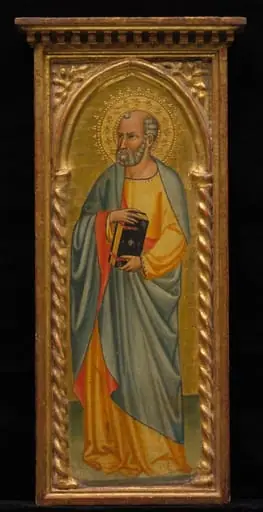
Standing Saint and Saint in Red Cloak (pair)
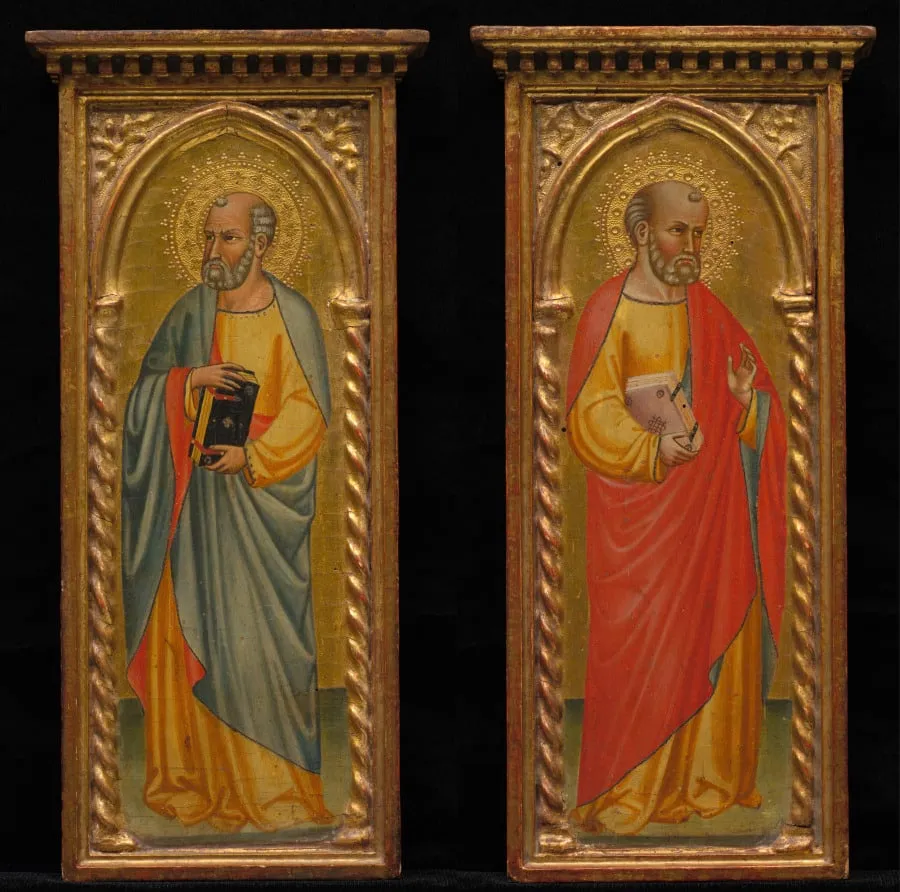
Standing Saint and Saint in Red Cloak (pair) is an unspecified painting by the Impressionist artist Unknown. It dates from 1900 and is held in the collection of the Cleveland Museum of Art.
About this work
Overview
This pair of panel paintings depicts two standing saints, each rendered in a vertical format with richly detailed robes against a dark, unmodeled background.
This pair of panel paintings depicts two standing saints, each rendered in a vertical format with richly detailed robes against a dark, unmodeled background. The figures are framed in ornate gold leaf, enhancing their solemn presence. The composition emphasizes stillness and hierarchy, with each saint occupying equal visual weight. The use of intense color and metallic trim suggests a devotional function, likely intended for private or chapel worship.
Subject & Meaning
The saints are not identified by inscription, but their attributes suggest ecclesiastical roles. The figure on the left holds a closed book, possibly indicating a scholar or evangelist. The figure on the right raises his right hand in a gesture of blessing, a common symbol of spiritual authority. Their matching postures and scale imply a paired devotional purpose, perhaps representing complementary aspects of sacred leadership or twin patrons of a religious community.
Technique & Style
The paintings employ tempera or oil on wood, with meticulous attention to fabric texture and color contrast. The red and greenish-blue cloaks are applied with layered pigments to achieve luminosity against the dark ground. Gold leaf trim is raised and burnished, mimicking real metalwork. Facial features are rendered with restrained realism, emphasizing dignity over individuality, consistent with late medieval devotional portraiture.
History & Provenance
The panels likely originated in a Northern European workshop during the late 14th or early 15th century. Their preservation in near-original condition suggests they were never widely dispersed or altered. They entered the Cleveland Museum of Art’s collection in the 20th century, possibly through a private European acquisition. Their pairing has remained intact, supporting the theory they were created as a set for a specific liturgical context.
Context
These works reflect the devotional practices of late medieval Europe, where paired saints were common in private altarpieces and household shrines. The emphasis on color and gold reflects both spiritual reverence and the wealth of patrons who commissioned such works. Similar pairs appear in regional altarpieces from the Low Countries and the Rhineland, where iconography emphasized saintly intercession through visual clarity and symbolic gesture.
Legacy
Though unsigned and unattributed to a known master, the panels exemplify the quiet sophistication of anonymous Northern European artisans. Their survival in original condition offers insight into pre-Reformation devotional aesthetics. They continue to inform scholarly understanding of how color, gesture, and material were used to convey sacred presence without narrative detail, influencing later representations of sanctity in Western art.
Artist & collection

 Domestic Scene
 Giacomo and Cardinal Marco, investing Andrea, Abbot of San Zeno, with his Benefice
 The Nymph of Fontainebleau
 Portrait of a Woman
 Madonna and Child with Saints in the Enclosed Garden
 Venus and Minerva
 Family Group of Four on Sofa
 Wall painting from Room H of the Villa of P. Fannius Synistor at Boscoreale
![Madonna and Child with the Blessing Christ, and Saints Peter, James Major, Anthony Abbott, and a Deacon Saint [entire triptych], by Martino di Bartolomeo](https://artifactworldgallery.com/img/martino-di-bartolomeo--madonna-and-child-with-the-blessing-christ-and-saints-peter--2c53e26d577a363b-w320.webp) Madonna and Child with the Blessing Christ, and Saints Peter, James Major, Anthony Abbott, and a Deacon Saint [entire triptych]
Madonna and Child with the Blessing Christ, and Saints Peter, James Major, Anthony Abbott, and a Deacon Saint [entire triptych]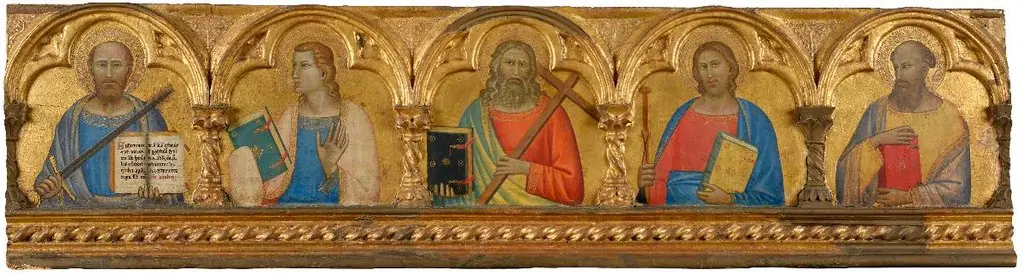 Five apostles
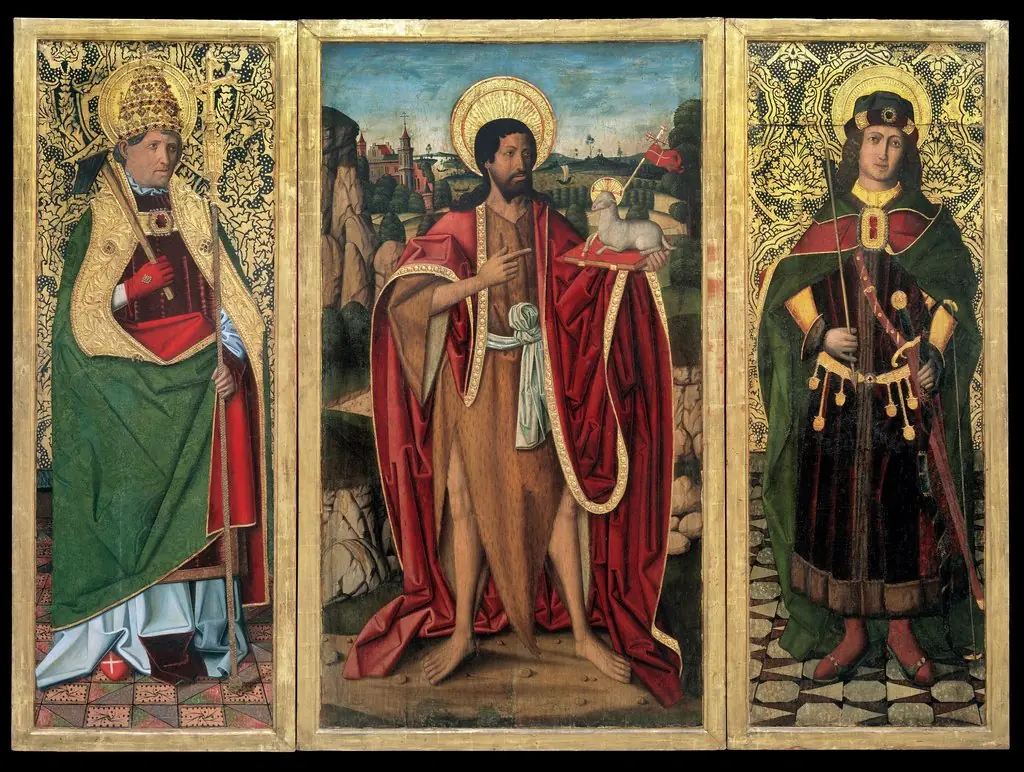 Saint John the Baptist, Saint Fabian and Saint Sebastian
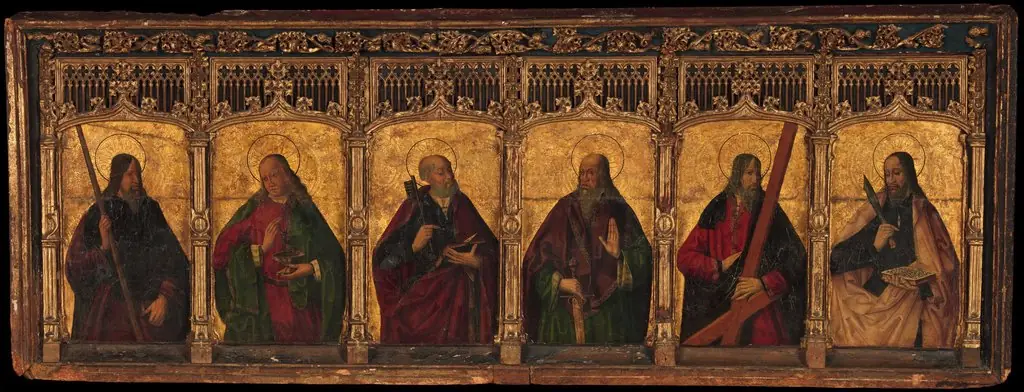 Six Apostles
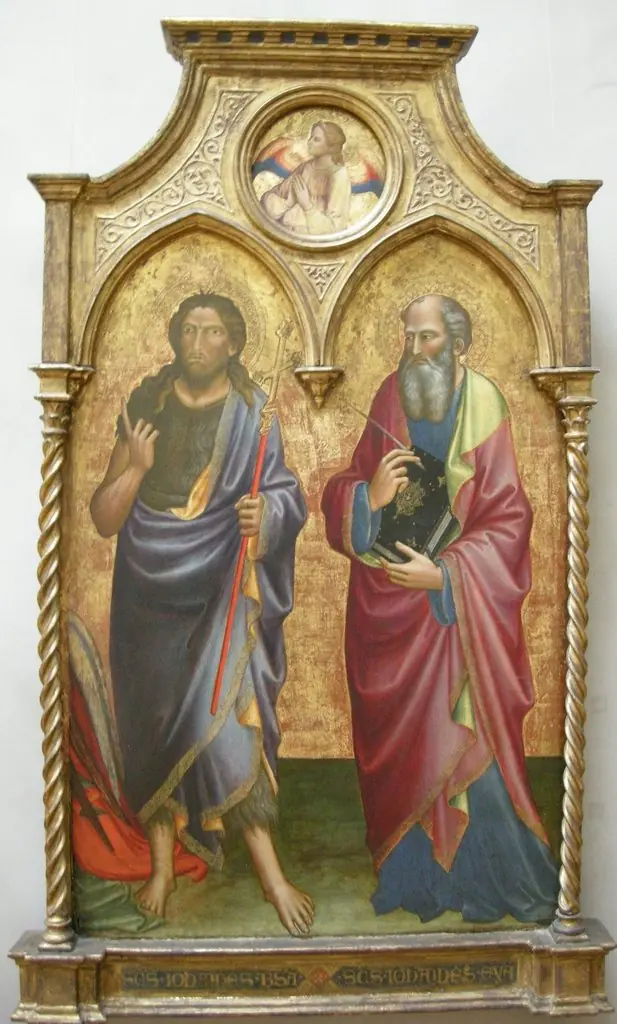 Saints John the Baptist and John the Evangelist
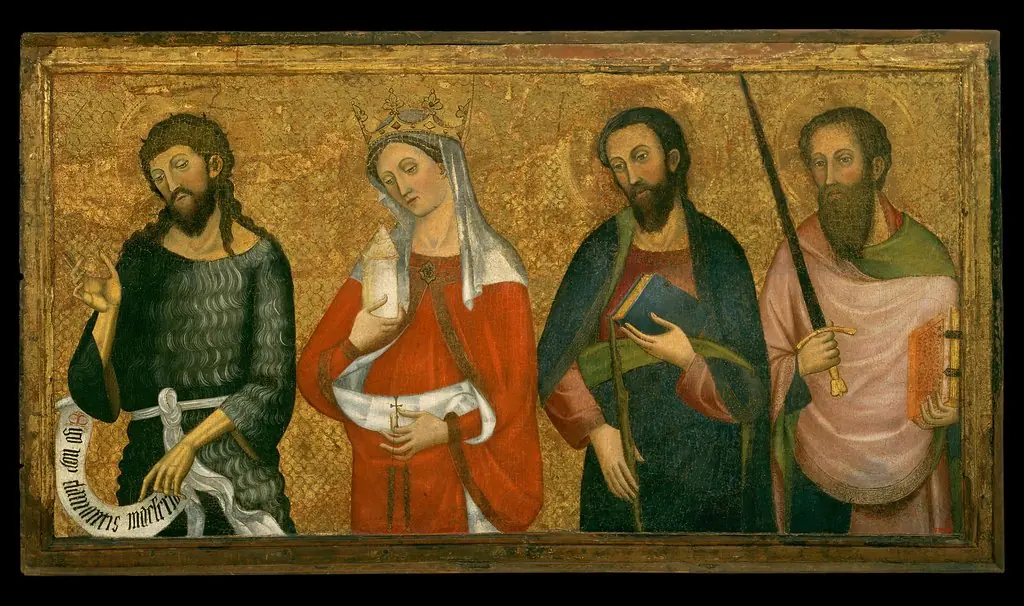 Saint John the Baptist, Saint Mary Magdalene, Saint James the Minor, Saint Paul
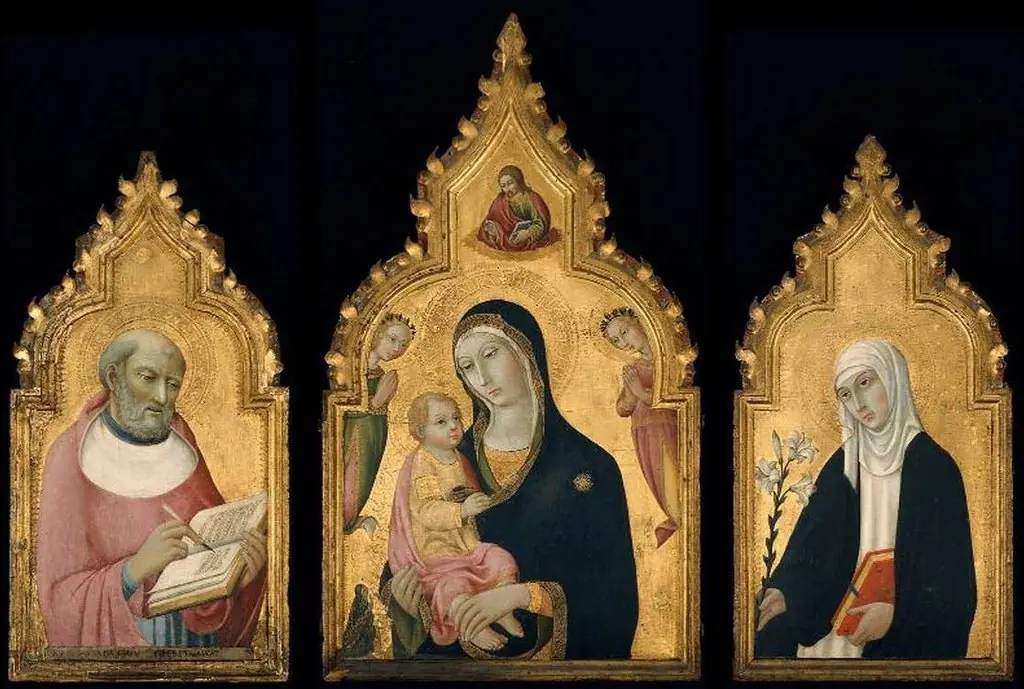 Triptych: The Virgin and Child with the Blessing Christ, Two Angels and a Donor
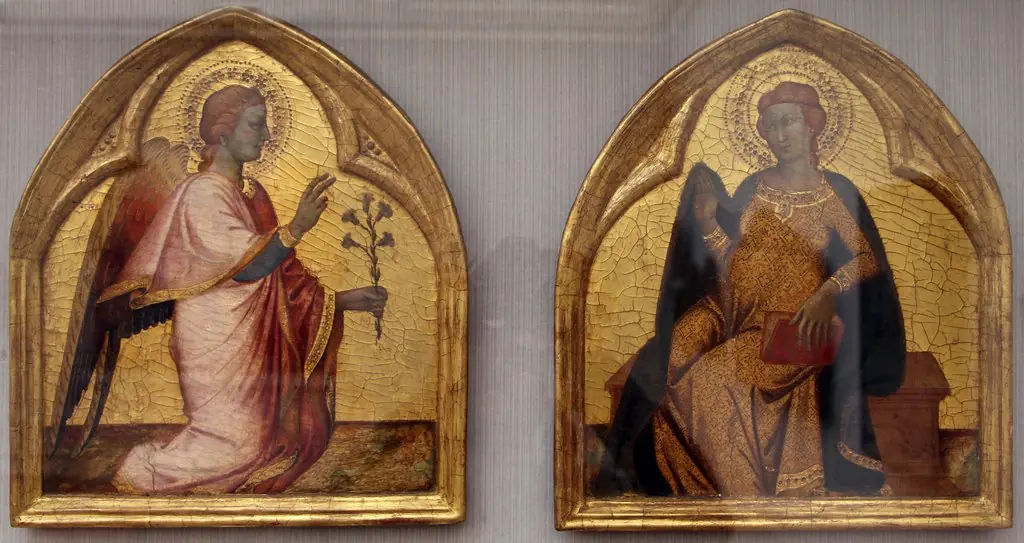 Mary of the Annunciation
 Standing Saint