Artwork
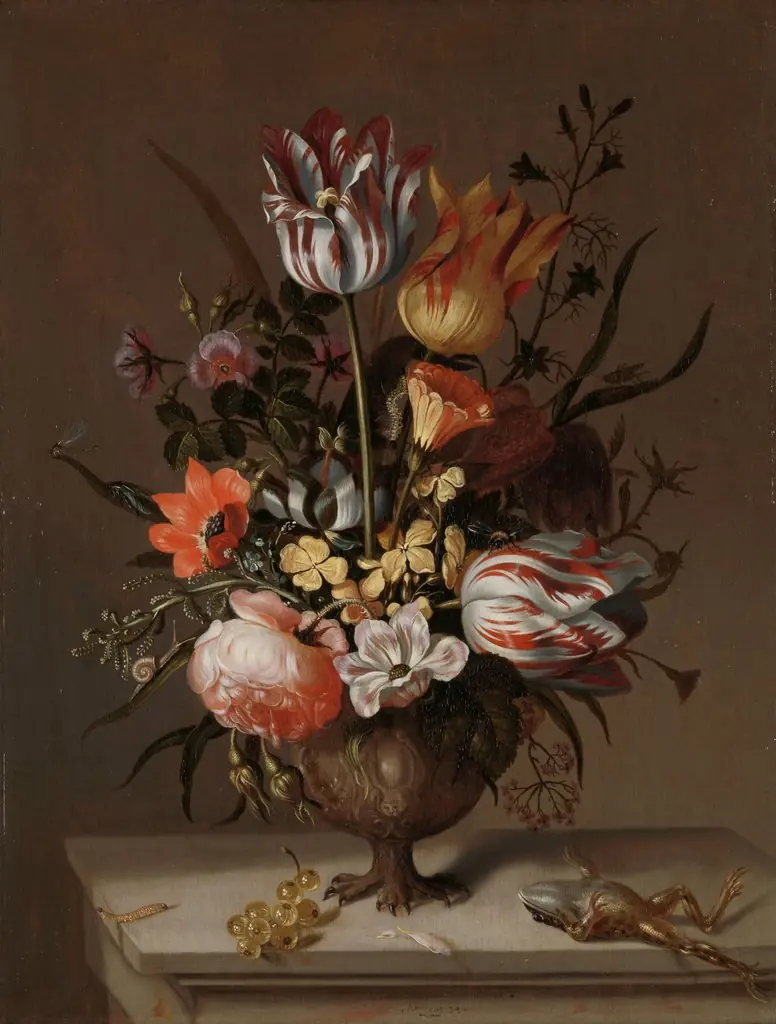
Still Life with a Vase of Flowers and a Dead Frog
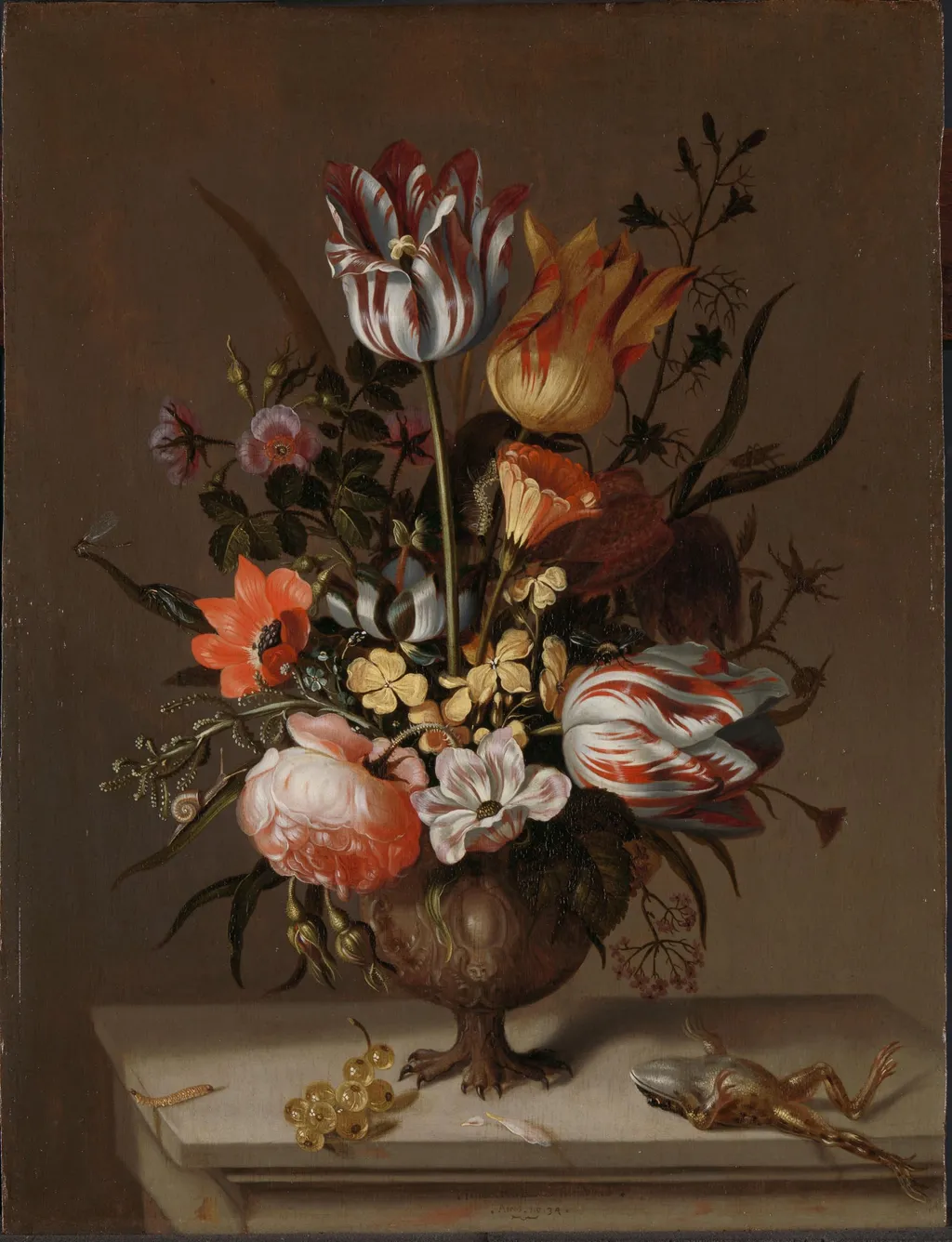
Still Life with a Vase of Flowers and a Dead Frog is an unspecified painting by the Dutch Golden Age artist Unknown. It dates from 1634 and is held in the collection of the Rijksmuseum.
About this work
Overview
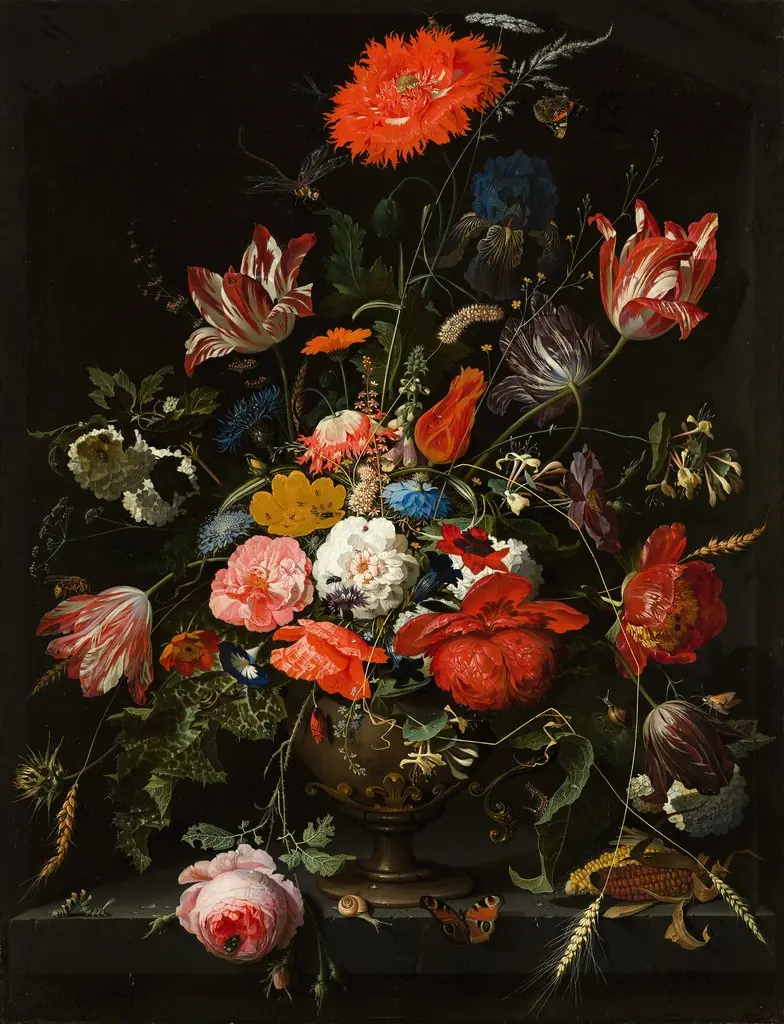
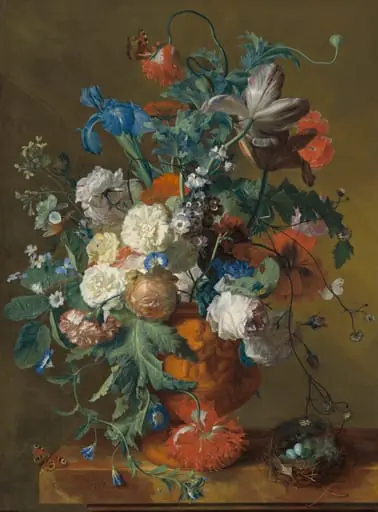
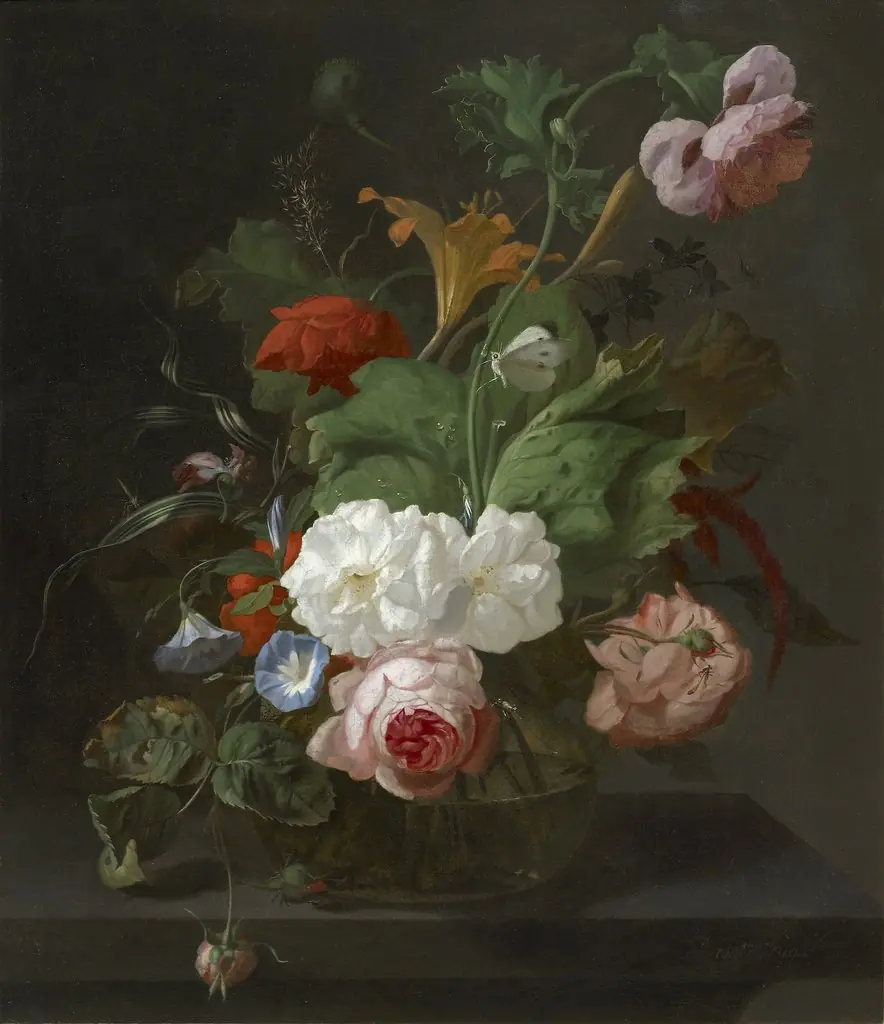
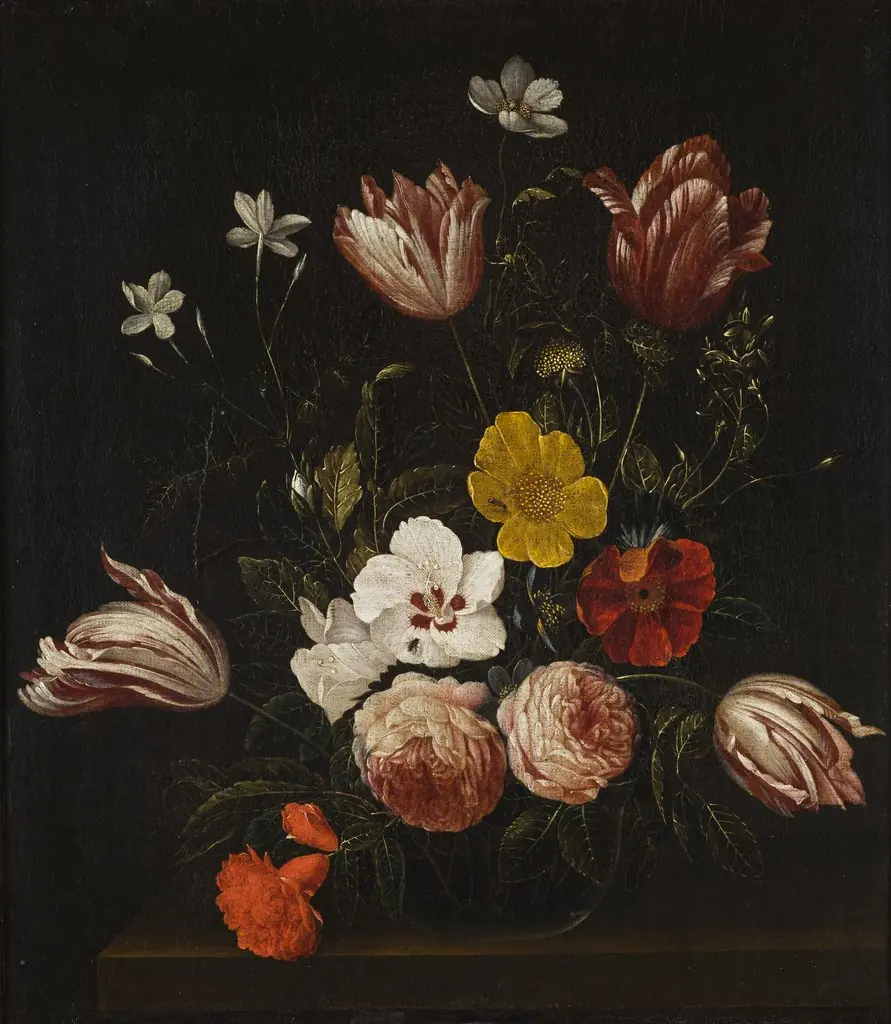
Jacob Marrel’s Still Life with a Vase of Flowers and a Dead Frog presents a modest stone ledge supporting a glass vase brimming with tulips, alongside a lifeless frog. Executed in the mid‑17th century, the composition juxtaposes the vivid, striped blossoms with the stark reminder of mortality, reflecting the era’s fascination with both botanical abundance and vanitas themes.
Subject & Meaning
The central focus is a bouquet of tulips, notably the rare red‑and‑white and red‑and‑yellow striped varieties that were highly coveted during the Dutch tulip craze. The inclusion of a dead frog serves as a quiet memento mori, underscoring the fleeting nature of even the most treasured possessions and the inevitability of decay.
Technique & Style
Marrel employs a meticulous, almost photographic rendering of petals and glass, characteristic of Dutch still‑life painting. Light falls softly across the vase, highlighting the delicate translucency of the tulip petals, while the frog’s textured skin is depicted with fine brushwork that enhances its lifelike stillness.
History & Provenance
Created at a time when tulip bulbs commanded prices exceeding gold, the work reflects contemporary market speculation. The painting entered the Rijksmuseum collection in the 20th century, where it has been catalogued as an example of Marrel’s specialization in floral subjects and his engagement with vanitas motifs.
Context
In 17th‑century Holland, tulip mania transformed bulbs into status symbols and speculative commodities. Artists like Marrel responded by embedding these prized flowers within still‑life settings, often pairing them with symbols of mortality to comment on the transitory nature of wealth and beauty.
Artist & collection

 Domestic Scene
 Giacomo and Cardinal Marco, investing Andrea, Abbot of San Zeno, with his Benefice
 The Nymph of Fontainebleau
 Portrait of a Woman
 Madonna and Child with Saints in the Enclosed Garden
 Venus and Minerva
 Family Group of Four on Sofa
 Wall painting from Room H of the Villa of P. Fannius Synistor at Boscoreale