Artwork
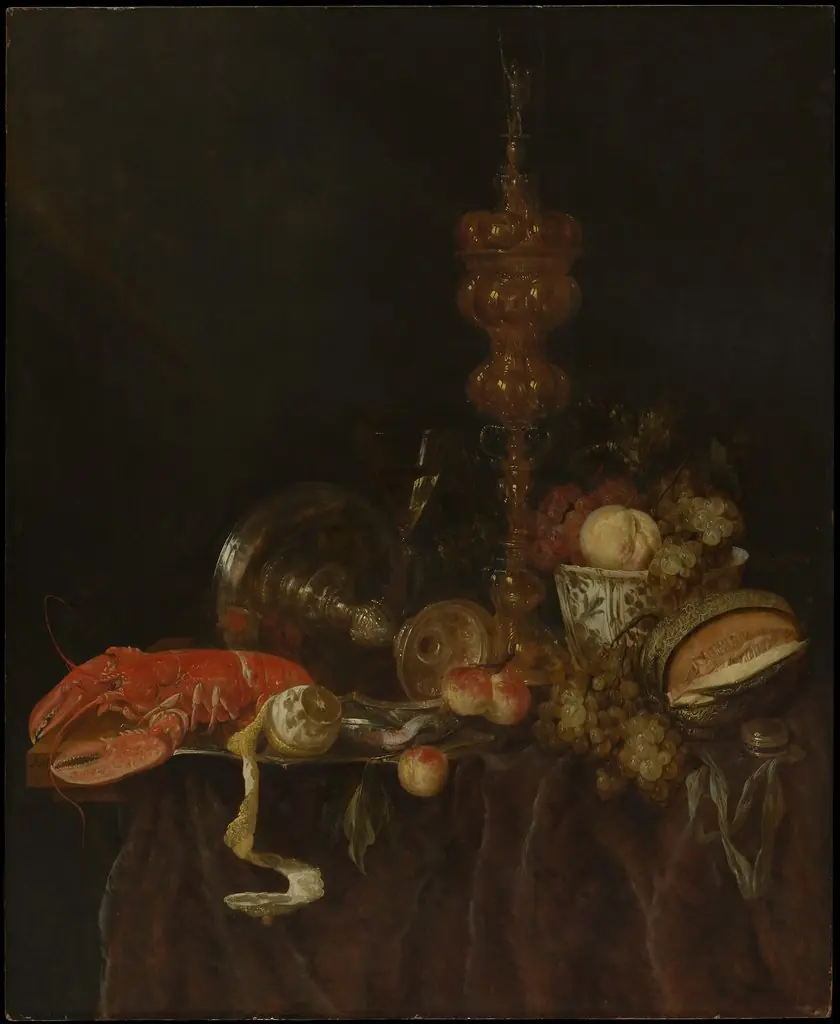
Still Life with Fruit and a Lobster
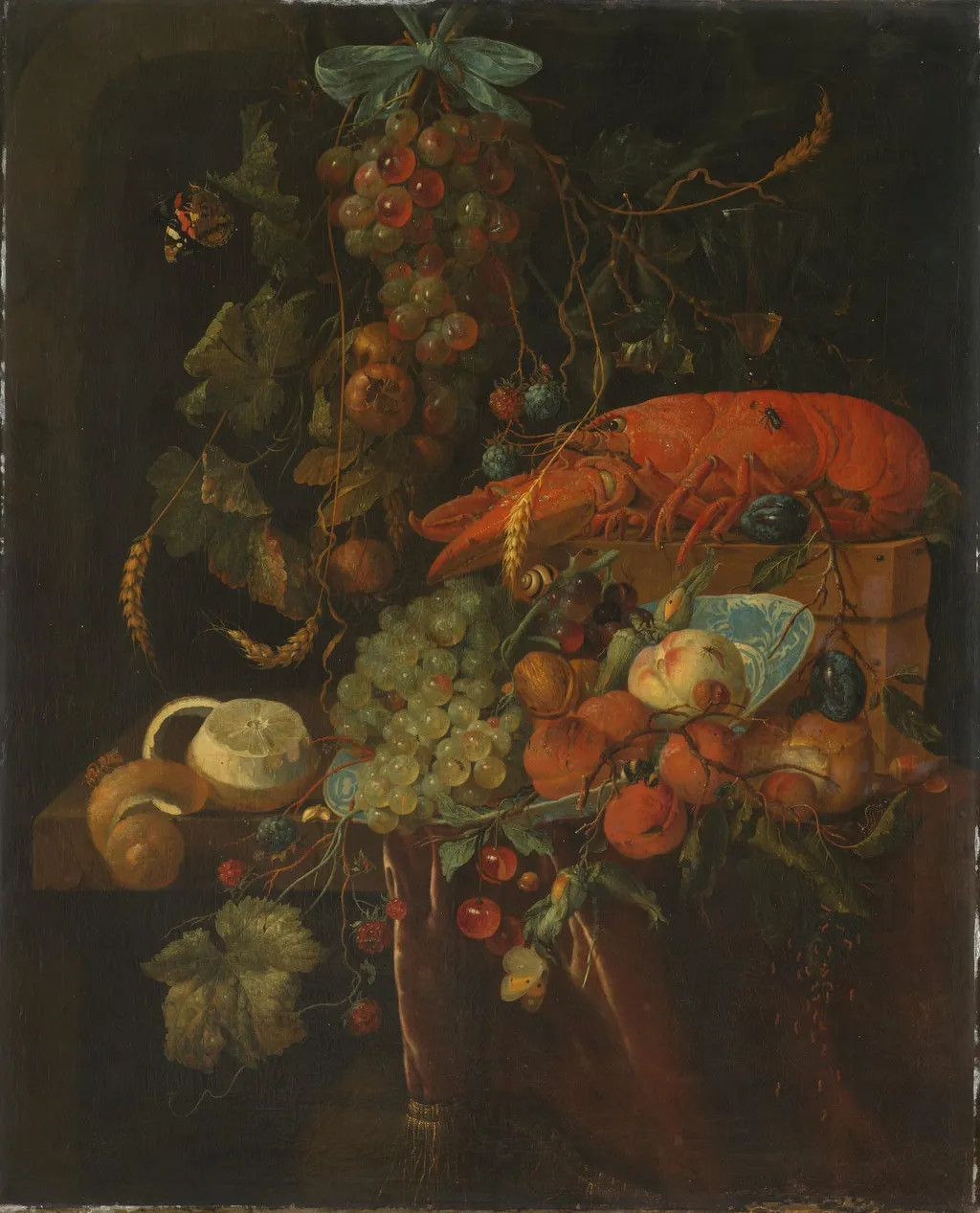
Still Life with Fruit and a Lobster is an unspecified painting by the Dutch Golden Age artist Unknown. It dates from 1670 and is held in the collection of the Rijksmuseum.
About this work
Overview
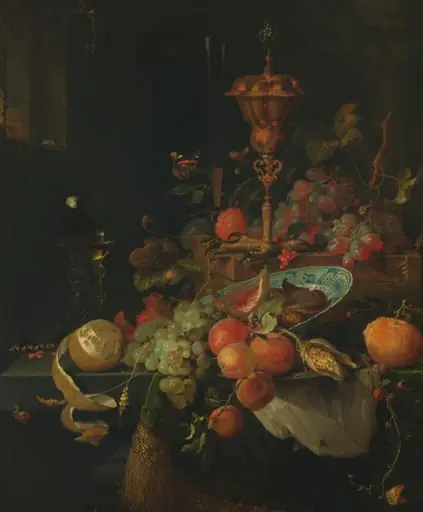
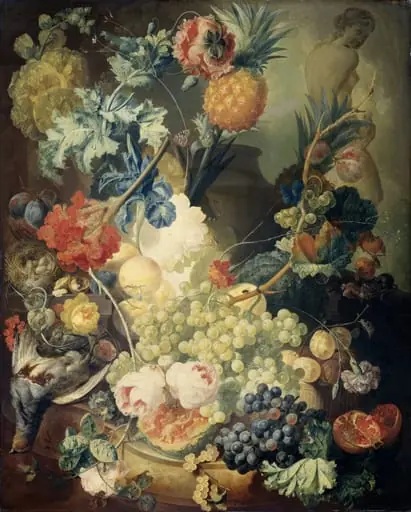
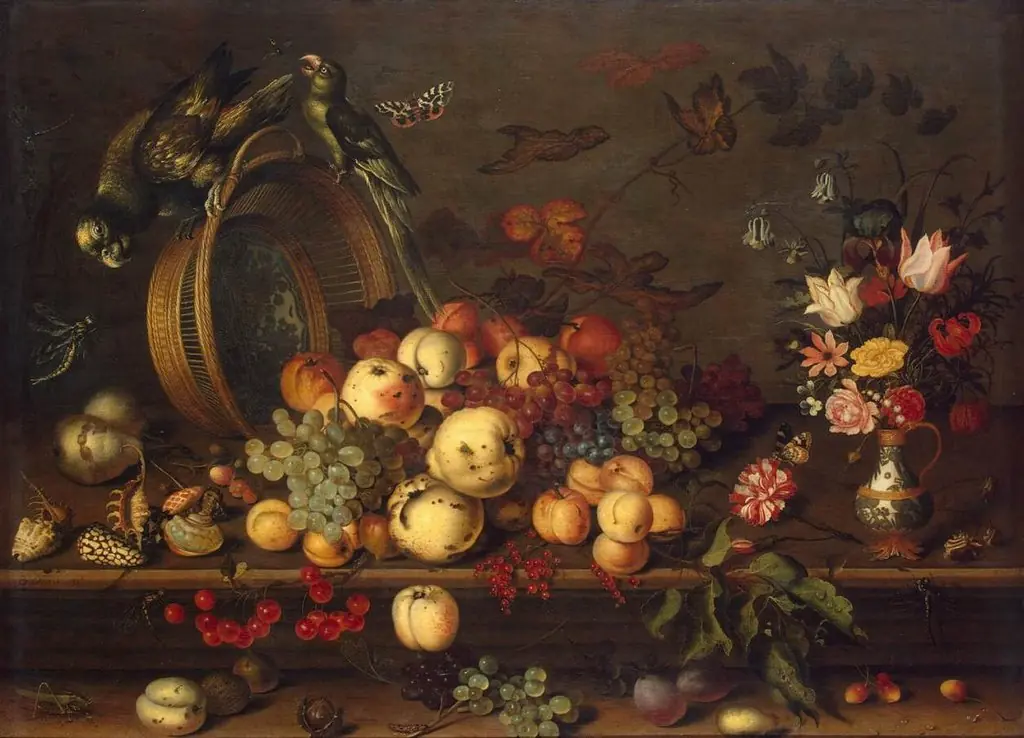
This painting is a 17th-century Dutch still life depicting an arrangement of fruit, a peeled lemon, and a live lobster on a table, with a fruit garland suspended on the wall behind. Though executed as a copy of an earlier work held in Dresden, the artist introduced distinctive details such as crawling insects and snails, suggesting a focus on organic decay and transient life rather than mere display.
Subject & Meaning
The composition centers on perishable foods and a living lobster, juxtaposing the ripe and the raw. Insects and snails moving among the fruit imply the inevitability of decay, while the lobster’s vitality contrasts with the fruit’s impending spoilage. These elements together evoke themes of temporality and the fragility of abundance, common in Dutch still lifes of the period.
Technique & Style
The artist rendered textures with precision: the glossy sheen of grapes, the fuzzy skin of peaches, and the segmented shell of the lobster. Brushwork is controlled yet naturalistic, capturing subtle shifts in light across surfaces. The inclusion of small, crawling creatures adds kinetic detail, enhancing the sense of a moment caught mid-decay rather than a static arrangement.
History & Provenance
The painting is a later reproduction of a composition originally created by a Dutch artist and housed in Dresden. While the original is lost or inaccessible, this version preserves its structure while introducing unique elements. Its existence reflects the 17th-century practice of copying admired works, often with personal modifications to suit contemporary tastes or symbolic emphasis.
Context
In the Dutch Golden Age, still lifes often carried moral or philosophical undertones beyond their visual appeal. Depictions of food, especially when paired with signs of decay, served as memento mori—reminders of life’s impermanence. This painting aligns with that tradition, using ordinary objects to reflect on nature’s cycles and human transience.
Legacy
Though not the original, this version contributes to the understanding of how Dutch still lifes were interpreted and adapted across time. Its added details reveal how later artists infused inherited compositions with new layers of meaning, preserving the genre’s thematic concerns while asserting individual observation and intent.
Artist & collection

 Domestic Scene
 Giacomo and Cardinal Marco, investing Andrea, Abbot of San Zeno, with his Benefice
 The Nymph of Fontainebleau
 Portrait of a Woman
 Madonna and Child with Saints in the Enclosed Garden
 Venus and Minerva
 Family Group of Four on Sofa
 Wall painting from Room H of the Villa of P. Fannius Synistor at Boscoreale