Artwork
Festoon of Fruits
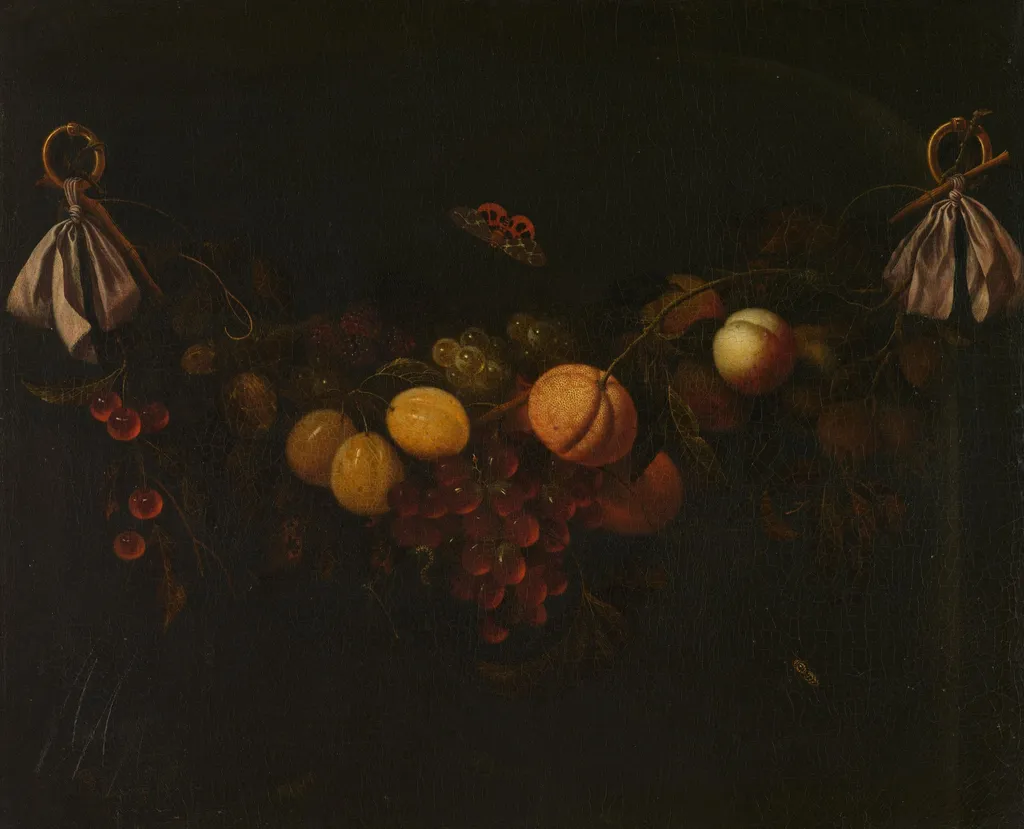
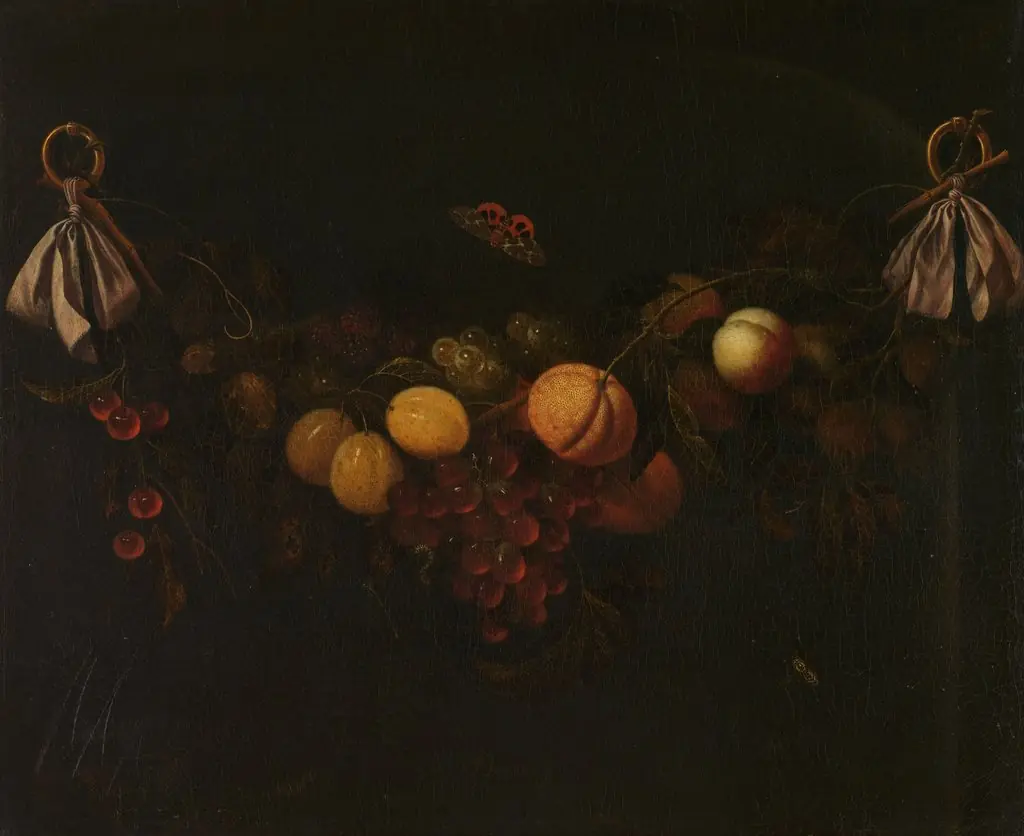
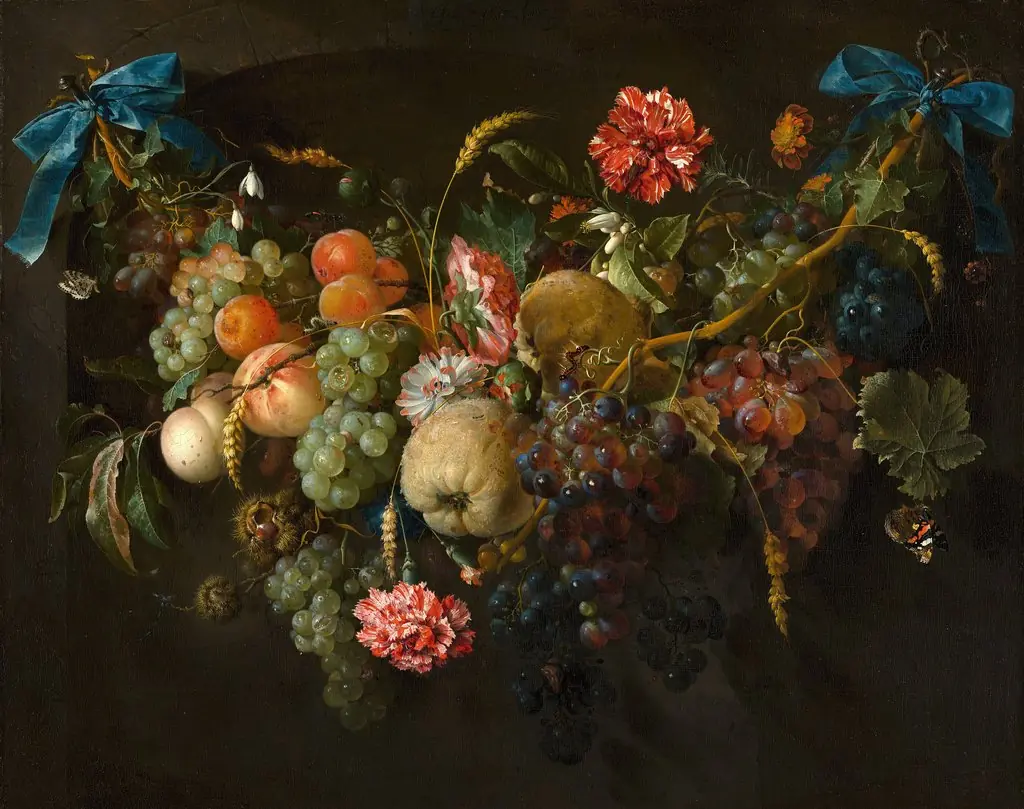
Festoon of Fruits is an unspecified painting by the Dutch Golden Age artist Johannes Borman. It dates from 1653 and is held in the collection of the Rijksmuseum.
About this work
Overview
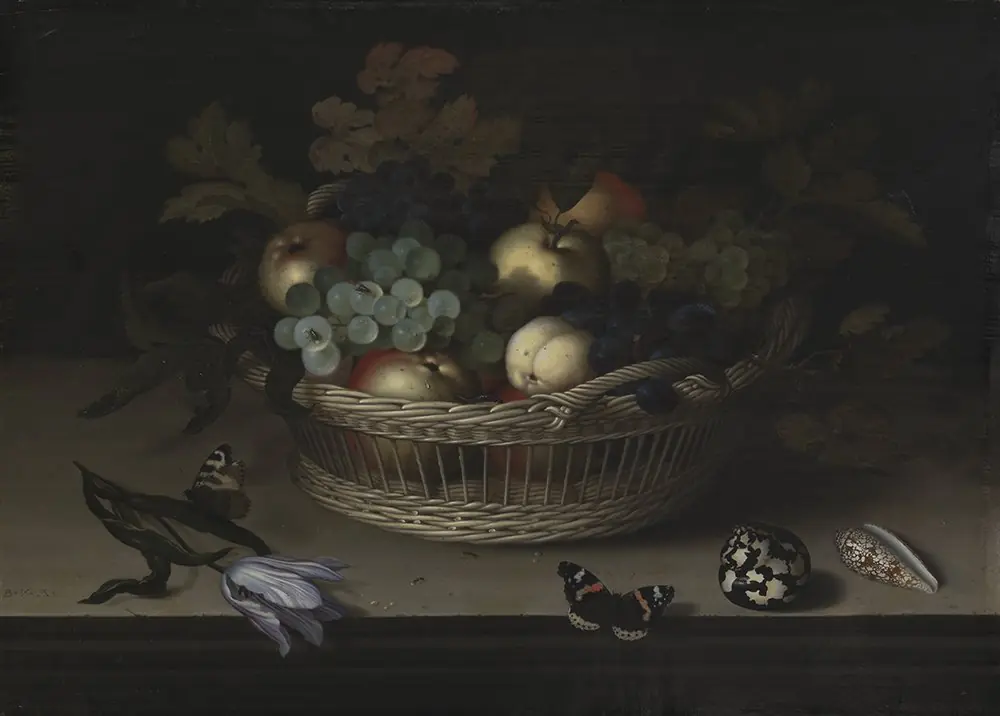
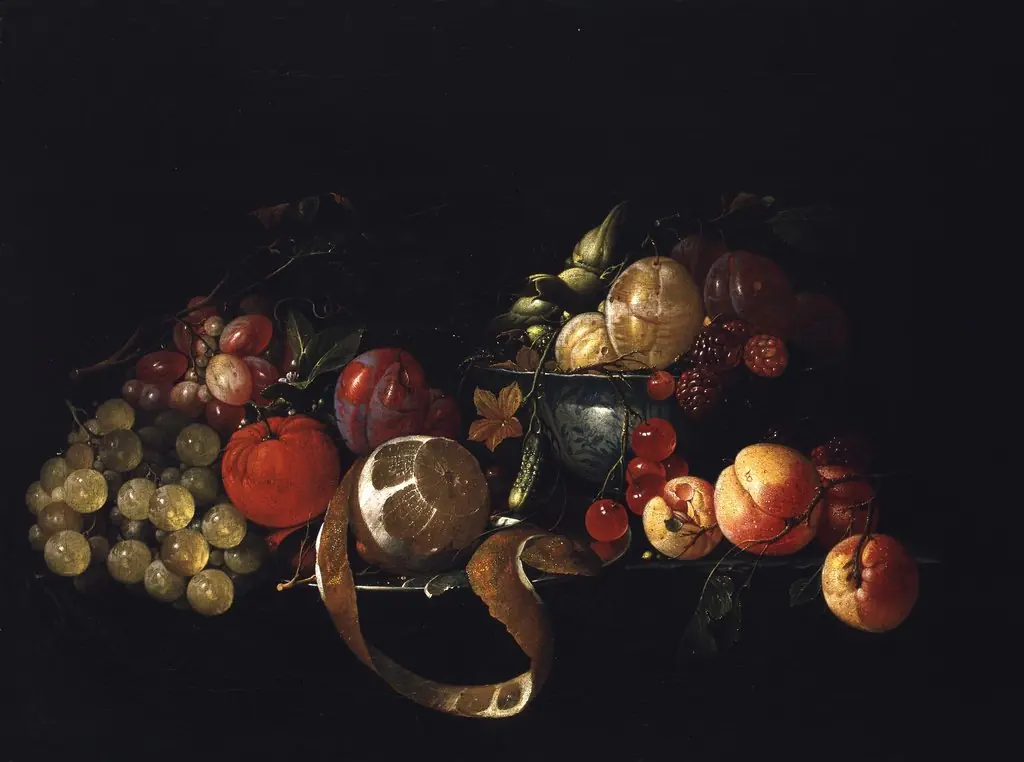
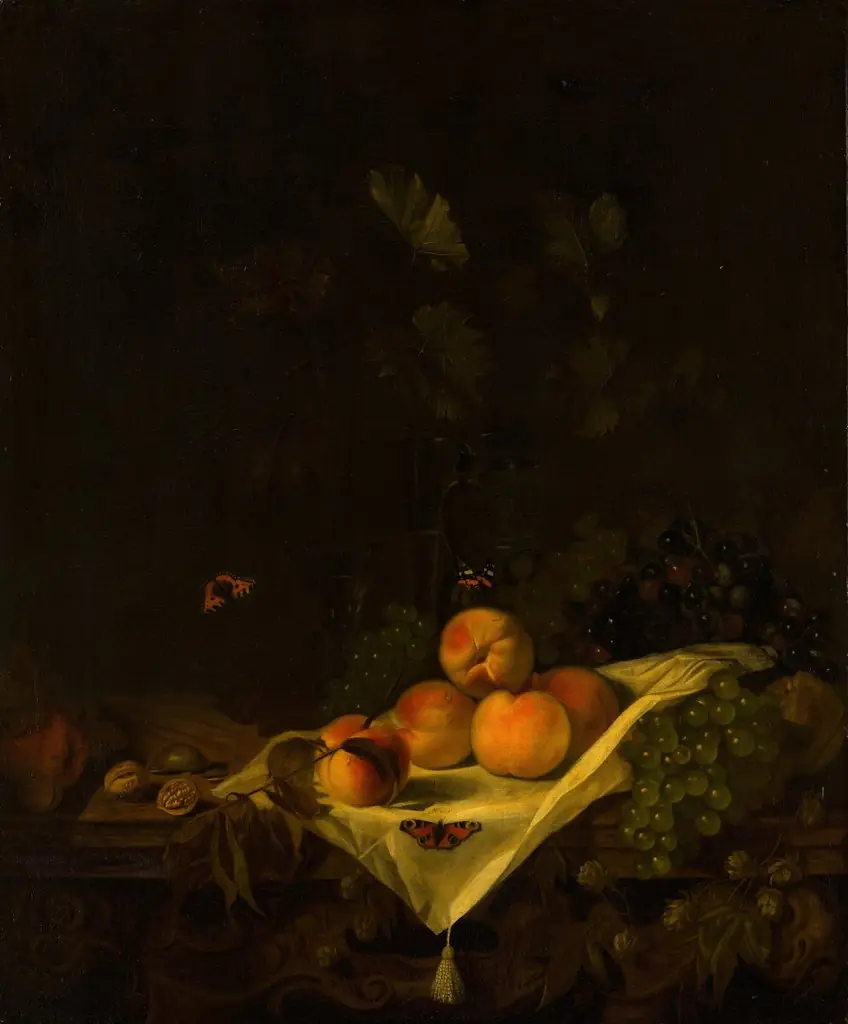
The work presents a circular arrangement of assorted fruit—grapes, apricots, oranges and peaches—suspended against a deep, shadowed backdrop. A butterfly and a wasp hover nearby, adding a fleeting sense of movement. The composition is rendered with meticulous detail, emphasizing the texture and color of each piece of fruit.
Subject & Meaning
The painting focuses on a still‑life motif common in 17th‑century Dutch art, celebrating abundance and the sensory pleasures of the kitchen. The inclusion of insects underscores the natural cycle of life and decay, subtly reminding viewers of the transience of material wealth.
Technique & Style
Executed with a pronounced chiaroscuro effect, the artist contrasts luminous fruit against a dark wall to heighten three‑dimensionality. Fine brushwork captures the sheen of grapes and the soft fuzz of peach skin, while the delicate rendering of the butterfly’s wings demonstrates a command of light and surface.
History & Provenance
The creator remains unidentified, though stylistic analysis places the piece within the Dutch Golden Age, around the 1650s. No documented ownership trail precedes its recent appearance in a private collection, where it was first recorded by scholars.
Context
During the mid‑1600s, Dutch painters frequently employed still‑life arrangements to display technical virtuosity and to reflect the prosperity of a merchant society. This work aligns with that tradition, employing a dark background—a hallmark of the period—to showcase the vivid colors of the fruit.
Own this work as a print
Artist & collection