Artwork
Study of Common Hogweed (<i>Heracleum sphondylium</i>)
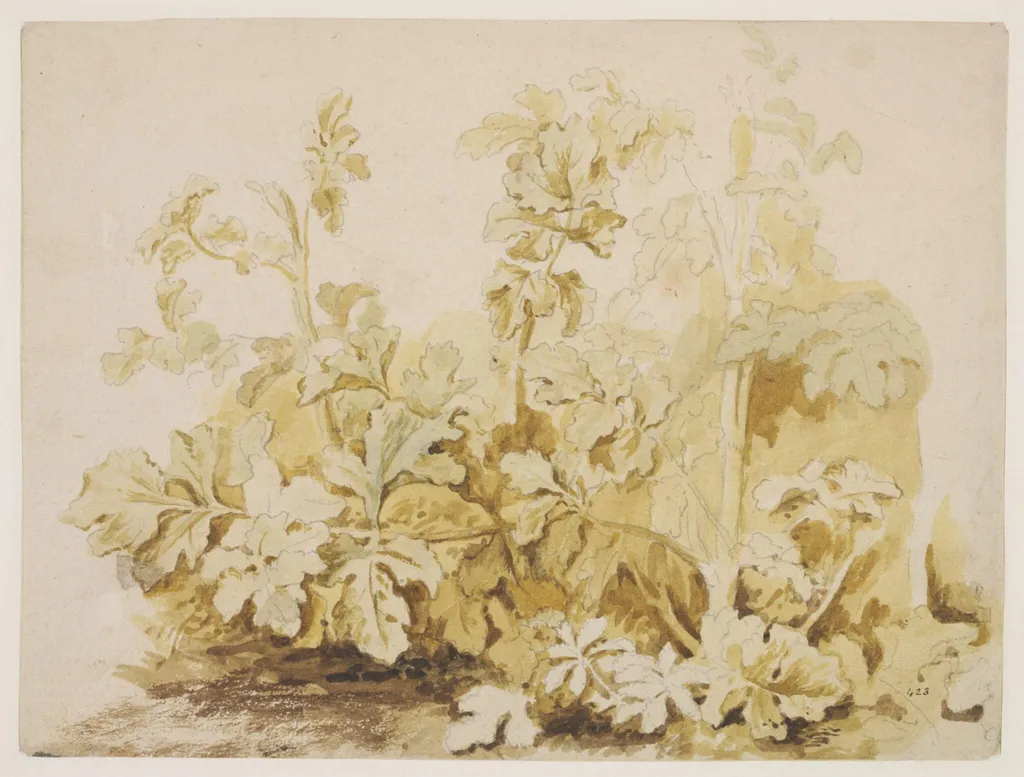
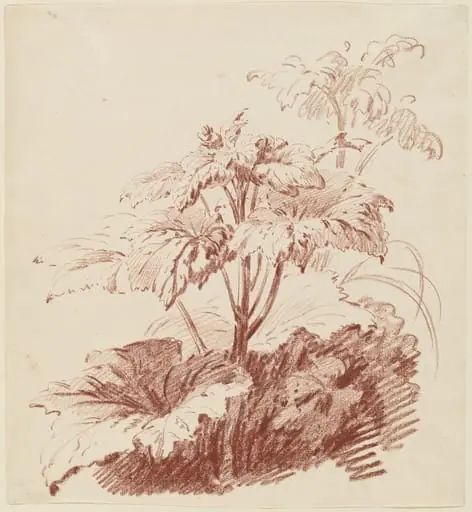
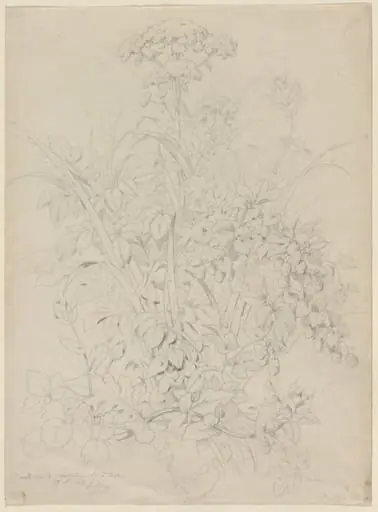
Study of Common Hogweed (<i>Heracleum sphondylium</i>) is a watercolor work on paper by Unknown. It dates from 1650 and is held in the collection of the Victoria and Albert Museum. This watercolour, dated around 1650, captures a cluster of common hogweed plants with quiet precision.
About this work
Overview
The composition centers on the plant’s tall stems and broad leaves, with minimal background elements suggesting a moist, riverside setting.
This watercolour, dated around 1650, captures a cluster of common hogweed plants with quiet precision. Executed in yellow ochre, brown, and green over a graphite sketch, the work reflects a scientific interest in botanical detail. The composition centers on the plant’s tall stems and broad leaves, with minimal background elements suggesting a moist, riverside setting. Its subdued palette and delicate handling align with early naturalist traditions in British art.
Subject & Meaning
The subject, Heracleum sphondylium, is rendered not as an ornamental specimen but as a specimen of observation. The artist emphasizes its natural form—leaf structure, stem taper, and clustered white flowers—without idealization. The inclusion of water, suggested by a faint horizontal line, implies the plant’s typical habitat. This study functions as a record of local flora, likely intended for personal or scholarly reference rather than public display.
Technique & Style
The artist employed loose, layered washes to suggest texture and light. Leaves transition from deep green at the margins to near-transparent near the stems, creating a sense of luminosity. The underlying graphite guides form without dominating, allowing the watercolour to breathe. The water’s presence is implied rather than defined, reinforcing the study’s focus on the plant’s interaction with its environment rather than its setting.
History & Provenance
The work was once owned by Rev. Alexander Dyce, a 19th-century collector and scholar known for his interest in early English art and manuscripts. Upon his death in 1869, he bequeathed his collection to the Victoria and Albert Museum in London, where this watercolour remains. Its survival in institutional hands suggests it was valued for its documentary quality rather than its aesthetic appeal at the time.
Context
Created during a period when botanical illustration was evolving from decorative to empirical, this piece reflects the growing influence of observational science in art. Similar studies by contemporaries often served as references for herbals or natural histories. The absence of human figures or dramatic elements underscores its role as a quiet, methodical record—part of a broader movement toward systematic documentation of the natural world.
Legacy
Though unsigned and unattributed, the work contributes to a lesser-known body of 17th-century British watercolours focused on native plants. Its preservation in a major museum highlights the enduring value of such studies as historical records of biodiversity and artistic practice. It stands as an example of how early naturalists used art not for spectacle, but for clarity and accuracy in understanding the environment.
Artist & collection

 Domestic Scene
 Giacomo and Cardinal Marco, investing Andrea, Abbot of San Zeno, with his Benefice
 The Nymph of Fontainebleau
 Portrait of a Woman
 Madonna and Child with Saints in the Enclosed Garden
 Venus and Minerva
 Family Group of Four on Sofa
 Wall painting from Room H of the Villa of P. Fannius Synistor at Boscoreale