Artwork
Poppy in Bloom
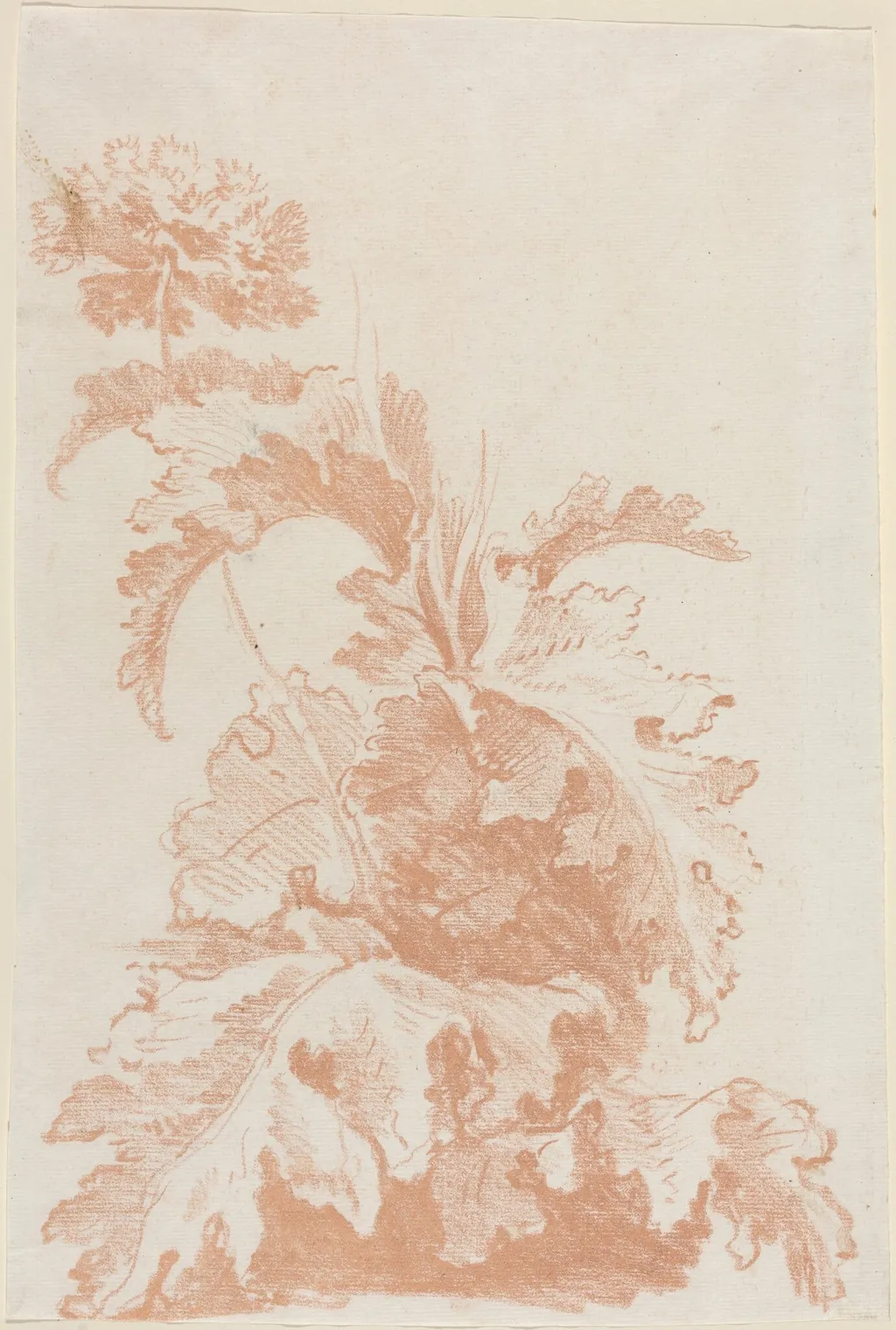
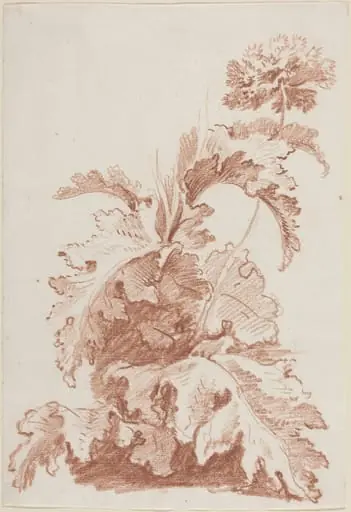
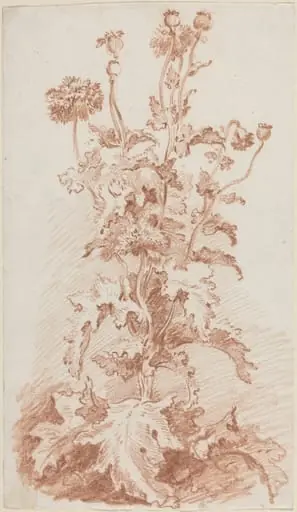
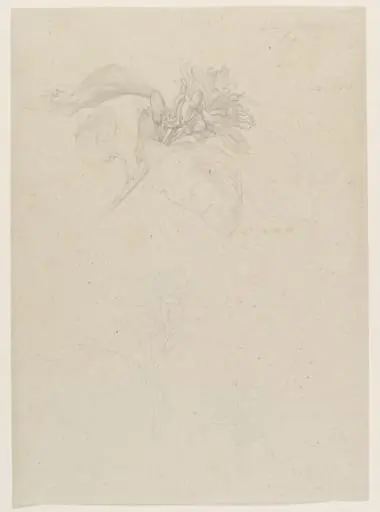
Poppy in Bloom is a chalk drawing by the Romanticist artist Jean-Baptiste Hüet. It dates from 1764 and is held in the collection of the National Gallery of Art.
About this work
Overview
The medium lends a warm, muted tone, emphasizing naturalism over detail, and reflects the artist’s interest in observing botanical forms with quiet precision.
Created around 1764 by Jean-Baptiste Hüet, this drawing captures a single poppy in full bloom using red chalk on laid paper. The image is a counterproof, meaning it was transferred from an original sketch, resulting in a reversed but delicate impression. The medium lends a warm, muted tone, emphasizing naturalism over detail, and reflects the artist’s interest in observing botanical forms with quiet precision.
Subject & Meaning
The subject is a solitary poppy, rendered with attention to its organic structure: curved petals, slender stems, and clustered seed pods. There is no symbolic or narrative context—instead, the focus lies in the plant’s quiet presence. The composition isolates the flower from its environment, inviting contemplation of its form and transience, characteristic of 18th-century naturalist studies.
Technique & Style
Hüet employed red chalk with a light, feathery hand, allowing the pigment to smudge subtly and create soft transitions. The effect mimics sfumato, blurring edges to suggest volume without harsh lines. The paper’s texture interacts with the chalk, enhancing the tactile quality of petals and leaves. This method prioritizes atmosphere over definition, aligning with contemporary drawing practices that valued observation over idealization.
History & Provenance
The work originates from Hüet’s personal sketchbook, likely made during his time studying natural forms in the French countryside. As a counterproof, it was produced by pressing the original chalk drawing against another sheet, a common practice for preserving preliminary studies. Its survival suggests it was retained not as a finished piece but as a record of direct observation.
Context
In mid-18th-century France, botanical drawing gained renewed interest among artists and scientists alike, driven by Enlightenment ideals of empirical study. Hüet, trained in the Royal Academy, participated in this trend, producing detailed studies of flora that balanced artistic sensitivity with scientific curiosity. This drawing reflects that intersection, devoid of ornamentation but rich in attentive detail.
Legacy
Though not widely exhibited, the drawing exemplifies a quiet tradition of French academic drawing that valued direct observation. Its preservation in institutional collections underscores its role as a representative example of preparatory botanical studies from the period, offering insight into how artists engaged with nature before the rise of photography.
Artist & collection