Artwork
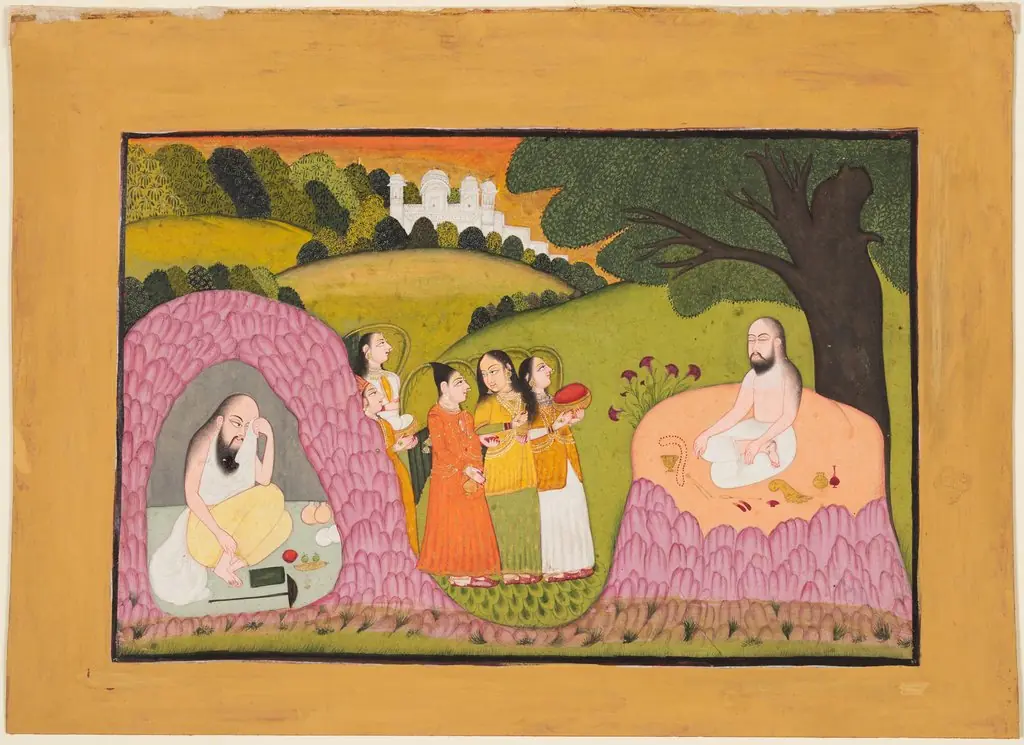
Sultan Ibrahim ibn Adham of Balkh Visited by Angels
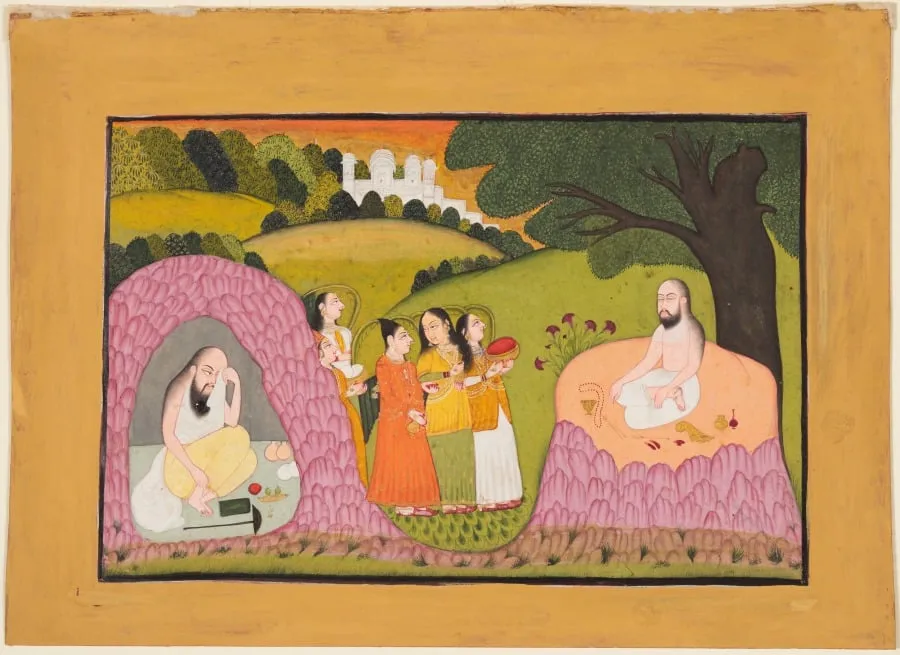
Sultan Ibrahim ibn Adham of Balkh Visited by Angels is an unspecified painting by the Baroque artist Unknown. It dates from 1740 and is held in the collection of the Cleveland Museum of Art.
About this work
Overview
The work depicts the legendary Sufi figure Ibrahim ibn Adham, once ruler of Balkh in present‑day Afghanistan, seated in meditation within a cavernous setting. He is shown beneath a solitary tree, his simple robe emphasizing renunciation, while five luminous angels hover nearby, their presence underscoring the saint’s reputed divine sustenance.
Subject & Meaning
According to hagiographic tradition, Ibrahim abandoned his throne in the eighth century to pursue an ascetic life in Syria, surviving on miraculous aid from angels. The painting visualizes this narrative, using the celestial figures as tangible proof of the saint’s holy withdrawal from worldly power.
Technique & Style
Executed in the regional Rajasthani idiom, the composition employs bright, flat pigments that recall the visual language of early Indian manuscript illustration. Figures are rendered with minimal shading, set against a stark, dark rocky backdrop that heightens the contrast between the earthly hermit and the ethereal angels.
History & Provenance
The piece originates from the artistic workshops of the Bundi kingdom, a Rajput state noted for its narrative wall paintings. Though the exact date is unspecified, its stylistic traits align with the 17th‑century Bundi school, which frequently illustrated stories of saints and former monarchs who embraced spirituality.
Context
In the cultural milieu of Rajasthan, visual storytelling served both devotional and didactic purposes, reinforcing moral exemplars like Ibrahim who renounced authority for faith. The inclusion of angels functions less as ornamental flourish and more as a visual affirmation of the saint’s sanctity within the local religious imagination.
Artist & collection

 Domestic Scene
 Giacomo and Cardinal Marco, investing Andrea, Abbot of San Zeno, with his Benefice
 The Nymph of Fontainebleau
 Portrait of a Woman
 Madonna and Child with Saints in the Enclosed Garden
 Venus and Minerva
 Family Group of Four on Sofa
 Wall painting from Room H of the Villa of P. Fannius Synistor at Boscoreale
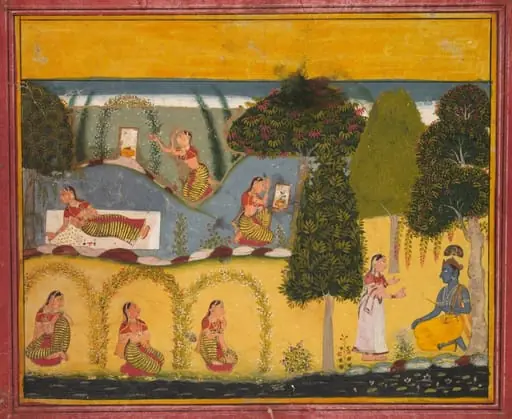 Radha Awaiting Reconciliation with Krishna, from a Gita Govinda of Jayadeva
 Untitled
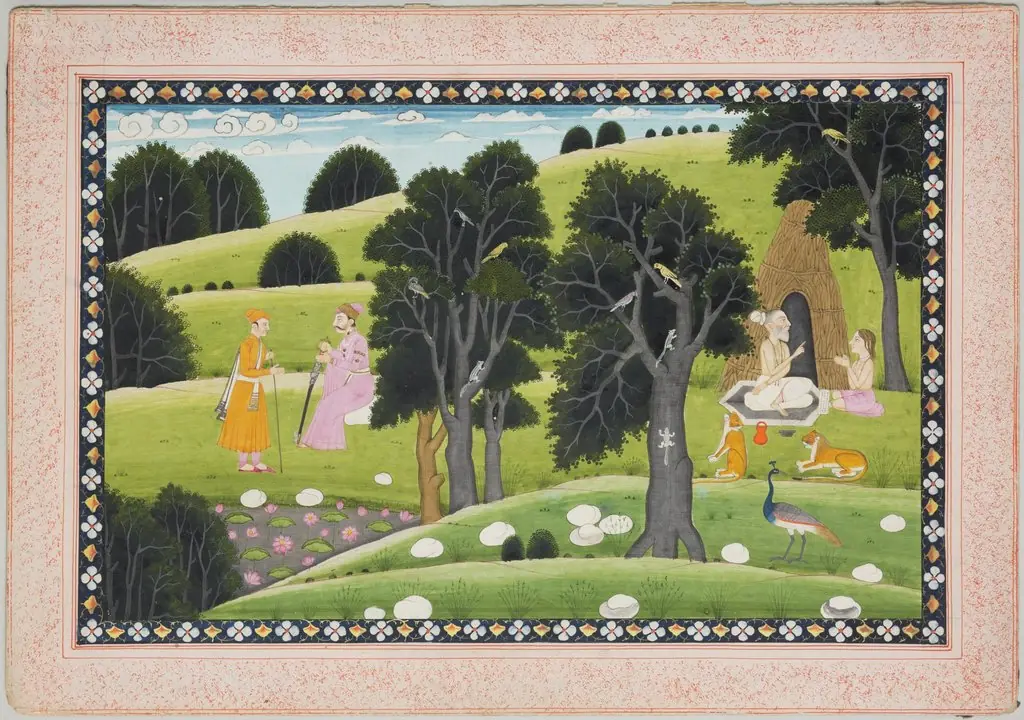 The Guru Discourses While Noblemen Wait
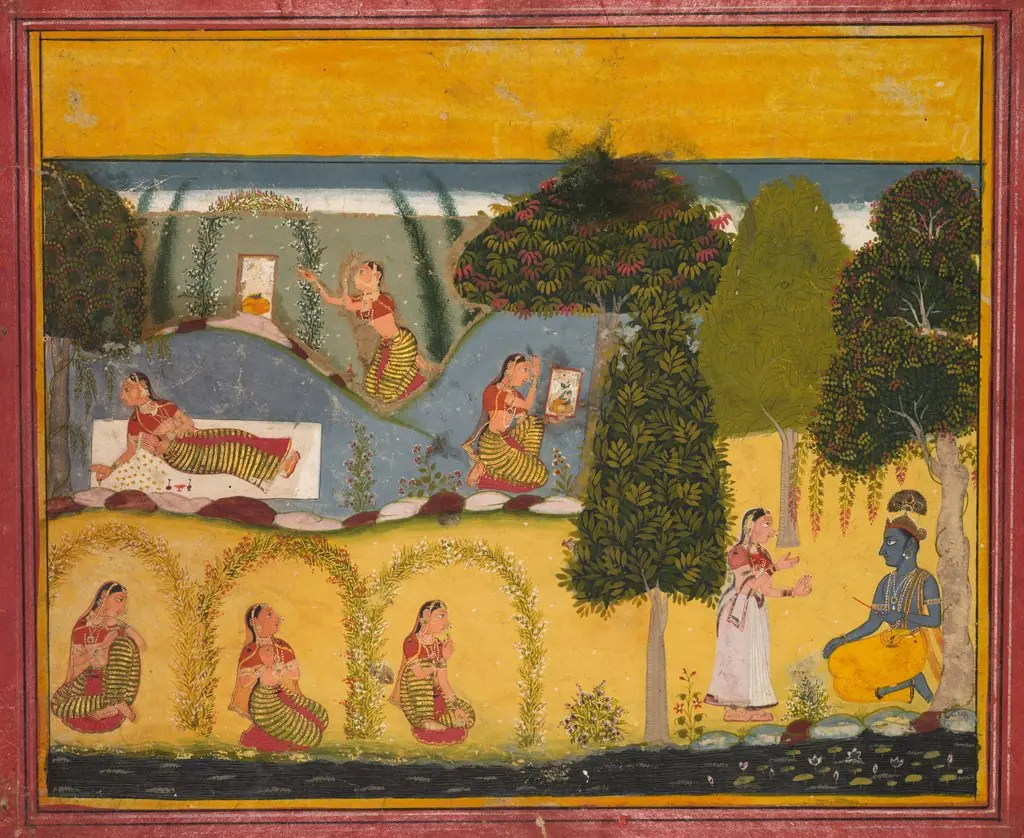 Radha Awaiting Reconciliation with Krishna, from a Gita Govinda of Jayadeva
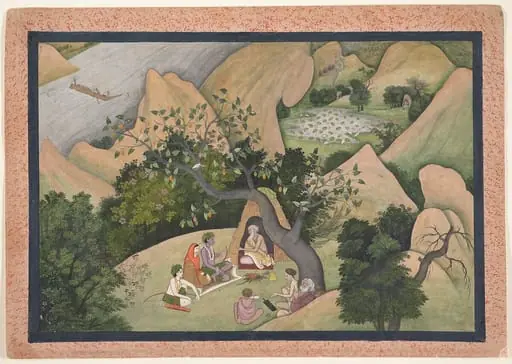 Untitled
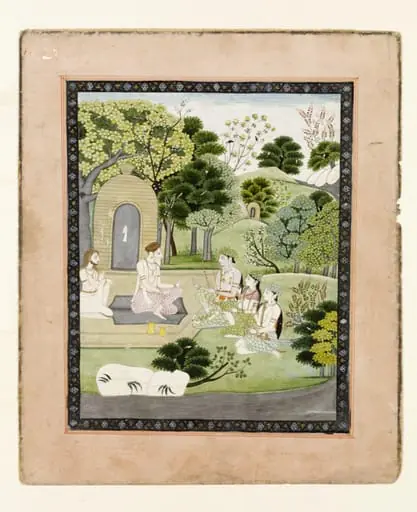 Rama, Sita and Lakhshmana
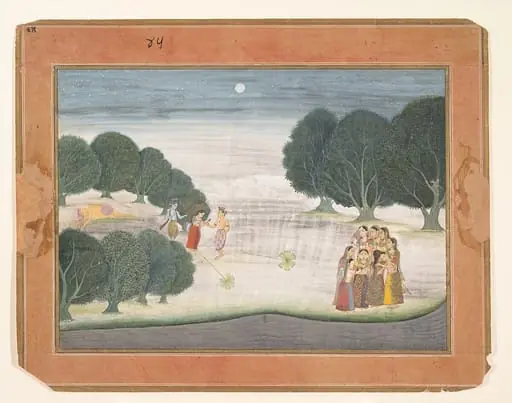 Untitled
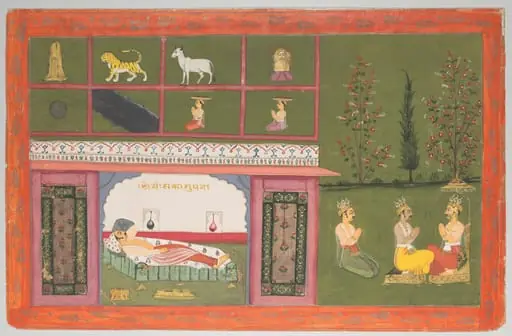 Prince Shreyamsa dreams of the coming of Rishabha, from a Panchakalyanaka (Five Auspicious Events)
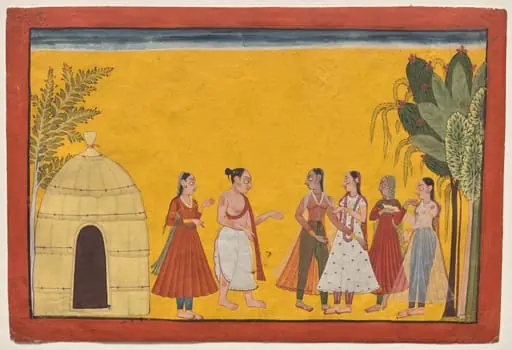 Rishyashringa addresses the courtesans, from the "Shangri" Ramayana
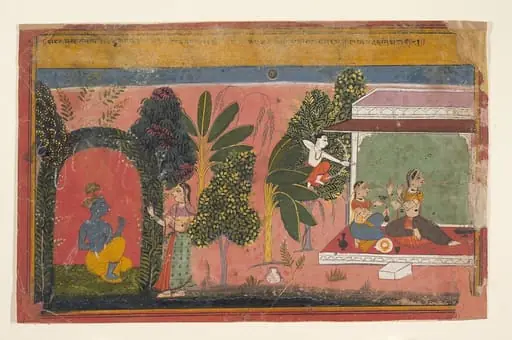 Untitled
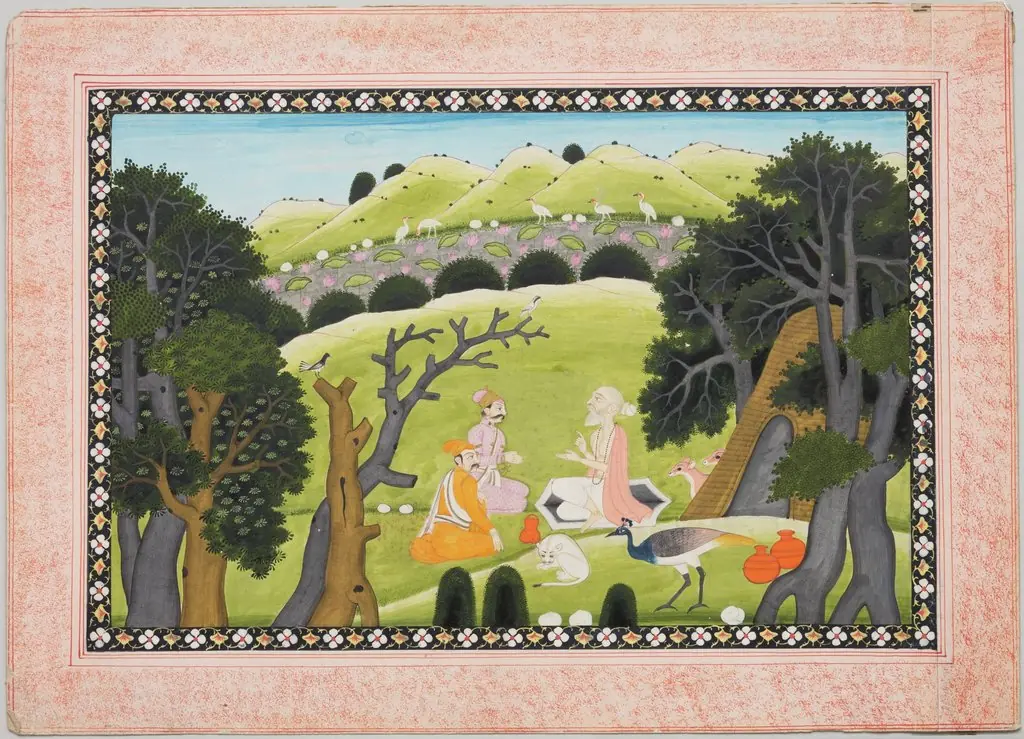 The Guru Giving Advice
 Sultan Ibrahim ibn Adham of Balkh Visited by Angels