Artwork
Radha Awaiting Reconciliation with Krishna, from a Gita Govinda of Jayadeva
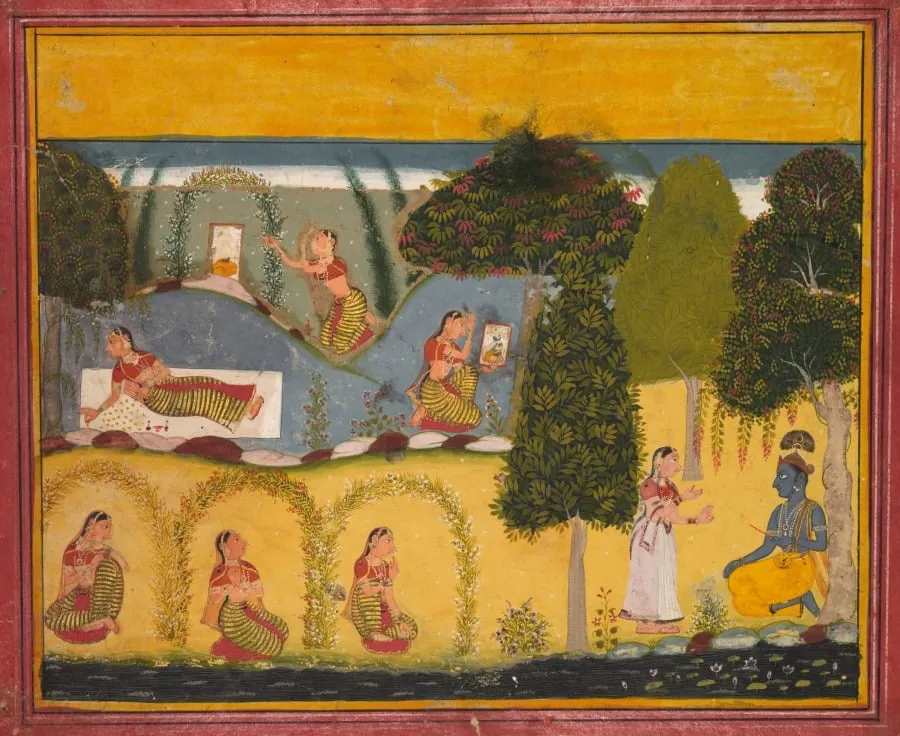
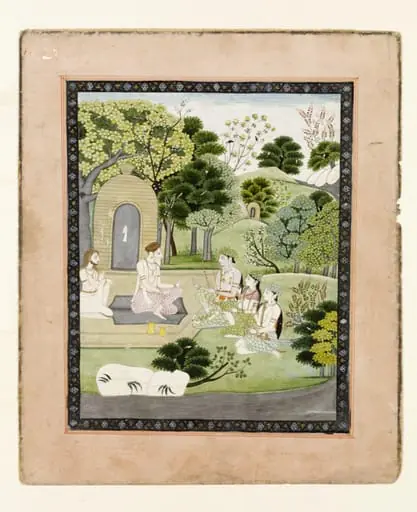
Radha Awaiting Reconciliation with Krishna, from a Gita Govinda of Jayadeva is an unspecified painting by the Baroque artist Unknown. It dates from 1680 and is held in the collection of the Cleveland Museum of Art. The painting portrays Radha, the beloved of Krishna, in a state of anxious anticipation.
About this work
Overview
Across six panels, Radha arranges flowers, offers drinks, and converses with an image of Krishna, while the deity remains seated nearby, seemingly indifferent.
The painting portrays Radha, the beloved of Krishna, in a state of anxious anticipation. Set beneath a tree laden with blossoms, she is shown repeatedly within the same composition, each iteration capturing a different facet of her waiting ritual. Across six panels, Radha arranges flowers, offers drinks, and converses with an image of Krishna, while the deity remains seated nearby, seemingly indifferent.
Subject & Meaning
The work visualises the devotional theme of longing and patience central to the Gita Govinda. Radha’s repeated gestures—preparing a private enclave, laying out offerings, and pleading with a portrait—express her intense yearning for Krishna’s presence. The contrast between her fervent activity and Krishna’s detached posture invites viewers to empathise with the devotee’s resolve to await divine grace, even when the beloved appears aloof.
Technique & Style
Rendered in vivid hues, the artist employs a narrative sequence akin to a storyboard, allowing multiple moments to coexist within a single frame. Delicate floral motifs and the bright red garment of Radra create visual focus, while the surrounding figures and foliage frame the scene without overwhelming it. The composition balances detailed interior spaces with a broader landscape, emphasizing both intimacy and the expansive emotional terrain.
Context
The subject derives from the Rajput court of Mewar, where such devotional episodes from Jayadeva’s Gita Govinda were popular motifs in courtly painting. The depiction reflects the period’s interest in illustrating mythic love stories as moral exemplars, encouraging patrons to emulate Radha’s steadfast devotion. The work thus functions both as a visual retelling of a sacred narrative and as a didactic illustration of idealized piety.
Artist & collection

 Domestic Scene
 Giacomo and Cardinal Marco, investing Andrea, Abbot of San Zeno, with his Benefice
 The Nymph of Fontainebleau
 Portrait of a Woman
 Madonna and Child with Saints in the Enclosed Garden
 Venus and Minerva
 Family Group of Four on Sofa
 Wall painting from Room H of the Villa of P. Fannius Synistor at Boscoreale
 Krishna and Radha
 Untitled
 Untitled
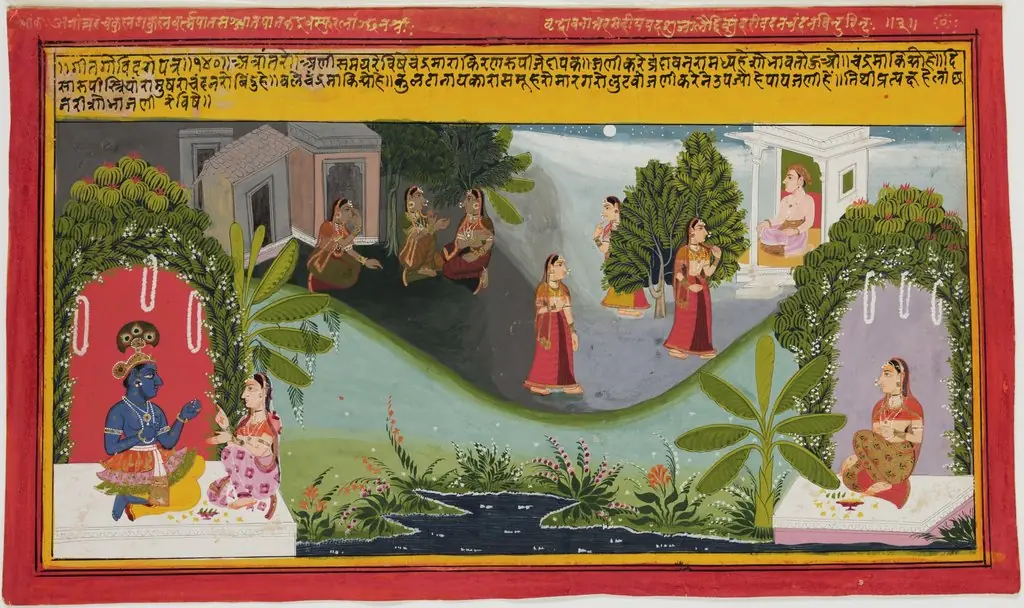 Radha's Attendant Converses with Krishna and Woman Travels By Moonlight to Meet her Lover (page from the Gita Govinda)
 Rati, the Goddess of Erotic Love, Takes Aim at Krishna, from a Rasikapriya
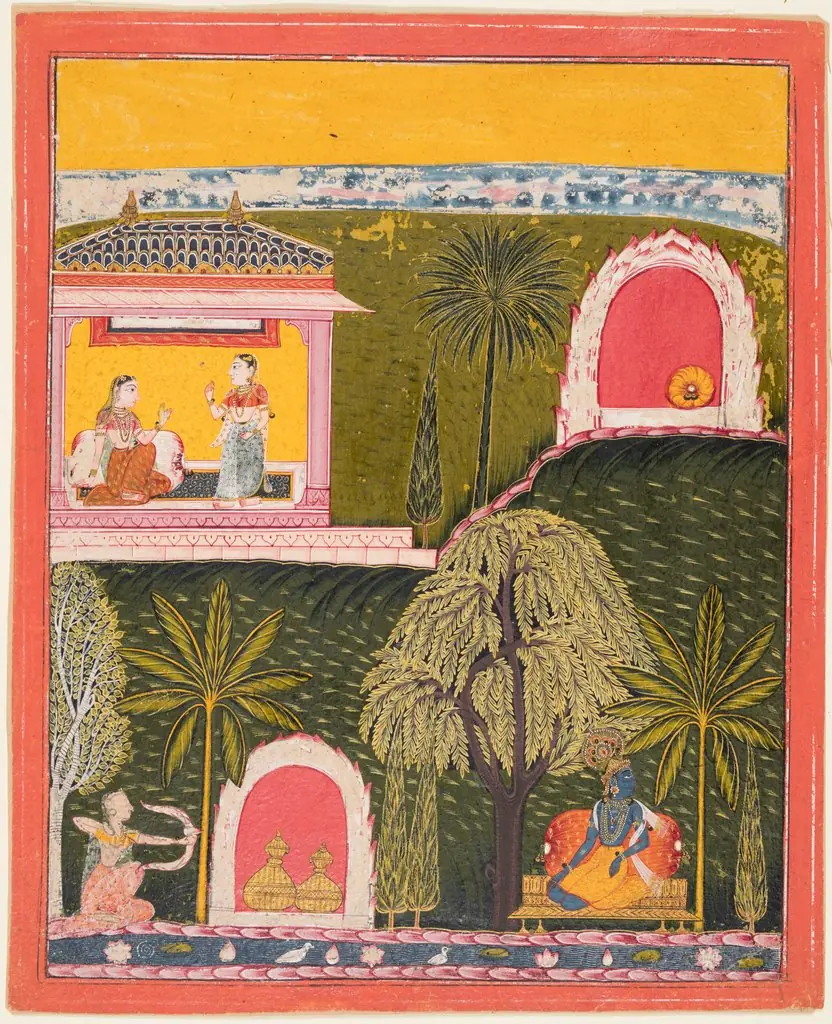 Rati, the Goddess of Erotic Love, Takes Aim at Krishna, from a Rasikapriya
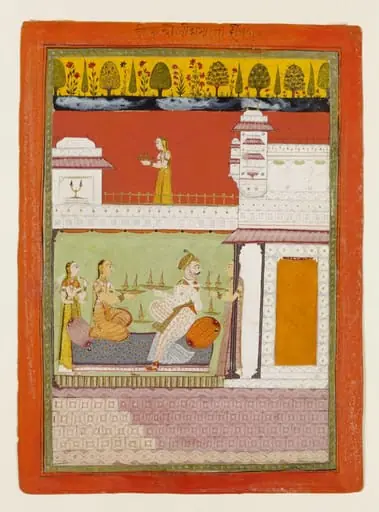 Dipak ragini
 Rama, Sita and Lakhshmana