Artwork
Sumerian limestone statue of Kurlil, ca. 2500 B.C., British Museum
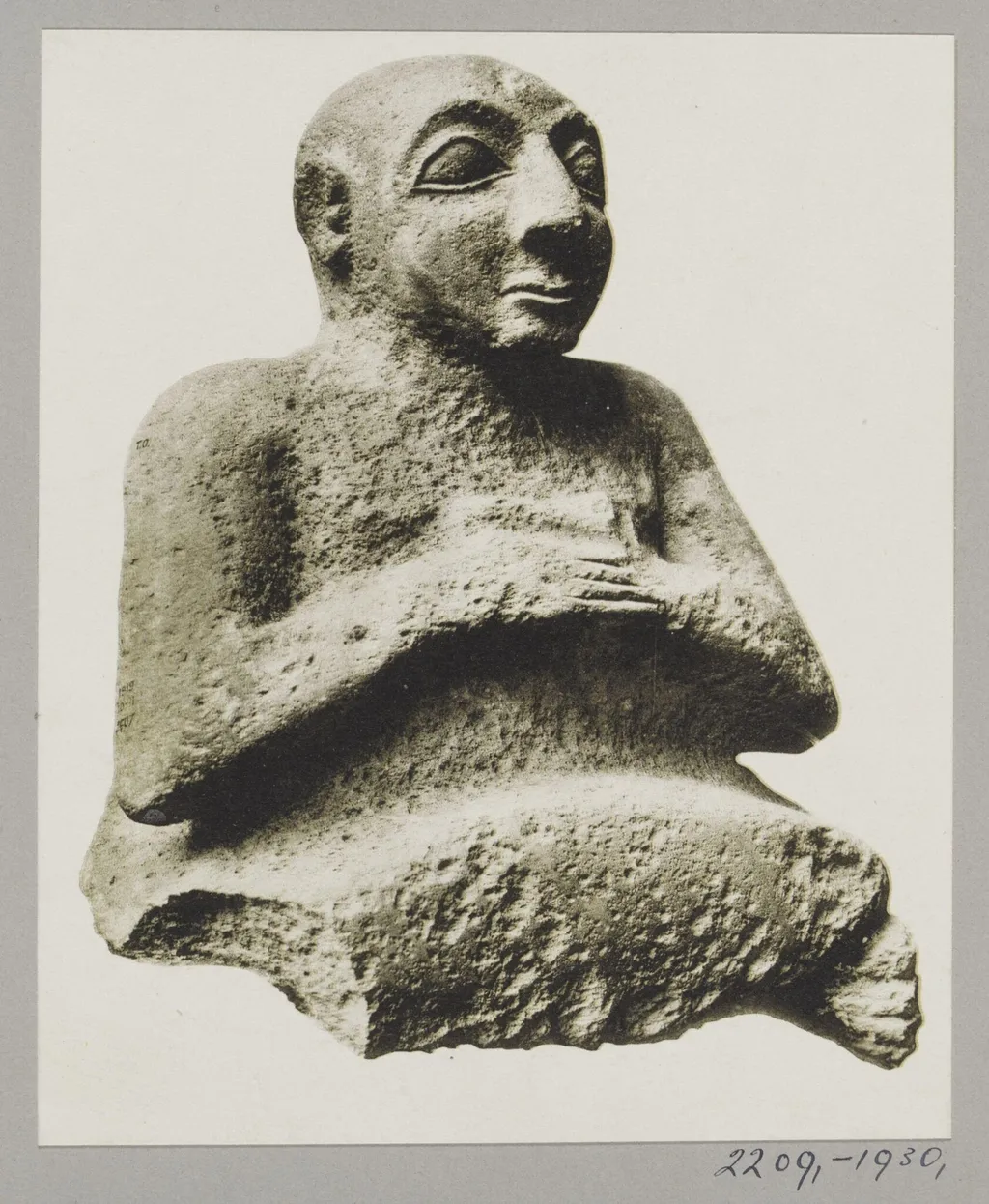
Sumerian limestone statue of Kurlil, ca. 2500 B.C., British Museum is a photographic photography by Unknown. It dates from 1924 and is held in the collection of the Victoria and Albert Museum. This limestone figure dates to roughly 2500 B.
About this work
Overview
This limestone figure dates to roughly 2500 B.C. and originates from the Sumerian civilization. Carved in a seated pose, the bald male is shown from the waist upward, his head turned to the right and his arms crossed over his chest. The image presented is a black‑and‑white photograph that isolates the statue against a neutral backdrop, allowing its carved details to be clearly observed.
Subject & Meaning
The statue is identified as Kurlil, a name associated with early Sumerian religious or administrative figures. The crossed‑arms posture and seated position suggest a formal, possibly ritualistic stance, while the bald head and stylized facial features reflect conventional Sumerian conventions for representing authority or divinity.
Technique & Style
Carved from fine limestone, the work displays careful incising of clothing folds and ornamental elements such as jewelry. The surface retains a smooth finish, yet the detailing of the garment’s pattern and the precise rendering of facial attributes reveal a high level of craftsmanship characteristic of early Mesopotamian stone sculpture.
History & Provenance
The piece is attributed to an anonymous Sumerian artist and entered the British Museum’s collection in the early twentieth century. Its provenance prior to acquisition is not fully documented, but the statue reflects the material culture of southern Mesopotamia during the Early Dynastic period.
Context
In the broader framework of Sumerian art, limestone statues served both cultic and commemorative functions, often placed in temples or tombs. The formal pose and stylized attire align with contemporaneous representations of officials or deities, underscoring the societal emphasis on order and hierarchy.
Artist & collection

 Domestic Scene
 Giacomo and Cardinal Marco, investing Andrea, Abbot of San Zeno, with his Benefice
 The Nymph of Fontainebleau
 Portrait of a Woman
 Madonna and Child with Saints in the Enclosed Garden
 Venus and Minerva
 Family Group of Four on Sofa
 Wall painting from Room H of the Villa of P. Fannius Synistor at Boscoreale