Artwork
Plaster Cast of Terra Cotta Sculpture. Yoruba.
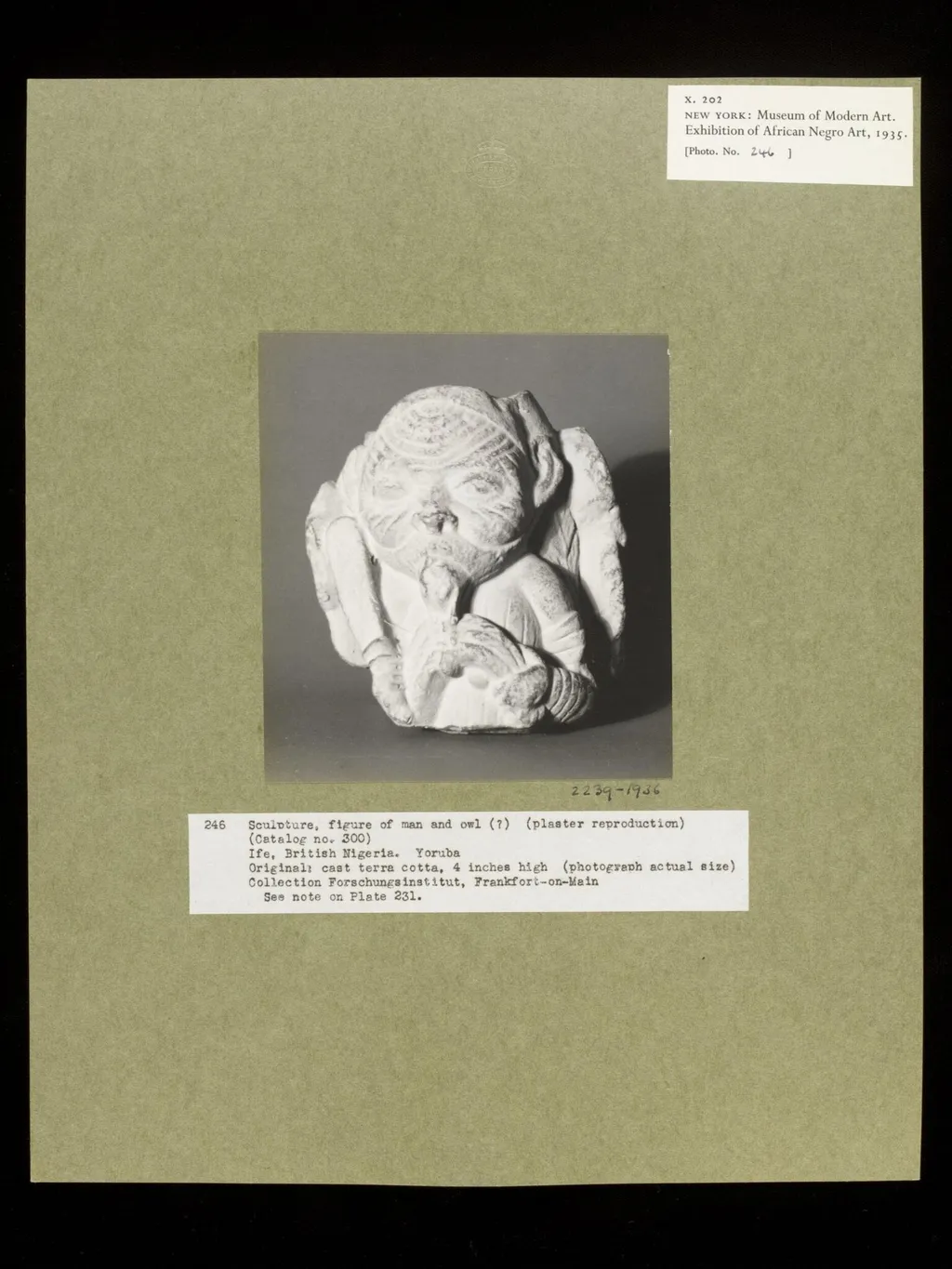
Plaster Cast of Terra Cotta Sculpture. Yoruba. is a photographic photography by Walker Evans. It dates from 1935 and is held in the collection of the Victoria and Albert Museum.
About this work
This particular piece is a copy of an older clay sculpture from the Yoruba people, but the photo itself was made by Walker Evans.
This is a small, crumpled plaster figure of a person holding what looks like a bird. The sculpture is rough and simple, with smooth curves in the body but sharp, almost broken edges where the arms and legs fold. The surface is plain, with no paint or extra details—just the shape itself.
The photo was taken in 1935 as part of an art show in New York. This particular piece is a copy of an older clay sculpture from the Yoruba people, but the photo itself was made by Walker Evans.
Next, look up Walker Evans to see more of his work.
Overview
The image is a 1935 black‑and‑white photograph taken by Walker Evans, showing a modest plaster cast of a Yoruba terra‑cotta figure. The cast reproduces a small, roughly modeled human form holding an object resembling a bird, its body marked by smooth curves and sharply folded limbs. The photograph was produced for a New York exhibition of African art.
Subject & Meaning
The original sculpture, crafted by Yoruba artisans, depicts a standing figure clutching a bird, a motif that may relate to ritual or mythic narratives within Yoruba culture. Its simplified, unpainted surface emphasizes form over ornament, suggesting a focus on the figure’s symbolic posture rather than decorative detail.
Technique & Style
The plaster replica captures the tactile qualities of the clay prototype: a plain, unadorned surface, rounded torso, and angular, almost broken edges at the joints. The casting process preserves the original’s crude modeling, allowing the viewer to discern the sculptor’s emphasis on silhouette and gesture.
History & Provenance
The terra‑cotta original was uncovered by German ethnographer Leo Frobenius during his 1910 expedition to Ifa, a town in present‑day Nigeria. After its discovery, the piece entered the collection of the Forschungsinstitut in Frankfurt‑am‑Main, where a plaster cast was made for exhibition purposes.
Context
Evans’s photograph was taken as part of a 1935 African art show in New York, a period when Western institutions were increasingly presenting African objects as fine art. The image documents the cast’s display, reflecting contemporary curatorial practices that often favored reproductions over original artifacts.
Legacy
The photograph stands as a visual record of early twentieth‑century approaches to African art collection and exhibition, illustrating both the scholarly interest sparked by Frobenius’s fieldwork and Evans’s role in documenting cultural artifacts within museum contexts.
Artist & collection
Artist
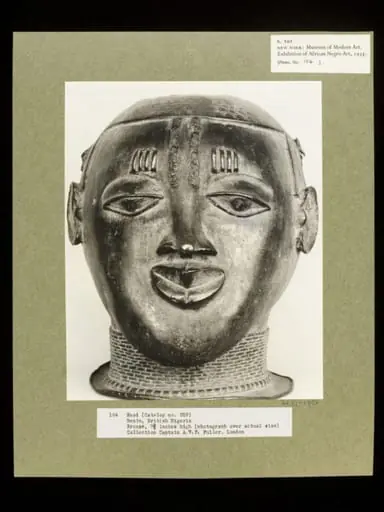
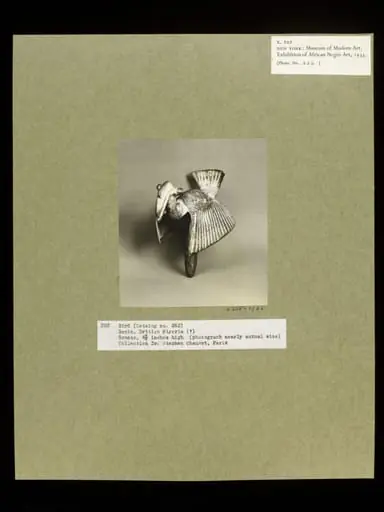
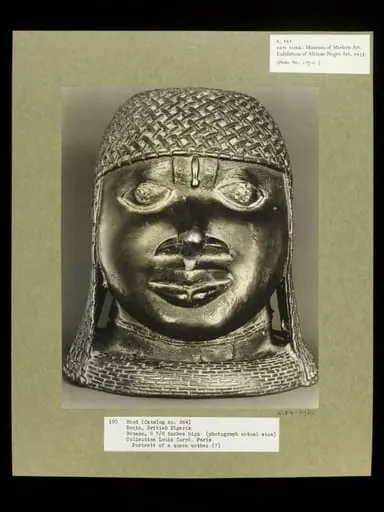
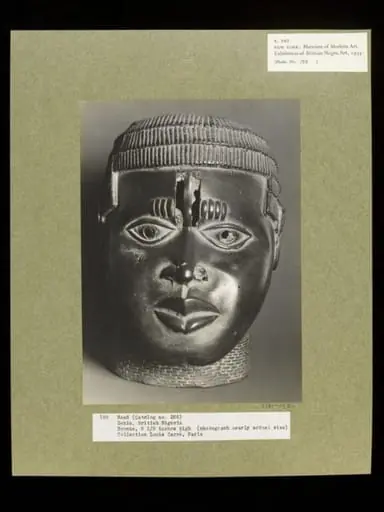
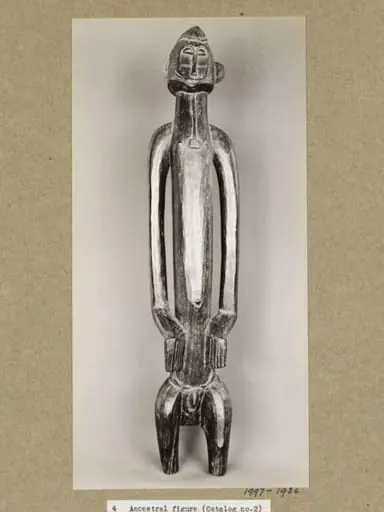
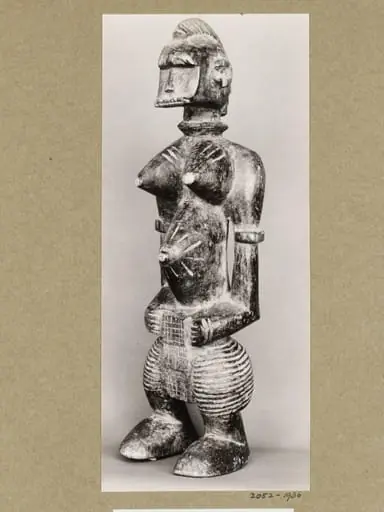
Walker Evans made stark black-and-white photos of carved wooden heads from Benin in 1935.

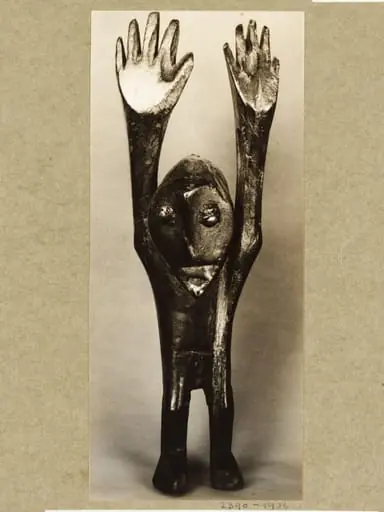
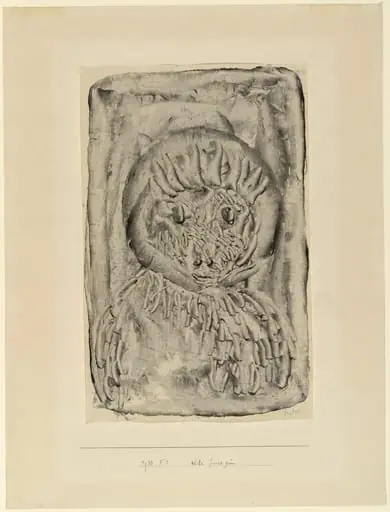 Untitled
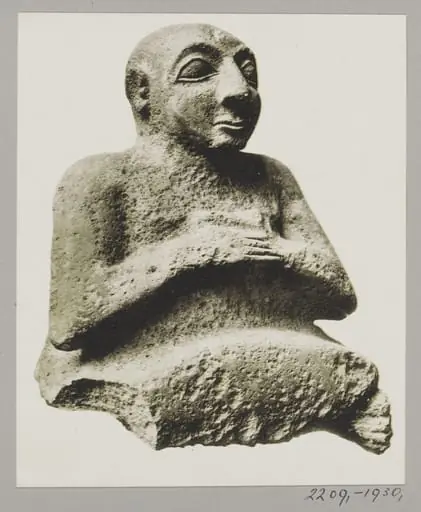 Sumerian limestone statue of Kurlil, ca. 2500 B.C., British Museum
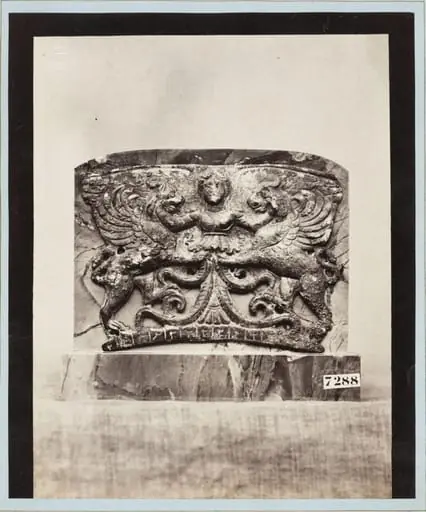 Antique bronze appliqué
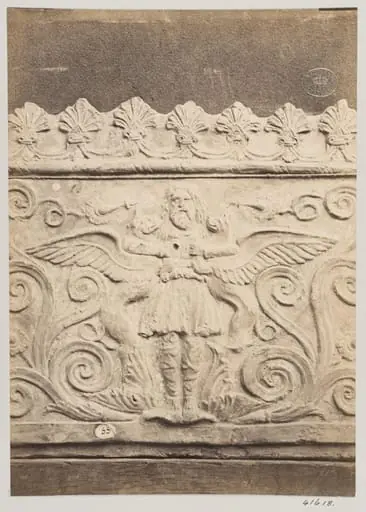 Bas-relief portion of a frieze of a flying genie in terra cotta
 Untitled
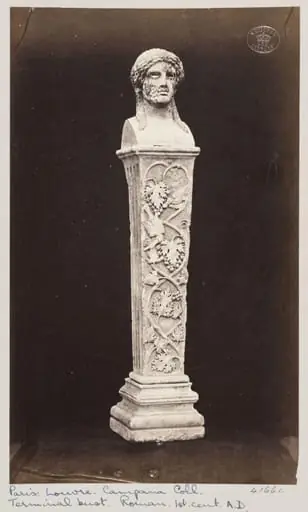 Marble herma with the head of Baccus ornamented with vine leaves and fruit
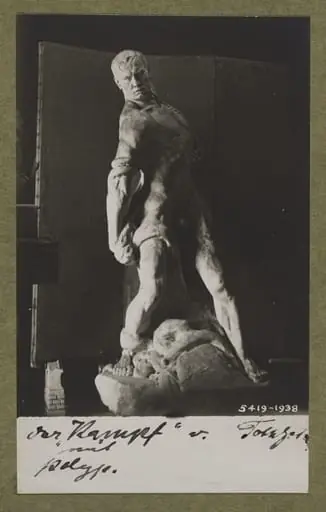 Untitled
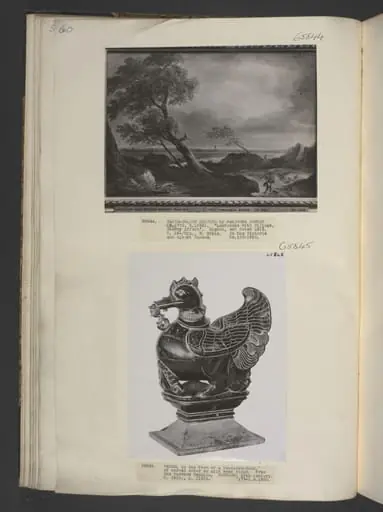 Landscape with village : stormy effect
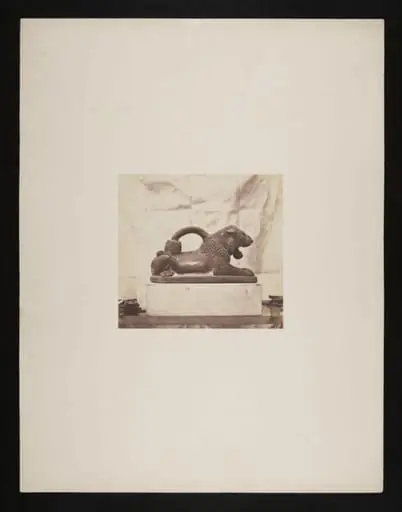 Lion Ornament
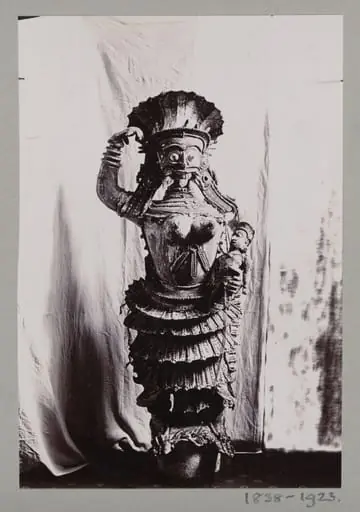 Carved wood sculpture, Goddess, Javanese (?)
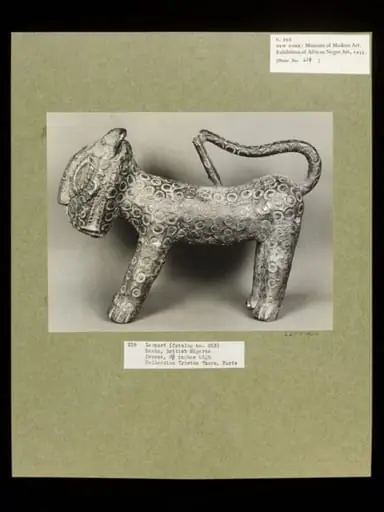 Leopard. Benin.