Artwork
Bronze Cambodian sculpture of Buddha, ca. 13th century, V&A Museum, London
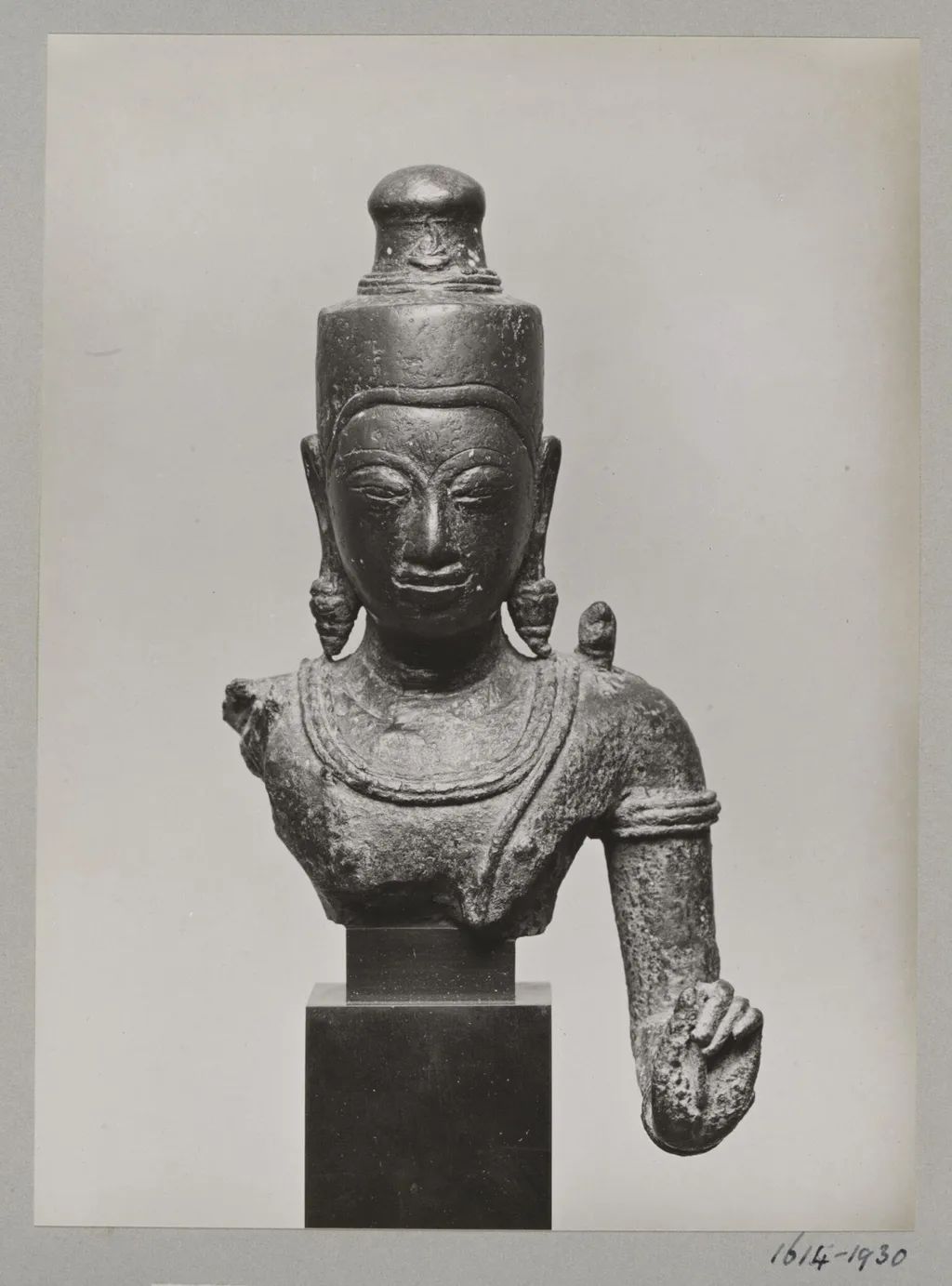
Bronze Cambodian sculpture of Buddha, ca. 13th century, V&A Museum, London is a photographic photography by Unknown. It dates from 1924 and is held in the collection of the Victoria and Albert Museum.
About this work
Overview
A 1924 black-and-white photograph in the Victoria and Albert Museum’s collection captures a 13th-century Cambodian bronze Buddha head, now missing its left arm.
A 1924 black-and-white photograph in the Victoria and Albert Museum’s collection captures a 13th-century Cambodian bronze Buddha head, now missing its left arm. The image records the sculpture as it appeared on display, mounted on a simple stone pedestal. The photograph preserves the object’s condition at the time, including surface wear and the absence of one limb, offering a historical record of its physical state in the early 20th century.
Subject & Meaning
The sculpture depicts the Buddha in a serene, meditative pose, with closed eyes and a tranquil expression characteristic of Khmer Buddhist iconography. The smooth, rounded facial features and restrained ornamentation reflect ideals of inner stillness and detachment. The draped shoulder cloth and simple necklace suggest monastic simplicity, while the open hand resting on the base may imply the gesture of reassurance or giving, common in Southeast Asian Buddhist art.
Technique & Style
Cast in bronze using the lost-wax method, the sculpture exhibits refined casting with subtle modeling of the face and hair. The hair is arranged in two tight buns, a stylistic trait seen in Angkor-period works. Surface wear, particularly on the missing arm and base, indicates centuries of handling or ritual use. The photograph reveals the metal’s patina and minor surface irregularities, consistent with long-term exposure and environmental aging.
History & Provenance
The bronze head likely originated in the Khmer Empire, possibly from a temple complex in present-day Cambodia. It entered the V&A’s collection in the early 20th century, though its exact path from Southeast Asia to London remains undocumented. The 1924 photograph was taken shortly after its acquisition, serving as an early archival record of its condition before modern conservation practices became standard.
Context
Created during the late Angkor period, this Buddha head reflects the fusion of Indian Buddhist traditions with indigenous Khmer aesthetics. Similar sculptures were once part of temple ensembles, venerated in religious rituals. The absence of the full body suggests the piece may have been separated from its original context, possibly due to looting, decay, or colonial-era removals during the French protectorate era.
Legacy
The photograph preserves a fragment of a once-complete devotional object, highlighting how colonial-era collections documented and dispersed Southeast Asian heritage. It remains a key visual reference for scholars studying the material culture of Khmer Buddhism and the early history of museum acquisition practices in Britain. The image underscores the fragility of cultural artifacts and the importance of archival records in reconstructing lost contexts.
Artist & collection

 Domestic Scene
 Giacomo and Cardinal Marco, investing Andrea, Abbot of San Zeno, with his Benefice
 The Nymph of Fontainebleau
 Portrait of a Woman
 Madonna and Child with Saints in the Enclosed Garden
 Venus and Minerva
 Family Group of Four on Sofa
 Wall painting from Room H of the Villa of P. Fannius Synistor at Boscoreale
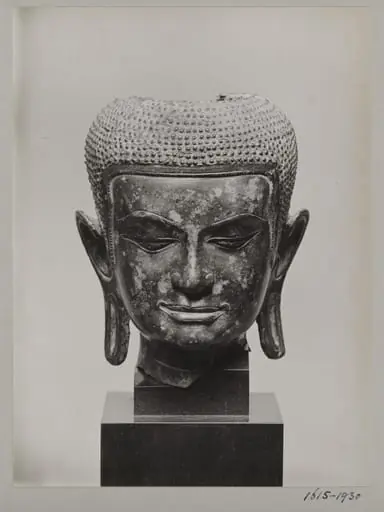 Cambodian bronze sculpture of Buddha head, ca. 13th century A.D., V&A Museum
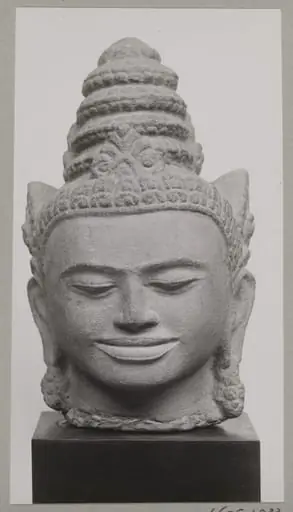 East Siam sculpture of head of Bodhisattva, ca. 12th century, H.G. Quaritch Wales Collection
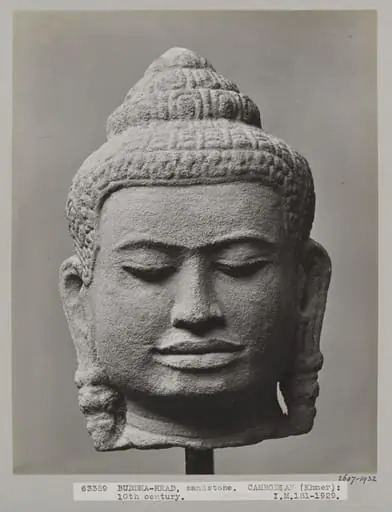 Cambodian Bayon style sandstone sculpture of head of Buddha, 10th century A.D., V&A Museum, London
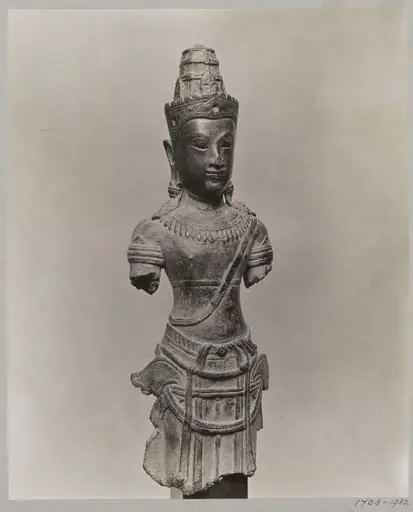 Bronze Cambodian sculpture of Bodhisattva, ca. 13th century, A.D., V&A Museum, London
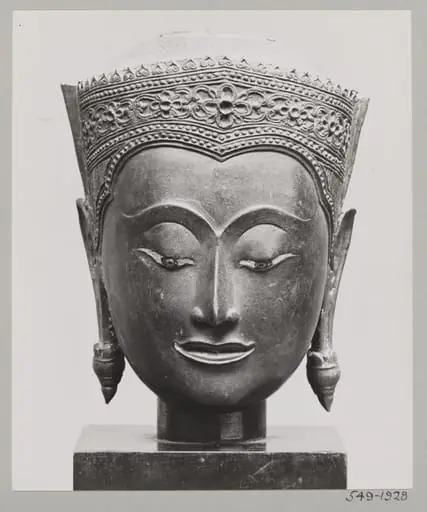 Siamese bronze sculpture of Buddha, 14th or 15th century, V&A Museum
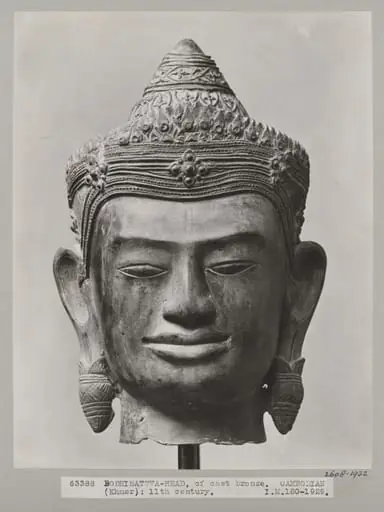 Cambodian bronze sculpture of head of Bodhisattva, 11th century A.D., V&A Museum, London
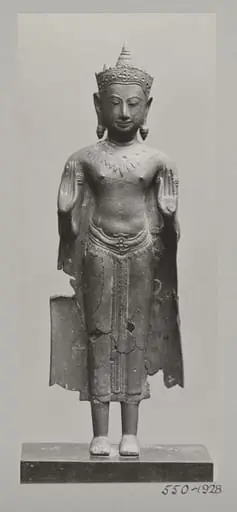 Bronze sculpture of standing figure of the Dipankara Buddha, V&A Museum
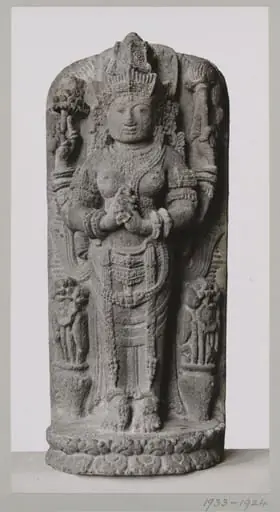 East Javanese volcanic rock sculpture, relief figure of Umā, early 15th century, V&A Museum, London
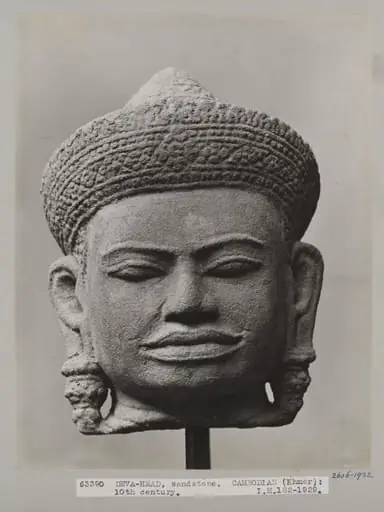 Cambodian sandstone sculpture of head of Deva, 10th century, V&A Museum, London
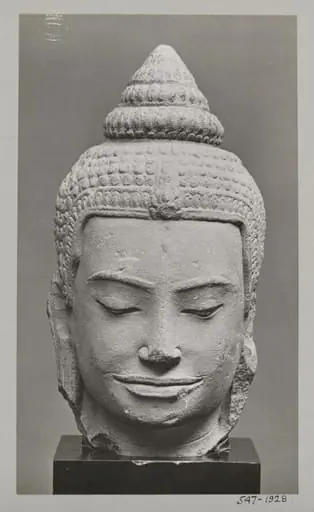 Sandstone sculpture of head of Buddha, Siam, 9th century A.D., V&A Museum, London
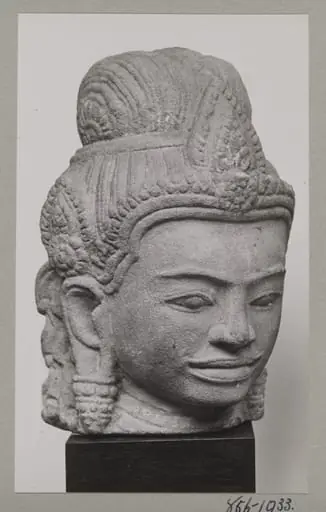 Sculpture, head of Asura, Ankor region, 12th - 13th century, H.G. Quaritch Wales collection
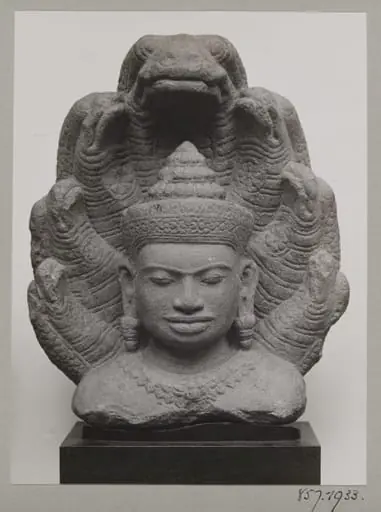 Sculpture, carved stone, Buddha with naga hood, Eastern Siam, 12th-13th century, H. G. Quaritch Wales Collection