Artwork
Tatăl marelui vornic Constantin (Câță) Niculescu
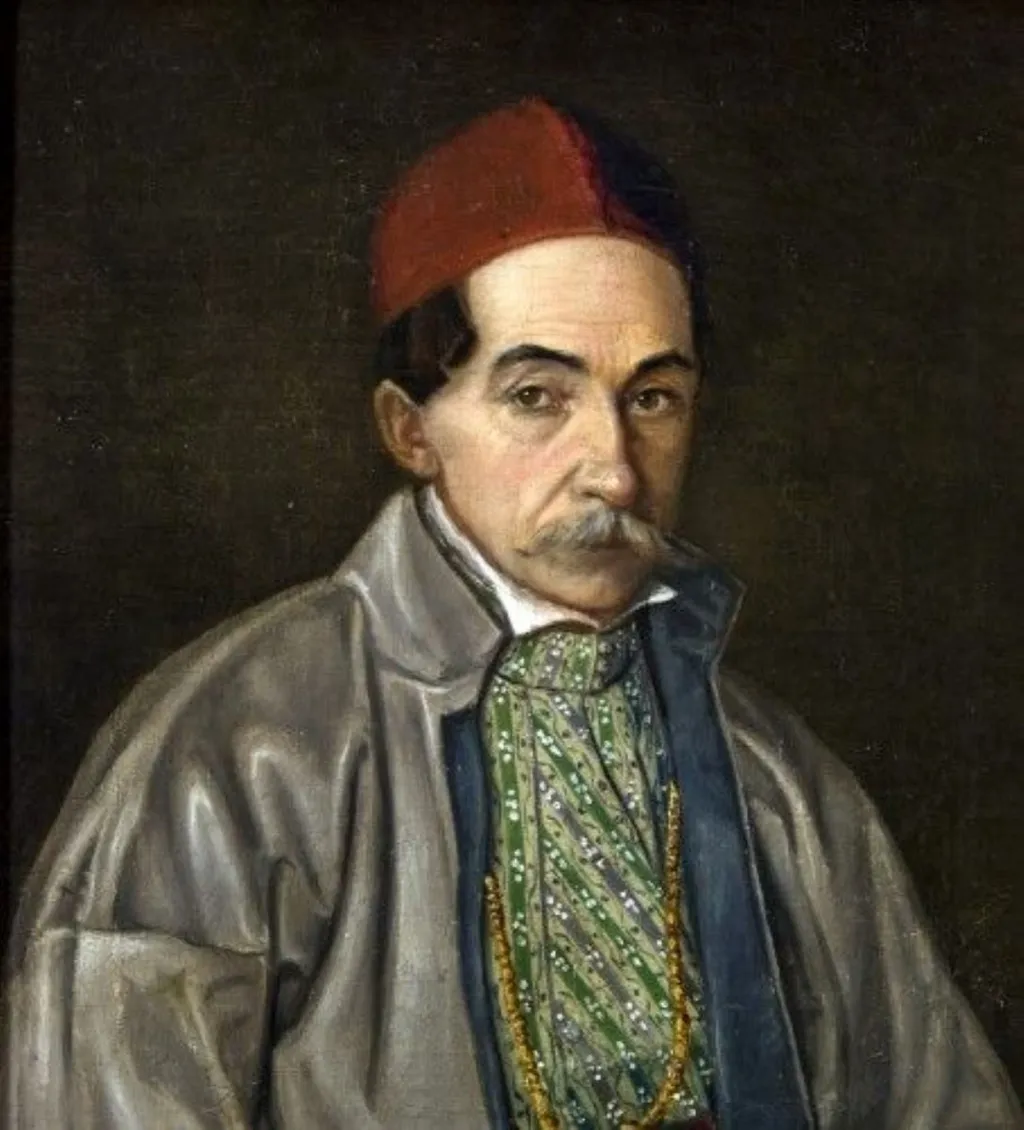
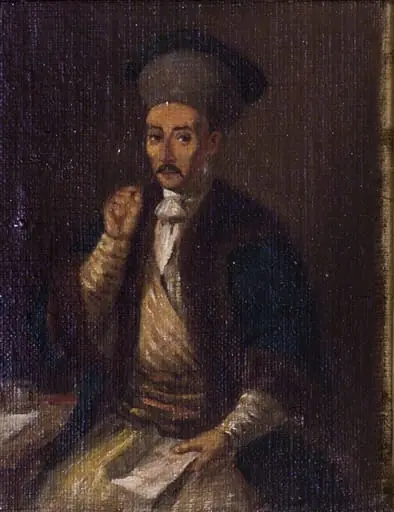
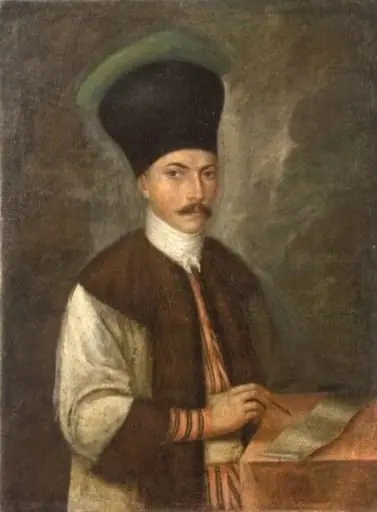
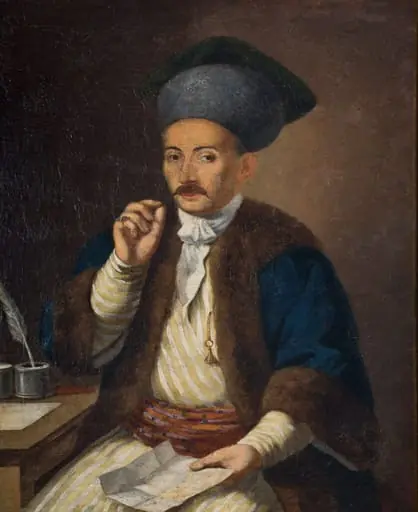
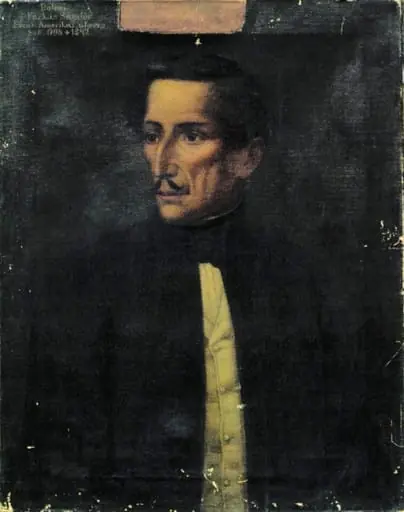
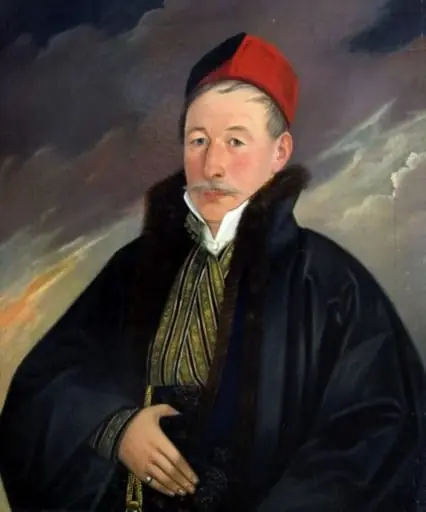
Tatăl marelui vornic Constantin (Câță) Niculescu is an unspecified painting by the Biedermeier artist Unknown. It dates from 1844 and is held in the collection of the National Museum of Art of Romania. This portrait depicts a man identified as Constantin Niculescu, a high-ranking official known as a vornic.
About this work
Overview
The composition reflects 19th-century Romanian portraiture, prioritizing dignity and individual presence over decorative flourish.
This portrait depicts a man identified as Constantin Niculescu, a high-ranking official known as a vornic. Rendered in oil on canvas, the work emphasizes realism through precise rendering of texture and form. The subject is framed against a dark, unobtrusive background, drawing focus to his attire and expression. The composition reflects 19th-century Romanian portraiture, prioritizing dignity and individual presence over decorative flourish.
Subject & Meaning
The sitter, Constantin Niculescu, held a position of administrative authority in Wallachia. His solemn expression and formal dress convey status and gravitas. The pointed red hat and patterned green shirt are elements of regional elite attire, signaling both social rank and cultural identity. The painting functions less as a personal likeness and more as a visual assertion of civic role and inherited authority.
Technique & Style
The artist employs fine brushwork to capture the weave of fabric, the sheen of leather, and the texture of facial hair. Light falls subtly across the face and upper torso, enhancing three-dimensionality without theatrical contrast. The dark background isolates the figure, a technique common in academic portraiture of the period. Attention to detail suggests a commitment to truthful representation over idealization.
History & Provenance
The painting originates from mid-19th century Wallachia, likely commissioned by the subject’s family or institution. It remained within Romanian private collections until entering public ownership. Documentation is limited, but its stylistic consistency with other portraits of Romanian boyars places it within a localized tradition of elite representation during the early stages of national cultural consolidation.
Context
Created during a period of political transition in the Danubian Principalities, the portrait reflects the persistence of traditional aristocratic dress even as modernizing reforms gained momentum. Similar works by Romanian artists of the era sought to document the appearance and demeanor of the ruling class, preserving visual records amid shifting social hierarchies and emerging national identity.
Legacy
The painting contributes to a small but significant corpus of Romanian portraiture from the early Romantic period. It offers insight into the visual language of local elites before full Western European stylistic assimilation. While not widely exhibited internationally, it remains a reference point in studies of 19th-century Romanian material culture and social representation.
Artist & collection

 Domestic Scene
 Giacomo and Cardinal Marco, investing Andrea, Abbot of San Zeno, with his Benefice
 The Nymph of Fontainebleau
 Portrait of a Woman
 Madonna and Child with Saints in the Enclosed Garden
 Venus and Minerva
 Family Group of Four on Sofa
 Wall painting from Room H of the Villa of P. Fannius Synistor at Boscoreale