Artwork
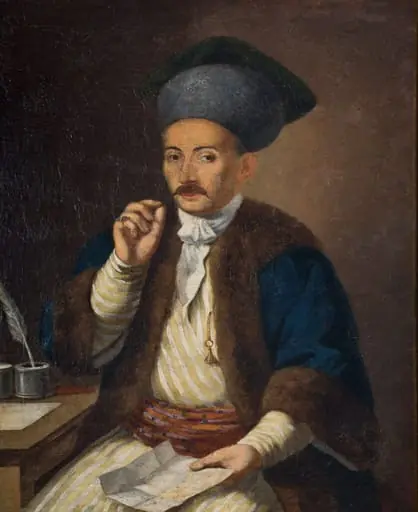
Serdarul Dumitru Aman. Replică după un portret de Carol Wallenstein
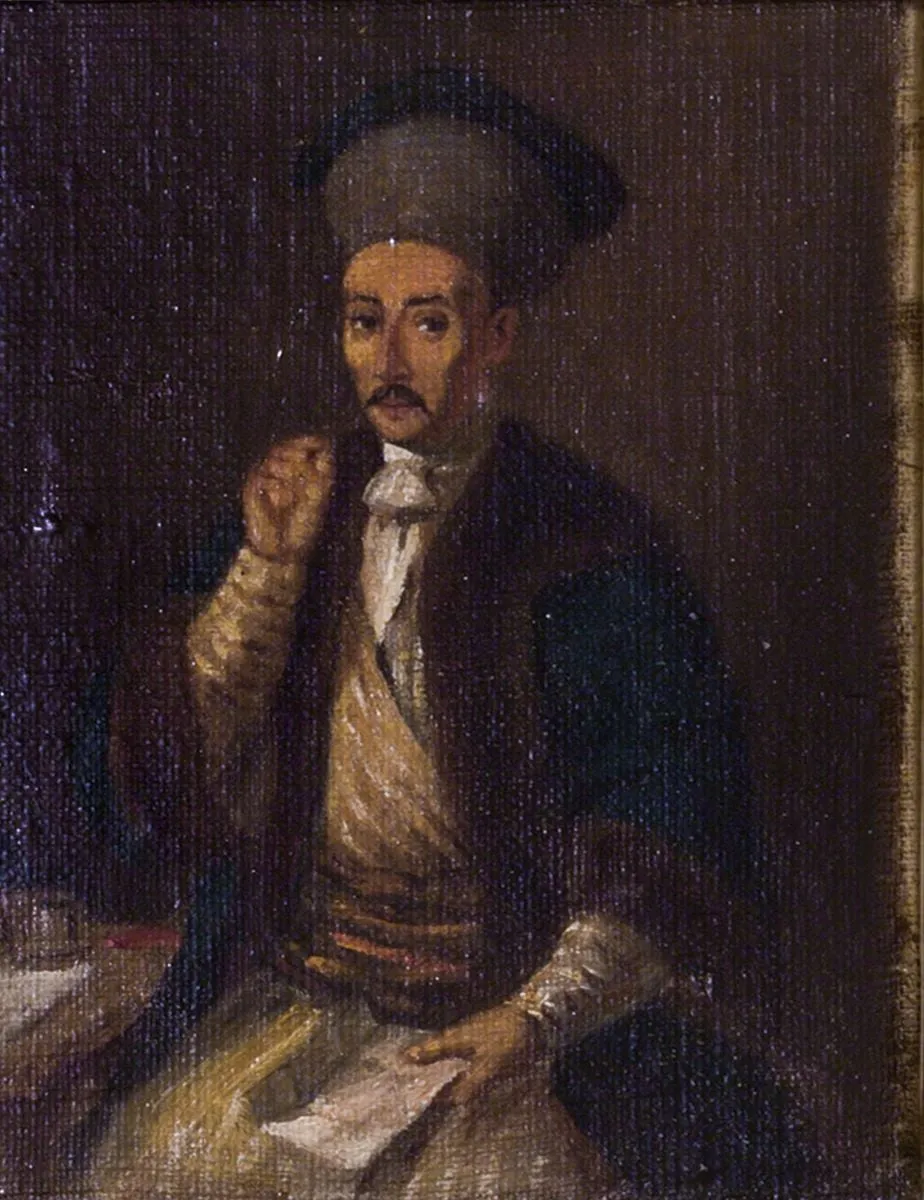
Serdarul Dumitru Aman. Replică după un portret de Carol Wallenstein is an unspecified painting by Theodor Aman. It dates from 1860 and is held in the collection of the Bucharest Municipality Museum.
About this work
Overview
Painted in 1860 by Theodor Aman, this work is a replica of a portrait originally by Carol Wallenstein. It depicts a male figure in formal attire against a deep, shadowed background. The painting resides in the Museum of Ethnography and reflects Aman’s engagement with portraiture during a period when Romanian artists were refining their technical and stylistic approaches to representation.
Subject & Meaning
The subject is a man of apparent authority, dressed in a high-collared coat, striped vest, and white cravat. His grip on a curved staff and small object suggests ceremonial or official status, possibly military or civic. The absence of contextual details focuses attention on his presence, emphasizing dignity and composure rather than narrative or identity.
Technique & Style
Aman employs loose, visible brushwork to create a textured surface, avoiding smooth academic finish. Strong chiaroscuro isolates the figure’s face and hands in light, contrasting with the near-black background. This dramatic lighting enhances volume and psychological depth, aligning the work with 19th-century European portraiture traditions while retaining a tactile, almost sketch-like quality.
History & Provenance
The painting is a replica of an earlier portrait by Carol Wallenstein, indicating Aman’s practice of reinterpreting existing works. It entered the collection of the Museum of Ethnography in the late 19th or early 20th century, likely as part of broader efforts to document Romanian cultural and artistic heritage during nation-building.
Context
In the 1860s, Romanian artists like Aman were navigating European artistic norms while asserting local identity. Replicating portraits of notable figures served both pedagogical and cultural purposes, allowing artists to study technique while honoring regional leadership. This work reflects that dual impulse—technical training intertwined with national self-definition.
Legacy
Though not widely exhibited, the painting contributes to understanding Aman’s development as a portraitist and his role in shaping Romanian visual culture. Its preservation in an ethnographic museum underscores its value as a document of social form and artistic practice, rather than as a singular artistic achievement.
Artist & collection
Artist
 Tatăl marelui vornic Constantin (Câță) Niculescu
 Negustorul Hagi Tudorache
 Autoportret
 Portrait of John III Sobieski (1629–1696), King of Poland
 Anastasie Dedulescu vel paharnic
 Προσωπογραφία του Ρήγα Βελεστινλή
 Portrait of Jacob Mossel (1704-1761)
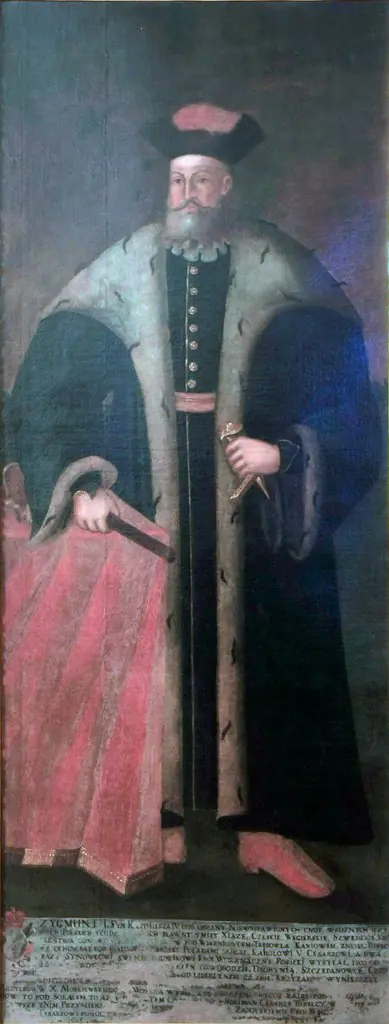 Portrait of king Sigismund I the Old (1467–1548)
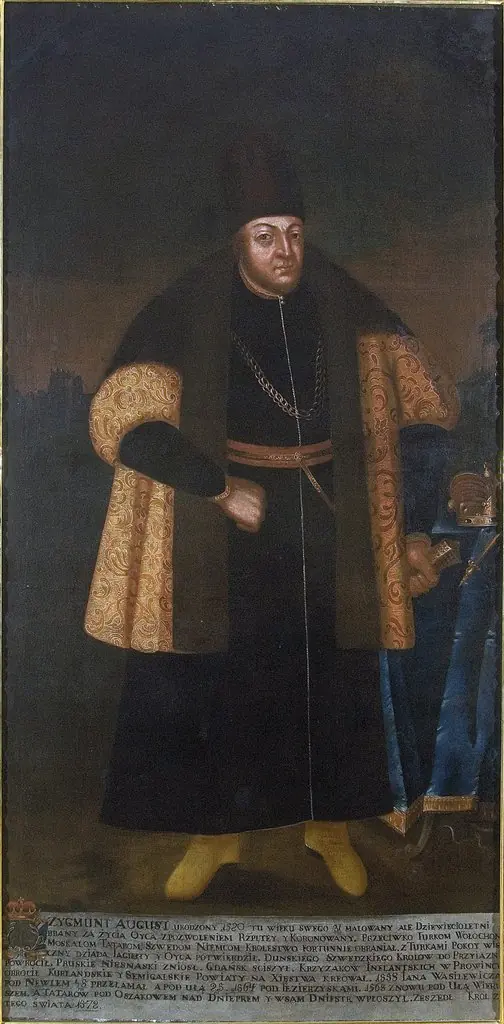 Portrait of king Sigismund II Augustus (1520–1572)
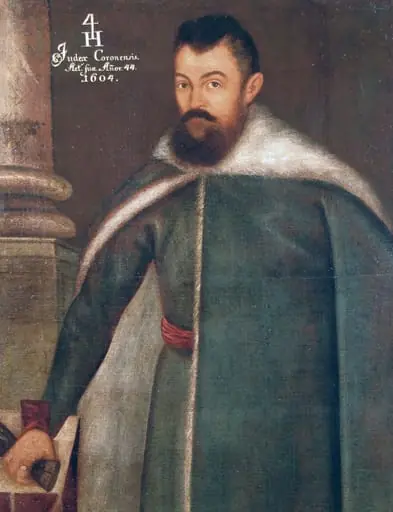 Portretul lui Valentin Hirscher
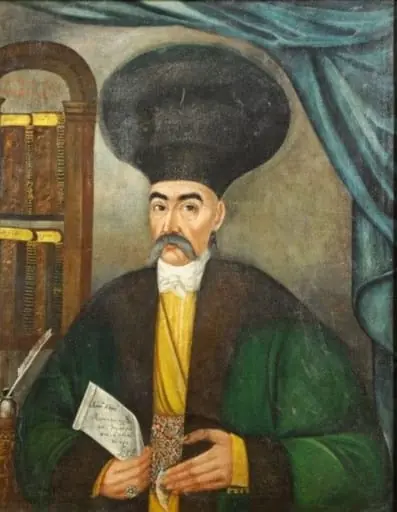 Serdarul Constantin Andronescu
 Portretul serdarului Dimitrie Aman