Artwork
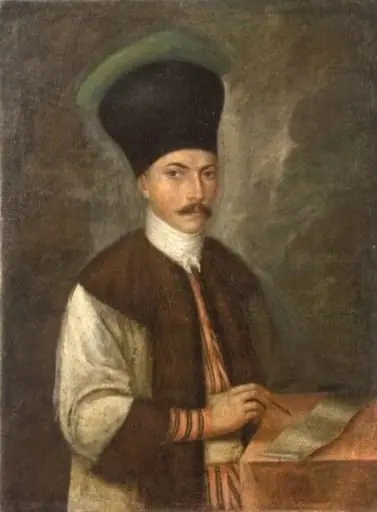
Portretul serdarului Dimitrie Aman
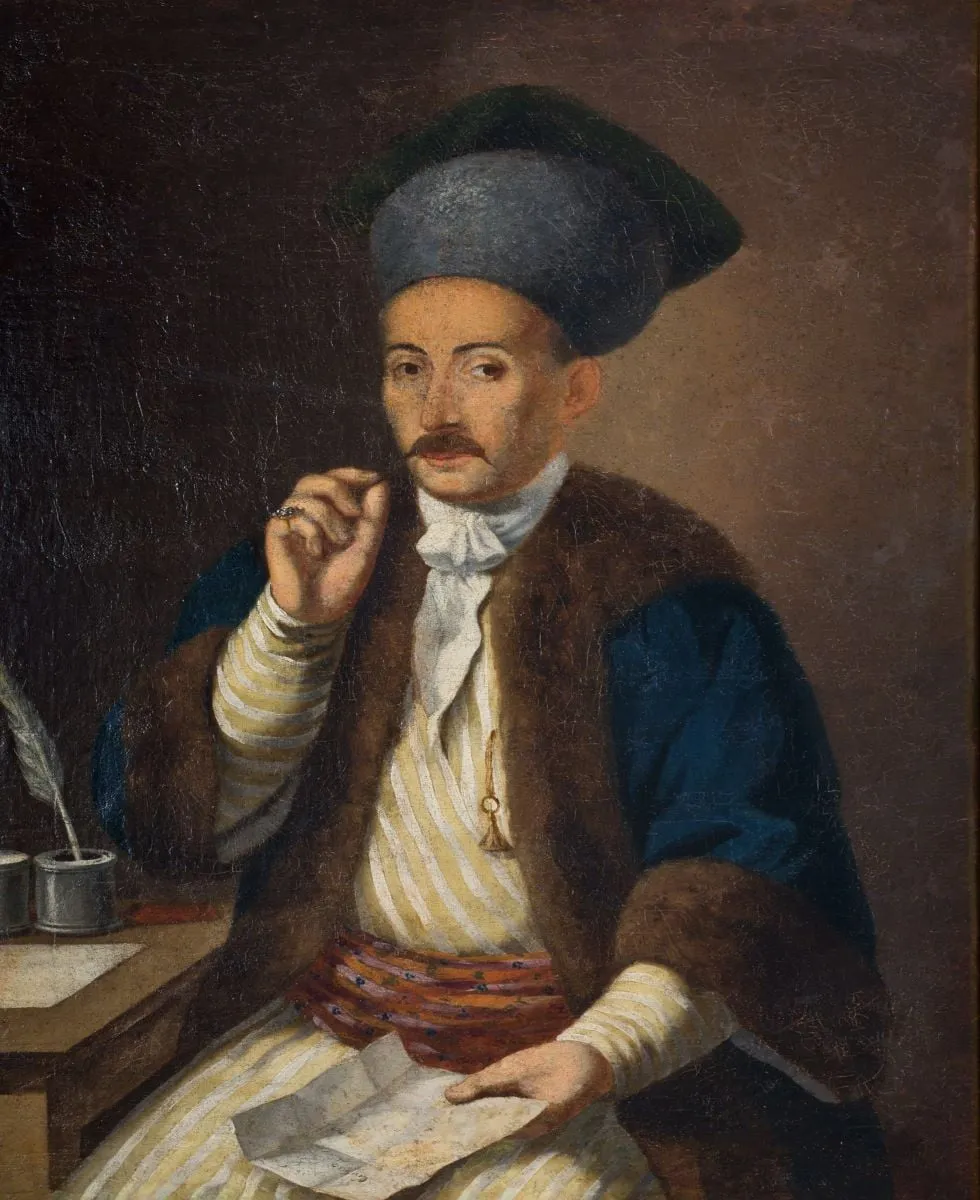
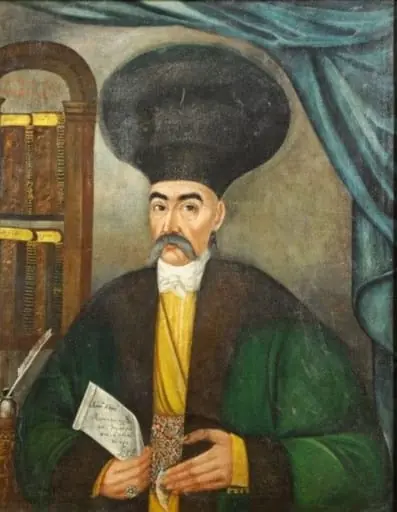
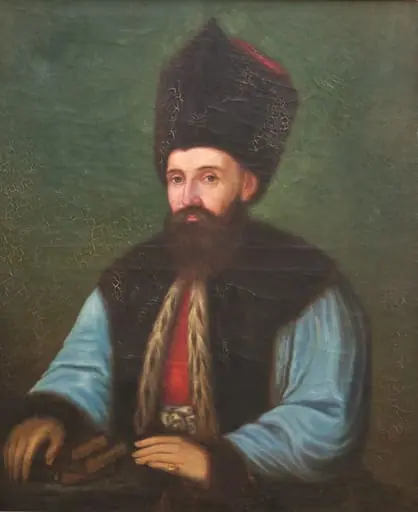
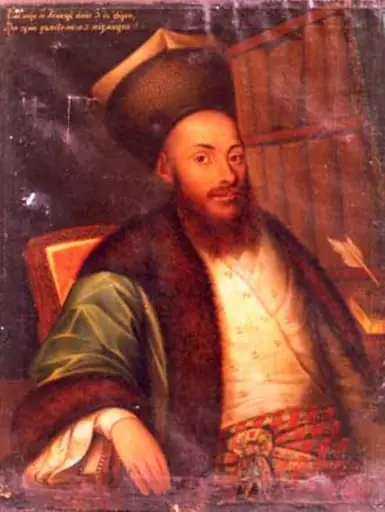
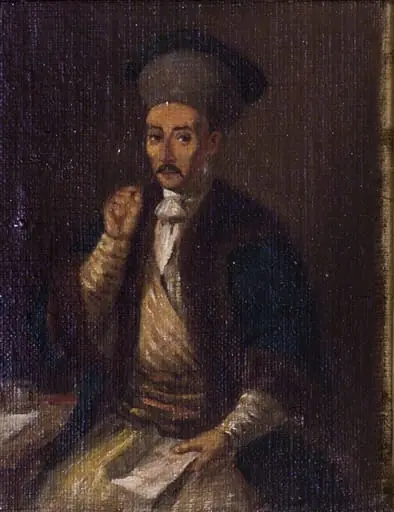
Portretul serdarului Dimitrie Aman is an unspecified painting by the Biedermeier artist Carol Wallenstein. It dates from 1818 and is held in the collection of the Bucharest Municipality Museum.
About this work
Overview
The work is part of the Museum of Ethnography’s collection and represents a formal depiction of a regional figure during a period of cultural transition.
Painted in 1818 by Carol Wallenstein, this portrait depicts Dimitrie Aman, a serdar—a military or administrative leader in the Danubian Principalities. The work is part of the Museum of Ethnography’s collection and represents a formal depiction of a regional figure during a period of cultural transition. The composition emphasizes dignity and authority through controlled posture and detailed attire.
Subject & Meaning
Dimitrie Aman is portrayed in the act of writing, suggesting his role in governance or record-keeping. His attire—blue hat, fur-trimmed coat, and striped shirt—reflects local elite dress of the early 19th century. The presence of inkwell and quill underscores literacy and administrative function, positioning him not merely as a noble but as an active participant in bureaucratic life.
Technique & Style
Wallenstein employs subtle chiaroscuro to model the figure’s form, lending volume to the fur collar and fabric folds. The palette is restrained, with earth tones balanced by the shirt’s muted stripes. Brushwork is precise, particularly in facial features and the texture of paper and leather, indicating a focus on realism over idealization, aligning with emerging trends in regional portraiture.
History & Provenance
The painting entered the Museum of Ethnography’s holdings in the late 19th or early 20th century, likely through state or institutional acquisition. Its preservation suggests early recognition of its cultural value. No documented ownership prior to museum acquisition is known, though it may have remained in Aman’s family or regional administrative circles before being transferred.
Context
Created during the Phanariot era’s decline, the portrait reflects a local elite asserting identity amid Ottoman suzerainty and rising Romanian nationalism. Wallenstein, active in Moldavia, captured figures who bridged traditional authority and emerging modern governance. The work stands as a regional counterpoint to Western European portraiture of the time.
Legacy
The portrait remains a key visual document of Moldavian administrative class identity. While not widely exhibited beyond ethnographic contexts, it contributes to scholarly understanding of non-royal portraiture in the Balkans. Its preservation underscores the importance of documenting local leadership beyond imperial or religious figures.
Artist & collection
Artist
Carol Wallenstein kept her left hand in her pocket whenever she picked up a pencil, a habit that made her self-portraits feel like stolen glances rather than posed performances.