Artwork
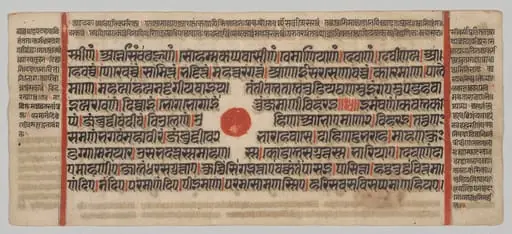
Text, Folio 17 (recto), from a Kalpa-sutra
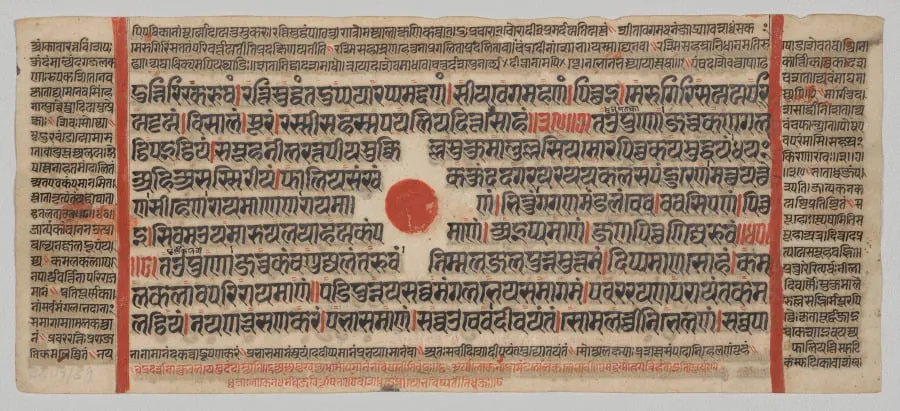
Text, Folio 17 (recto), from a Kalpa-sutra is an unspecified painting by the Mughal Painting artist Unknown. It dates from 1488 and is held in the collection of the Cleveland Museum of Art. This folio comes from a Kalpa-sutra manuscript, a Jain religious text illustrated with scenes of spiritual figures and ascetic life.
About this work
Overview
This folio comes from a Kalpa-sutra manuscript, a Jain religious text illustrated with scenes of spiritual figures and ascetic life. The image presents a seated woman in quiet repose, rendered with refined brushwork and restrained color. Though not a narrative scene, its composition aligns with the manuscript’s tradition of portraying dignified individuals associated with religious authority.
Subject & Meaning
The woman, identified by her white sari with red border and red bindi, likely represents a Jain nun or a noble patron of the text. Her downward gaze and still posture suggest inner reflection, consistent with Jain ideals of self-discipline and detachment. The absence of elaborate ornamentation or symbolic objects emphasizes spiritual composure over worldly status.
Technique & Style
Painted in tempera on paper, the work employs fine linework and flat, saturated hues typical of western Indian manuscript painting. The light brown background, subtly textured with darker strokes, creates depth without distraction. Facial features are delicately modeled, and the folds of the sari are rendered with minimal but precise strokes, reflecting a highly trained hand.
History & Provenance
Folio 17 (recto) originates from a 15th-century Kalpa-sutra manuscript produced in Gujarat or Rajasthan, regions known for Jain manuscript illumination. Such folios were bound into codices used in ritual recitation. The piece likely passed through monastic collections before entering private or institutional holdings in the modern era.
Context
Kalpa-sutra manuscripts combined doctrinal texts with portraits of Tirthankaras and their followers. While most folios depict monks or sermons, occasional images of laywomen—often patrons or nuns—appear to affirm their spiritual role. This work reflects the integration of aristocratic portraiture into devotional literature, bridging social and sacred spheres.
Legacy
This folio exemplifies the quiet dignity of Jain manuscript painting, a tradition that preserved religious aesthetics through centuries of political change. Its preservation offers insight into the visual culture of Jain communities and the role of women as both subjects and sponsors within religious art.
Artist & collection

 Domestic Scene
 Giacomo and Cardinal Marco, investing Andrea, Abbot of San Zeno, with his Benefice
 The Nymph of Fontainebleau
 Portrait of a Woman
 Madonna and Child with Saints in the Enclosed Garden
 Venus and Minerva
 Family Group of Four on Sofa
 Wall painting from Room H of the Villa of P. Fannius Synistor at Boscoreale
 Text, Folio 15 (recto), from a Kalpa-sutra
 Text, Folio 17 (verso), from a Kalpa-sutra
 Text, Folio 35 (recto), from a Kalpa-sutra
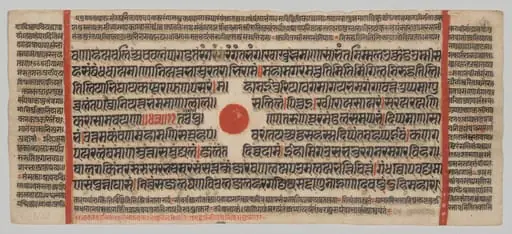 Text, Folio 18 (recto), from a Kalpa-sutra
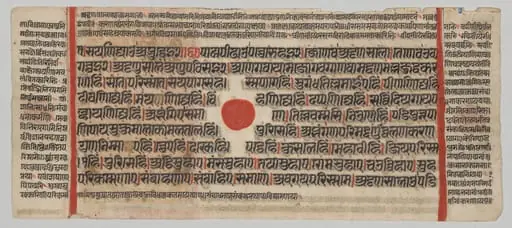 Text, Folio 22 (recto), from a Kalpa-sutra
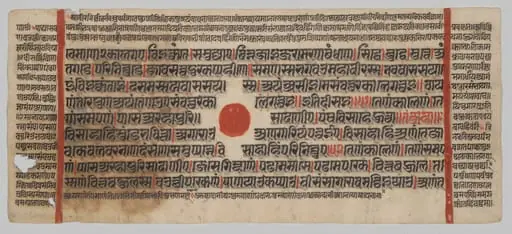 Text, Folio 44 (recto), from a Kalpa-sutra
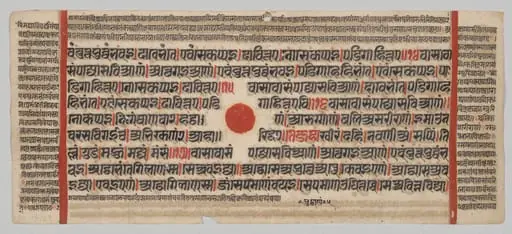 Text, Folio 68 (recto), from a Kalpa-sutra
 Text, folio 6 (recto), from a Kalpa-sutra