Artwork
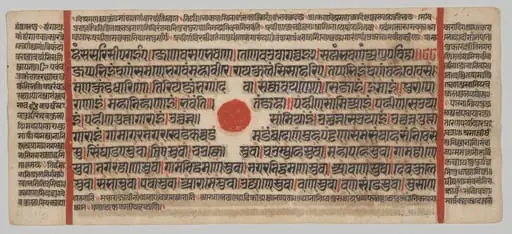
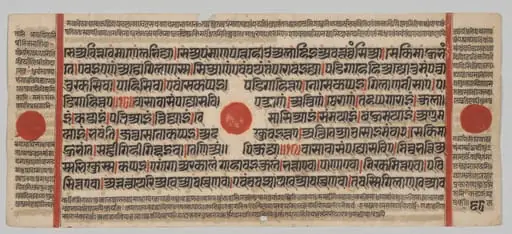
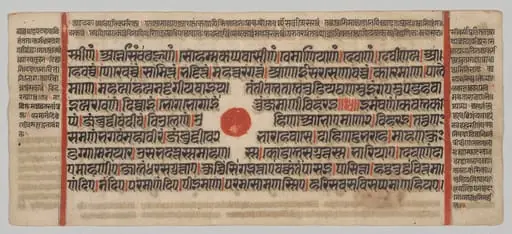
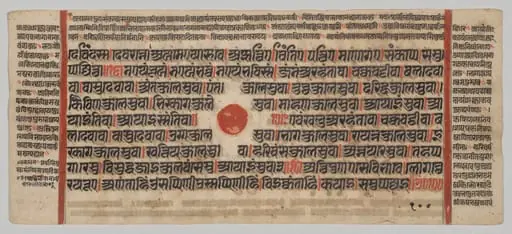
Text, Folio 68 (recto), from a Kalpa-sutra
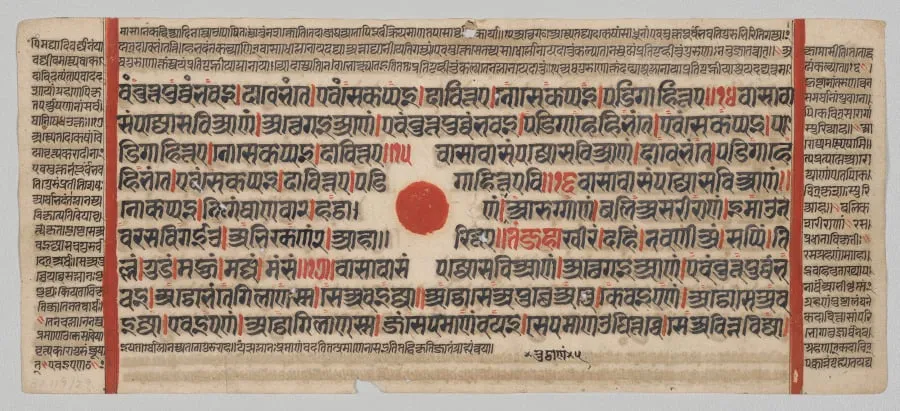
Text, Folio 68 (recto), from a Kalpa-sutra is an unspecified painting by the Mughal Painting artist Unknown. It dates from 1488 and is held in the collection of the Cleveland Museum of Art. This folio comes from a Kalpa-sutra manuscript, a Jain religious text used in ritual recitation.
About this work
Overview
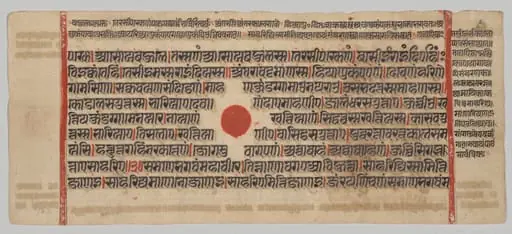
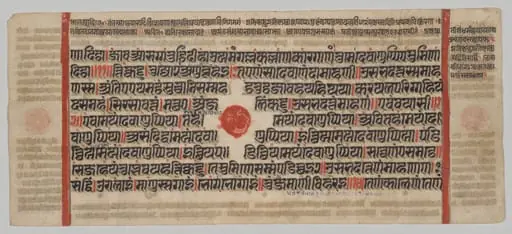
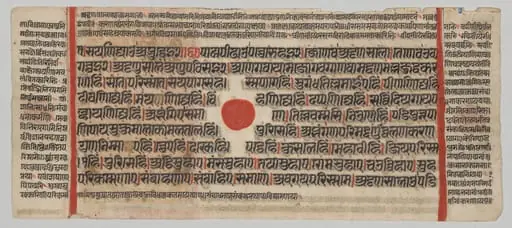
The page features densely arranged black ink script in vertical columns, with red ink used for structural markers and a central emblem.
This folio comes from a Kalpa-sutra manuscript, a Jain religious text used in ritual recitation. The page features densely arranged black ink script in vertical columns, with red ink used for structural markers and a central emblem. The paper shows signs of age—yellowed and lightly worn—consistent with centuries of handling in liturgical contexts. The layout reflects a disciplined aesthetic, prioritizing clarity and sacred order.
Subject & Meaning
The text likely contains doctrinal passages or liturgical instructions central to Jain monastic practice. The red circle with a white dot at the center may symbolize the Jain concept of the soul or a spiritual focal point, common in manuscript illumination. Red lines frame the text, guiding the reader’s eye and reinforcing the sacred structure of the content. The design serves both functional and symbolic purposes within ritual use.
Technique & Style
The script is executed in precise, uniform handwriting, typical of Jain scribal traditions. Black ink forms the main text, while red ink delineates margins and highlights key symbols. The central emblem, a red circle with a white center, is rendered with geometric clarity. The use of two colors reflects a restrained yet intentional visual hierarchy, avoiding ornamentation in favor of legibility and spiritual focus.
History & Provenance
This folio originates from a manuscript produced in western India, likely between the 14th and 16th centuries. Such texts were copied by Jain monks for use in monastic communities and ceremonial readings. The wear on the paper suggests repeated handling over generations. It entered the Cleveland Museum of Art’s collection through documented acquisition, preserving its lineage as a devotional object.
Context
Kalpa-sutra manuscripts were essential to Jain religious life, particularly during the Paryushana festival. Scribes meticulously copied these texts to preserve doctrine and merit. The visual discipline of the page—its grid, color coding, and minimal decoration—mirrors Jain values of austerity and precision. Similar folios survive in temple libraries and museum collections across India, testifying to a widespread scribal tradition.
Legacy
This folio exemplifies the enduring Jain commitment to textual preservation through disciplined artistry. Its design influenced later manuscript traditions in South Asia, where clarity and sacred symbolism took precedence over decorative excess. Today, it stands as a material witness to centuries of monastic scholarship and the quiet, sustained practice of religious transmission.
Artist & collection

 Domestic Scene
 Giacomo and Cardinal Marco, investing Andrea, Abbot of San Zeno, with his Benefice
 The Nymph of Fontainebleau
 Portrait of a Woman
 Madonna and Child with Saints in the Enclosed Garden
 Venus and Minerva
 Family Group of Four on Sofa
 Wall painting from Room H of the Villa of P. Fannius Synistor at Boscoreale