Artwork
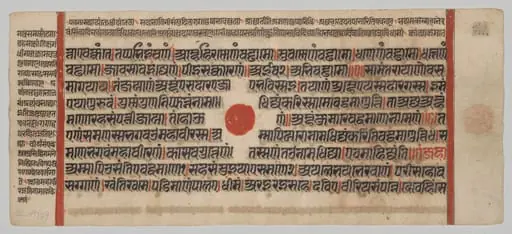
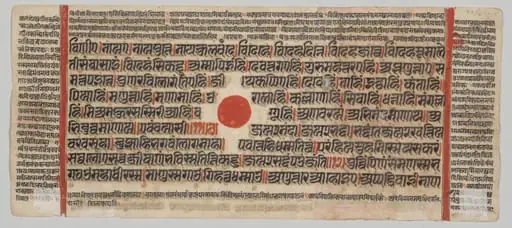
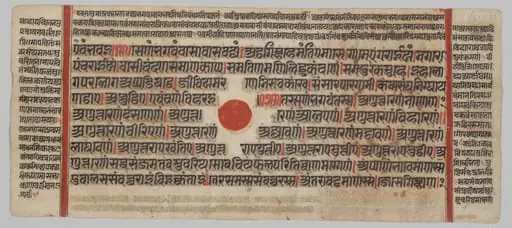
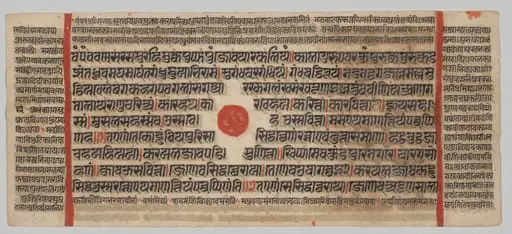
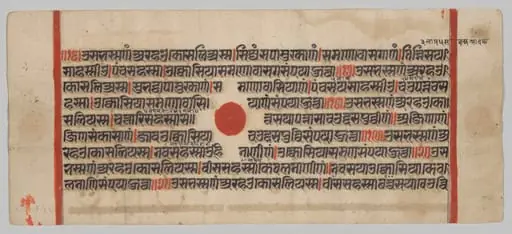
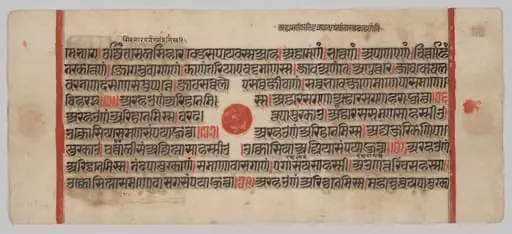
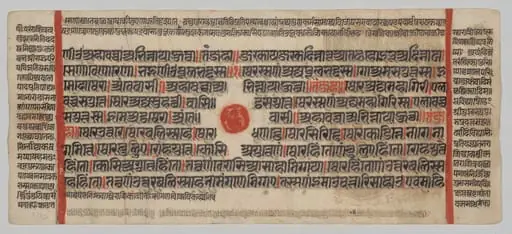
Text, Folio 30 (recto), from a Kalpa-sutra
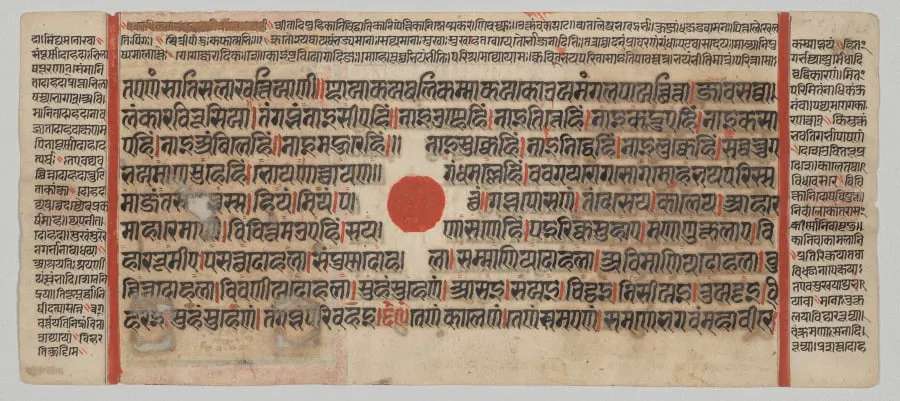
Text, Folio 30 (recto), from a Kalpa-sutra is an unspecified painting by the Mughal Painting artist Unknown. It dates from 1488 and is held in the collection of the Cleveland Museum of Art. The object is a single folio, recto side, taken from a Kalpa‑sutra manuscript.
About this work
Overview
The object is a single folio, recto side, taken from a Kalpa‑sutra manuscript. It consists of a parchment leaf that has yellowed with age and bears rows of text rendered in a formal cursive hand, accompanied by occasional red markings and modest decorative motifs.
Subject & Meaning
The script appears to be a form of Sanskrit, indicating that the content is likely a religious or ceremonial instruction typical of Kalpa‑sutras, which outline ritual procedures and doctrinal rules within the Buddhist tradition.
Technique & Style
The text is executed in black ink with selective red accents that highlight headings or important terms. The calligraphy follows a smooth, flowing cursive style, while the marginal decorations are modest, consisting of small geometric or vegetal motifs that frame the columns without overwhelming the script.
History & Provenance
The folio originates from an unidentified copy of the Kalpa‑sutra, a text that circulated in South‑Asian monastic libraries from the early medieval period onward. The material’s condition—yellowed, slightly warped, and bearing signs of handling—suggests considerable antiquity, though precise dating and ownership remain unrecorded.
Context
Kalpa‑sutras formed part of the broader corpus of Buddhist literature that guided monastic practice. Manuscripts such as this were traditionally produced in scriptoria attached to monasteries, where scribes copied texts by hand for liturgical use and instruction.
Artist & collection

 Domestic Scene
 Giacomo and Cardinal Marco, investing Andrea, Abbot of San Zeno, with his Benefice
 The Nymph of Fontainebleau
 Portrait of a Woman
 Madonna and Child with Saints in the Enclosed Garden
 Venus and Minerva
 Family Group of Four on Sofa
 Wall painting from Room H of the Villa of P. Fannius Synistor at Boscoreale