Artwork
Text, Folio 32 (recto), from a Kalpa-sutra
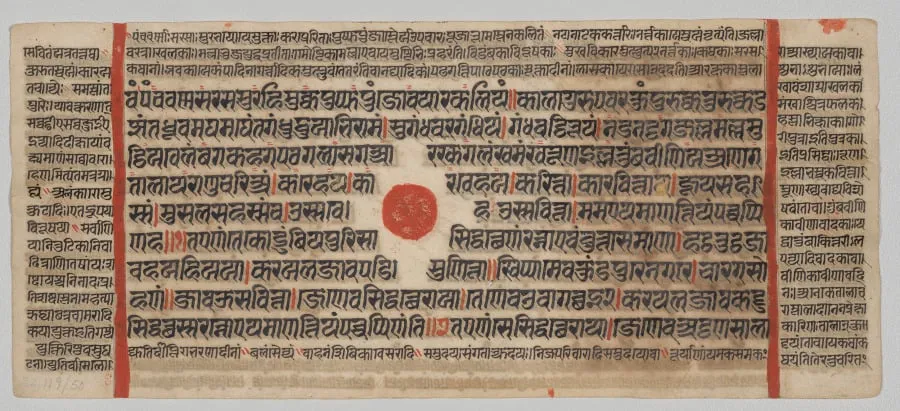
Text, Folio 32 (recto), from a Kalpa-sutra is an unspecified painting by the Mughal Painting artist Unknown. It dates from 1488 and is held in the collection of the Cleveland Museum of Art. The object is a single folio, recto side, from a Kalpa‑sutra manuscript, rendered as a painted page.
About this work
Overview
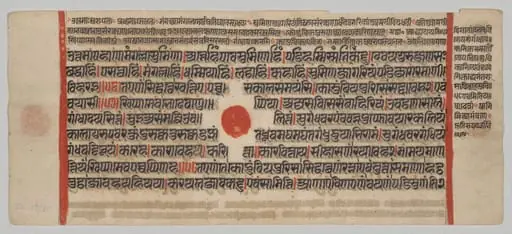
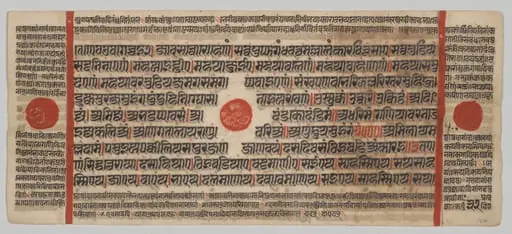
The object is a single folio, recto side, from a Kalpa‑sutra manuscript, rendered as a painted page. Measuring roughly the size of a standard sheet, the light‑beige surface is densely covered with minute black characters arranged in tight, orderly rows, leaving little empty space.
Subject & Meaning
The script records verses from the Kalpa‑sutra, a Buddhist text dealing with monastic discipline and ritual conduct. The presence of a small red circle with a central dot suggests a scribal marker, possibly indicating a pause, a section break, or a decorative element within the religious context.
Technique & Style
The page combines calligraphic brushwork with pigment application. Black ink, likely derived from carbon or soot, forms the text, while thin red lines border the margins and separate the lines of script. The red circle, painted with mineral pigment, provides visual contrast and may serve as a visual cue for readers.
History & Provenance
The folio originates from a larger Kalpa‑sutra codex, typical of Buddhist manuscript production in South‑East Asia between the 9th and 13th centuries. It entered the collection of the Cleveland Museum of Art through acquisition of a private collection of Asian manuscripts, though precise details of its earlier ownership remain undocumented.
Context
Kalpa‑sutras were central to monastic education, guiding ethical behavior and ceremonial practice. Manuscripts of this type were often produced in monastic scriptoria, where scribes copied texts by hand, employing standardized layouts and occasional decorative marks to aid navigation.
Legacy
Pages such as this illustrate the meticulous labor involved in preserving Buddhist doctrinal texts before the advent of printing. Their survival provides scholars with insight into historical script styles, pigment use, and the transmission of religious knowledge across centuries.
Artist & collection

 Domestic Scene
 Giacomo and Cardinal Marco, investing Andrea, Abbot of San Zeno, with his Benefice
 The Nymph of Fontainebleau
 Portrait of a Woman
 Madonna and Child with Saints in the Enclosed Garden
 Venus and Minerva
 Family Group of Four on Sofa
 Wall painting from Room H of the Villa of P. Fannius Synistor at Boscoreale
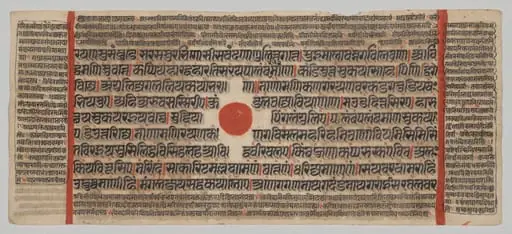 Text, Folio 23 (recto), from a Kalpa-sutra
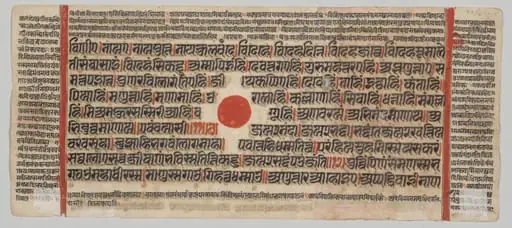 Text, Folio 35 (recto), from a Kalpa-sutra
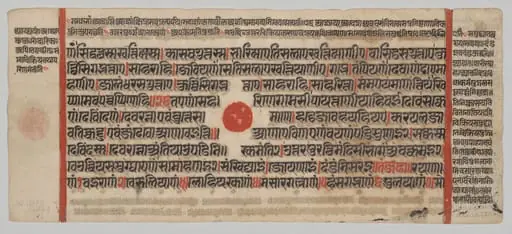 Text, folio 11 (recto), from a Kalpa-sutra
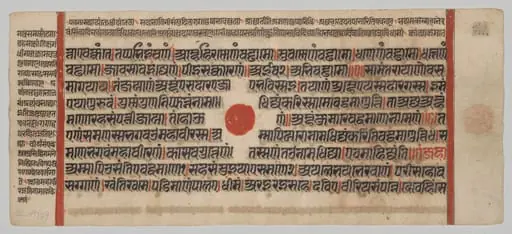 Text, Folio 34 (recto), from a Kalpa-sutra
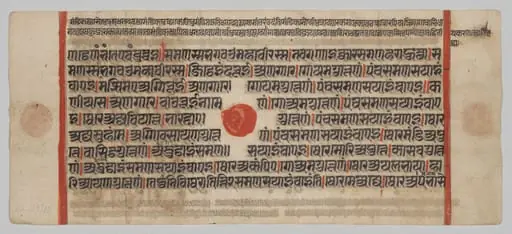 Text, Folio 58 (recto), from a Kalpa-sutra
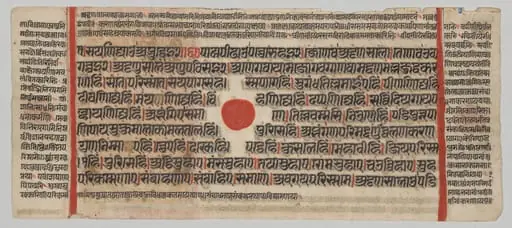 Text, Folio 22 (recto), from a Kalpa-sutra
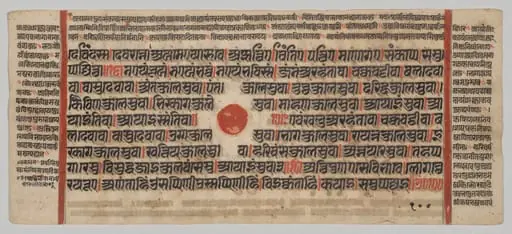 Text, Folio 8 (recto), from a Kalpa-sutra
 Text, Folio 21 (recto), from a Kalpa-sutra
 Text, Folio 32 (verso), from a Kalpa-sutra