Artwork
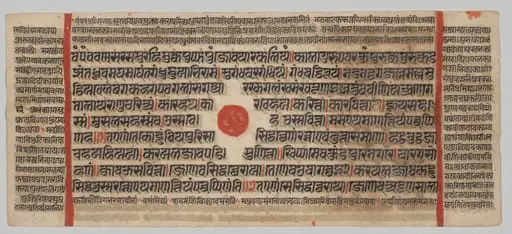
Text, Folio 21 (recto), from a Kalpa-sutra
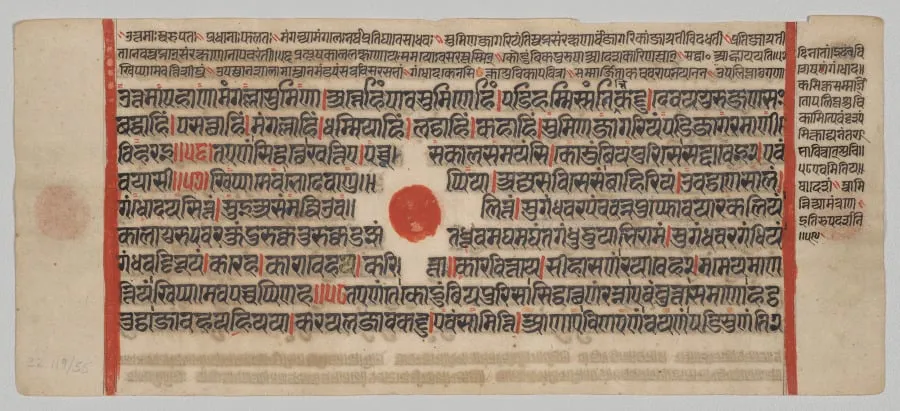
Text, Folio 21 (recto), from a Kalpa-sutra is an unspecified painting by the Mughal Painting artist Unknown. It dates from 1488 and is held in the collection of the Cleveland Museum of Art. This folio originates from a Kalpa-sutra manuscript, a Jain religious text used in ritual recitation.
About this work
Overview
The script is highly stylized, featuring elaborate flourishes typical of medieval Indian scribal traditions, not Renaissance art as incorrectly suggested.
This folio originates from a Kalpa-sutra manuscript, a Jain religious text used in ritual recitation. The page displays dense, hand-written script in black ink, with selective red highlights for emphasis. The paper shows signs of age—yellowing, creasing, and minor tears—indicating frequent handling over centuries. The script is highly stylized, featuring elaborate flourishes typical of medieval Indian scribal traditions, not Renaissance art as incorrectly suggested.
Subject & Meaning
The text contains passages from the Kalpa-sutra, detailing the lives and teachings of Jain Tirthankaras, particularly Mahavira. Red accents mark key names or doctrinal phrases, guiding oral recitation during religious ceremonies. The page functions not as decorative art but as a liturgical tool, where visual cues enhance memorization and ritual precision within a monastic context.
Technique & Style
The script is executed in a regional variant of Devanagari or Gujarati, with meticulous penwork and ink control. Flourishes and ligatures reflect the scribe’s training and the manuscript’s ceremonial purpose. Red pigment, likely vermilion or cinnabar, was applied sparingly to highlight sacred terms. The dense layout maximizes textual content on a limited surface, reflecting the value placed on preserving sacred words.
History & Provenance
This folio likely dates to the 15th or 16th century, produced in western India, possibly Gujarat or Rajasthan. It was part of a larger manuscript used in Jain monasteries, passed down through generations of monks. Its physical wear suggests repeated use in ritual settings. The current condition reflects centuries of handling, storage, and environmental exposure, not deliberate preservation.
Context
Kalpa-sutra manuscripts were central to Jain religious life, especially during the Paryushana festival. Scribes, often monks, produced these texts with great care, viewing their work as spiritual practice. The use of red ink and ornate script aligned with broader Indian traditions of sacred writing, where visual form reinforced textual sanctity, distinct from European Renaissance aesthetics.
Legacy
Folios like this preserve the continuity of Jain textual traditions and scribal craftsmanship. They offer insight into pre-modern literacy, religious devotion, and material culture in western India. Today, such fragments are studied as historical artifacts, valued for their linguistic, religious, and artistic significance within South Asian heritage, not as examples of unrelated European movements.
Artist & collection

 Domestic Scene
 Giacomo and Cardinal Marco, investing Andrea, Abbot of San Zeno, with his Benefice
 The Nymph of Fontainebleau
 Portrait of a Woman
 Madonna and Child with Saints in the Enclosed Garden
 Venus and Minerva
 Family Group of Four on Sofa
 Wall painting from Room H of the Villa of P. Fannius Synistor at Boscoreale
 Text, Folio 22 (recto), from a Kalpa-sutra
 Text, Folio 5 (recto), from a Kalpa-sutra
 Text, Folio 21 (verso), from a Kalpa-sutra
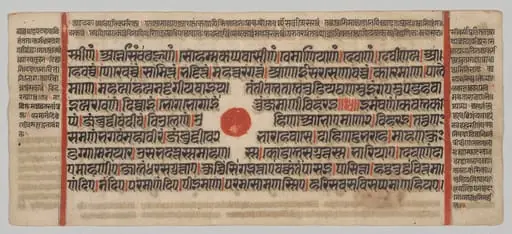 Text, folio 6 (recto), from a Kalpa-sutra
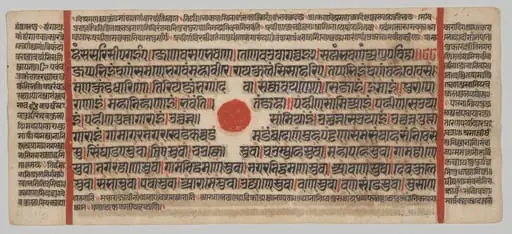 Text, Folio 28 (recto), from a Kalpa-sutra
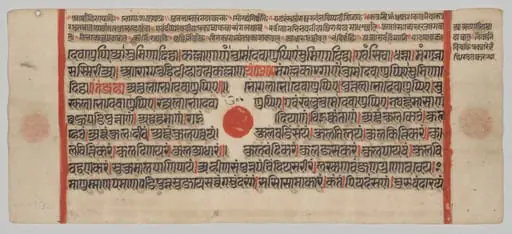 Text, Folio 20 (recto), from a Kalpa-sutra
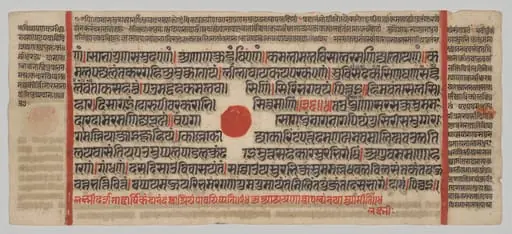 Text, Folio 16 (recto), from a Kalpa-sutra
 Text, Folio 32 (recto), from a Kalpa-sutra