Artwork
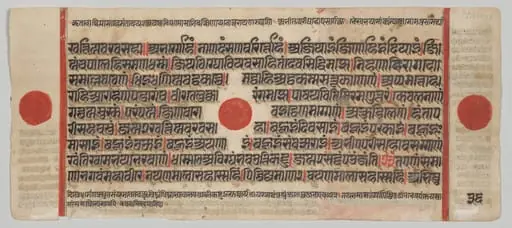
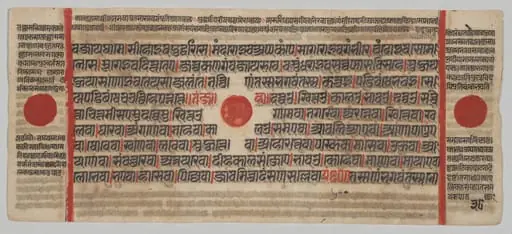
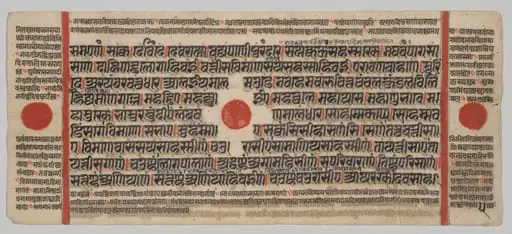
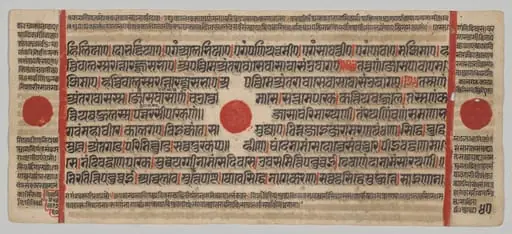
Text, Folio 53 (verso), from a Kalpa-sutra
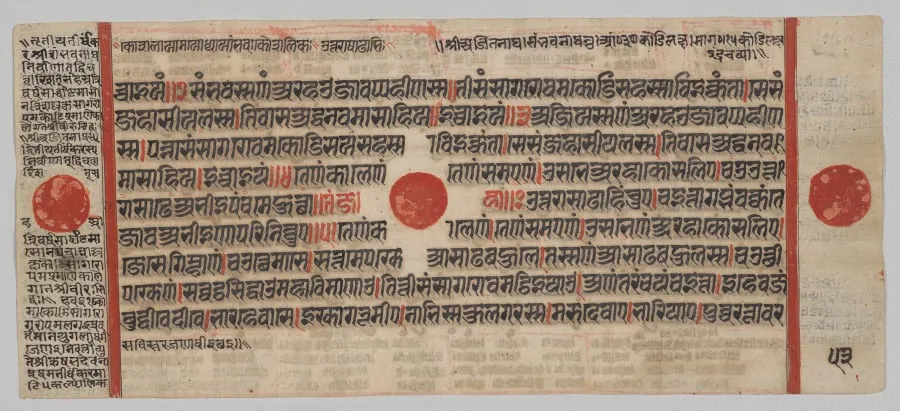
Text, Folio 53 (verso), from a Kalpa-sutra is an unspecified painting by the Mughal Painting artist Unknown. It dates from 1488 and is held in the collection of the Cleveland Museum of Art. This folio is part of a manuscript in the Kalpa-sutra tradition, featuring densely arranged black script with selective red ink highlights.
About this work
Overview
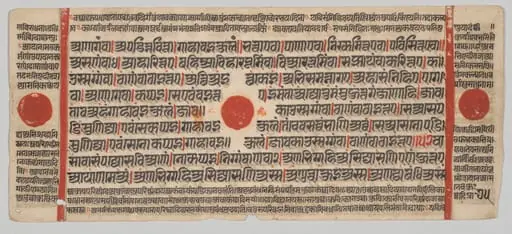
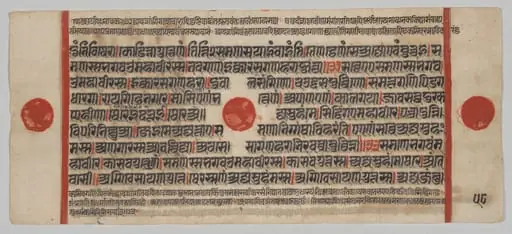
This folio is part of a manuscript in the Kalpa-sutra tradition, featuring densely arranged black script with selective red ink highlights.
This folio is part of a manuscript in the Kalpa-sutra tradition, featuring densely arranged black script with selective red ink highlights. Three round red seals, positioned near the center and right edge, suggest institutional or scholarly authentication. The paper shows signs of age—yellowing, subtle creases, and wear—indicating prolonged handling and storage. Its layout reflects disciplined scribal practice, typical of religious texts preserved in South Asian manuscript culture.
Subject & Meaning
The text likely contains doctrinal or liturgical content from the Kalpa-sutra, a Jain canonical work detailing the lives of spiritual teachers. The use of red ink to emphasize key passages signals pedagogical or ritual significance, guiding readers through important passages. The seals imply the manuscript was reviewed or endorsed by religious authorities, reinforcing its legitimacy within a scholarly or monastic context.
Technique & Style
The script is executed in fine, uniform strokes, demonstrating skilled calligraphy. Red ink is used sparingly for emphasis, contrasting with the dominant black to aid visual navigation. The seals, applied in vermilion, are circular and stamped with precision, likely bearing inscriptions or symbols of authority. The paper’s texture and wear reflect centuries of use, with folds and discoloration consistent with pre-modern storage practices.
History & Provenance
This folio originates from a larger manuscript tradition practiced in western India, likely between the 14th and 17th centuries. The presence of authentication seals suggests it passed through monastic or scholarly networks where textual integrity was closely guarded. Its survival indicates careful preservation, possibly within a temple library or private collection, before entering institutional hands in the modern era.
Context
Manuscripts like this were central to Jain religious life, serving as both liturgical tools and objects of devotion. Scribes worked under strict guidelines to ensure accuracy, and seals functioned as quality control, akin to institutional certification. Similar folios appear in collections across India and the West, reflecting the broader circulation of Jain textual culture through trade, pilgrimage, and patronage.
Legacy
Folios such as this preserve the material history of Jain scholarship and scribal practice. They offer insight into how religious knowledge was transmitted, authenticated, and physically maintained over centuries. Today, they serve as primary sources for understanding pre-modern South Asian literacy, religious discipline, and the material culture of manuscript production.
Artist & collection

 Domestic Scene
 Giacomo and Cardinal Marco, investing Andrea, Abbot of San Zeno, with his Benefice
 The Nymph of Fontainebleau
 Portrait of a Woman
 Madonna and Child with Saints in the Enclosed Garden
 Venus and Minerva
 Family Group of Four on Sofa
 Wall painting from Room H of the Villa of P. Fannius Synistor at Boscoreale