Artwork
Text, Folio 38 (recto), from a Kalpa-sutra
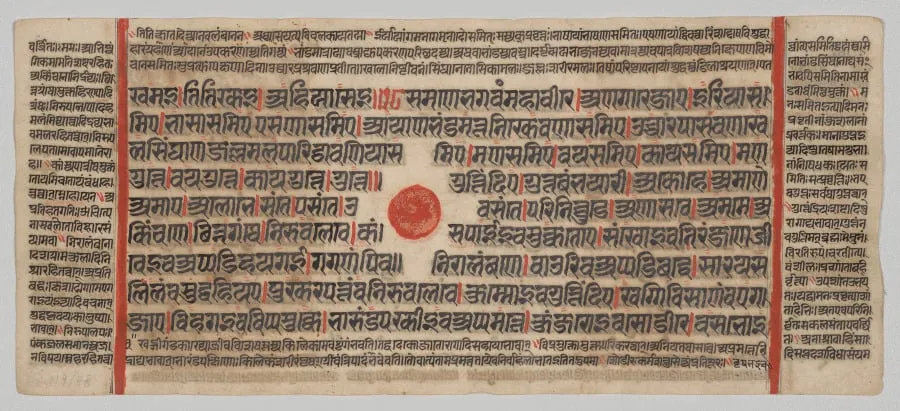
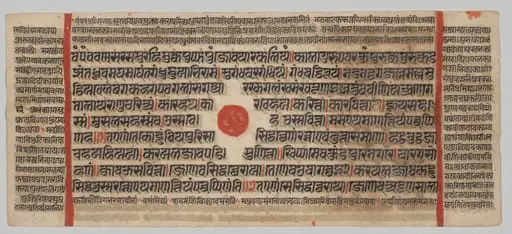
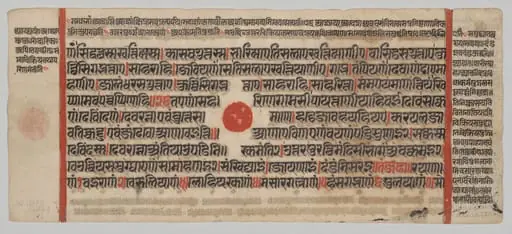
Text, Folio 38 (recto), from a Kalpa-sutra is an unspecified painting by the Mughal Painting artist Unknown. It dates from 1488 and is held in the collection of the Cleveland Museum of Art. This folio comes from a handwritten copy of the Kalpa-sutra, a sacred Jain text.
About this work
Overview
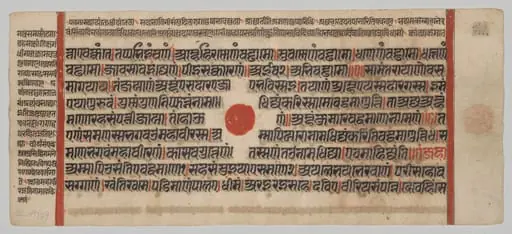
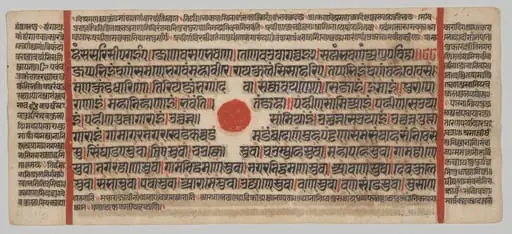
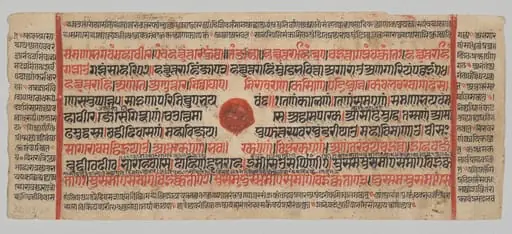
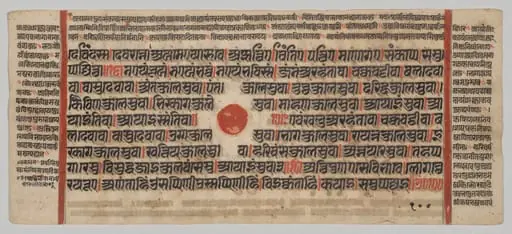
The page features densely arranged black script in an archaic Indic script, with red ink used to delineate margins and highlight a central circular mark.
This folio comes from a handwritten copy of the Kalpa-sutra, a sacred Jain text. The page features densely arranged black script in an archaic Indic script, with red ink used to delineate margins and highlight a central circular mark. The paper shows signs of age and handling, suggesting regular use in ritual or study. Its format reflects the tradition of devotional manuscript production in medieval western India.
Subject & Meaning
The text contains passages from the Kalpa-sutra, which details the lives of Jain tirthankaras and monastic rules. The red circle likely indicates a significant doctrinal point, a section break, or a marker for liturgical recitation. Such visual cues guided readers through sacred content, reinforcing the text’s spiritual authority through careful typographic discipline.
Technique & Style
The script is executed in fine, uniform strokes using a reed pen, typical of Jain scribal practice. Red ink outlines the text block and accents key symbols, contrasting with the dark ink of the main text. The layout is orderly, with consistent line spacing and no illustrations, emphasizing textual purity over ornamentation, a hallmark of Jain manuscript aesthetics.
History & Provenance
Produced in the 15th or 16th century, likely in Gujarat or Rajasthan, this folio belonged to a larger codex used in Jain monastic communities. Its survival suggests it was preserved with reverence, possibly in temple libraries or private collections. The absence of later annotations implies limited external interference, preserving its original devotional context.
Context
Contemporary with early Renaissance manuscript culture in Europe, this folio reflects a parallel tradition of textual devotion. While European scribes illuminated texts with gold and figural scenes, Jain scribes prioritized legibility and symbolic minimalism. Both traditions valued the handwritten word as a vessel of sacred truth, though their visual languages diverged sharply.
Legacy
This folio exemplifies the enduring Jain commitment to textual preservation through meticulous hand-copying. Such manuscripts remain vital to scholarly study of Jain theology and paleography. Their survival offers insight into pre-modern literacy, religious practice, and the material culture of South Asian monastic life.
Artist & collection

 Domestic Scene
 Giacomo and Cardinal Marco, investing Andrea, Abbot of San Zeno, with his Benefice
 The Nymph of Fontainebleau
 Portrait of a Woman
 Madonna and Child with Saints in the Enclosed Garden
 Venus and Minerva
 Family Group of Four on Sofa
 Wall painting from Room H of the Villa of P. Fannius Synistor at Boscoreale