Artwork
Text, Folio 61 (verso), from a Kalpa-sutra
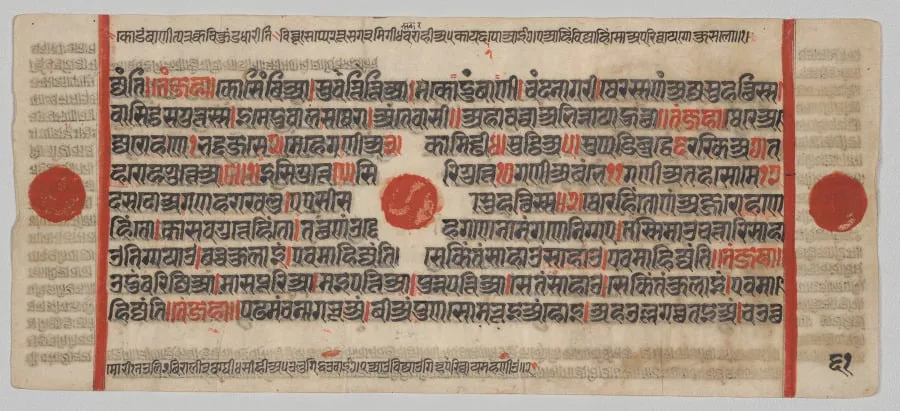
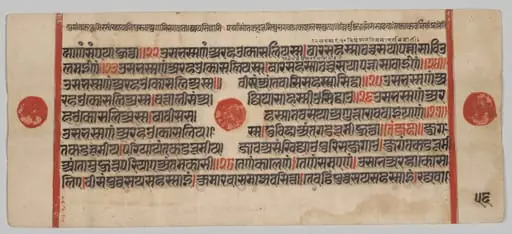
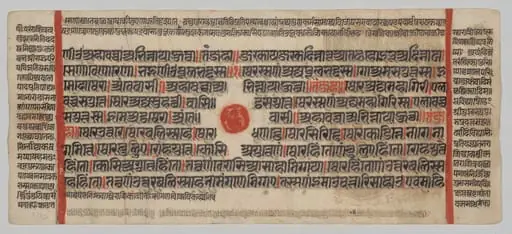
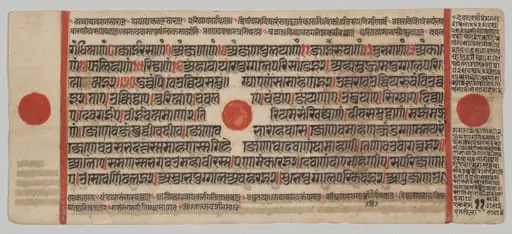
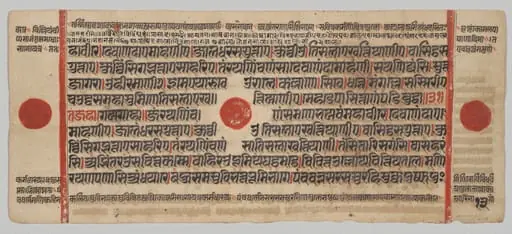
Text, Folio 61 (verso), from a Kalpa-sutra is an unspecified painting by the Mughal Painting artist Unknown. It dates from 1488 and is held in the collection of the Cleveland Museum of Art. This folio is a handwritten page from a Kalpa-sutra, a Jain religious manuscript.
About this work
Overview
Three red circular seals appear at the margins, and a vertical red line runs along the right edge, likely serving as a structural or ritual marker.
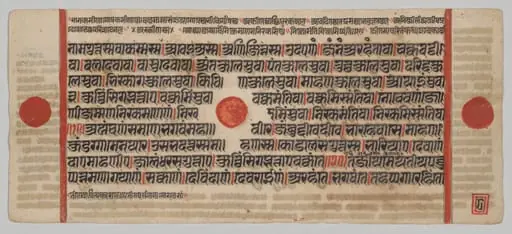
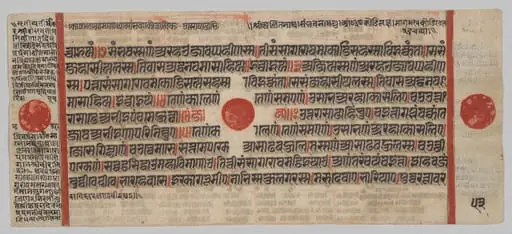
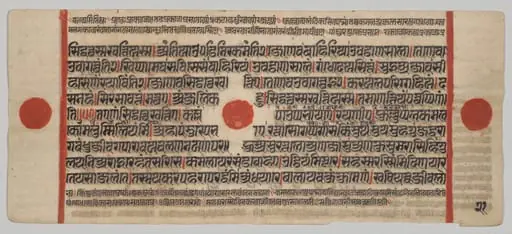
This folio is a handwritten page from a Kalpa-sutra, a Jain religious manuscript. The surface is densely covered in small, uniform script in red and black ink, with no illustrative elements. Three red circular seals appear at the margins, and a vertical red line runs along the right edge, likely serving as a structural or ritual marker. The page reflects meticulous scribal practice and the value placed on textual preservation in Jain tradition.
Subject & Meaning
The Kalpa-sutra contains doctrinal guidelines, biographies of Jain teachers, and ritual instructions for monastic life. This folio, devoid of imagery, emphasizes the primacy of sacred text over visual representation in certain Jain communities. The careful arrangement of script suggests its use in liturgical study or recitation, reinforcing the spiritual authority of the written word in Jain practice.
Technique & Style
The script is executed in fine, consistent brushwork, using red and black ink to distinguish sections or corrections. The absence of illumination or decoration aligns with ascetic aesthetic values. Red stamps and the vertical line may indicate provenance, ownership, or ritual consecration. The page’s compact layout maximizes space, reflecting efficient manuscript production and reverence for textual integrity.
History & Provenance
This folio originates from a larger manuscript tradition dating to the medieval period in western India. Its preservation suggests continuous use within Jain monastic circles. The red seals and marginal markings may denote institutional ownership or ceremonial validation. While its exact provenance is undocumented, similar folios are held in collections such as the Cleveland Museum of Art, indicating a shared cultural heritage.
Context
In Jain religious culture, handwritten scriptures were treated as sacred objects, often copied by trained scribes under strict ritual conditions. Unlike other Indian manuscript traditions that favored illustration, certain Jain sects prioritized textual purity. This folio exemplifies that preference, representing a devotional practice centered on the physical and linguistic presence of scripture rather than visual narrative.
Legacy
Folios like this preserve the transmission of Jain doctrine through centuries of oral and written practice. Their minimalist design influenced later manuscript traditions that valued clarity and restraint. Today, such pages serve as critical evidence of pre-modern literacy, religious discipline, and the material culture of South Asian monastic communities.
Artist & collection

 Domestic Scene
 Giacomo and Cardinal Marco, investing Andrea, Abbot of San Zeno, with his Benefice
 The Nymph of Fontainebleau
 Portrait of a Woman
 Madonna and Child with Saints in the Enclosed Garden
 Venus and Minerva
 Family Group of Four on Sofa
 Wall painting from Room H of the Villa of P. Fannius Synistor at Boscoreale