Artwork
Text of Rustam and Suhrab, from the Shah-nama of Firdausi (Persian, c. 934–1020) (verso)
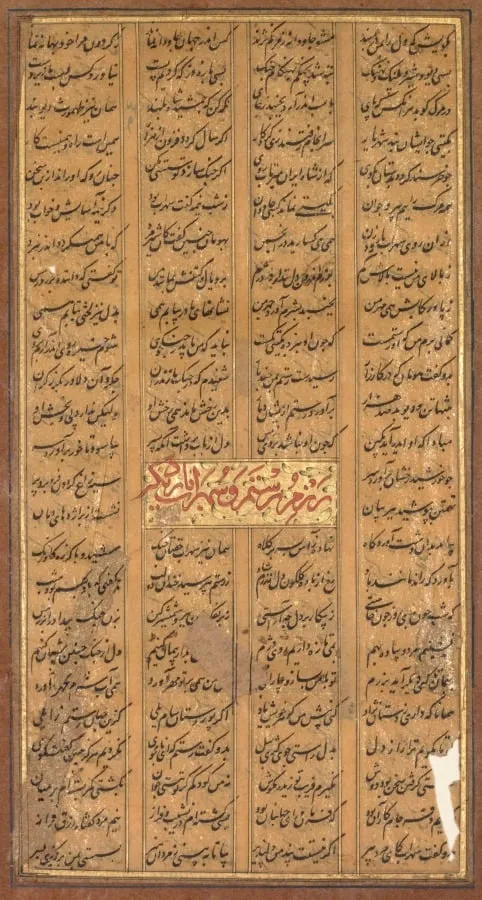
Text of Rustam and Suhrab, from the Shah-nama of Firdausi (Persian, c. 934–1020) (verso) is an unspecified painting by the Baroque artist Unknown. It dates from 1610 and is held in the collection of the Cleveland Museum of Art. This folio contains Persian calligraphy from a lavishly produced manuscript of the Shah-nama, composed by Firdausi between 934 and 1020.
About this work
Overview
This folio contains Persian calligraphy from a lavishly produced manuscript of the Shah-nama, composed by Firdausi between 934 and 1020.
This folio contains Persian calligraphy from a lavishly produced manuscript of the Shah-nama, composed by Firdausi between 934 and 1020. Created in the Deccan city of Bijapur, it features a chapter heading in bold red ink above dense black script on cream paper. The text recounts a pivotal moment in the epic: the fatal duel between the hero Rustam and his unknown son, Suhrab. The page reflects the enduring cultural prestige of Persian literature in early modern South Asia.
Subject & Meaning
The passage details the tragic confrontation between Rustam and Suhrab, two warriors unaware of their blood tie. Their duel ends in Suhrab’s death, a moment of profound loss that underscores the Shah-nama’s themes of fate, identity, and the unintended consequences of heroism. The red heading emphasizes the gravity of the scene, signaling to readers the emotional climax of this episode within the larger narrative of kingship and lineage.
Technique & Style
The script is executed in a clear, disciplined Nastaʿlīq hand, typical of Persianate manuscript traditions. The chapter title is rendered in vibrant red ink, contrasting with the black text below, guiding the reader’s eye and marking structural divisions. The paper is smooth and cream-hued, chosen for its durability and aesthetic harmony with the ink. No illustrations accompany the text, focusing attention on the literary content and the artistry of the writing itself.
History & Provenance
Produced in the courtly ateliers of Bijapur during the late 16th or early 17th century, this manuscript reflects the Deccan sultanates’ patronage of Persian literary culture. Though originating in Iran, the Shah-nama found deep resonance in South Asia, where rulers commissioned deluxe copies as symbols of refined taste and political legitimacy. This folio is one of many surviving pages from a once-complete volume, now dispersed across collections.
Context
In the Deccan, Persian was the language of administration and high culture, even as local languages flourished. The Shah-nama was not merely literature but a moral and historical touchstone, recited and copied across courts from Istanbul to Vijayanagara. Bijapur’s version, like others in the region, demonstrates how Persian epics were adapted into local artistic traditions without altering their textual core.
Legacy
This manuscript exemplifies the transregional circulation of Persian literary culture in early modern Asia. Its survival, despite the dispersal of many such volumes, highlights the value placed on textual preservation over pictorial embellishment in certain scholarly circles. Today, such pages serve as primary evidence of how epic poetry was transmitted, read, and revered across linguistic and geographic boundaries.
Artist & collection

 Domestic Scene
 Giacomo and Cardinal Marco, investing Andrea, Abbot of San Zeno, with his Benefice
 The Nymph of Fontainebleau
 Portrait of a Woman
 Madonna and Child with Saints in the Enclosed Garden
 Venus and Minerva
 Family Group of Four on Sofa
 Wall painting from Room H of the Villa of P. Fannius Synistor at Boscoreale
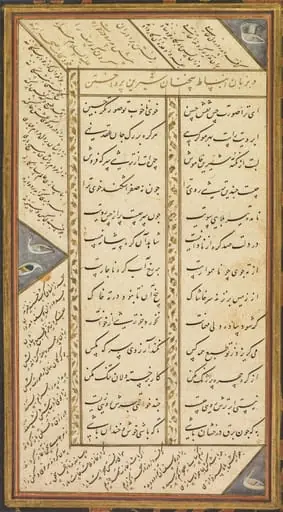 Page from the Panj Ganj (Five Treasures) of Abd al-Rahman Jami (Persian, 1414–1492), with two Persian masnavis (narrative poems): Yusuf va Zulaykha (Joseph and Zulaykha) and Subhat al-abrar (Rosary of the Righteous)
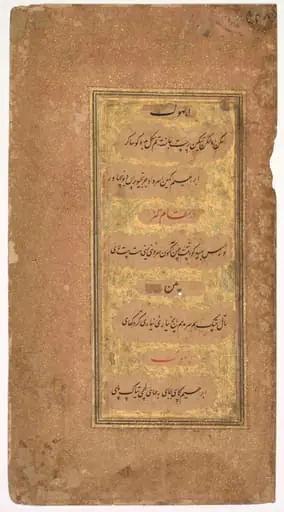 From Dohras (Songs) 40 and 42 from the Kitab-i Nauras (Book of Nine Essences) of Sultan Ibrahim Adil Shah II of Bijapur (r. 1580–1627) (recto)
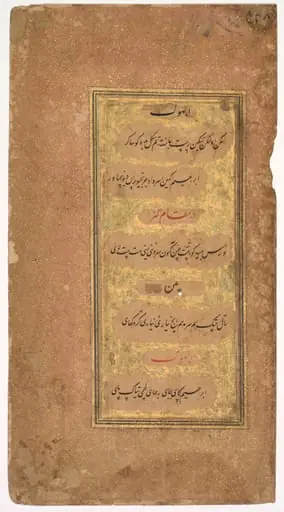 From Dohras (Songs) 40 and 42 from the Kitab-i Nauras (Book of Nine Essences) of Sultan Ibrahim Adil Shah II of Bijapur (r. 1580–1627); verso: From Dohras (Songs) 40 and 36 from the Kitab-i Nauras of Sultan Ibrahim Adil Shah II
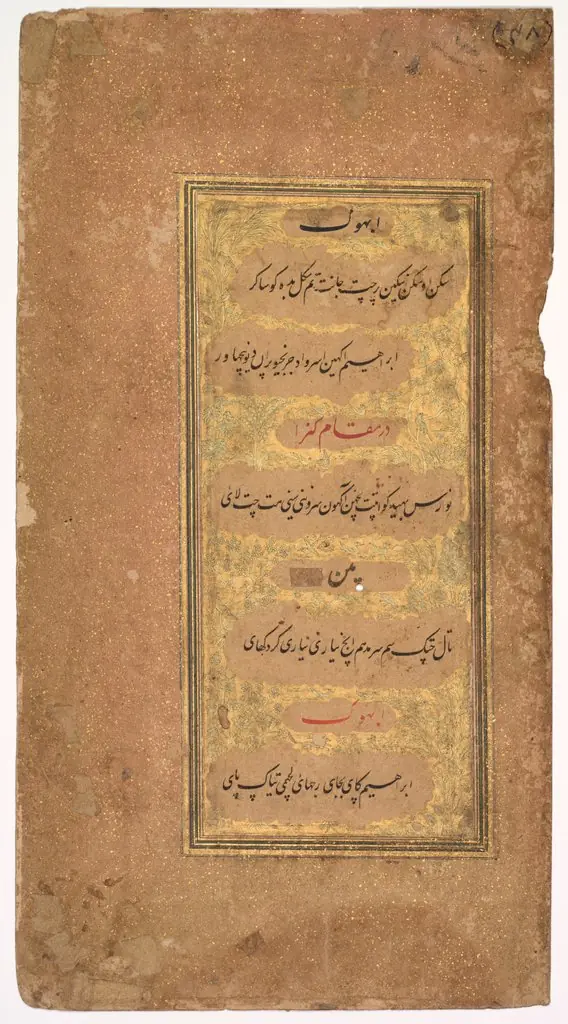 From Dohras (Songs) 40 and 42 from the Kitab-i Nauras (Book of Nine Essences) of Sultan Ibrahim Adil Shah II of Bijapur (r. 1580–1627); verso: From Dohras (Songs) 40 and 36 from the Kitab-i Nauras of Sultan Ibrahim Adil Shah II
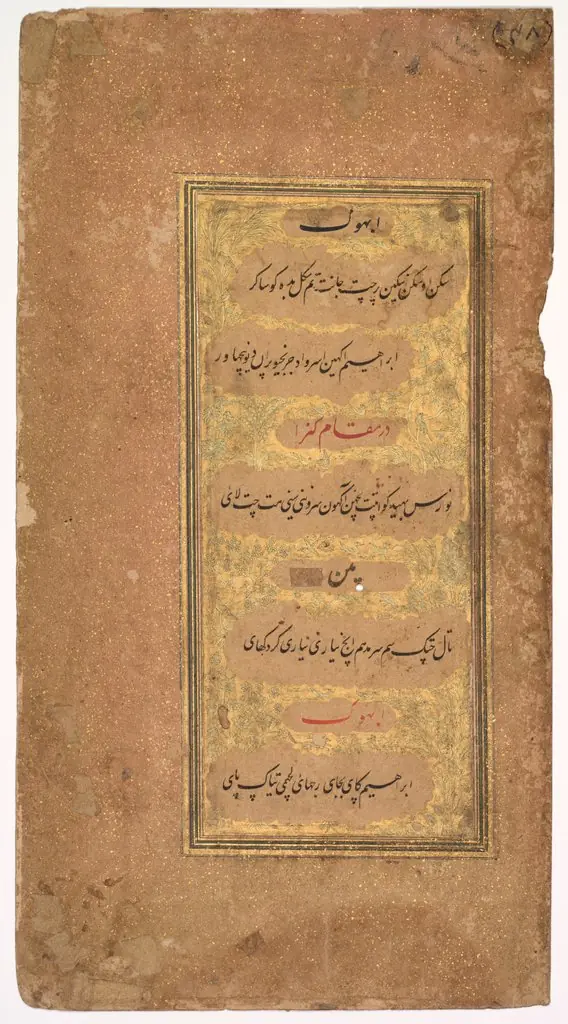 From Dohras (Songs) 40 and 42 from the Kitab-i Nauras (Book of Nine Essences) of Sultan Ibrahim Adil Shah II of Bijapur (r. 1580–1627) (recto)
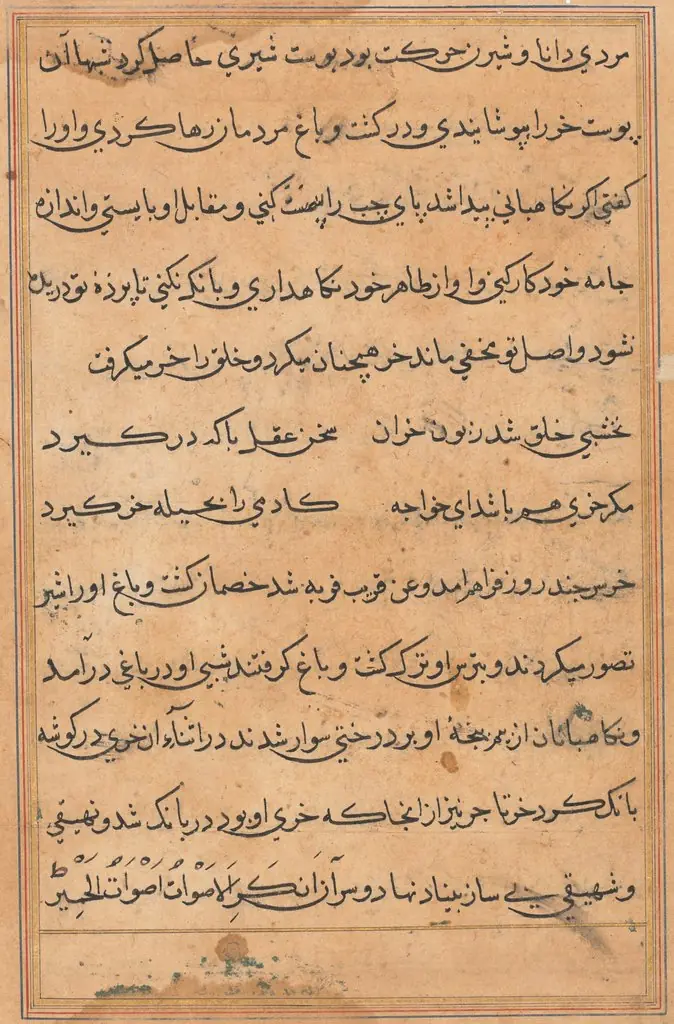 Page from Tales of a Parrot (Tuti-nama): text page
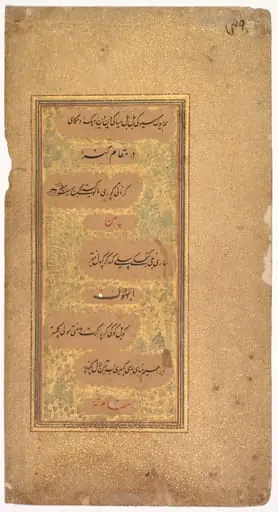 From Dohras (Songs) 40 and 36 from the Kitab-i Nauras of Sultan Ibrahim Adil Shah II (verso)