Artwork
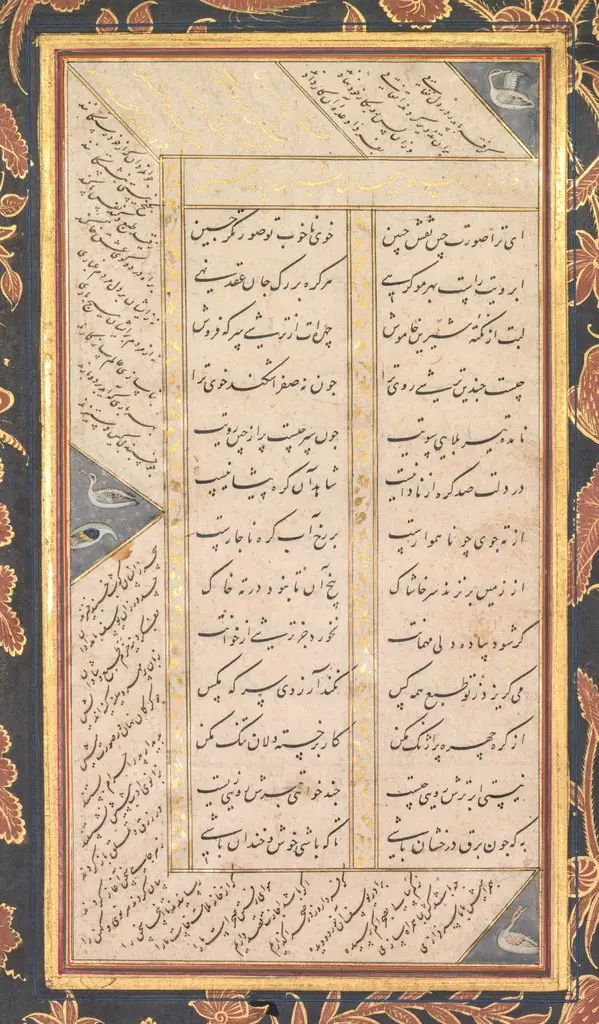
Page from the Panj Ganj (Five Treasures) of Abd al-Rahman Jami (Persian, 1414–1492), with two Persian masnavis (narrative poems): Yusuf va Zulaykha (Joseph and Zulaykha) and Subhat al-abrar (Rosary of the Righteous)
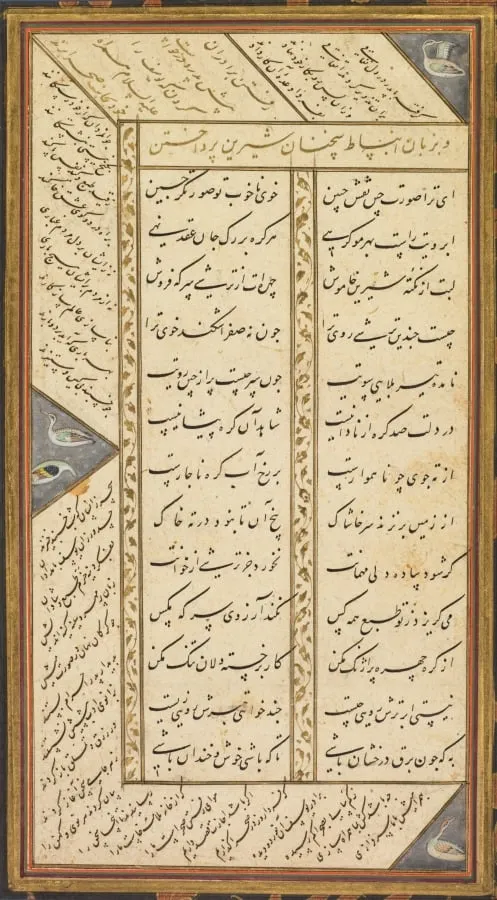
Page from the Panj Ganj (Five Treasures) of Abd al-Rahman Jami (Persian, 1414–1492), with two Persian masnavis (narrative poems): Yusuf va Zulaykha (Joseph and Zulaykha) and Subhat al-abrar (Rosary of the Righteous) is an unspecified painting by the Mughal Painting artist Mushfiq. It dates from 1564 and is held in the collection of the Cleveland Museum of Art. This illuminated album leaf presents two Persian masnavis: a narrative of Joseph and Zulaykha and a didactic poem urging frequent smiles.
About this work
The words were written in Herat (now Afghanistan) around 1500, then sent to India where Mushfiq added the paintings and gold work sixty years later.
You see a page of Persian poetry framed by gold borders and tiny painted scenes. The words curve around the edges, telling a story of Joseph and his brothers.
This book was made in two places, decades apart. The words were written in Herat (now Afghanistan) around 1500, then sent to India where Mushfiq added the paintings and gold work sixty years later. It’s like a time capsule—two cultures, two moments, one page.
For more pages like this, look up northern India, Mughal, early 17th century, Indian art.
Overview
This illuminated album leaf presents two Persian masnavis: a narrative of Joseph and Zulaykha and a didactic poem urging frequent smiles. The page is divided by a decorative gold border containing a diagonal verse and a central block of text in two columns, each rendered in elegant calligraphy.
Subject & Meaning
The border poem recounts a youthful episode of Joseph, where his brothers propose a journey with their father Jacob, ostensibly to teach him the countryside, while secretly plotting his death. The central verses function as moral counsel, comparing the pleasantness of a smile to the sweetness of sugar.
Technique & Style
The manuscript combines Herat‑originated calligraphic script with later Mughal embellishments. Gold leaf outlines the page, and miniature scenes are painted in vibrant pigments within the border, reflecting the exuberant decorative program typical of early 17th‑century Indian workshops.
History & Provenance
Originally written in Herat around 1500, the text was later sent to the Mughal court, where the vizier Abd al‑Rahim, a prominent minister under Akbar and Jahangir, acquired the volume. Approximately sixty years after its creation, the Indian artist Mushfiq completed the illumination, adding the painted borders and full‑page scenes.
Context
The work exemplifies the cross‑cultural exchange between Persian literary traditions and Mughal artistic patronage. It illustrates how elite collectors like Abd al‑Rahim commissioned Indian artisans to finish Persian manuscripts, merging Central Asian textual heritage with the opulent visual language of the Mughal empire.
Artist & collection
Artist
Mushfiq was a sub-imperial Mughal painter who worked in the atelier of Abd-ur-Rahim Khan-i-Khanan (also called Abdul Rahim Khan-I-Khana), commander-in-chief of the Mughal army in the late 16th/early 17th century.

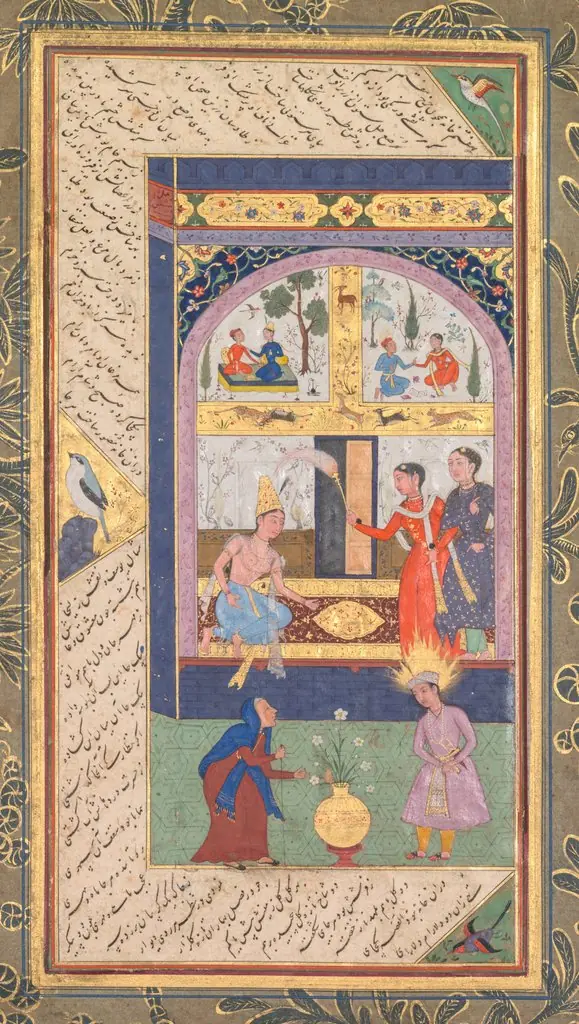 Zulaykha in her palace and as an elderly woman with Joseph (recto), from a Panj Ganj (Five Treasures) of Abd al- Rahman Jami (Persian, 1414–1492)
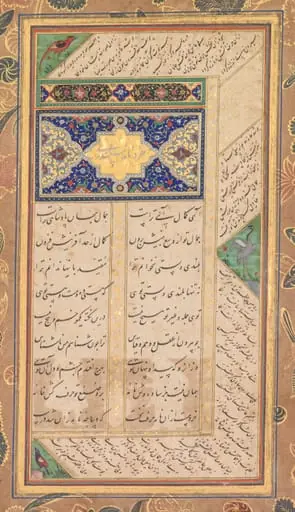 Illuminated page (verso), from a Panj Ganj (Five Treasures) of Abd al- Rahman Jami (Persian, 1414–1492) with two Persian masnavis: Yusuf va Zulaykha (Joseph and Zulaykha) and Khirad-nama-i Iskandari (Alexander’s Book of Wisdom)
 Zulaykha in her palace and as an old woman with Joseph, from a Panj Ganj (Five Treasures) of Abd al-Rahman Jami (Persian, 1414–1492); verso from a Panj Ganj of Abd al-Rahman Jami (Persian, 1414–1492), with two masnavis: Yusuf va Zulaykha (Joseph and Zulaykha) and Khirad-nama-i Iskandari (Alexander’s Book of Wisdom)
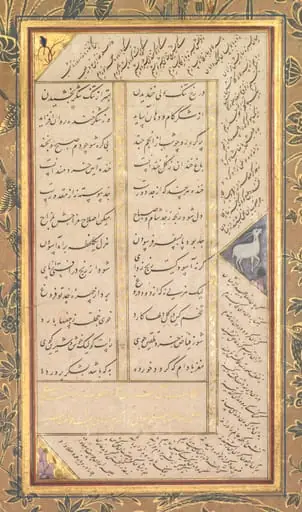 Page from a Panj Ganj (Five Treasures) of Abd al-Rahman Jami (Persian, 1414–1492), with two Persian
masnavis: Yusuf va Zulaykha (Joseph and Zulaykha) and Subhat al-abrar (Rosary of the Righteous) (verso)
Page from a Panj Ganj (Five Treasures) of Abd al-Rahman Jami (Persian, 1414–1492), with two Persian
masnavis: Yusuf va Zulaykha (Joseph and Zulaykha) and Subhat al-abrar (Rosary of the Righteous) (verso)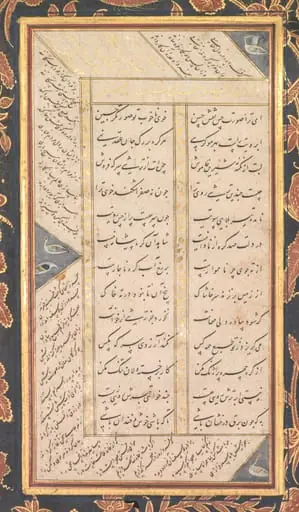 Folio B: Folio from the "Five Treasures" (Panj Ganj) of Jami (recto)
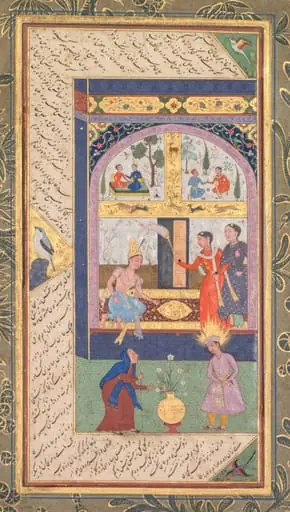 Zulaykha in her palace and as an elderly woman with Joseph (recto), from a Panj Ganj (Five Treasures) of Abd al- Rahman Jami (Persian, 1414–1492)
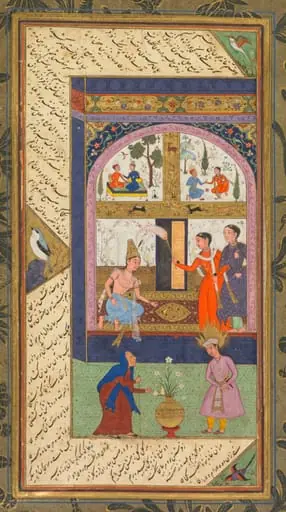 Folios A and B from the "Five Treasures" (Panj Ganj) of Jami
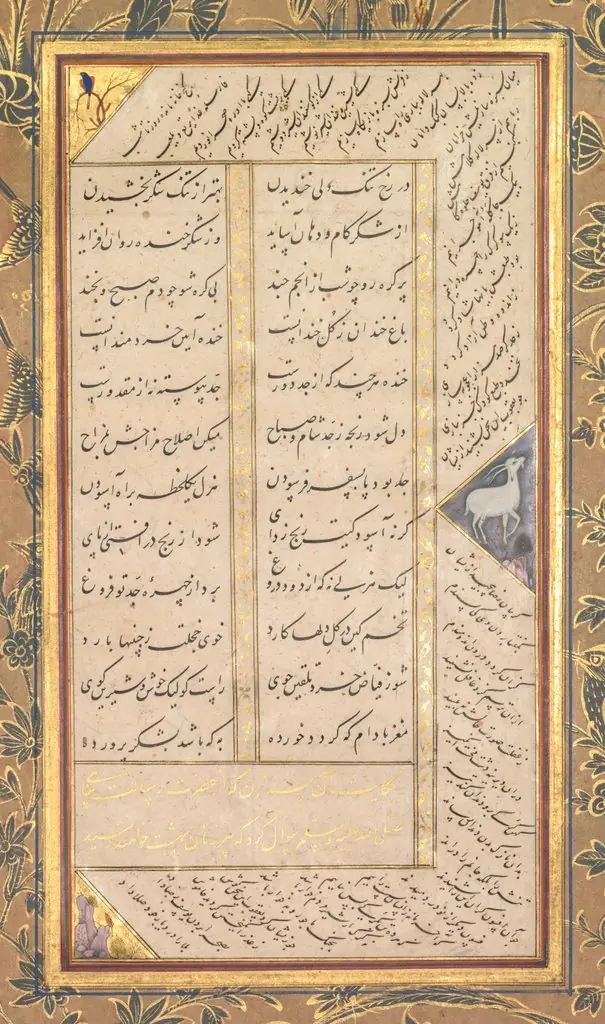 Page from a Panj Ganj (Five Treasures) of Abd al-Rahman Jami (Persian, 1414–1492), with two Persian masnavis: Yusuf va Zulaykha (Joseph and Zulaykha) and Subhat al-abrar (Rosary of the Righteous) (verso)
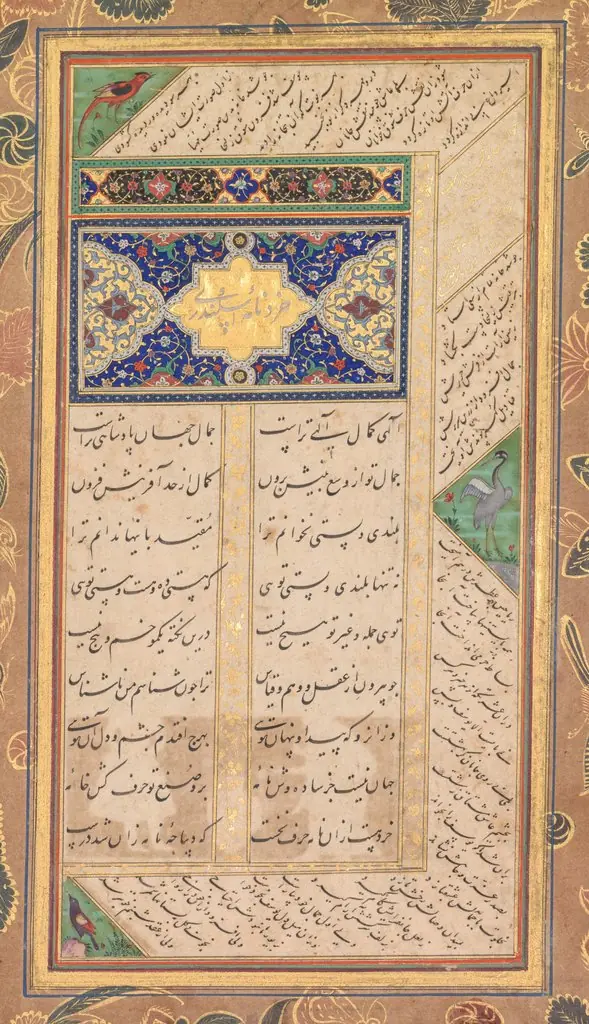 Illuminated page (verso), from a Panj Ganj (Five Treasures) of Abd al- Rahman Jami (Persian, 1414–1492) with two Persian masnavis: Yusuf va Zulaykha (Joseph and Zulaykha) and Khirad-nama-i Iskandari (Alexander’s Book of Wisdom)
 From Dohras (Songs) 40 and 42 from the Kitab-i Nauras (Book of Nine Essences) of Sultan Ibrahim Adil Shah II of Bijapur (r. 1580–1627) (recto)
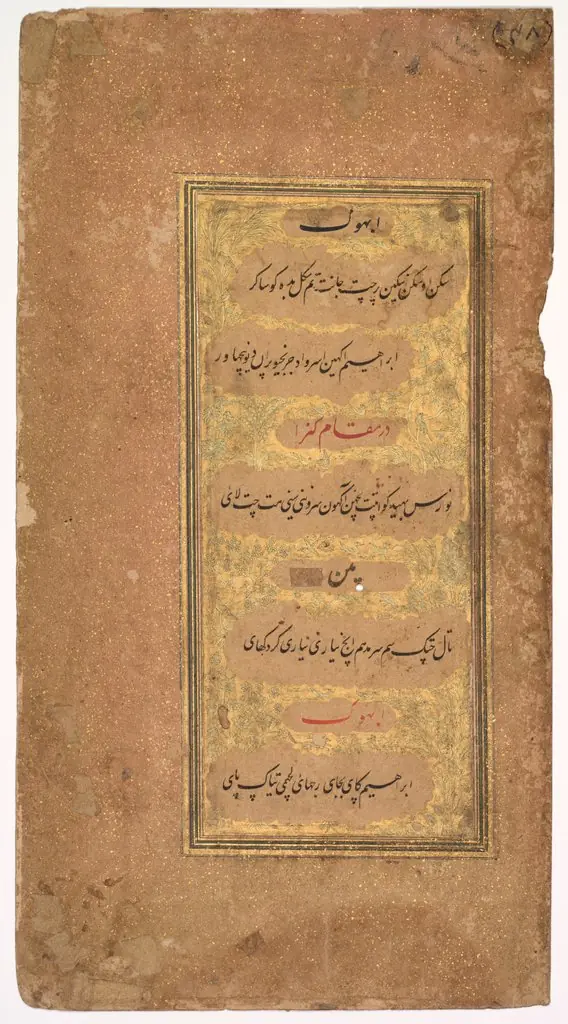 From Dohras (Songs) 40 and 42 from the Kitab-i Nauras (Book of Nine Essences) of Sultan Ibrahim Adil Shah II of Bijapur (r. 1580–1627) (recto)
 Folio B: Folio from the "Five Treasures" (Panj Ganj) of Jami (recto)
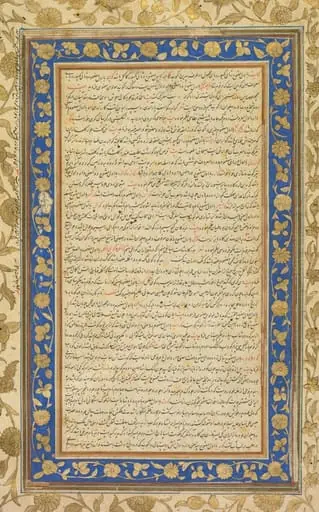 An Illuminated Folio from the Royal Manuscript of the Farhang-i Jahangiri (recto)
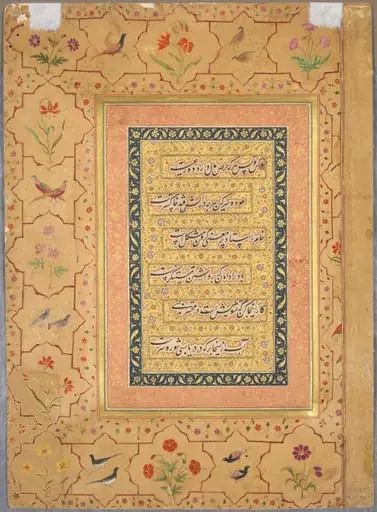 Calligraphy framed by an ornamental border with poppies and pairs of birds, from the Late Shah Jahan Album (verso)