Artwork
From Dohras (Songs) 40 and 42 from the Kitab-i Nauras (Book of Nine Essences) of Sultan Ibrahim Adil Shah II of Bijapur (r. 1580–1627); verso: From Dohras (Songs) 40 and 36 from the Kitab-i Nauras of Sultan Ibrahim Adil Shah II
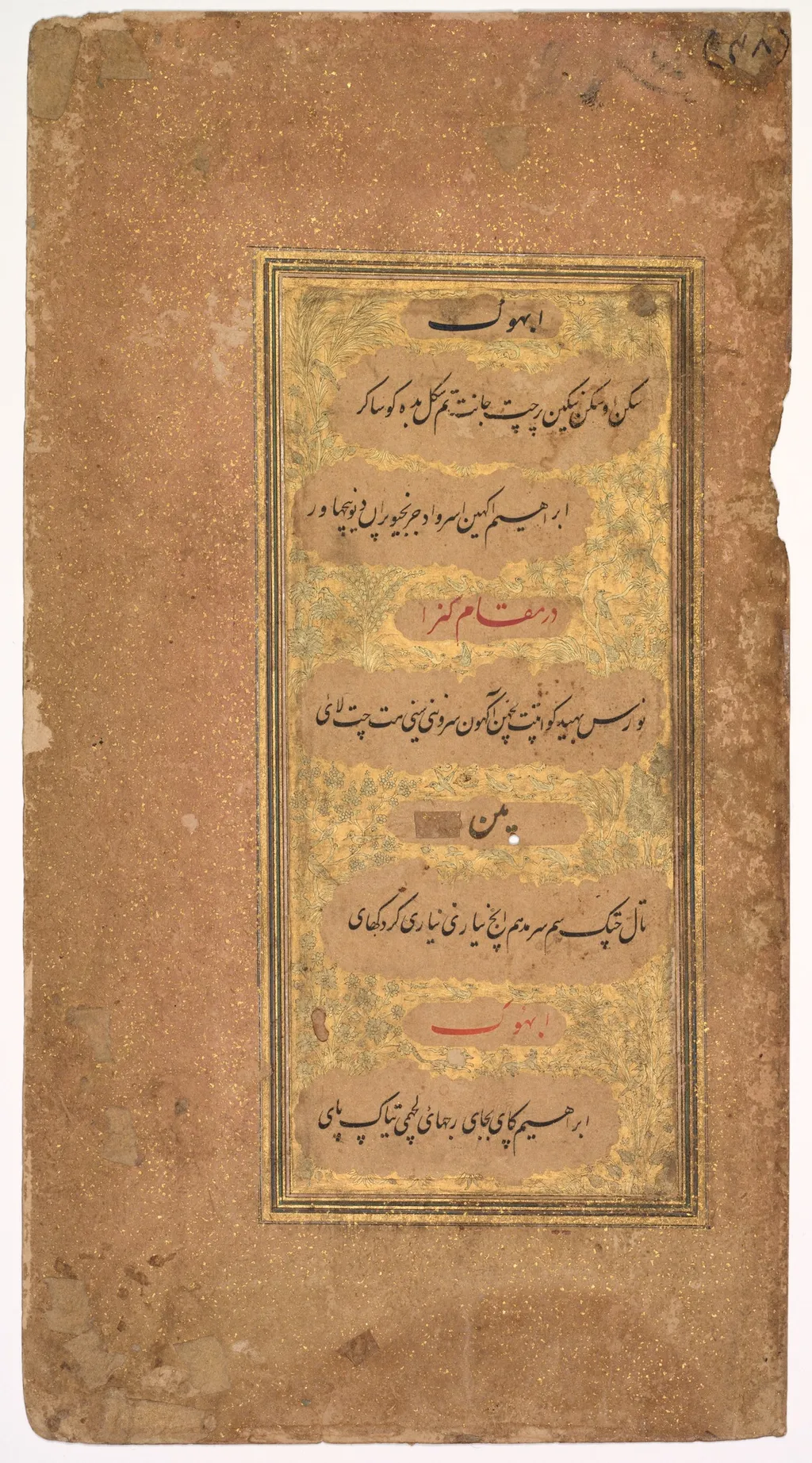
From Dohras (Songs) 40 and 42 from the Kitab-i Nauras (Book of Nine Essences) of Sultan Ibrahim Adil Shah II of Bijapur (r. 1580–1627); verso: From Dohras (Songs) 40 and 36 from the Kitab-i Nauras of Sultan Ibrahim Adil Shah II is an unspecified painting by Khalilullah Butshikan. It dates from 1618 and is held in the collection of the Cleveland Museum of Art.
About this work
Overview
Created in 1618 by the Deccan artist Khalilullah Butshikan, this illuminated page forms part of the Kitab-i Nauras, a poetic anthology commissioned by Sultan Ibrahim Adil Shah II of Bijapur (r. 1580–1627). The manuscript contains verses identified as Dohras 40, 42 on the recto and Dohras 40, 36 on the verso, reflecting the Sultan’s personal engagement with music and poetry.
Subject & Meaning
The text consists of Persian lyrical couplets, likely devotional or courtly songs, arranged in two distinct blocks separated by small red punctuation marks that function as visual cues for the reader. The verses exemplify the Sultan’s patronage of a syncretic cultural milieu where Islamic, Hindu, and regional traditions converged in the arts.
Technique & Style
Executed on paper with black ink calligraphy, the script is set against a muted palette of brown, gold, red, and green. A delicate ornamental frame of miniature floral and leaf motifs borders the text, while faint gold edging suggests the original page once featured richer coloration. The careful spacing and occasional raised lines indicate a high level of scribal precision.
History & Provenance
After its production in the Bijapur court, the page entered various private collections before being acquired by the Cleveland Museum of Art, where it now resides in the Asian art department. Its survival in relatively good condition, despite creases and wear, attests to continued handling and appreciation over four centuries.
Context
The Kitab-i Nauras belongs to a broader tradition of royal manuscript production in the Deccan Sultanates, where rulers used illuminated books to assert cultural authority and personal taste. Ibrahim Adil Shah II, known for his musical treatises, fostered a court where Persian literary forms blended with indigenous artistic vocabularies.
Legacy
Pages such as this illuminate the interdisciplinary nature of Deccan court culture, offering scholars insight into the visual and literary aesthetics of early 17th‑century South India. Their preservation in institutions like the Cleveland Museum supports ongoing research into cross‑cultural exchanges within the Indian Ocean world.
Artist & collection

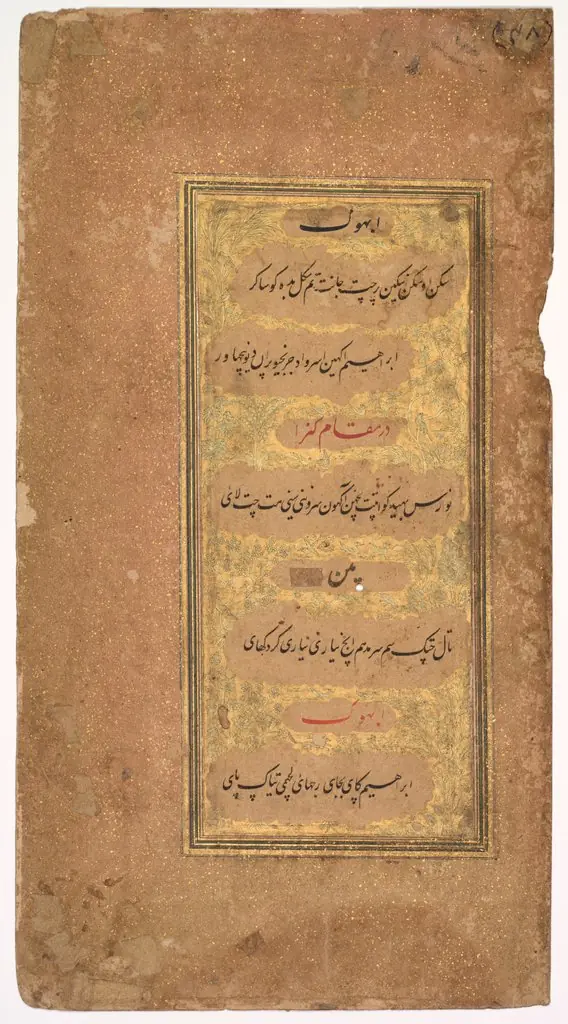 From Dohras (Songs) 40 and 42 from the Kitab-i Nauras (Book of Nine Essences) of Sultan Ibrahim Adil Shah II of Bijapur (r. 1580–1627) (recto)
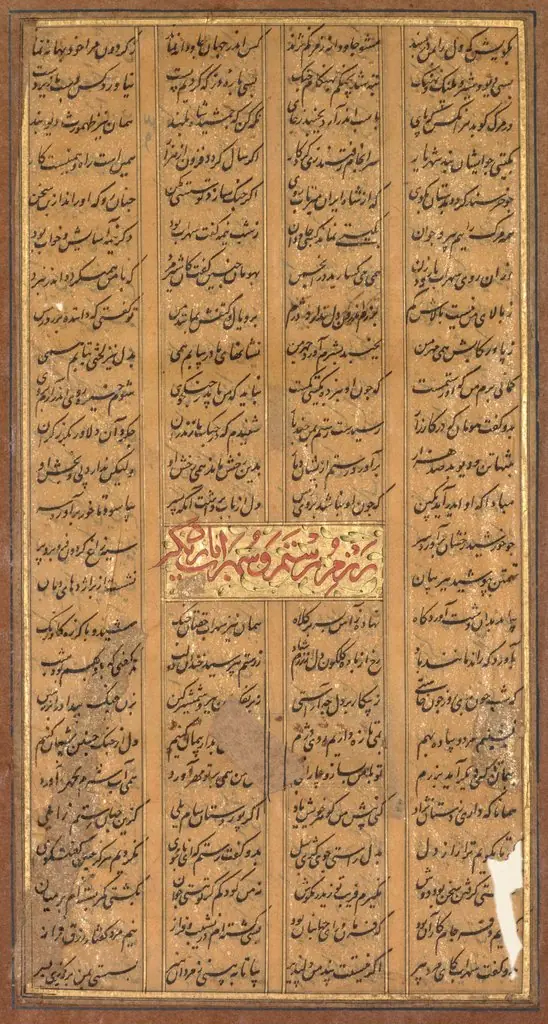 Text of Rustam and Suhrab, from the Shah-nama of Firdausi (Persian, c. 934–1020) (verso)
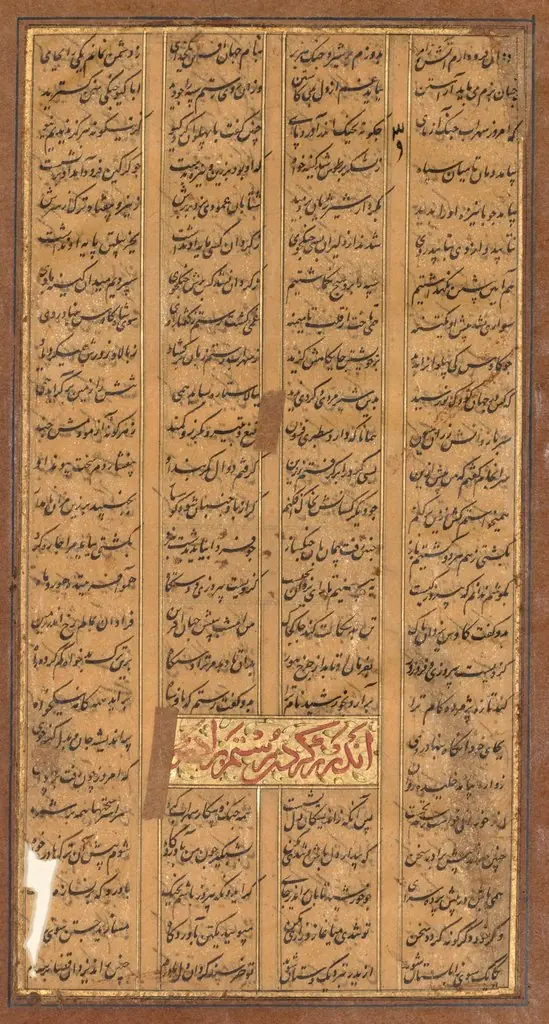 Text of Rustam and Suhrab, from the Shah-nama of Firdausi (Persian, c. 934–1020) (recto)
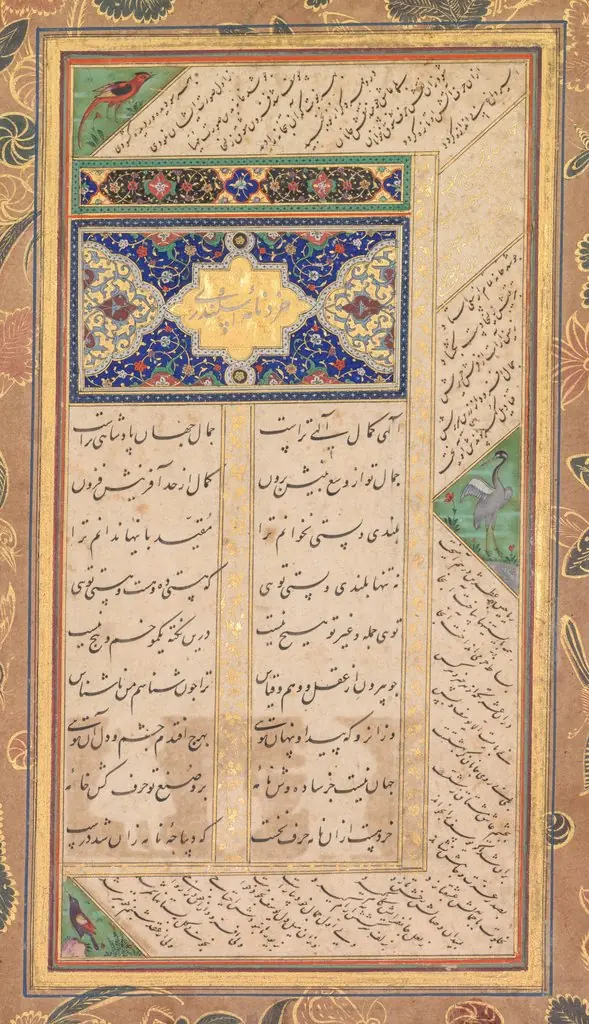 Illuminated page (verso), from a Panj Ganj (Five Treasures) of Abd al- Rahman Jami (Persian, 1414–1492) with two Persian masnavis: Yusuf va Zulaykha (Joseph and Zulaykha) and Khirad-nama-i Iskandari (Alexander’s Book of Wisdom)