Artwork
The Adoration of the Magi
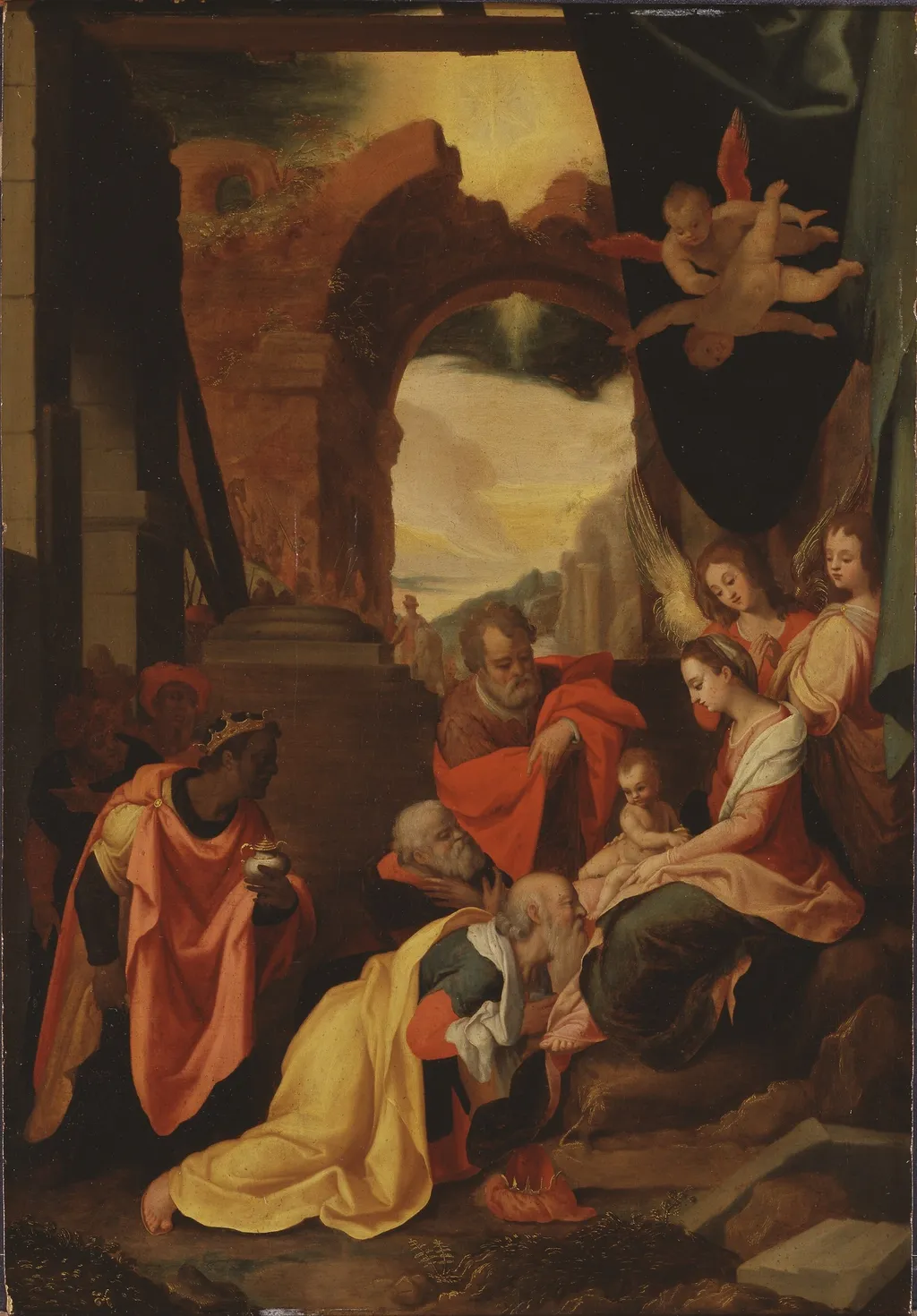
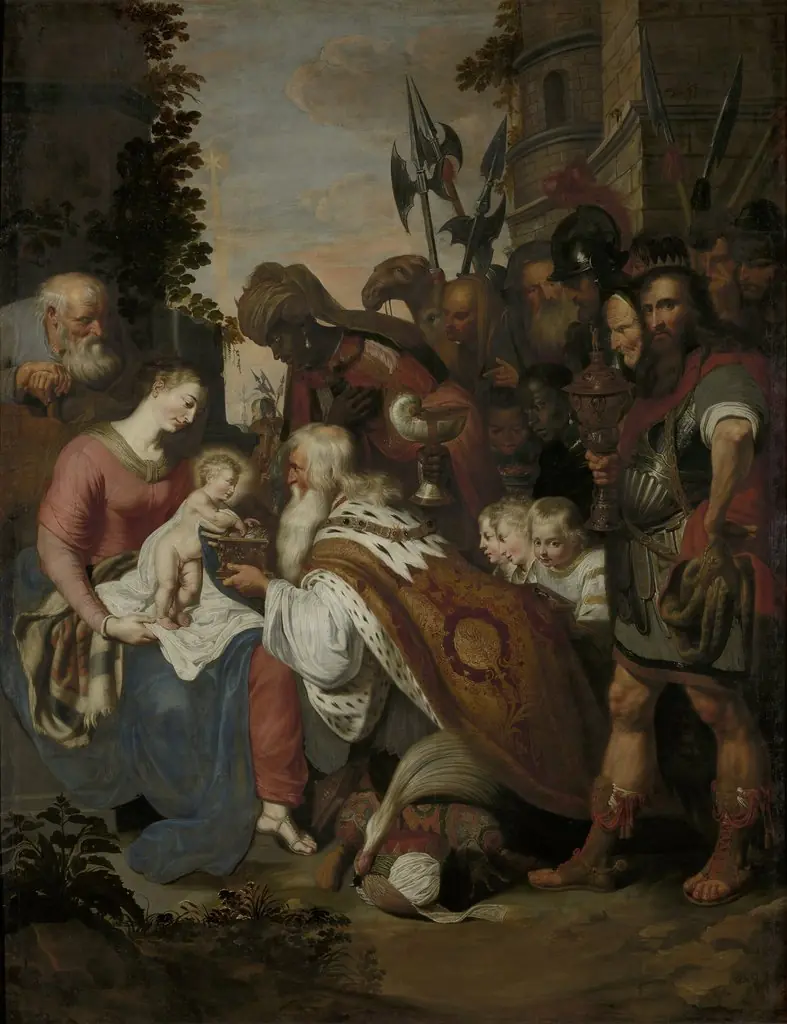
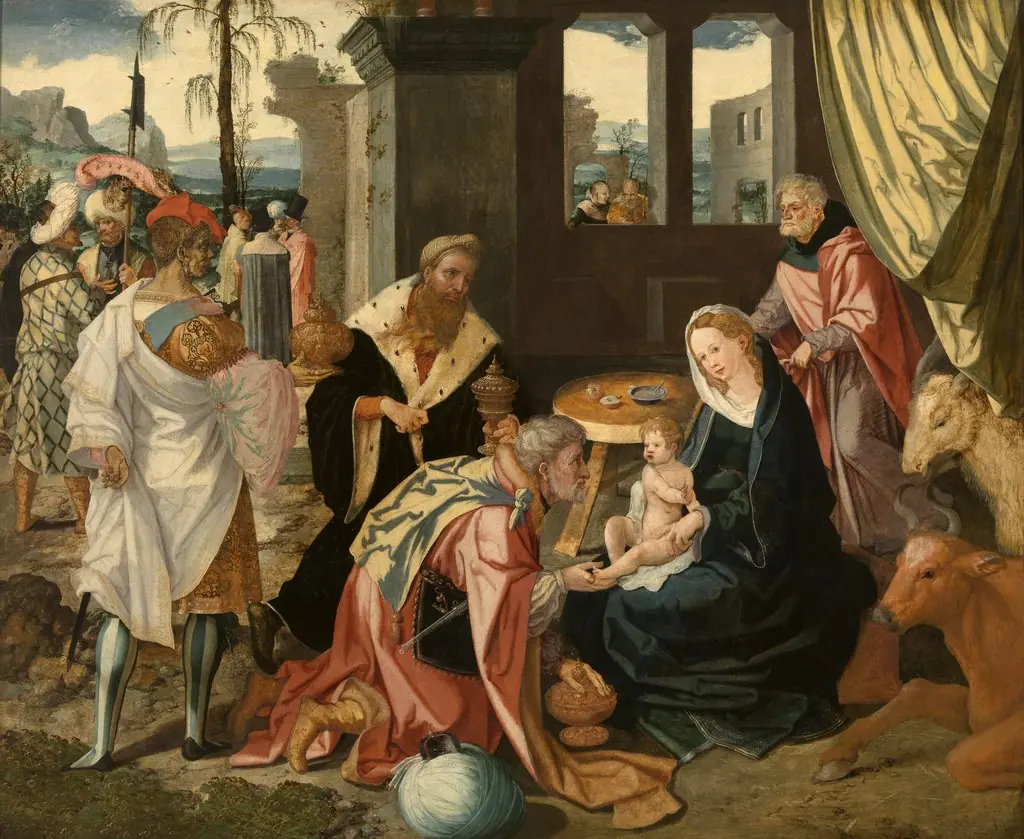
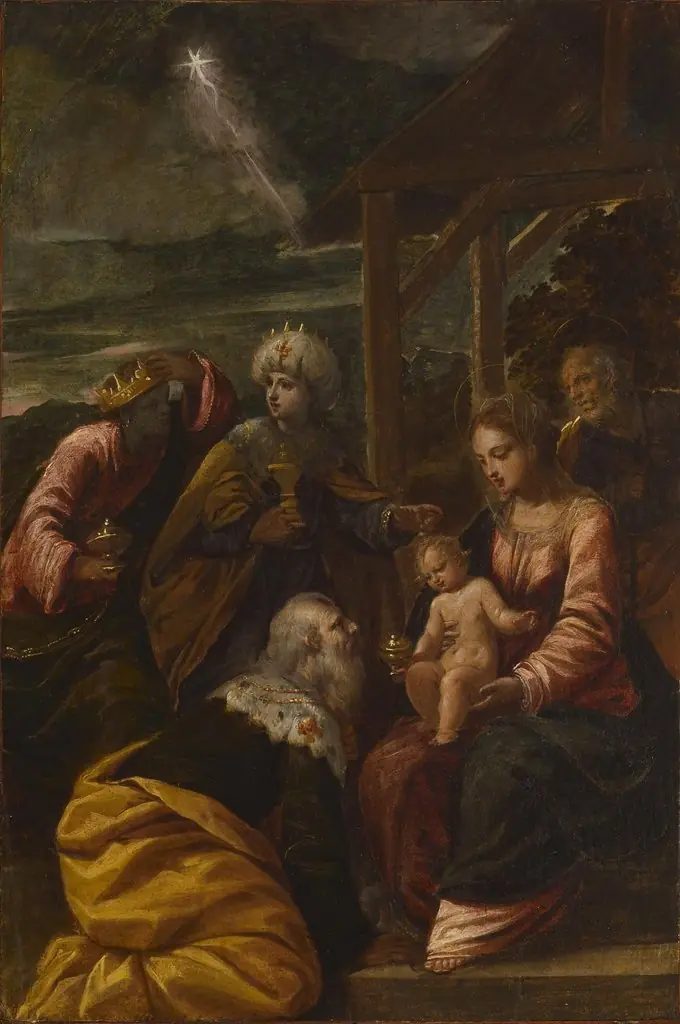
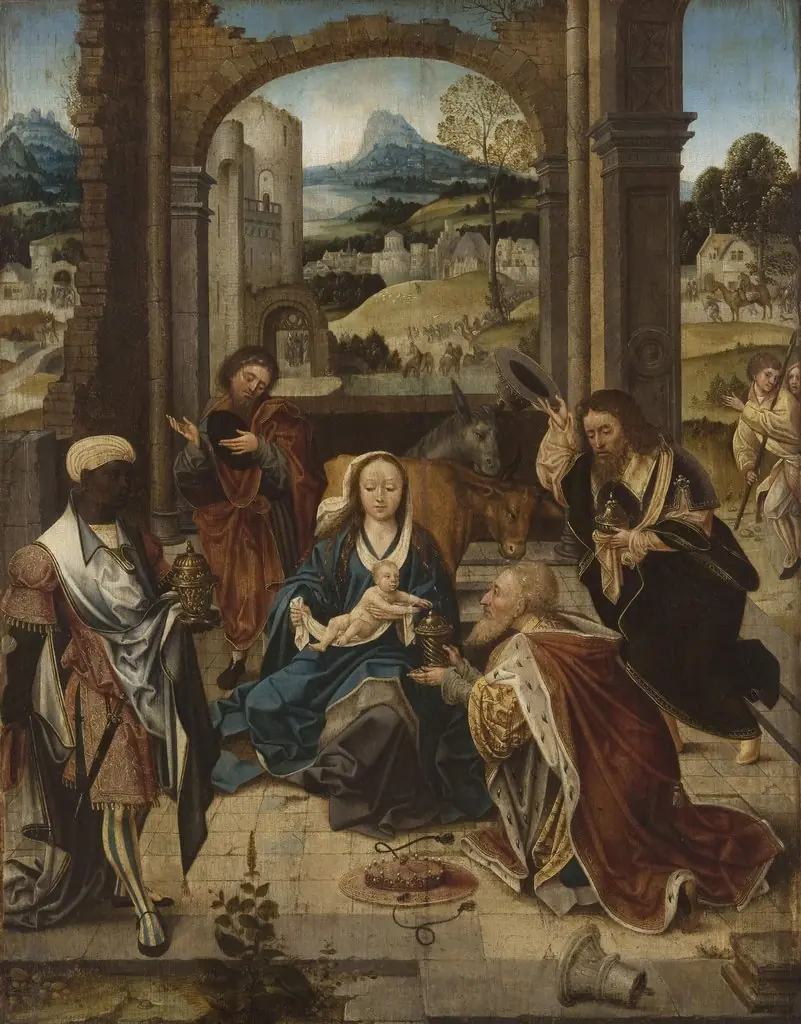
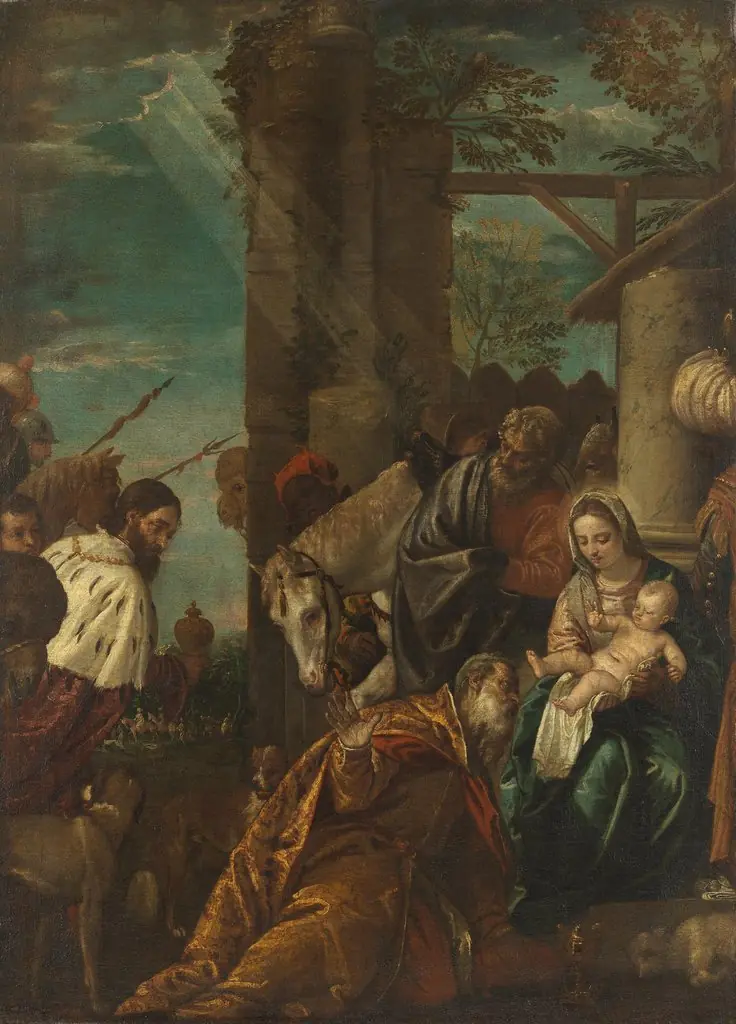
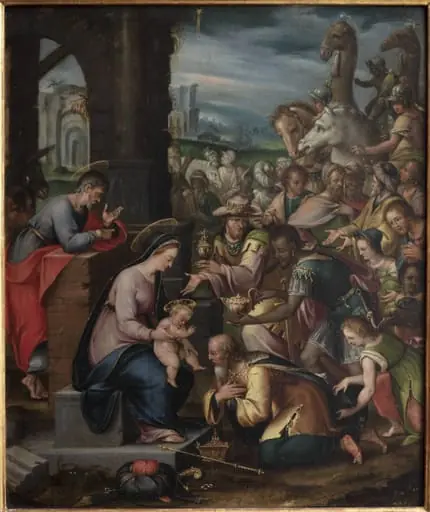
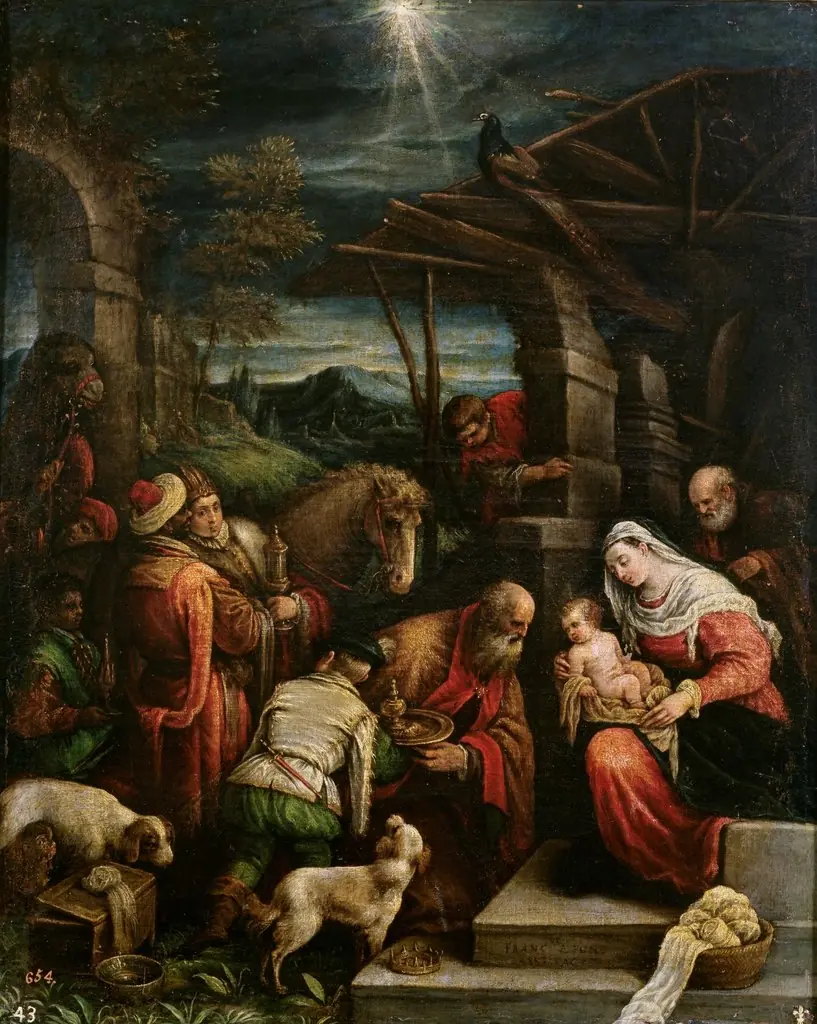
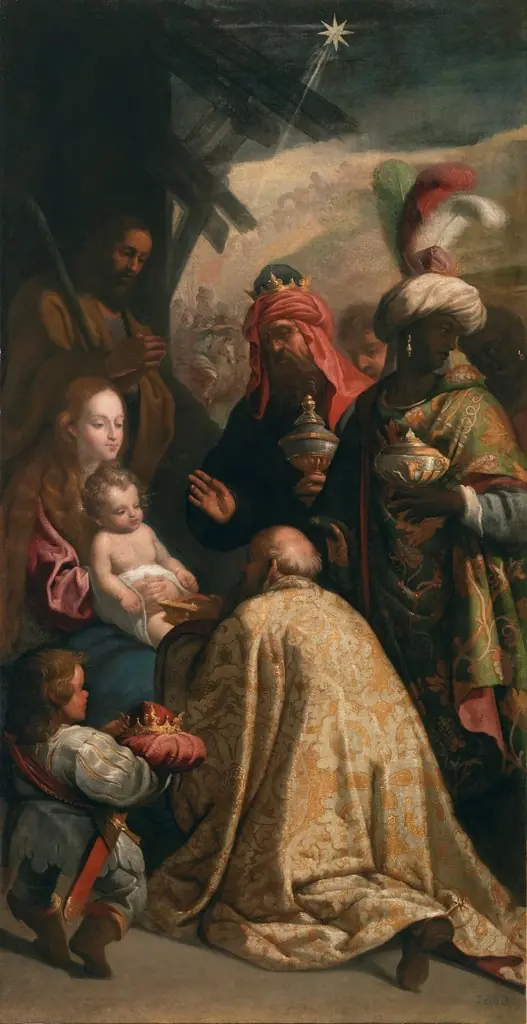
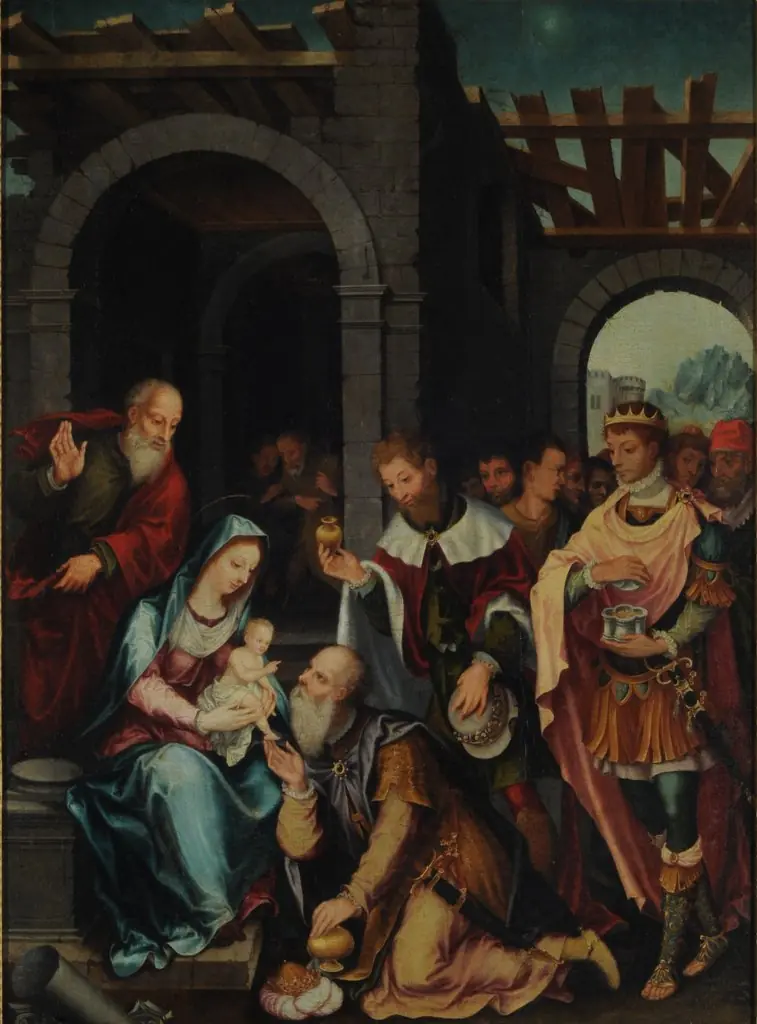
The Adoration of the Magi is an oil painting by Unknown. It dates from 1850 and is held in the collection of the Nationalmuseum. The work depicts a domestic interior illuminated by a strong backlight that highlights a central female figure cradling an infant.
About this work
Overview
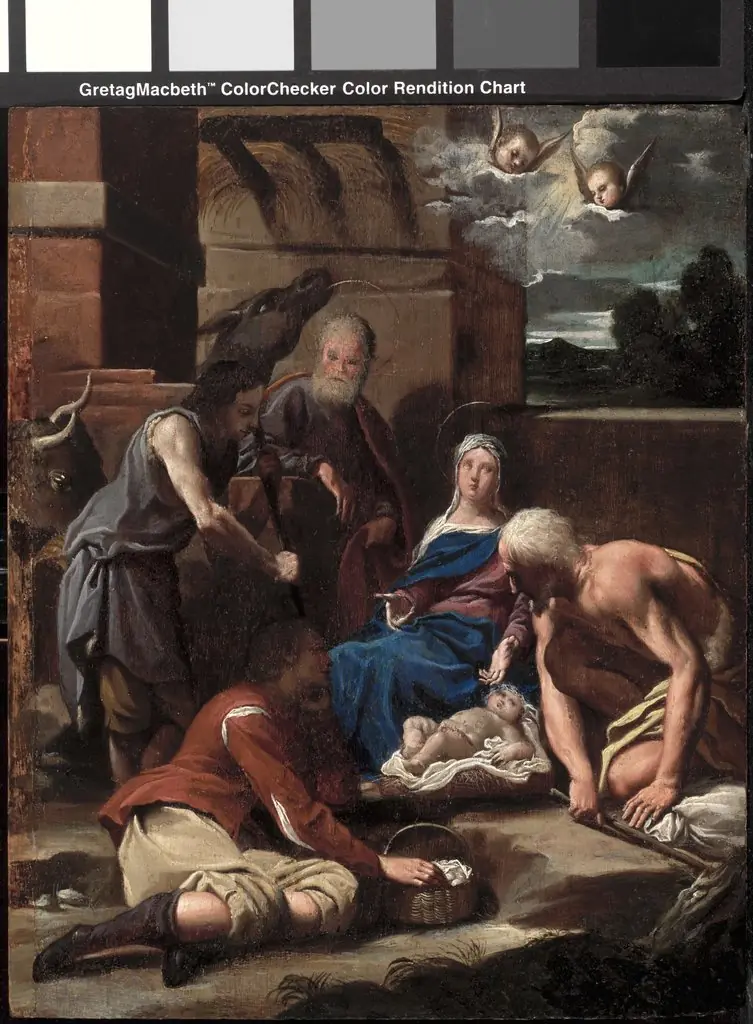
The work depicts a domestic interior illuminated by a strong backlight that highlights a central female figure cradling an infant. Surrounding them are several attendants, some kneeling, others seated, all gathered in a solemn arrangement. Angelic forms hover in the upper background, while a broken column frames the luminous source, creating a dramatic contrast between light and shadow.
Subject & Meaning
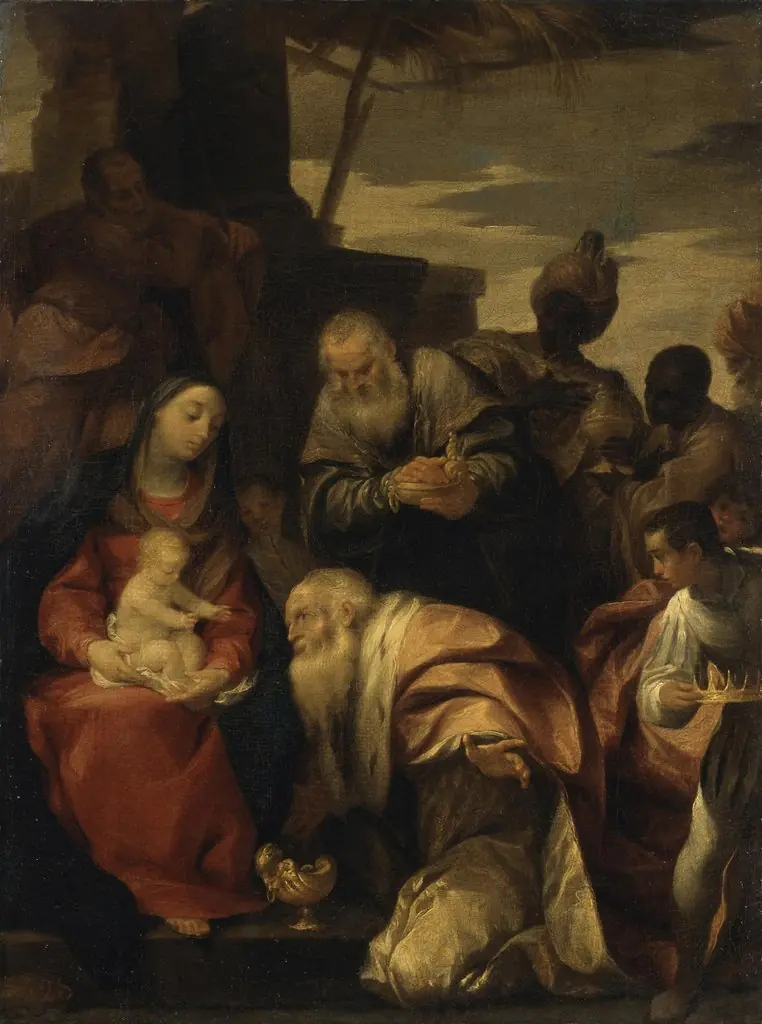
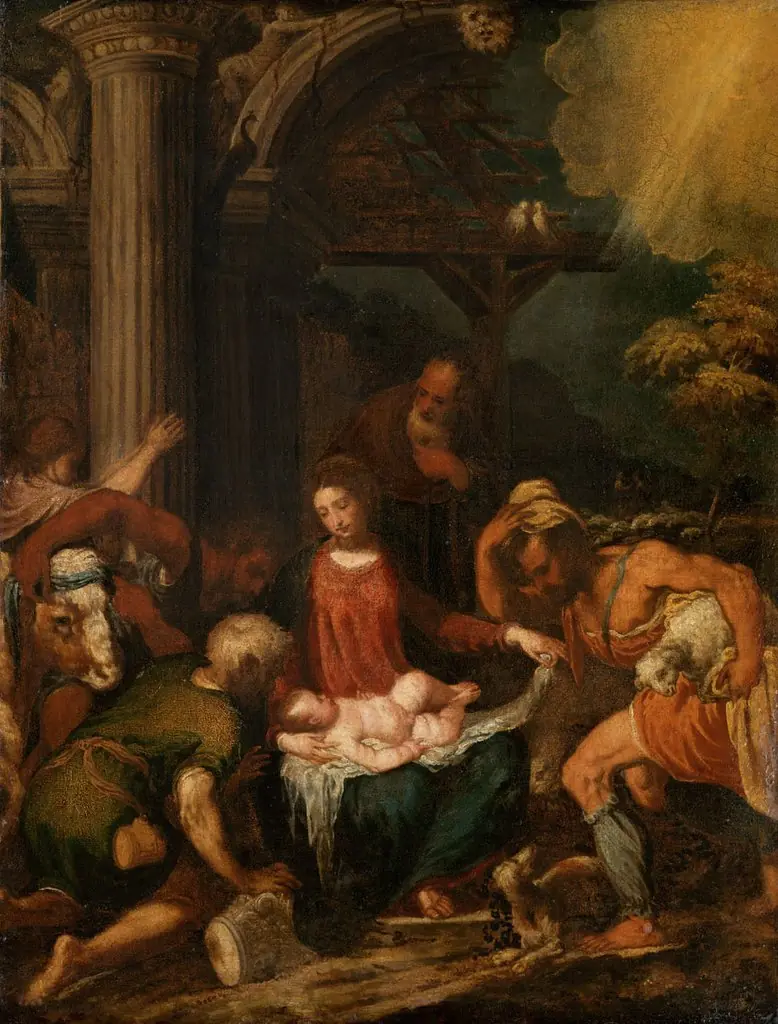
The central mother and child are presented as the focal point of devotion, surrounded by figures offering gifts and reverence. The kneeling man with a red cloth appears to present a tribute, suggesting a narrative of worship and homage. The inclusion of angels reinforces a spiritual dimension, linking the intimate scene to a broader religious context.
Technique & Style
The painter employs chiaroscuro, using a bright glow behind the column to carve the figures from a darkened space. Warm hues of red, yellow, and earth tones dominate the palette, while deep shadows enhance depth. The composition balances strong contrasts with subtle modeling, allowing the central figures to emerge sharply against the surrounding gloom.
History & Provenance
Created in oil on canvas, the piece reflects a period when artists explored dramatic lighting to convey narrative intensity. While specific details of its commission and ownership are not recorded here, the stylistic traits align it with works produced during the Baroque era, when such visual strategies were prevalent.
Artist & collection

 Domestic Scene
 Giacomo and Cardinal Marco, investing Andrea, Abbot of San Zeno, with his Benefice
 The Nymph of Fontainebleau
 Portrait of a Woman
 Madonna and Child with Saints in the Enclosed Garden
 Venus and Minerva
 Family Group of Four on Sofa
 Wall painting from Room H of the Villa of P. Fannius Synistor at Boscoreale