Artwork
The Descent into Limbo
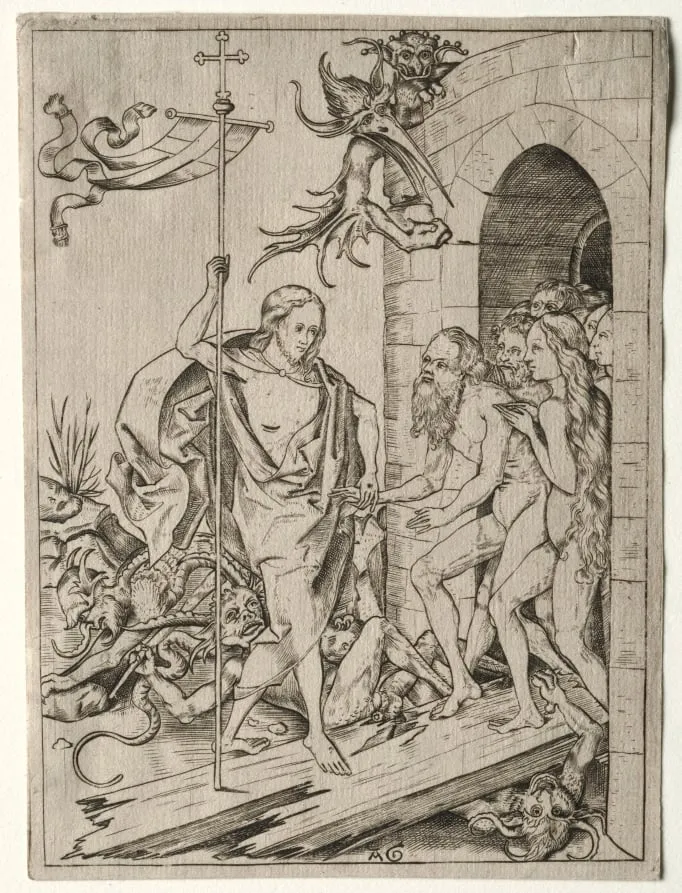
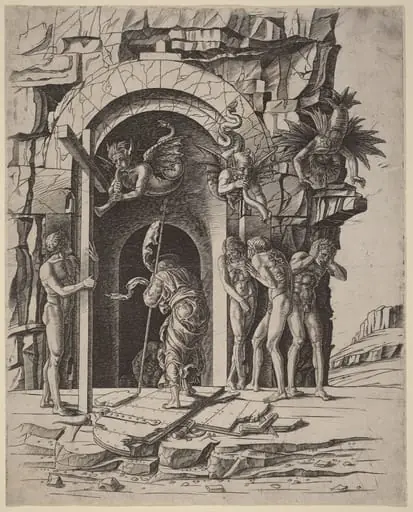
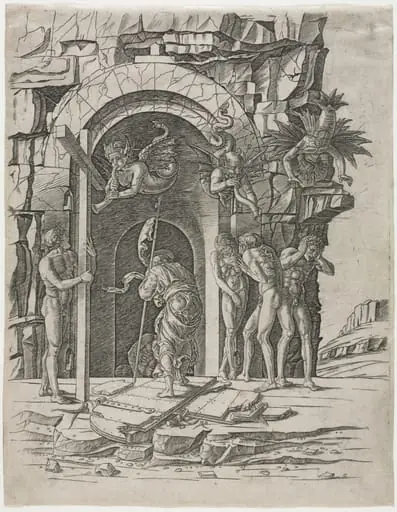
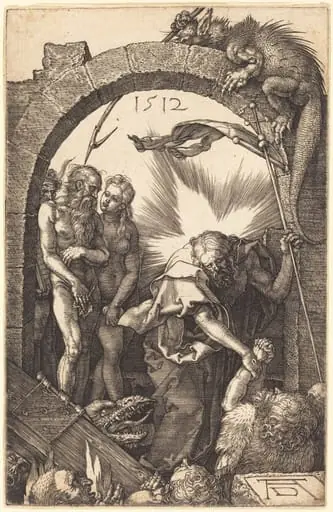
The Descent into Limbo is a print by the Renaissance artist Unknown. It dates from 1404 and is held in the collection of the Cleveland Museum of Art. This print depicts a robed figure standing on a narrow plank above a dark chasm, holding a staff topped with a cross.
About this work
Overview
This print depicts a robed figure standing on a narrow plank above a dark chasm, holding a staff topped with a cross.
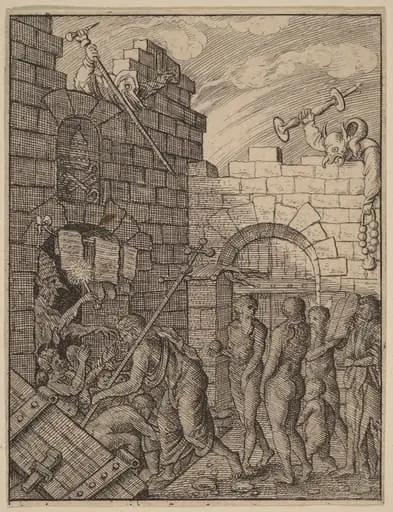
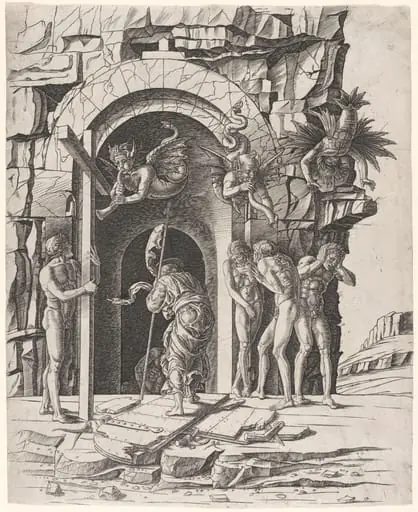
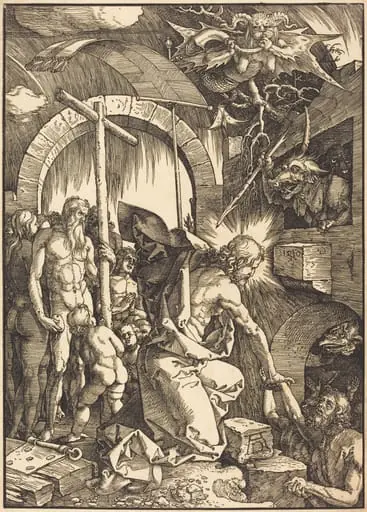
This print depicts a robed figure standing on a narrow plank above a dark chasm, holding a staff topped with a cross. Beneath him, a group of nude figures reach upward in desperation. Behind them, shadowy creatures and a banner bearing a serpent suggest a liminal, otherworldly setting. The scene conveys a moment of transition, though the exact narrative remains ambiguous. The composition and rendering align with Renaissance visual conventions, emphasizing human form and spatial depth.
Subject & Meaning
The central figure, possibly a savior or guide, hovers between realms, offering aid to the lost souls below. Their outstretched hands imply yearning for deliverance, while the serpent emblem and monstrous forms evoke themes of sin, temptation, or the underworld. The ambiguity of the scene resists a single interpretation—whether it illustrates redemption, judgment, or the soul’s passage through purgatory remains deliberately unresolved.
Technique & Style
Rendered with precise linework and tonal gradation, the print reflects Renaissance engraving traditions. Figures are modeled with anatomical clarity, and the pit’s depth is suggested through layered shadows. The background monsters are rendered with stylized detail, contrasting the naturalism of the human forms. The composition directs the viewer’s gaze downward, reinforcing the tension between the elevated figure and the supplicants below.
History & Provenance
The print’s origin is tied to late 15th- or early 16th-century Northern European workshops, where biblical and allegorical subjects were commonly reproduced. No definitive artist or commission is recorded, but its stylistic traits align with prints circulating in the Rhineland or Low Countries. Early ownership traces are sparse, and it likely entered institutional collections in the 19th century as interest in Renaissance graphic arts grew.
Context
Created during a period of intense religious reflection, the image resonates with contemporary depictions of Christ’s Harrowing of Hell and medieval visions of the afterlife. It reflects a cultural preoccupation with salvation, moral peril, and divine intervention. While not directly illustrating scripture, it draws from popular theological imagery, blending doctrinal themes with imaginative elements common in devotional prints of the era.
Legacy
Though not widely reproduced in modern scholarship, the print contributes to the broader corpus of Renaissance allegorical graphics that explored spiritual transition. Its enigmatic narrative influenced later symbolic works in printmaking, particularly those addressing moral ambiguity and the soul’s journey. It remains a quiet example of how visual art conveyed complex theological ideas without explicit textual reference.
Artist & collection

 Domestic Scene
 Giacomo and Cardinal Marco, investing Andrea, Abbot of San Zeno, with his Benefice
 The Nymph of Fontainebleau
 Portrait of a Woman
 Madonna and Child with Saints in the Enclosed Garden
 Venus and Minerva
 Family Group of Four on Sofa
 Wall painting from Room H of the Villa of P. Fannius Synistor at Boscoreale