Artwork
The Eight Hosts of Deva, Naga, and Yakshi
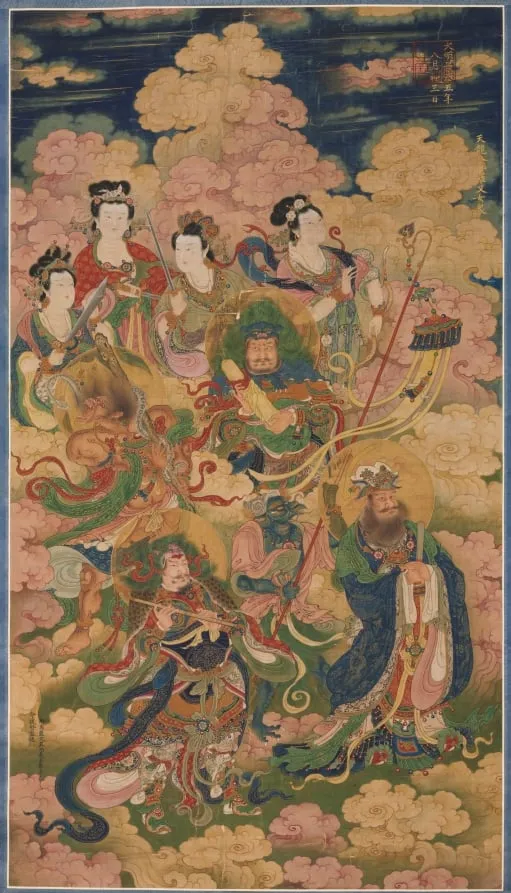
The Eight Hosts of Deva, Naga, and Yakshi is an unspecified painting by the Ming dynasty painting artist Unknown. It dates from 1454 and is held in the collection of the Cleveland Museum of Art.
About this work
You see eight figures floating on clouds—four snake-like nagas with human heads and four yakshis, nature spirits with flowing robes and jewels.
You see eight figures floating on clouds—four snake-like nagas with human heads and four yakshis, nature spirits with flowing robes and jewels.
This painting was made for a week-long Buddhist ritual called the Water-Land ceremony. It was hung in the inner altar on the second day to guide the souls of the dead. The bright colors and gold details were meant to impress crowds and honor imperial ancestors.
Look up more about the subject: *china, ming dynasty (1368–1644)*.
Overview
The scroll is a Ming‑period painting created for the Water‑Land (shuilu) ceremony, a Buddhist rite intended to aid the souls of the deceased on both land and sea. Displayed on the second day of the week‑long ritual, it formed part of a larger set of thirty‑six paintings used in the inner altar to accompany the ceremony.
Subject & Meaning
The image depicts eight celestial beings drawn from the Lotus Sutra: four naga figures—serpentine bodies with human heads—paired with four yakshi, graceful nature spirits clothed in flowing robes and adorned with jewels. Their presence was believed to guide and protect the departed during the rite.
Technique & Style
Executed in vivid, opaque pigments and outlined with fine gilt lines, the work retains its original brilliance. The combination of bright color fields and delicate gold detailing reflects the luxurious aesthetic favored in court‑sponsored religious art of the late Ming.
History & Provenance
The painting belongs to a distinguished group of Water‑Land ritual scrolls, including the companion piece CMA 1973.70.1, recognized as the finest surviving examples of their type from the Ming era. Both works have remained in excellent condition, with their original coloration and gilding largely unchanged.
Context
Water‑Land ceremonies were performed for imperial ancestors and high officials from the Song through the Ming dynasties, attracting large public audiences. The elaborate visual program, of which this scroll is a component, reinforced the ritual’s esoteric purpose of universal salvation.
Artist & collection

 Domestic Scene
 Giacomo and Cardinal Marco, investing Andrea, Abbot of San Zeno, with his Benefice
 The Nymph of Fontainebleau
 Portrait of a Woman
 Madonna and Child with Saints in the Enclosed Garden
 Venus and Minerva
 Family Group of Four on Sofa
 Wall painting from Room H of the Villa of P. Fannius Synistor at Boscoreale
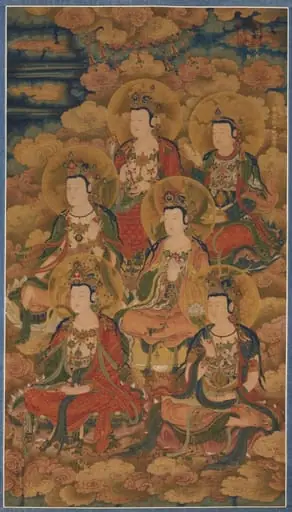 The Bodhisattvas of the Ten Stages in Attaining the Most Perfect Knowledge
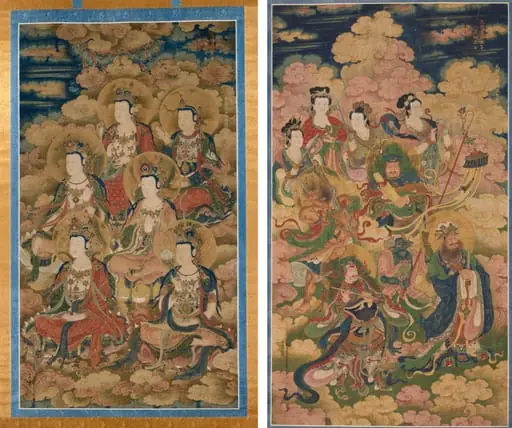 The Bodhisattvas of the Ten Stages in Attaining the Most Perfect Knowledge; The Eight Hosts of Deva, Naga, and Yakshi
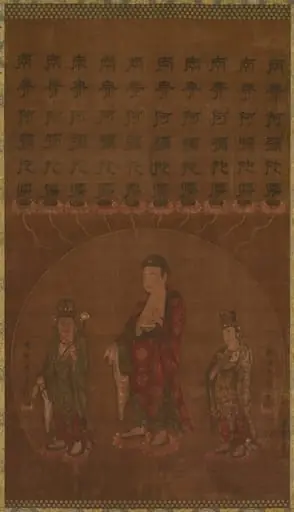 Buddha Amitābha with Two Attending Bodhisattvas
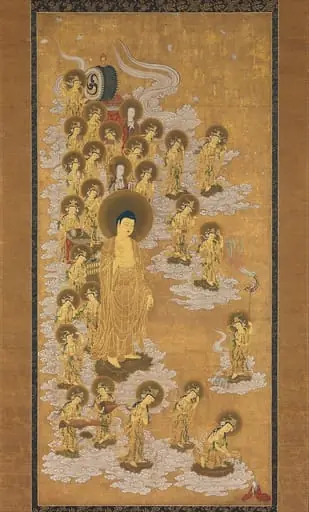 阿弥陀二十五菩薩来迎図|Welcoming Descent of Amida Buddha and Twenty-five Bodhisattvas
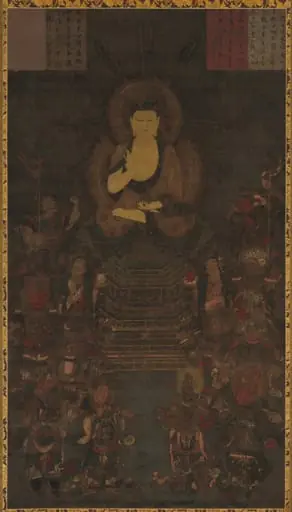 Medicine Master Buddha and the Twelve Divine Generals
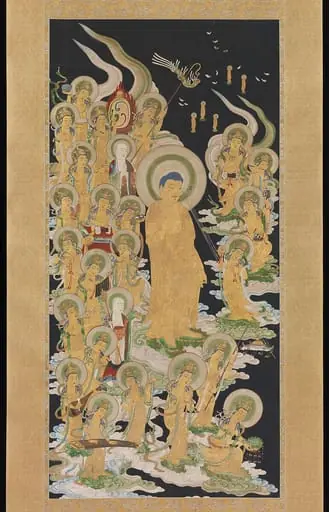 阿弥陀二十五菩薩来迎図|Buddha and Attendants
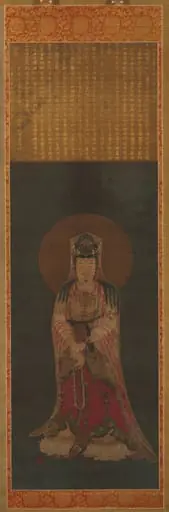 Kannon