Artwork
Kannon
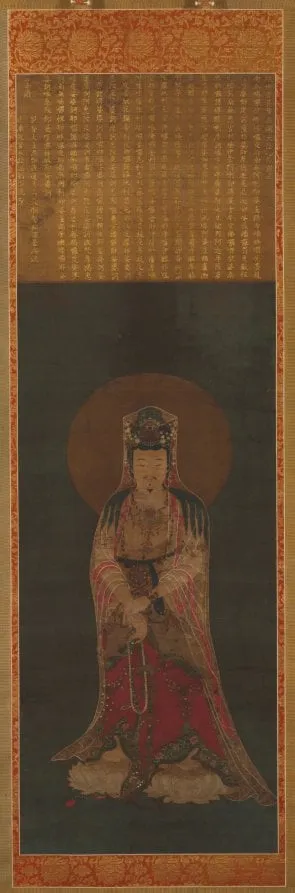
Kannon is an unspecified painting by the Impressionist artist Unknown. It dates from 1890 and is held in the collection of the Cleveland Museum of Art.
About this work
This painting copies the look of much older Korean Buddhist art—thin, see-through shawls and soft lines.
A golden figure floats on two lotus flowers, robes swirling like water. Tiny flames dance along the edges, and a small Buddha sits in the figure’s crown.
This painting copies the look of much older Korean Buddhist art—thin, see-through shawls and soft lines. The artist tried to keep that old style alive even as Japan changed fast around him.
To see how the old style really looked, search for paintings from the Korean Goryeo period (918–1392).
Overview
The painting depicts the bodhisattva Avalokiteshvara, known in Japan as Kannon, poised with both feet on lotus blossoms. A small figure of the Buddha Amitabha appears within the deity’s headdress, and a gold‑inscribed passage praising Kannon crowns the composition.
Subject & Meaning
Kannon is shown as a compassionate intercessor, standing on lotus flowers that symbolize purity. The inclusion of Amitabha in the crown links the bodhisattva to the Pure Land tradition, while the golden text underscores the devotional reverence accorded to the figure.
Technique & Style
The artist emulated the delicate, translucent shawls characteristic of Goryeo‑period Korean Buddhist paintings, rendering the robes with soft, flowing lines that suggest water. Subtle flame motifs trace the edges, and the overall palette emphasizes gold and muted tones.
History & Provenance
Created during a period of rapid cultural change in Japan, the work reflects a conscious effort to preserve the aesthetic of earlier Korean Buddhist art. The painting’s provenance traces back to a Japanese workshop that specialized in reproducing Goryeo motifs for local patrons.
Context
The Goryeo dynasty (918–1392) produced Buddhist images noted for ethereal drapery and refined line work. Japanese artists of later centuries often looked to these models for inspiration, adapting their visual language to contemporary religious practice.
Artist & collection

 Domestic Scene
 Giacomo and Cardinal Marco, investing Andrea, Abbot of San Zeno, with his Benefice
 The Nymph of Fontainebleau
 Portrait of a Woman
 Madonna and Child with Saints in the Enclosed Garden
 Venus and Minerva
 Family Group of Four on Sofa
 Wall painting from Room H of the Villa of P. Fannius Synistor at Boscoreale
 Amitābha Triad
 Water-Moon Kannon (Suigetsu Kannon)
 Standing Ksitigarbha
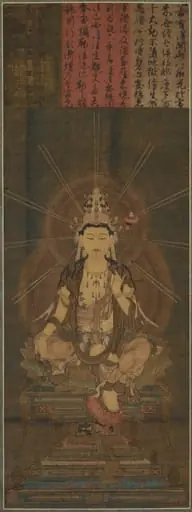 Miroku (Maitreya)
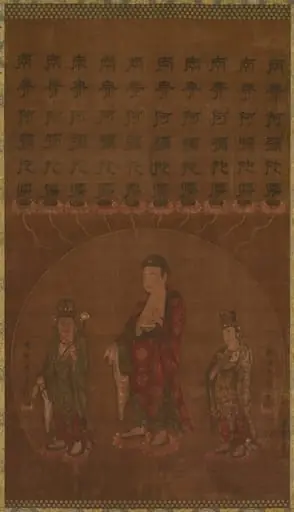 Buddha Amitābha with Two Attending Bodhisattvas
 Eleven-Headed Kannon (Jūichimen Kannon)
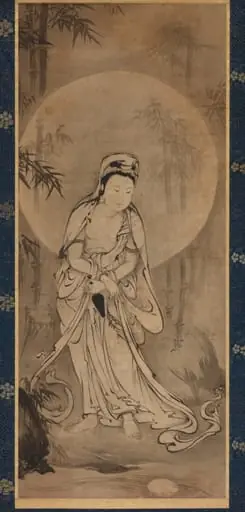 Willow-and-Moon Kannon (Yōryū Kannon)
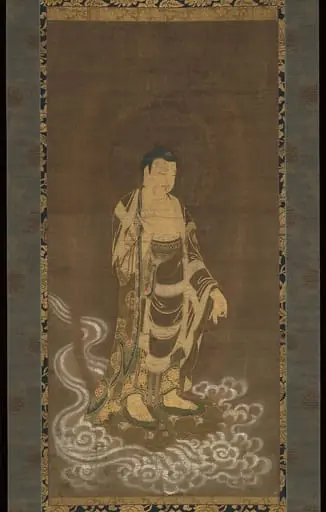 阿弥陀如来像|Welcoming Descent of Amida Buddha
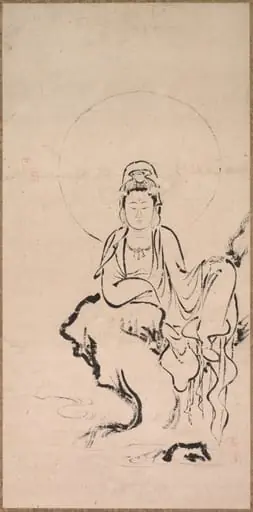 White-Robed Kannon (Byakue Kannon)
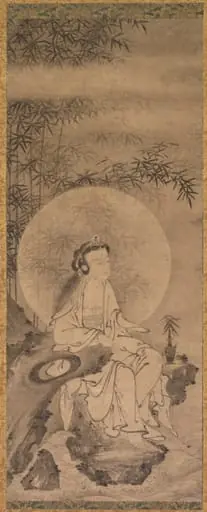 White-Robed Guanyin
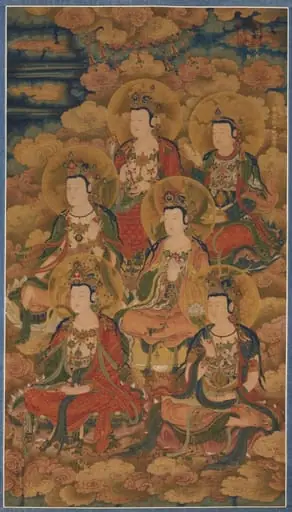 The Bodhisattvas of the Ten Stages in Attaining the Most Perfect Knowledge
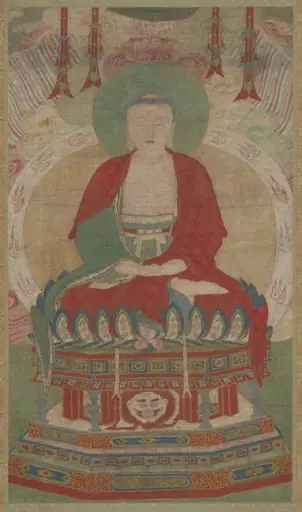 Seated Amitābha