Artwork
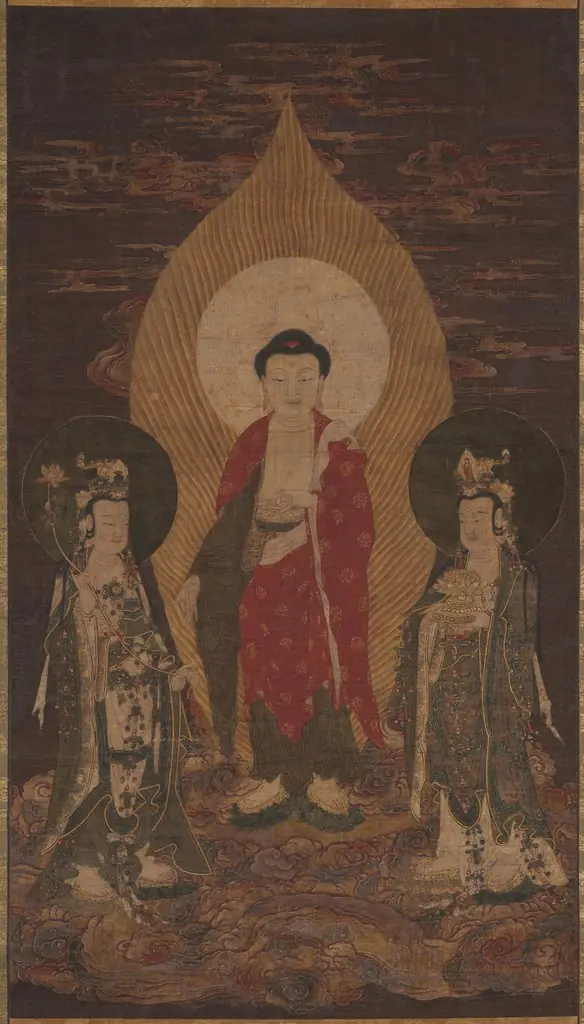
Buddha Amitābha with Two Attending Bodhisattvas
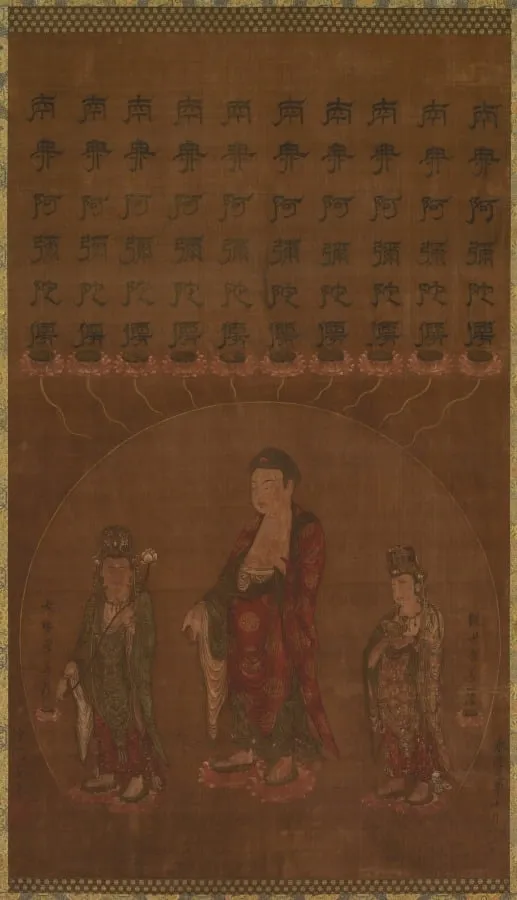
Buddha Amitābha with Two Attending Bodhisattvas is an unspecified painting by the Ming dynasty painting artist Unknown. It dates from 1204 and is held in the collection of the Cleveland Museum of Art.
About this work
This painting was made for Pure Land Buddhists who believed chanting the Buddha’s name would earn them a spot in paradise.
You see a golden Buddha sitting on a lotus, flanked by two helpers in flowing robes. Above them, Chinese characters repeat the same prayer ten times.
This painting was made for Pure Land Buddhists who believed chanting the Buddha’s name would earn them a spot in paradise. The circle of light around the figures shows that paradise—bright, endless, and peaceful.
If you like this quiet, spiritual style, look up china, southern song dynasty (1127-1279).
Overview
This painting depicts the Buddhist deities Amitābha, Avalokiteśvara, and Mahāsthāmaprāpta within a circular aura of light, symbolizing the Western Paradise of the Pure Land sect.
Subject & Meaning
Amitābha, the central figure, is flanked by two attending bodhisattvas. The scene emphasizes the importance of reciting 'namo amituofo' for entry into the Western Paradise, with the phrase inscribed ten times above the deities.
Technique & Style
Characterized by a serene and spiritual aesthetic, the work features a golden Buddha on a lotus, attended figures in flowing robes, and repetitive calligraphy, all enclosed within a luminous circular form.
History & Provenance
Created during the Southern Song Dynasty (1127-1279), this painting was specifically designed for Pure Land Buddhists, reflecting the sect's beliefs in name-recitation as a path to paradise.
Context
The piece aligns with the artistic and religious practices of its time, embodying the mystical and devotional aspects of Pure Land Buddhism during the Southern Song period.
Legacy
This work represents a quintessential example of Southern Song Dynasty religious art, influencing subsequent depictions of Buddhist paradises and the incorporation of calligraphic elements in devotional paintings.
Artist & collection

 Domestic Scene
 Giacomo and Cardinal Marco, investing Andrea, Abbot of San Zeno, with his Benefice
 The Nymph of Fontainebleau
 Portrait of a Woman
 Madonna and Child with Saints in the Enclosed Garden
 Venus and Minerva
 Family Group of Four on Sofa
 Wall painting from Room H of the Villa of P. Fannius Synistor at Boscoreale
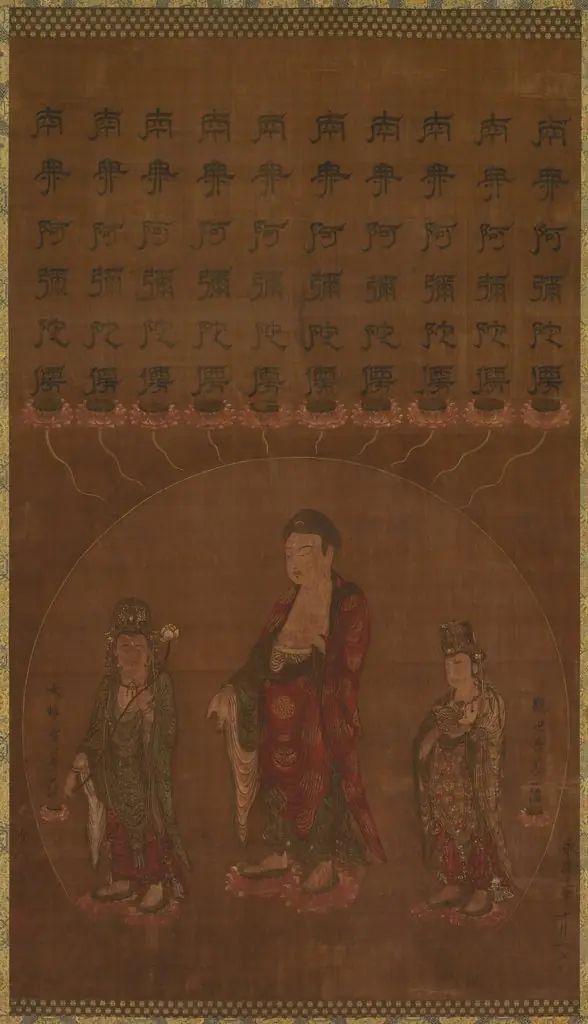 Buddha Amitābha with Two Attending Bodhisattvas
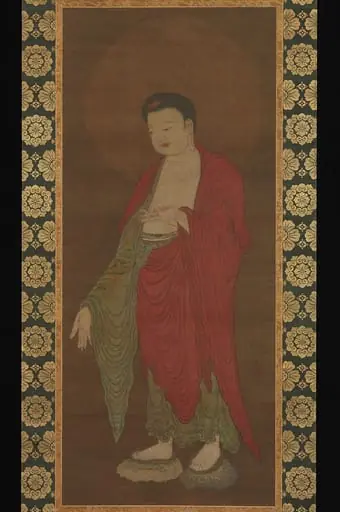 南宋 佚名 阿彌陀佛圖 軸|Buddha Amitabha Descending from his Pure Land
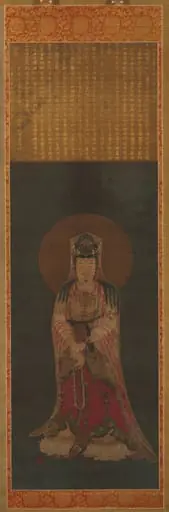 Kannon
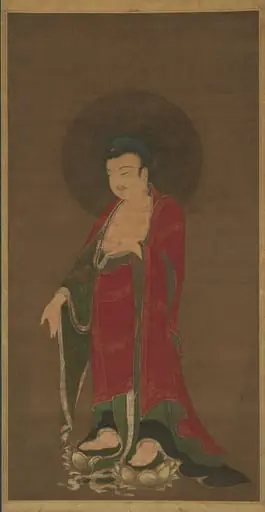 南宋 佚名 阿彌陀佛圖 軸|Buddha Amitabha Descending from His Pure Land
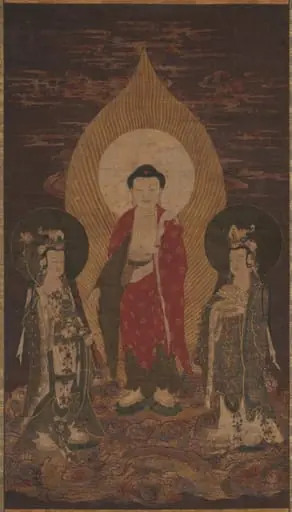 Amitābha Triad
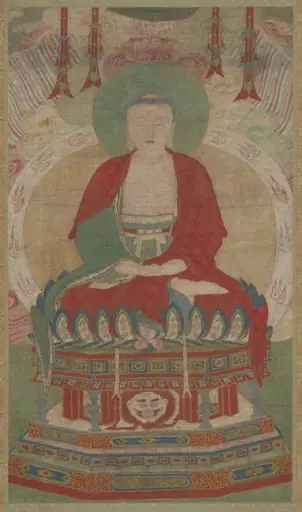 Seated Amitābha
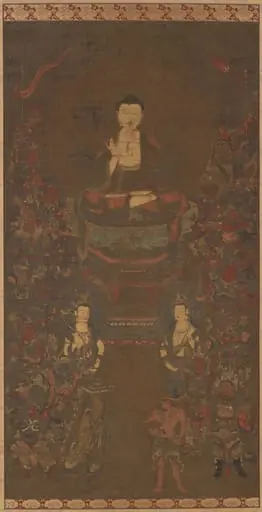 Shakyamuni with the Sixteen Benevolent Deities
 Amitābha Triad
 Samantabhadra
 Shakyamuni Triad: Buddha Attended by Manjushri and Samantabhadra