Artwork
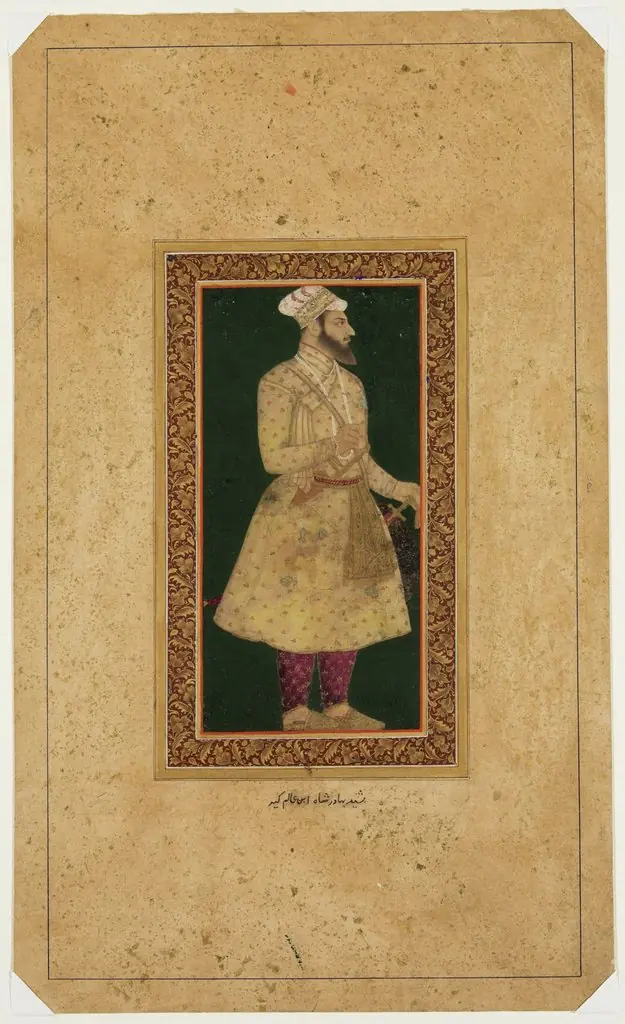
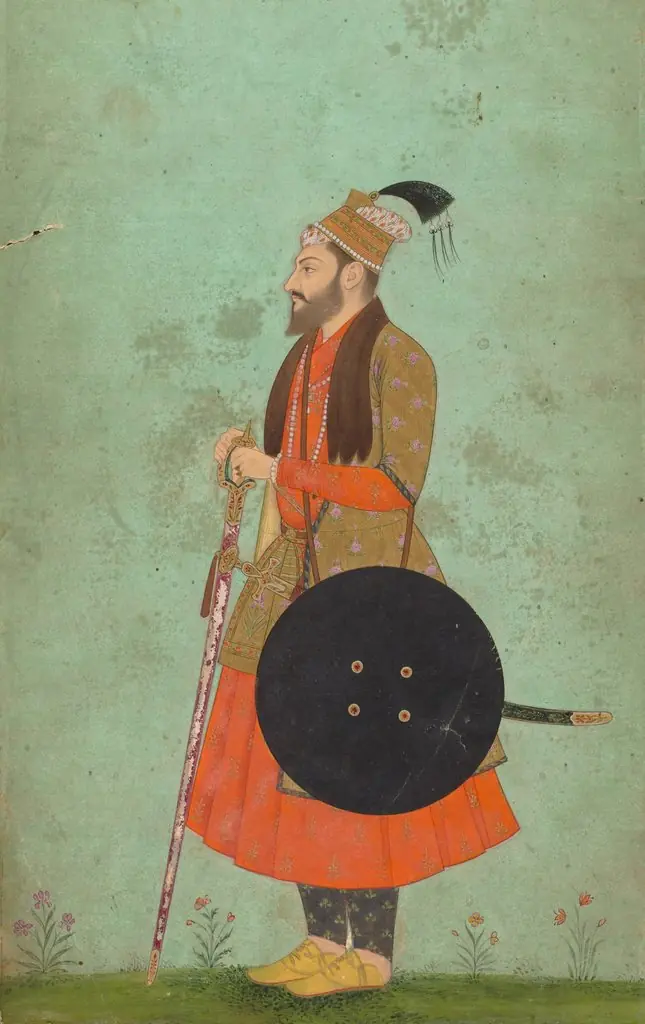
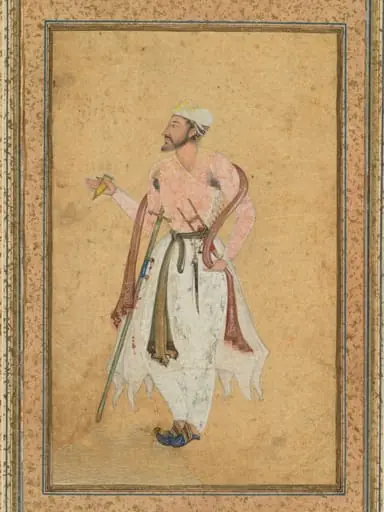
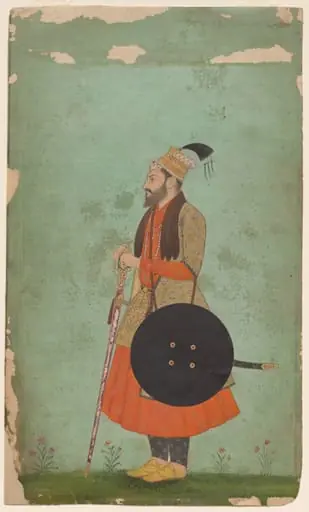
Portrait of a Mughal Prince, possibly a copy of a portrait of Sultan Shuja (1616-1659)
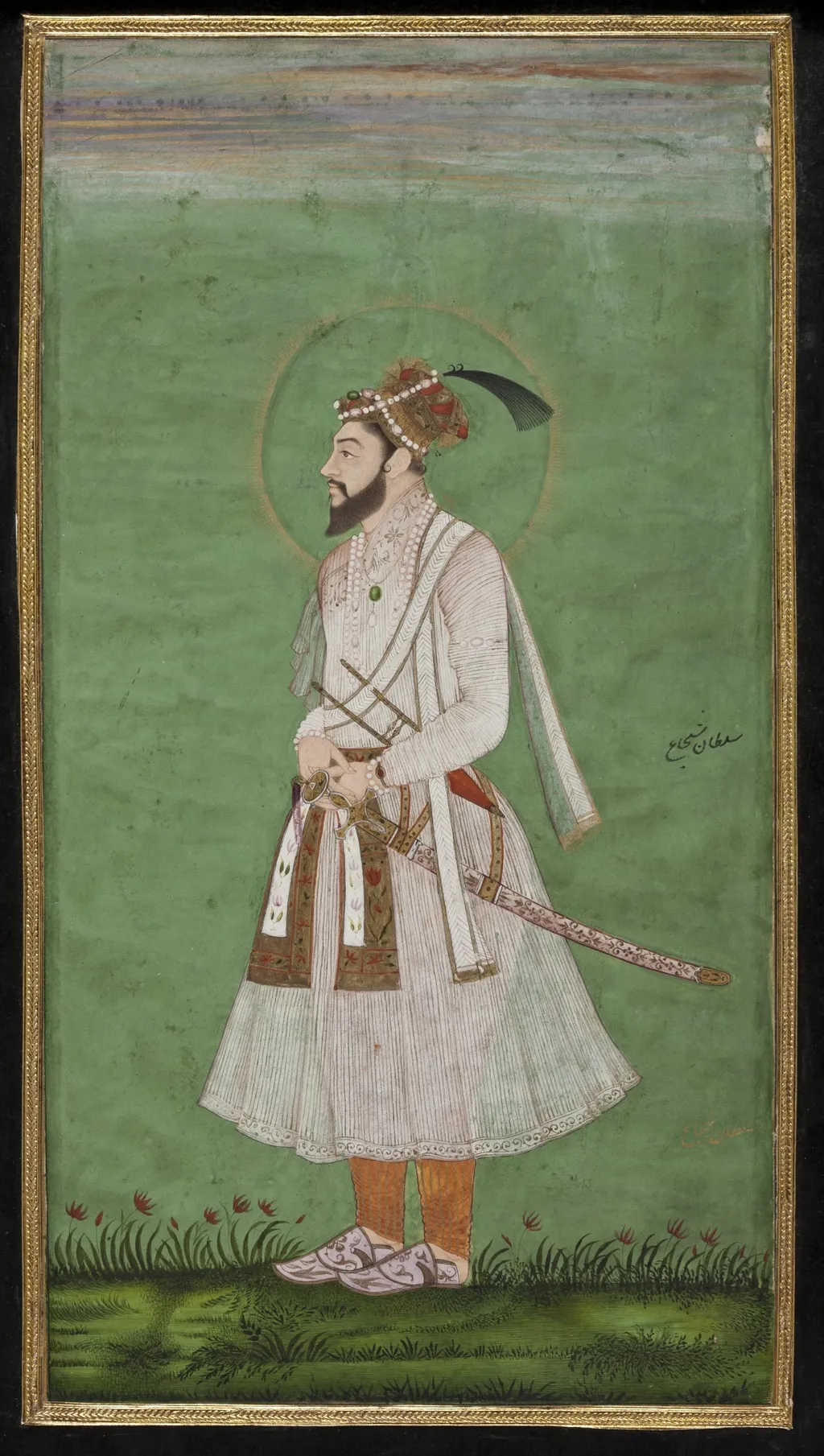
Portrait of a Mughal Prince, possibly a copy of a portrait of Sultan Shuja (1616-1659) is an unspecified painting by Unknown. It dates from 1650 and is held in the collection of the Detroit Institute of Arts. This painting depicts a Mughal nobleman in formal attire, likely a copy of an earlier portrait of Sultan Shuja, son of Emperor Shah Jahan.
About this work
Overview
The composition avoids naturalistic depth, focusing instead on regal stillness and ornamental detail characteristic of Mughal court portraiture.
This painting depicts a Mughal nobleman in formal attire, likely a copy of an earlier portrait of Sultan Shuja, son of Emperor Shah Jahan. Rendered with meticulous precision, the figure stands alone against a flat green background, emphasizing his presence through elaborate dress and symbolic elements. The composition avoids naturalistic depth, focusing instead on regal stillness and ornamental detail characteristic of Mughal court portraiture.
Subject & Meaning
The figure is identified as a prince, possibly Sultan Shuja, distinguished by his white robes, jeweled adornments, and the circular halo—an attribute of divine favor or sovereign authority in Mughal iconography. The sword signifies martial status, while the long feather in his turban denotes high rank. Clasped hands suggest composure and dignity, reinforcing his role as a figure of political and spiritual bearing within the imperial hierarchy.
Technique & Style
Executed in fine brushwork typical of Mughal miniature painting, the portrait features intricate patterns on fabric, precise rendering of textures, and subtle gradations in color. The use of lapis lazuli for the green background and natural pigments for the gemstone and floral details reflects access to premium materials. The flat, non-perspectival space and emphasis on surface decoration align with courtly aesthetic traditions prioritizing symbolic clarity over spatial realism.
History & Provenance
The painting is believed to be a later copy, produced in the mid-17th century, of an original portrait commissioned during Shuja’s lifetime. Such copies were often made for distribution among courtiers or as diplomatic gifts. Its survival suggests continued reverence for the prince’s image, even after his political decline. The work likely passed through royal collections before entering private or institutional holdings in the modern era.
Context
Created during a period of intense courtly patronage under Shah Jahan, this portrait reflects the Mughal emphasis on visual representation as a tool of legitimacy. Portraits of princes were not merely likenesses but assertions of lineage and authority. The stylized setting, rich materials, and symbolic elements mirror broader trends in imperial art, where identity was conveyed through costume, adornment, and ritualized posture rather than psychological depth.
Legacy
Though not an original imperial commission, this copy preserves the visual language of Mughal princely portraiture and offers insight into how such images were reproduced and circulated. It contributes to the understanding of how royal imagery was maintained beyond the lifetime of its subject, serving as a cultural artifact that bridges artistic practice and political memory within the Mughal court tradition.
Artist & collection

 Domestic Scene
 Giacomo and Cardinal Marco, investing Andrea, Abbot of San Zeno, with his Benefice
 The Nymph of Fontainebleau
 Portrait of a Woman
 Madonna and Child with Saints in the Enclosed Garden
 Venus and Minerva
 Family Group of Four on Sofa
 Wall painting from Room H of the Villa of P. Fannius Synistor at Boscoreale