Artwork
The Emperor's Attendance at the Horse Race: Episode from the Tale of Eiga (Eiga Monogatari)
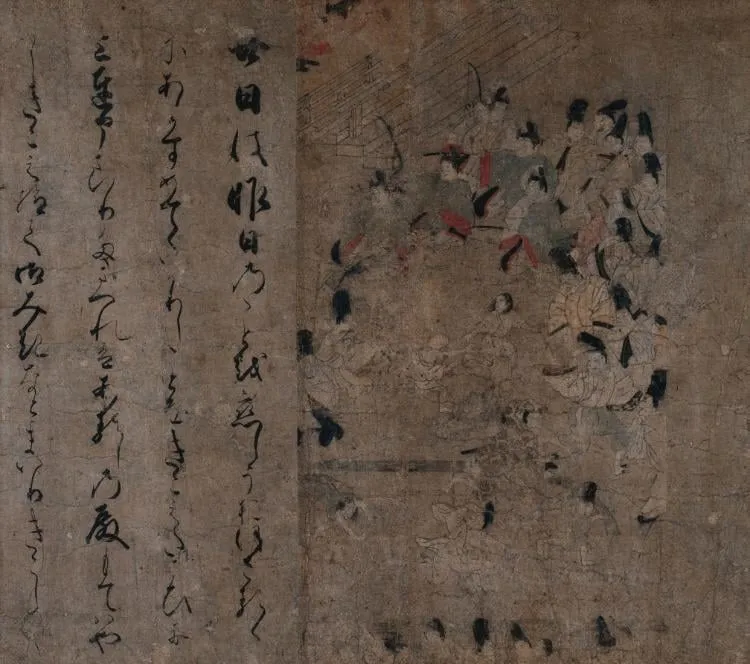
The Emperor's Attendance at the Horse Race: Episode from the Tale of Eiga (Eiga Monogatari) is an unspecified painting by the Byzantine icon painting artist Unknown. It dates from 1200 and is held in the collection of the Cleveland Museum of Art.
About this work
Overview
The work, titled *The Emperor’s Attendance at the Horse Race: Episode from the Tale of Eiga (Eiga Monogatari)*, is a painted illustration depicting a lively equestrian scene. Small, dynamic figures on horseback populate a rugged landscape rendered in subdued earth tones of brown, green and red, while a vertical band of black calligraphy runs along the left edge.
Subject & Meaning
The image illustrates a moment from the *Eiga Monogatari*, a 11th‑century Japanese narrative chronicling court life. It captures the emperor’s presence at a horse race, a ceremonial event that underscores imperial patronage of sport and the spectacle of aristocratic leisure.
Technique & Style
Executed in the traditional Japanese painting mode of the Kamakura period, the piece employs ink and mineral pigments on paper. The composition relies on flat areas of muted colour and a stylised, almost schematic representation of figures, characteristic of yamato‑e narrative scrolls.
History & Provenance
Created during the Kamakura era (1185–1333), the painting likely formed part of a larger illustrated manuscript of the *Eiga Monogatari*. Its survival in a museum collection suggests it was preserved as a valuable example of courtly visual narrative, though specific ownership records remain limited.
Context
Horse races were a popular aristocratic pastime in Heian and early Kamakura Japan, often staged for imperial audiences. The scene reflects contemporary courtly interests in display, competition, and the reinforcement of hierarchical order through public spectacles.
Legacy
As a visual record of a literary episode, the work provides insight into the interplay between text and image in medieval Japan. It continues to inform scholars of narrative illustration practices and the cultural significance of equestrian events in the period’s courtly life.
Artist & collection

 Domestic Scene
 Giacomo and Cardinal Marco, investing Andrea, Abbot of San Zeno, with his Benefice
 The Nymph of Fontainebleau
 Portrait of a Woman
 Madonna and Child with Saints in the Enclosed Garden
 Venus and Minerva
 Family Group of Four on Sofa
 Wall painting from Room H of the Villa of P. Fannius Synistor at Boscoreale
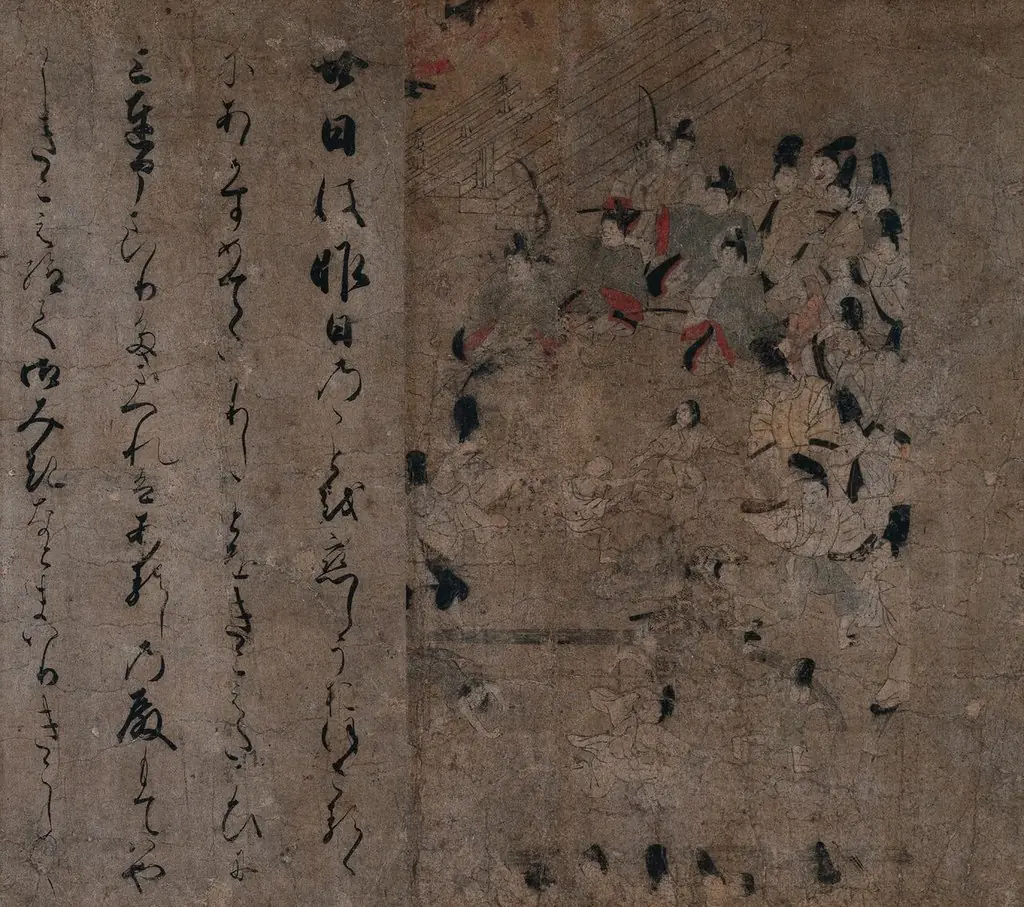 The Emperor's Attendance at the Horse Race: Episode from the Tale of Eiga (Eiga Monogatari)
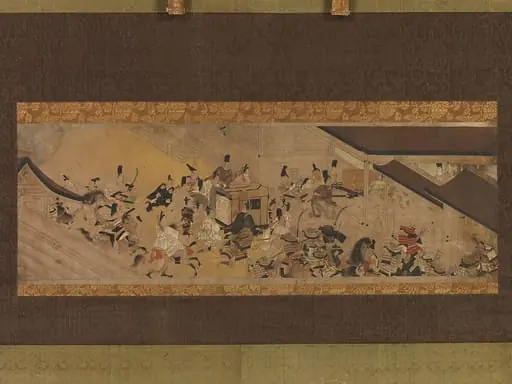 「六波羅行幸」 平治物語絵巻 断簡|Scene from “Imperial Visit to Rokuhara,” from The Tale of the Heiji Rebellion (Heiji monogatari)
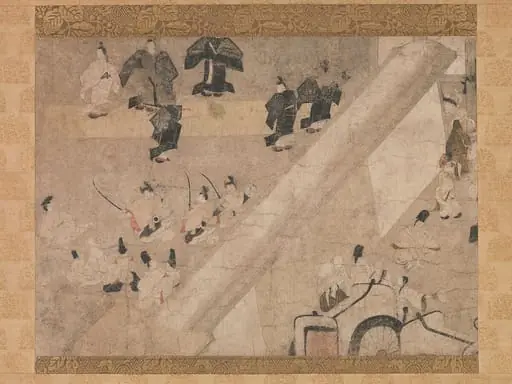 「高陽院駒競行幸絵巻」『栄花物語』 断簡|"Imperial Visit to the Great Horse Race at the Kaya-no-in Mansion" from the Tale of Flowering Fortunes
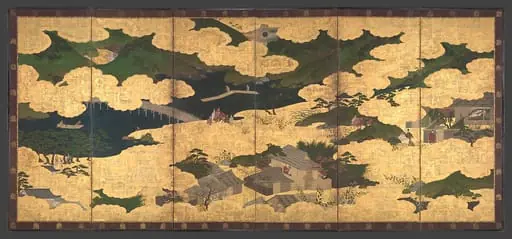 平家物語図屏風 「小督」 「大原御幸」|"Kogō" and "The Imperial Procession to Ōhara", from The Tale of the Heike (Heike monogatari)
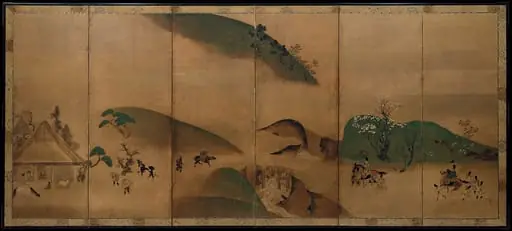 俵屋宗達工房 大原御幸図屏風|Royal Visit to Ōhara, from The Tale of the Heike
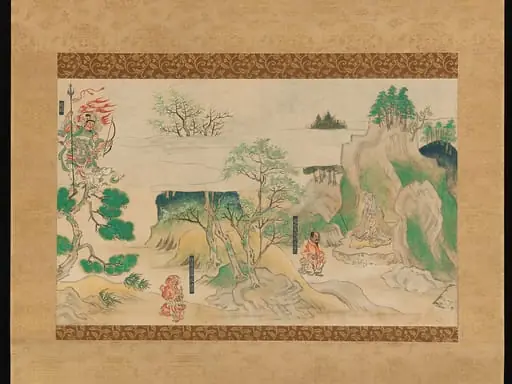 神於寺縁起絵巻断簡|Scene from The Illustrated Legends of Jin’ōji Temple