Artwork
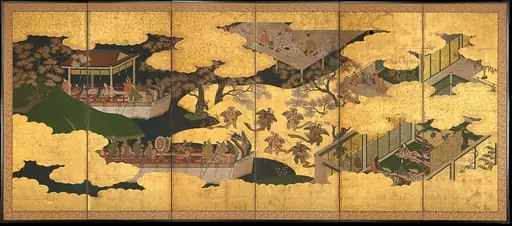
平家物語図屏風 「小督」 「大原御幸」|"Kogō" and "The Imperial Procession to Ōhara", from The Tale of the Heike (Heike monogatari)
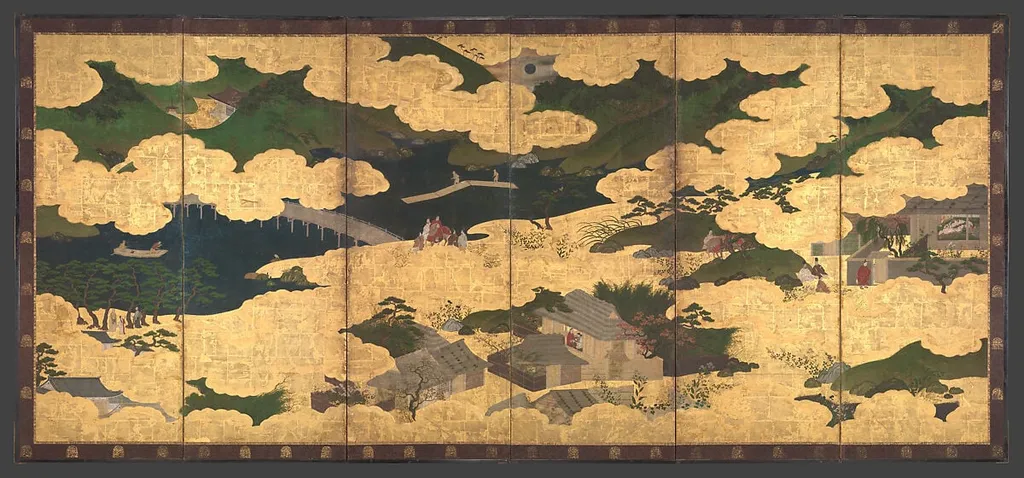
平家物語図屏風 「小督」 「大原御幸」|"Kogō" and "The Imperial Procession to Ōhara", from The Tale of the Heike (Heike monogatari) is an ink painting by the Baroque artist Unknown. It dates from 1618 and is held in the collection of the Metropolitan Museum of Art. The work consists of two six‑panel folding screens illustrating scenes from the medieval Japanese epic, The Tale of the Heike.
About this work
Overview
The work consists of two six‑panel folding screens illustrating scenes from the medieval Japanese epic, The Tale of the Heike. Rendered on paper with ink, pigments, gold, and gold leaf, the screens present a tranquil landscape of rolling hills, trees, and modest architecture, rendered in muted greens, browns, and luminous gold accents.
Subject & Meaning
The panels depict two episodes: "Kogō," a gathering of courtiers near a building, and "The Imperial Procession to Ōhara," a ceremonial march through a wooded path. Both scenes convey the narrative of aristocratic life and the ritualized movement of the imperial court within the natural world, reflecting the Heike’s themes of transience and political power.
Technique & Style
Executed with brushwork in ink and mineral pigments, the artist applies gold leaf to highlight architectural elements and foliage, creating a subtle sense of depth. The composition balances flat decorative surfaces with atmospheric perspective, a hallmark of Japanese screen painting that emphasizes harmony between figure and landscape.
History & Provenance
The screens are traditional Japanese folding screens (byōbu) dating from the Edo period, when illustrated Heike narratives were popular among samurai and aristocratic patrons. They have remained in private collections before entering a museum setting, where they are displayed as examples of narrative screen painting.
Context
Narrative byōbu such as these served both decorative and didactic purposes, providing visual accompaniment to oral storytelling. The Heike episodes chosen illustrate courtly ceremony and the interplay of political authority with the surrounding environment, a common motif in medieval Japanese visual culture.
Artist & collection

 Domestic Scene
 Giacomo and Cardinal Marco, investing Andrea, Abbot of San Zeno, with his Benefice
 The Nymph of Fontainebleau
 Portrait of a Woman
 Madonna and Child with Saints in the Enclosed Garden
 Venus and Minerva
 Family Group of Four on Sofa
 Wall painting from Room H of the Villa of P. Fannius Synistor at Boscoreale
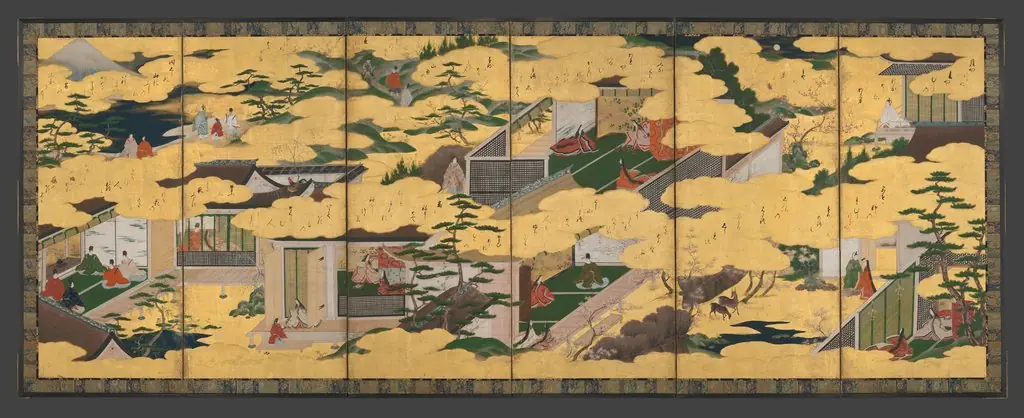 Scenes from the Tales of Ise
 Scenes from the Tale of Genji
 厳島吉野花見図屏風|Cherry Blossom Viewing at Itsukushima and Yoshino
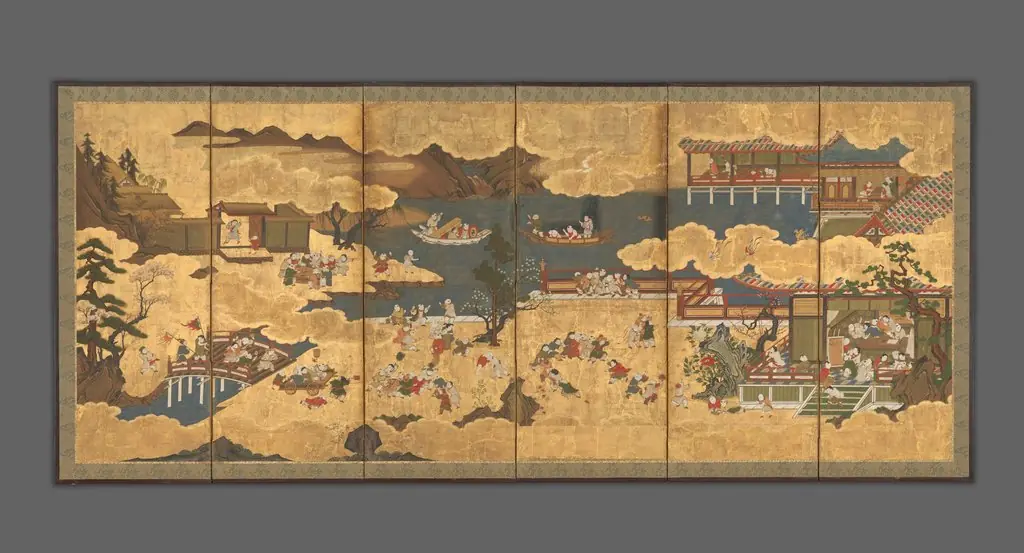 One Hundred Chinese Boys
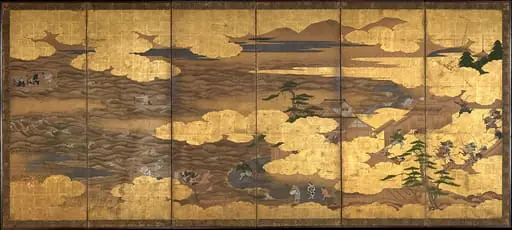 新曲図屏風|“Takebun,” from the Musical Drama “The New Piece” (“Shinkyoku”)
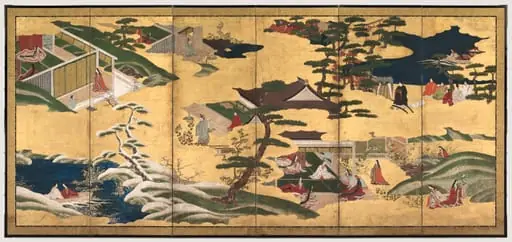 Scenes from the Tale of Genji
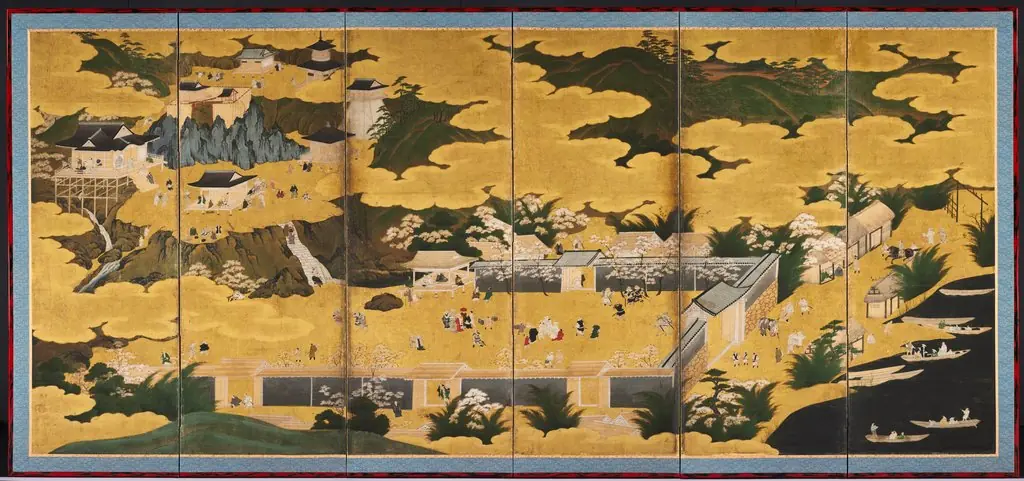 Famous Views of Ōmi
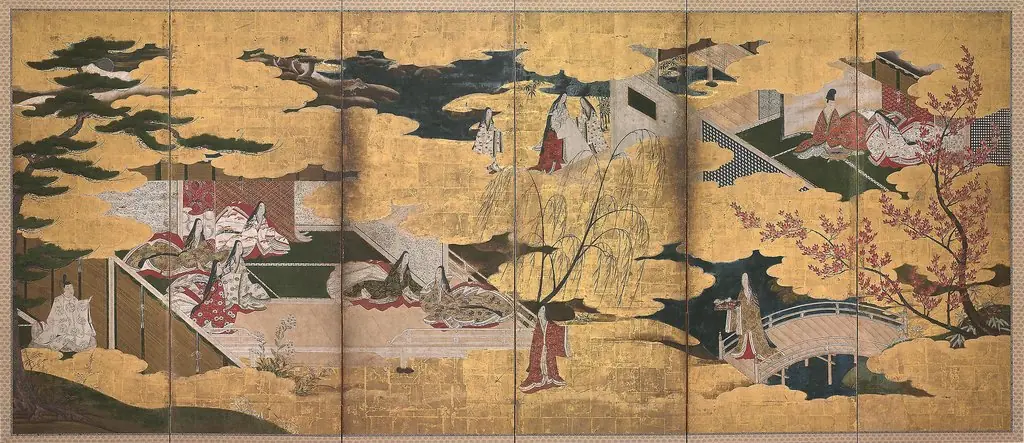 The Tale of Genji
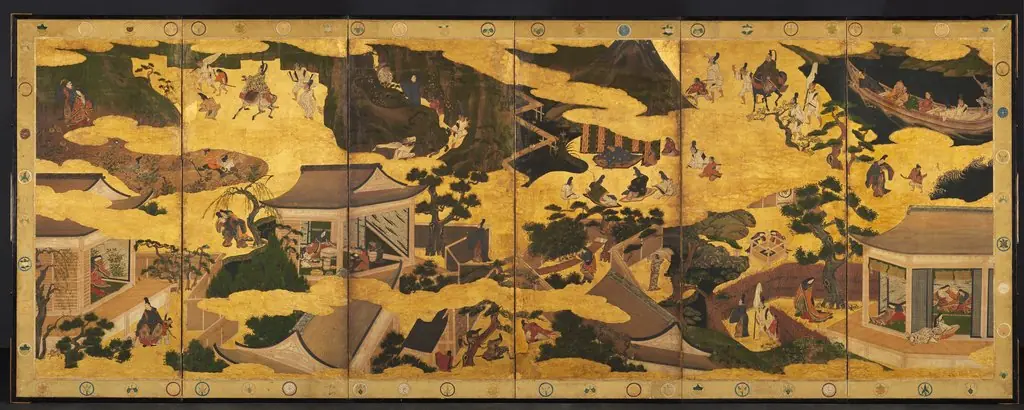 Scenes from the Tales of Ise
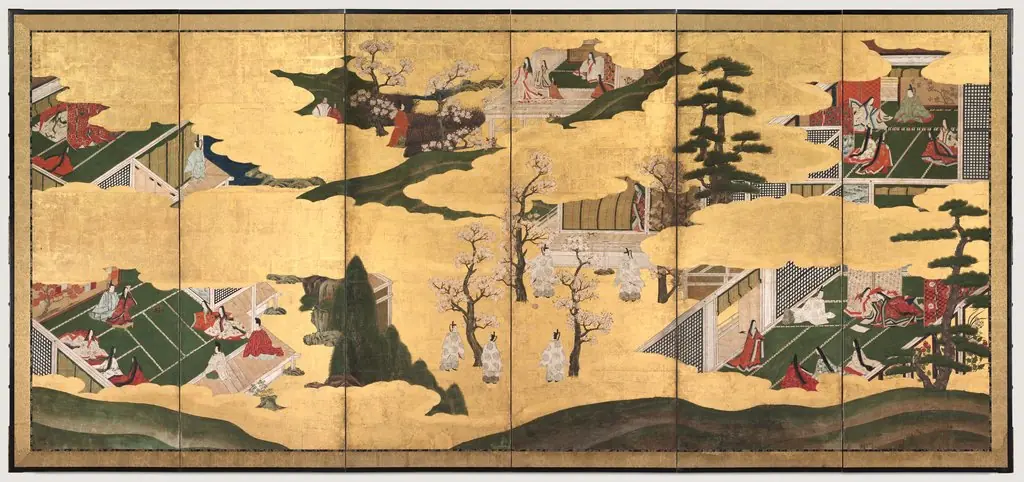 Scenes from the Tale of Genji
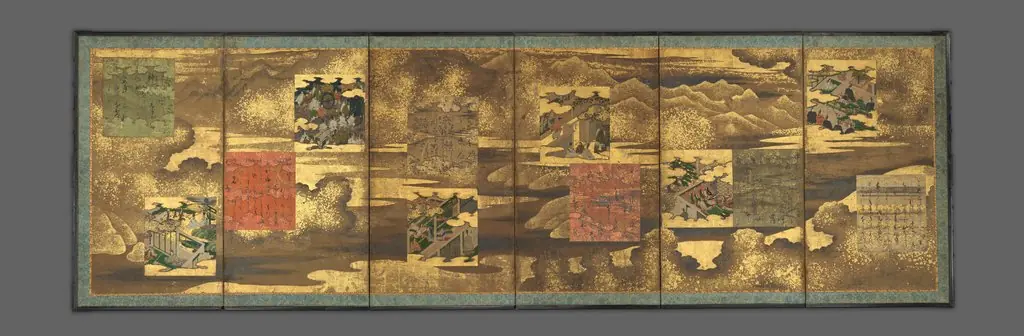 Tale of Genji Screen (Genji monogatari zu shikishi harimaze byōbu)
 源氏物語図屏風 (胡蝶)|“Butterflies”