Artwork
The Great Whirlpool, Niagara
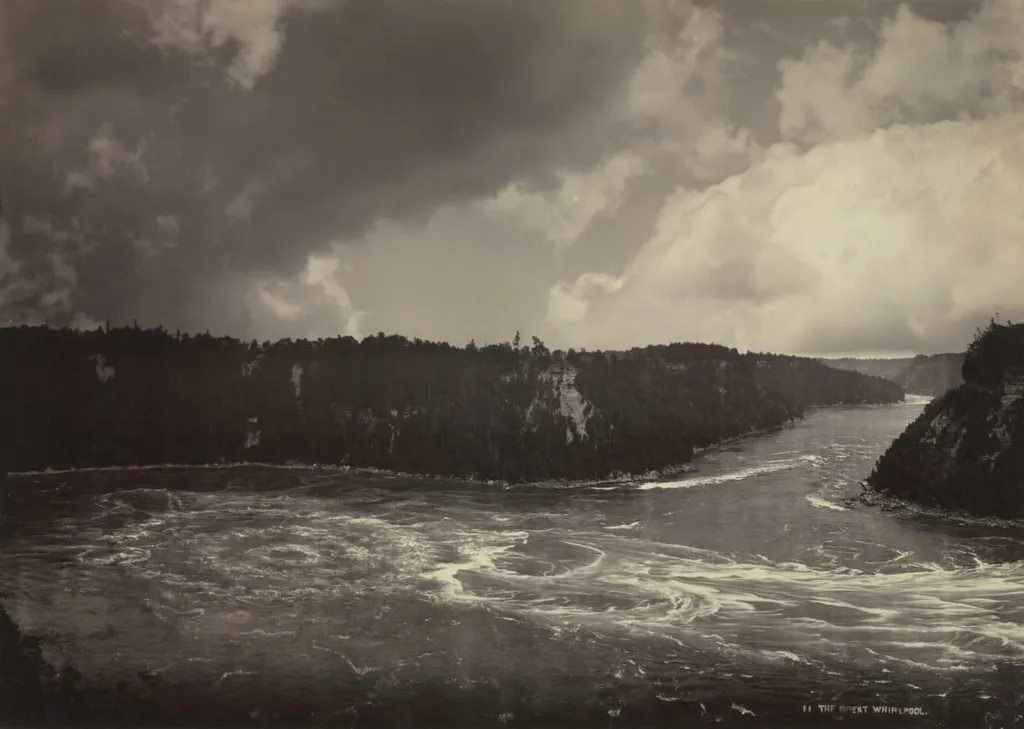
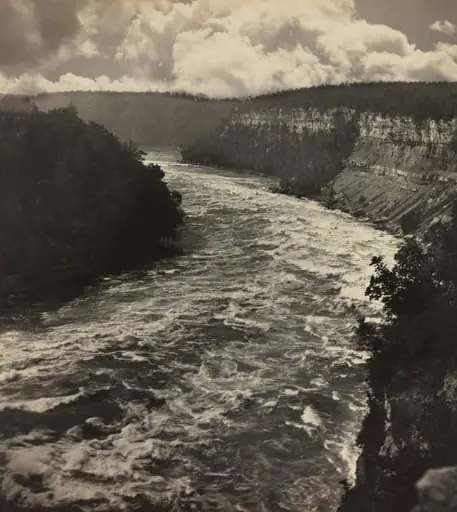
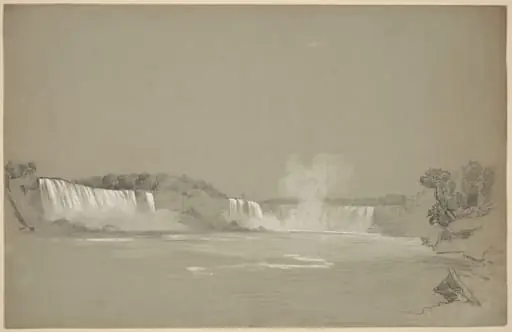
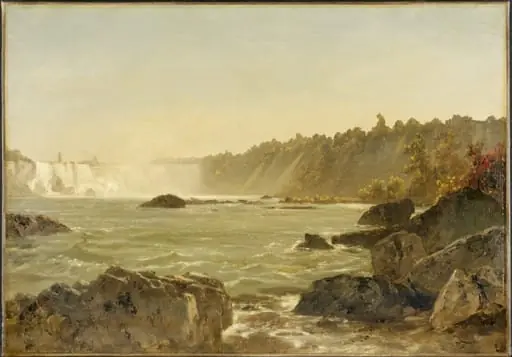
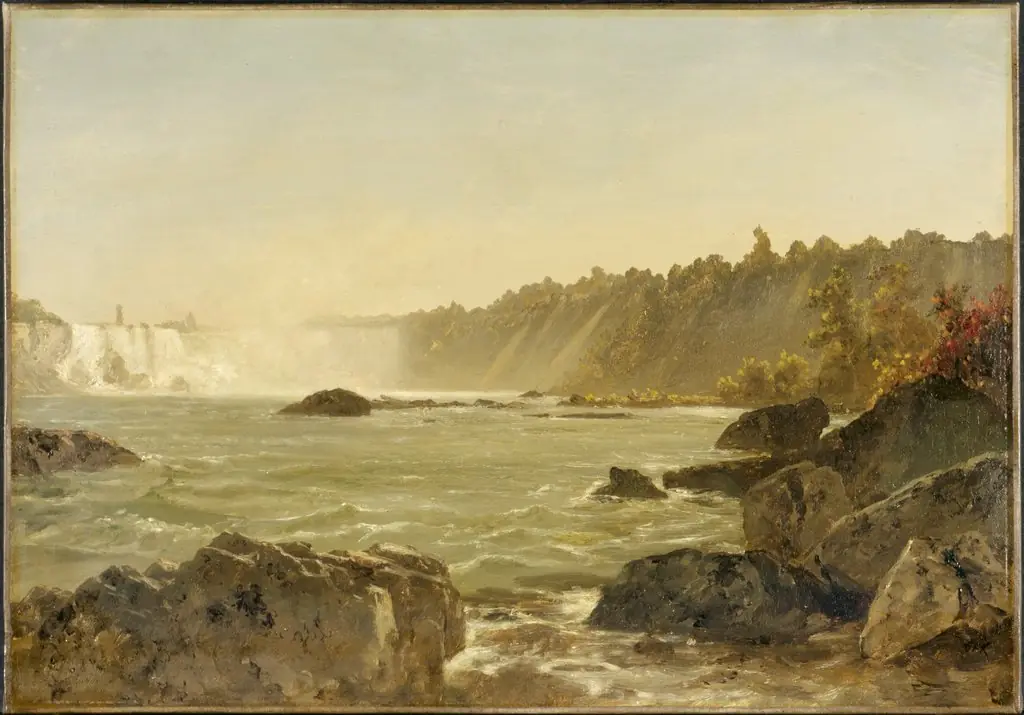
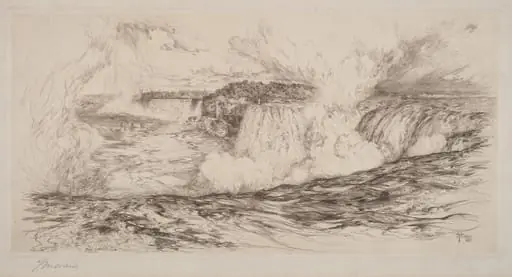
The Great Whirlpool, Niagara is a photography by the Impressionist artist Unknown. It dates from 1884 and is held in the collection of the Cleveland Museum of Art. This photograph captures the turbulent waters of the Niagara Whirlpool, a natural vortex formed where the Niagara River makes a sharp turn.
About this work
Overview
This photograph captures the turbulent waters of the Niagara Whirlpool, a natural vortex formed where the Niagara River makes a sharp turn. The image emphasizes the raw force of moving water, framed by steep, forested cliffs and a brooding sky. The composition draws attention to the swirling current, contrasting the stillness of the rocky banks with the chaotic motion of the river.
Subject & Meaning
The subject is the whirlpool itself—a powerful hydrological feature shaped by the river’s geology and flow. The image conveys nature’s indifference to human scale, presenting the whirlpool not as a spectacle but as a geological process. The storm-lit sky and deep shadows reinforce a sense of elemental energy, suggesting nature’s autonomy from human observation.
Technique & Style
The photograph employs high contrast and careful framing to highlight the texture of churning water against the dark, vertical cliffs. The use of natural light, filtered through heavy clouds, enhances the drama without artificial staging. The composition is balanced yet dynamic, guiding the viewer’s eye along the river’s curve into the vortex at the center.
History & Provenance
Taken in the mid-19th century, this image emerged during a period when photography began documenting natural landmarks as scientific and aesthetic subjects.
Taken in the mid-19th century, this image emerged during a period when photography began documenting natural landmarks as scientific and aesthetic subjects. It likely originated from a survey or travel-oriented project, aligning with early efforts to record North American geology. The photograph’s survival suggests it was preserved in institutional or private collections focused on natural history.
Context
During the 1850s and 1860s, photographers increasingly turned to Niagara Falls and its surrounding features as subjects, drawn by their dramatic topography and accessibility via new rail lines. This image reflects a broader cultural interest in documenting natural phenomena with scientific precision, even as tourism to the region grew rapidly.
Legacy
The photograph contributes to a visual archive of Niagara’s natural features, influencing later landscape documentation. Its restrained tone distinguishes it from romanticized paintings of the era, offering instead a direct record of the whirlpool’s physical presence. It remains a reference for studies of 19th-century photographic approaches to nature.
Artist & collection

 Domestic Scene
 Giacomo and Cardinal Marco, investing Andrea, Abbot of San Zeno, with his Benefice
 The Nymph of Fontainebleau
 Portrait of a Woman
 Madonna and Child with Saints in the Enclosed Garden
 Venus and Minerva
 Family Group of Four on Sofa
 Wall painting from Room H of the Villa of P. Fannius Synistor at Boscoreale