Artwork
The Jami Masjid, Delhi
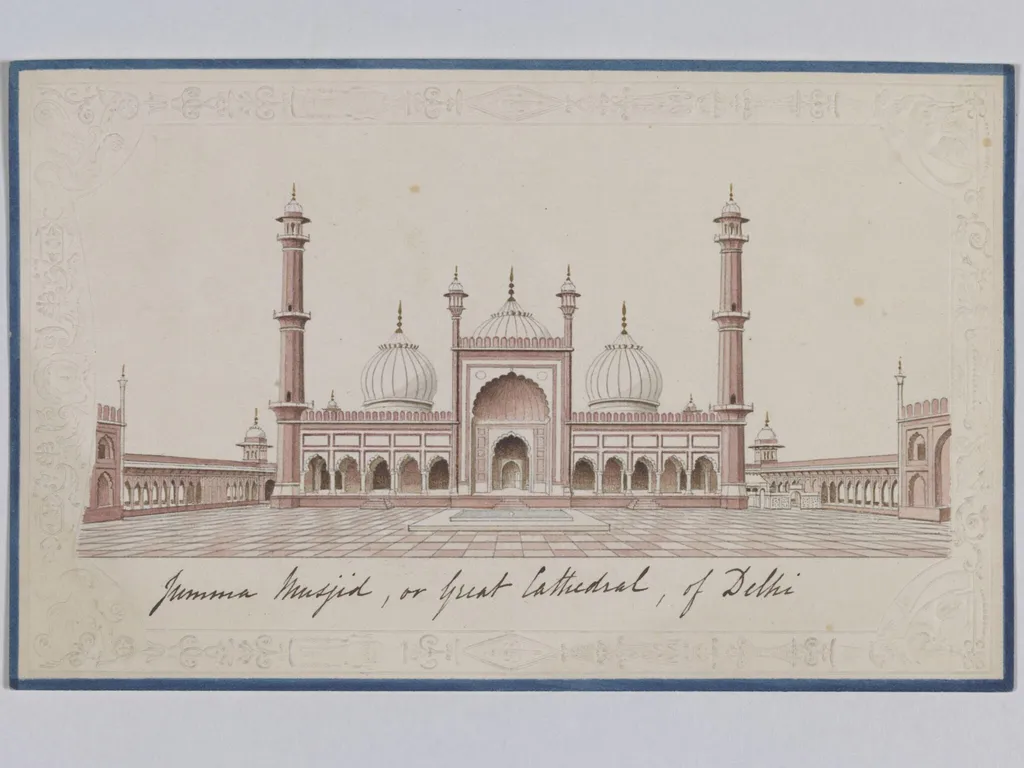
The Jami Masjid, Delhi is a paint painting by the Patna School of Painting artist Unknown. It dates from 1820 and is held in the collection of the Victoria and Albert Museum.
About this work
The painting also shows some people standing in the courtyard, but they are very small and hard to see.
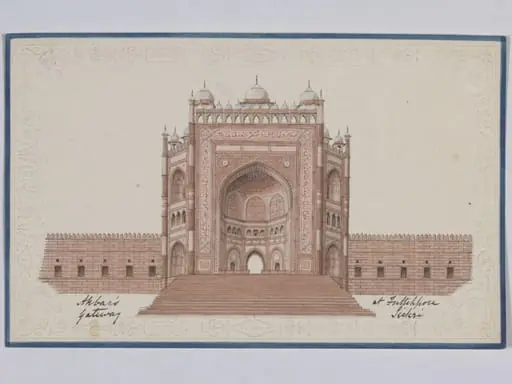
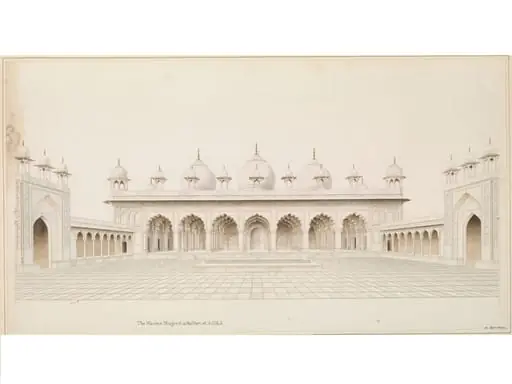
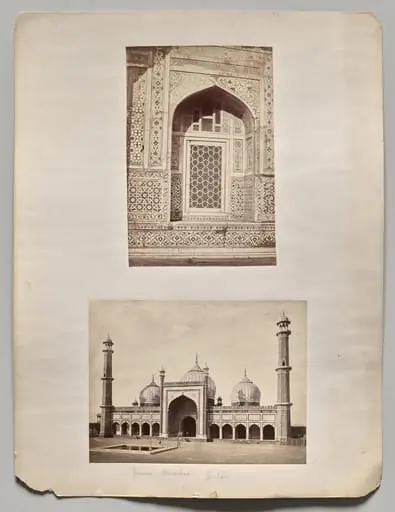
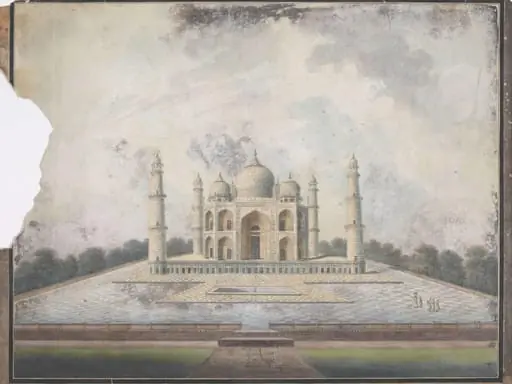
The painting shows a large mosque with a big courtyard and tall towers. The building is red and white, with many arches and domes. In the middle of the courtyard is a small pool of water.
The painting is very detailed, with many small details like windows and carvings on the walls. The artist used a lot of different colors to make the painting look realistic. The painting also shows some people standing in the courtyard, but they are very small and hard to see.
This painting is a great example of Romanticism, a style of art that was popular in the 19th century. To learn more about this style, look up Romanticism.
Overview
This watercolor painting depicts the Jami Masjid in Delhi, one of fifteen monuments in Agra, Delhi, and Fatehpur Sikri captured in the series. It is linked to Lord Amherst, Governor-General of India (1823-1828), and his watercolor-practicing wife, reflecting their interest in Indian subjects.
Subject & Meaning
The painting focuses on the Jami Masjid's architectural grandeur, highlighting its red and white color scheme, numerous arches, domes, tall towers, and a central courtyard pool. The inclusion of tiny figures in the courtyard subtly acknowledges human presence within the monumental space.
Technique & Style
The work exhibits meticulous detail, with intricate renderings of windows, carvings, and varied color palette aiming for realism. However, the emphasis on capturing the emotional and aesthetic appeal of the subject also aligns with broader Romantic-era artistic sensibilities.
History & Provenance
The painting's provenance is tied to Lord Amherst and his wife, suggesting its creation during or shortly after Amherst's tenure as Governor-General of India (1823-1828), though the artist remains unspecified.
Context
Created during the British colonial period in India, the painting reflects the era's European fascination with Indian architecture and culture, potentially serving as a form of visual documentation or souvenir.
Legacy
While not individually renowned, the painting contributes to the broader legacy of 19th-century watercolor depictions of Indian monuments, influencing how Western audiences perceived and appreciated Indian architectural heritage.
Artist & collection

 Domestic Scene
 Giacomo and Cardinal Marco, investing Andrea, Abbot of San Zeno, with his Benefice
 The Nymph of Fontainebleau
 Portrait of a Woman
 Madonna and Child with Saints in the Enclosed Garden
 Venus and Minerva
 Family Group of Four on Sofa
 Wall painting from Room H of the Villa of P. Fannius Synistor at Boscoreale