Artwork
The Buland Darwaza of the Jami Masjid, Fatehpur Sikri
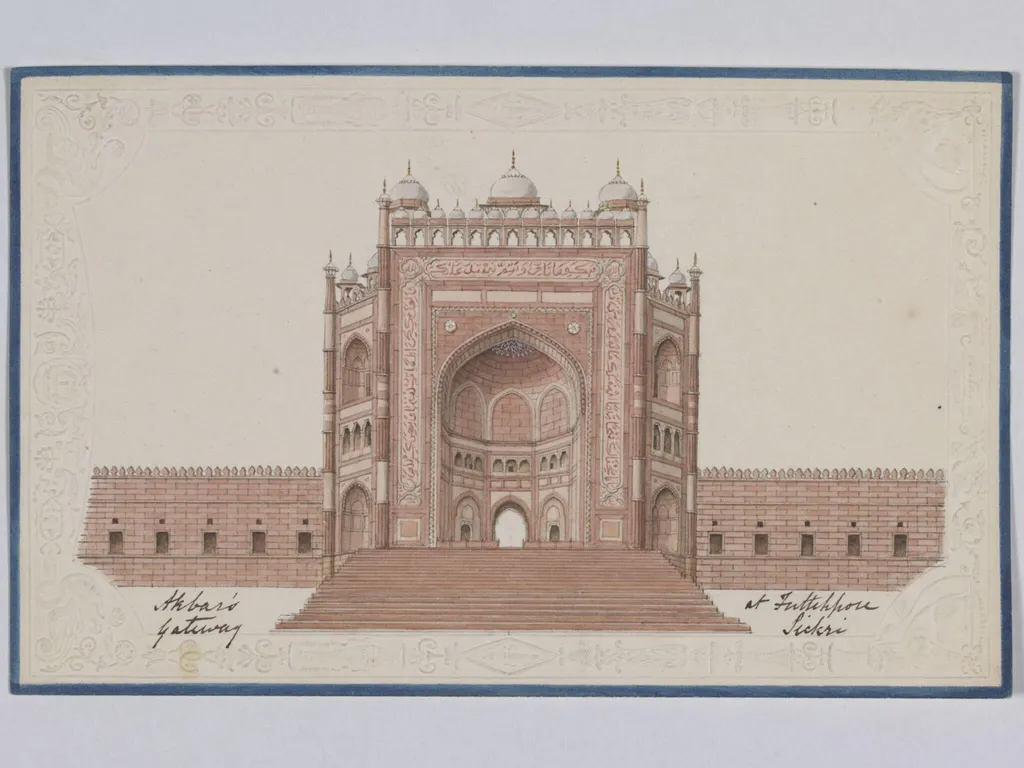
The Buland Darwaza of the Jami Masjid, Fatehpur Sikri is a paint painting by the Romanticist artist Unknown. It dates from 1820 and is held in the collection of the Victoria and Albert Museum. This watercolor depicts the Buland Darwaza, the monumental gateway of the Jami Masjid in Fatehpur Sikri.
About this work
Overview
The work belongs to a series commissioned to record significant historical sites during British colonial administration.
This watercolor depicts the Buland Darwaza, the monumental gateway of the Jami Masjid in Fatehpur Sikri. It is one of fifteen topographical paintings documenting Mughal-era architecture in northern India, produced during the 1820s under the patronage of Lord Amherst, then Governor-General. The work belongs to a series commissioned to record significant historical sites during British colonial administration.
Subject & Meaning
The Buland Darwaza, built by Akbar in 1601 to commemorate his victory in Gujarat, stands as a symbol of imperial authority. The painting isolates the structure against a neutral background, emphasizing its scale and architectural complexity. Its function as a ceremonial entrance to the mosque is rendered without contextual elements, focusing attention on its form as a relic of Mughal grandeur.
Technique & Style
Rendered in watercolor, the painting captures the texture of red sandstone through layered washes and fine linear detail. Architectural elements—arches, niches, and carved motifs—are rendered with precision, while the absence of figures or landscape reinforces a documentary intent. The palette remains restrained, relying on tonal variation to suggest depth and surface quality rather than decorative color.
History & Provenance
The painting was likely created by a professional artist employed by or associated with Lady Amherst, who was known for her own watercolors of Indian sites. It formed part of a collection assembled during Lord Amherst’s tenure as Governor-General (1823–1828). The series was intended as a visual archive, later preserved in British institutional collections as ethnographic and architectural records.
Context
Produced during a period of heightened British interest in India’s architectural heritage, the painting reflects colonial efforts to document and classify indigenous monuments. While not overtly political, its meticulous detail aligns with contemporary survey practices. The focus on Mughal structures, rather than contemporary Indian life, underscores a fascination with imperial ruins as symbols of a bygone era.
Legacy
The painting contributes to a broader 19th-century corpus of Indian topographical art that shaped European perceptions of Mughal architecture. Though not widely exhibited today, it remains a valuable record of the Buland Darwaza’s condition in the early colonial period. Its existence highlights the role of private patronage in preserving visual documentation before systematic archaeological surveys became standard.
Artist & collection

 Domestic Scene
 Giacomo and Cardinal Marco, investing Andrea, Abbot of San Zeno, with his Benefice
 The Nymph of Fontainebleau
 Portrait of a Woman
 Madonna and Child with Saints in the Enclosed Garden
 Venus and Minerva
 Family Group of Four on Sofa
 Wall painting from Room H of the Villa of P. Fannius Synistor at Boscoreale
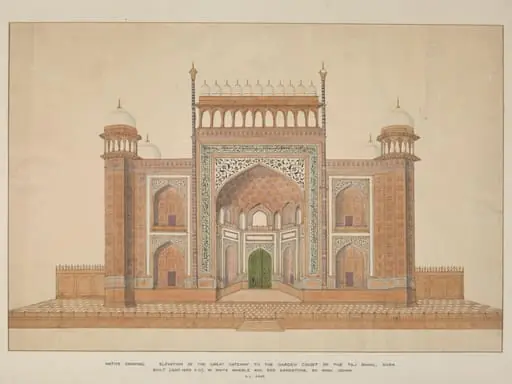 Gateway to the Taj Mahal
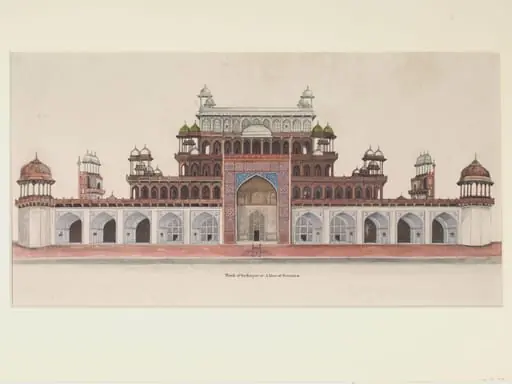 Elevation of the front of the mausoleum of the Emperor Akbar at Sikandra near Agra
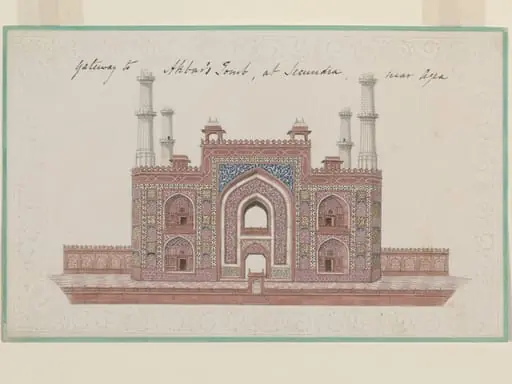 Gateway of Akbar's tomb, Sikandra
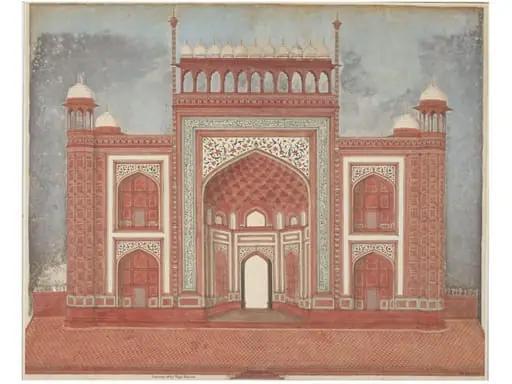 Elevation of the great gateway of the garden court of the Taj Mahal.
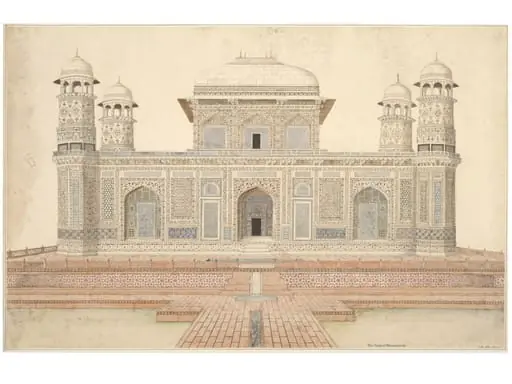 The facade of the tomb of I'timad ad-daula and his wife Asmat Begum, Agra.
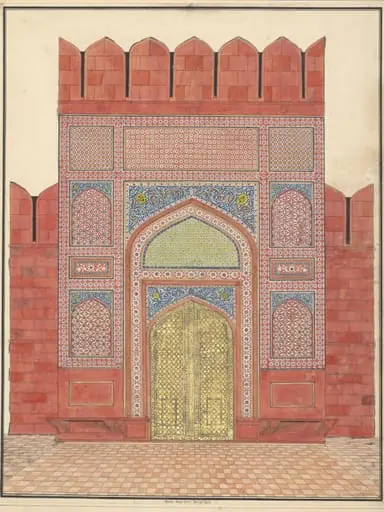 Front elevation of Amar Singh's Gate, Agra Fort.
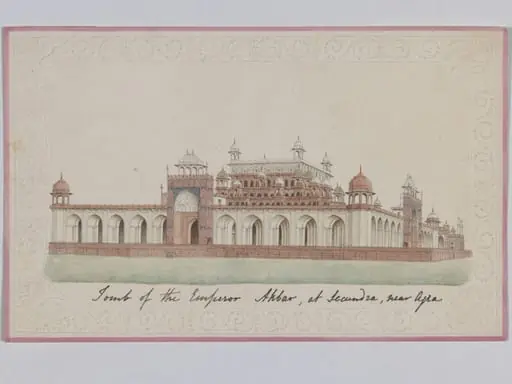 Akbar's mausoleum, Sikandra
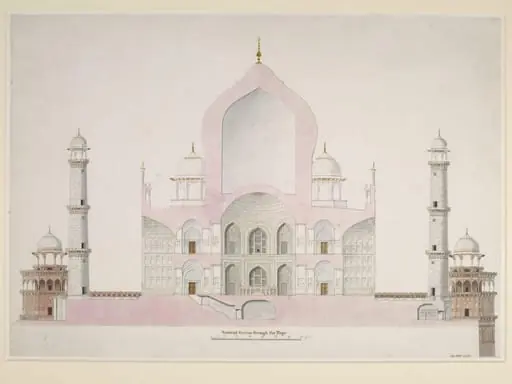 Vertical Section through the Tage