Artwork
The Mausoleum of Akbar at Secundrabad
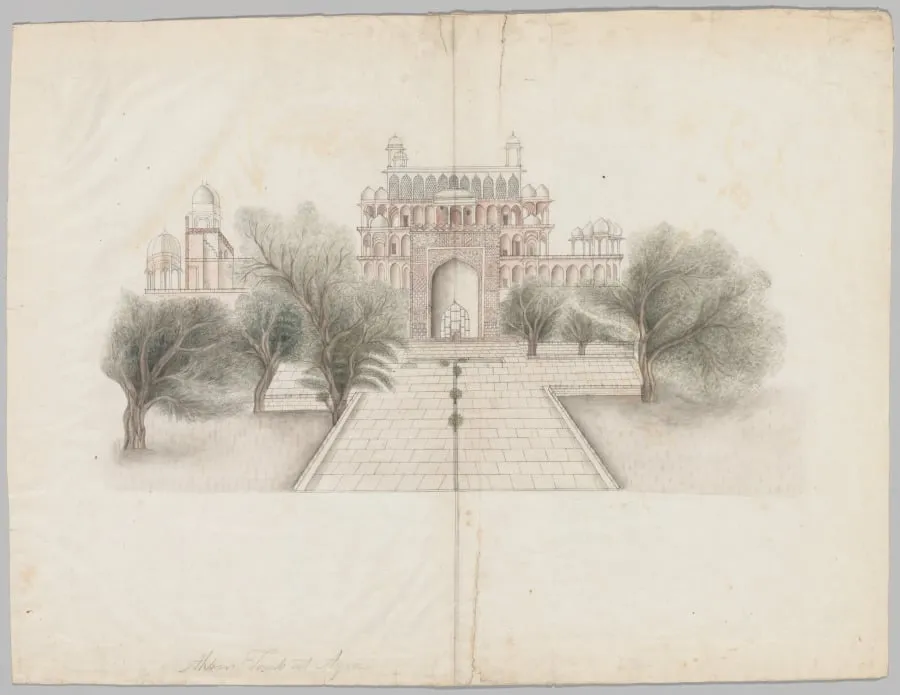
The Mausoleum of Akbar at Secundrabad is a drawing by the Romanticist artist Unknown. It dates from 1804 and is held in the collection of the Cleveland Museum of Art. This watercolor sketch depicts the Mausoleum of Akbar, the burial site of the Mughal emperor Akbar, near Agra, India.
About this work
Overview
This watercolor sketch depicts the Mausoleum of Akbar, the burial site of the Mughal emperor Akbar, near Agra, India. Created for British travelers before the advent of photography, it captures the monument in a subdued color palette characteristic of the time.
Subject & Meaning
The subject is Akbar's tomb, a significant historical site. The sketch serves as a visual record for travelers, prioritizing recognizability over detailed ornamentation, reflecting the European aesthetic preference for simplicity in Indian landscapes.
Technique & Style
Executed in muted browns and blues, the sketch simplifies the tomb's intricate geometric and floral motifs, characteristic of the Company School style, which catered to British tastes by toning down the vibrancy and complexity of Indian architecture.
History & Provenance
Dating to the pre-photographic era, this sketch was part of a collection of Indian monuments and scenes gathered by British travelers, indicating the tomb's appeal as a notable Indian landmark during the period.
Context
The sketch contrasts with the actual mausoleum, which is renowned for its grand scale, multicolored stone inlays, relief carvings, and paintings. This contrast highlights the artistic and cultural filters applied to represent Indian monuments for a European audience.
Legacy
This work is associated with the Company School, a style significant for understanding the visual exchange between Indian artists and British patrons during the colonial era, influencing how Indian architecture was perceived and documented in the West.
Artist & collection

 Domestic Scene
 Giacomo and Cardinal Marco, investing Andrea, Abbot of San Zeno, with his Benefice
 The Nymph of Fontainebleau
 Portrait of a Woman
 Madonna and Child with Saints in the Enclosed Garden
 Venus and Minerva
 Family Group of Four on Sofa
 Wall painting from Room H of the Villa of P. Fannius Synistor at Boscoreale
 View of Painswick House and Gardens, Gloucestershire
 Palazzo Communale, Bologna
 Chungqua's premises seen from the portico of the East India Company's 'factory' at Guangzhou (Canton)
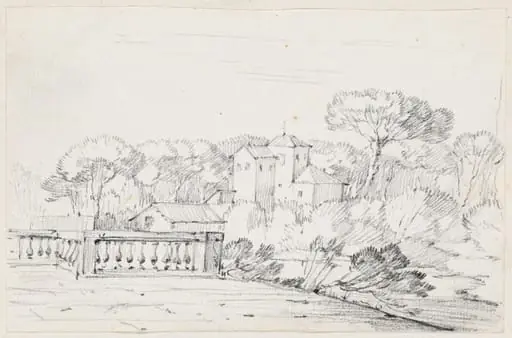 Terrace by a River with a Villa and Trees Beyond
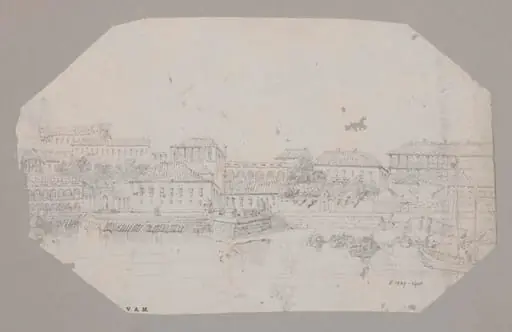 The Praya Grande, Macau
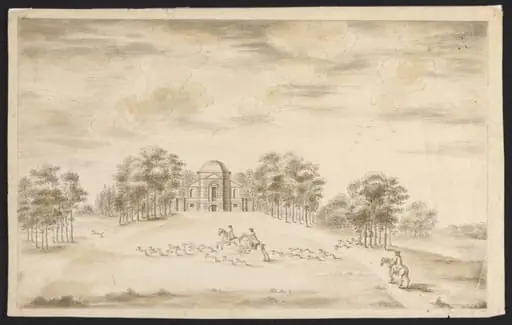 Untitled
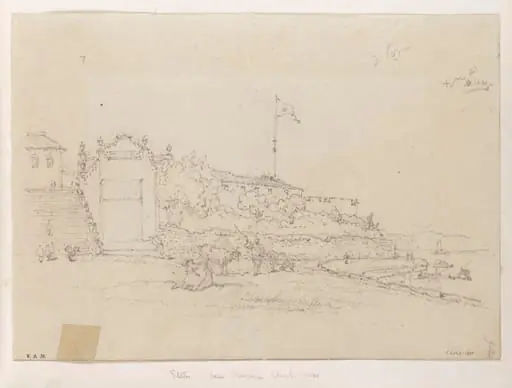 The church of S. Francisco and the adjacent fort, Macau
 Study for "The Seconda Macchina for the Chinea of 1754: An Allegory of Waterworks"
 Triumphal Gateway at Hyde Park Corner
 Drawings of the A-Ma temple, Macau
 Ham House
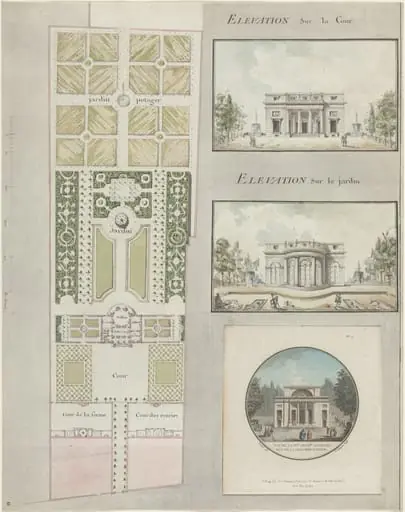 Project for the House and Gardens of Mlle. Guimard