Artwork
Untitled
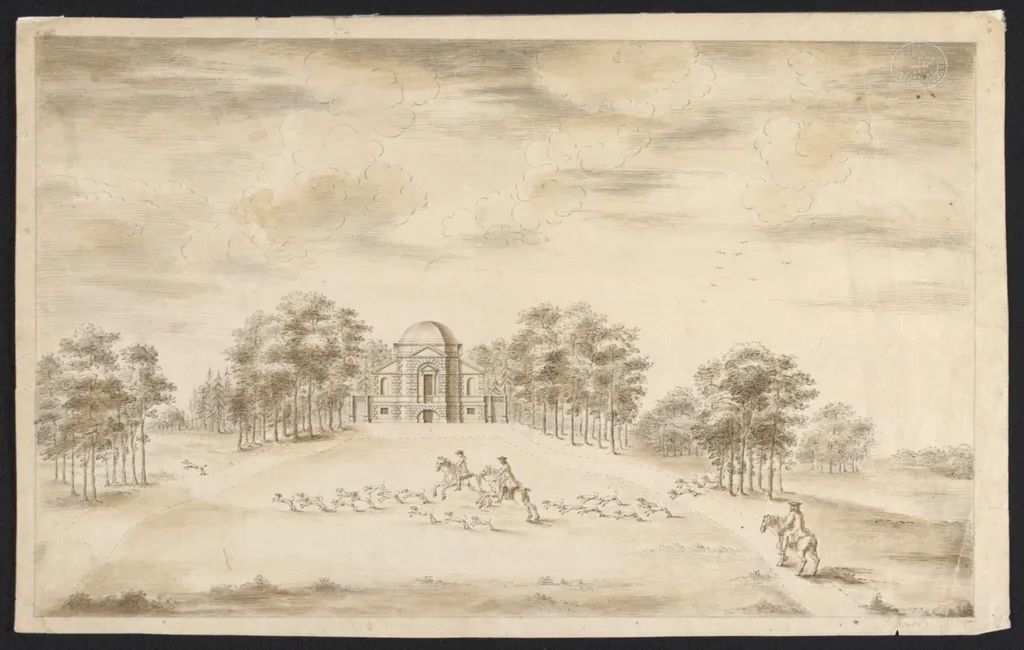
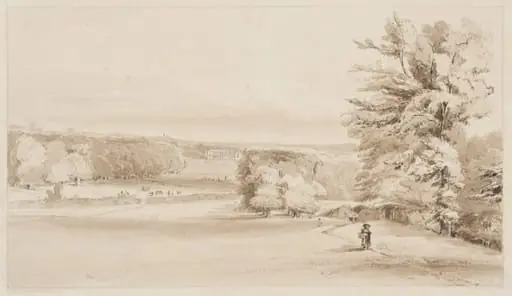
Untitled is a drawing by the Baroque artist William Kent. It dates from 1746 and is held in the collection of the Victoria and Albert Museum. The drawing depicts the Temple, also known as Banqueting House, set within the park of Euston Hall in Suffolk.
About this work
Kent drew a grand house in Suffolk in 1746. It sits on a rise with wide steps up to the main floor. Fox hunters ride and run below the building.
The house, called The Temple, was finished later in 1755. Kent planned it with another architect, John Vardy.
This drawing shows an early idea before the final stairs were built.
Look up the architect William Kent.
Overview
The drawing depicts the Temple, also known as Banqueting House, set within the park of Euston Hall in Suffolk. In the foreground a fox‑hunt is underway, while the building rises on a raised platform accessed by broad steps. The image records the structure as it was conceived before the final design of its staircases was completed.
Subject & Meaning
The composition juxtaposes the elegance of the neoclassical pavilion with the lively, rural activity of a hunting party, reflecting the 18th‑century aristocratic pastime of combining landscape architecture with sport. The presence of the hunt underscores the estate’s social function as a venue for leisure and display.
Technique & Style
Executed as a drawing, the work employs precise line work to render architectural details and the surrounding terrain. The rendering emphasizes proportion and symmetry, hallmarks of the classical idiom that William Kent championed, while the figures of the hunters are sketched with enough vigor to convey motion.
History & Provenance
The Temple was commissioned by Charles Fitzroy, 2nd Duke of Grafton, and constructed in 1755. The design was a collaboration between William Kent (1685‑1748) and John Vardy (1718‑1765). The drawing, dated 1746, represents an early stage of the project, predating the final stair configuration that appears in the completed building.
Context
Kent’s architectural career was shaped by his 1715 visit to Rome, where he met the patron Richard Boyle, 3rd Earl of Burlington. Their partnership introduced Kent to classical architecture, leading to commissions such as Holkham Hall and the Horse Guards. The Temple reflects this classical influence within a country‑house setting.
Artist & collection
Artist
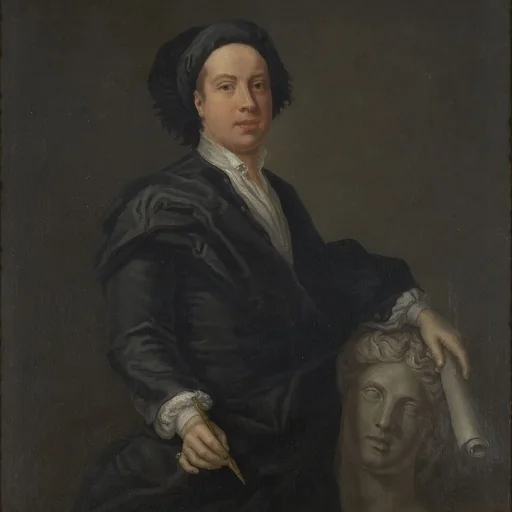
William Kent (c. 1685 – 12 April 1748) was an English architect, landscape architect, painter and furniture designer of the early 18th century. He began his career as a painter, and became Principal Painter in Ordinary…

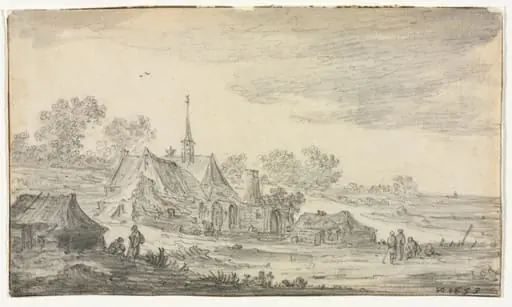 Group of Buildings on a Seashore
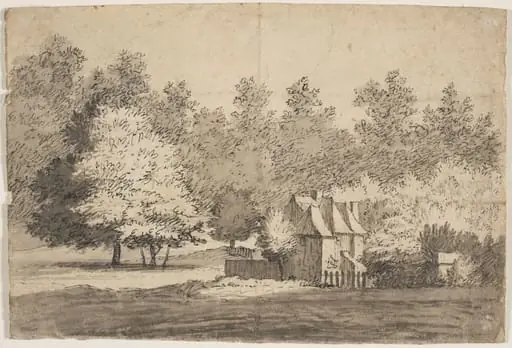 A cottage set among trees
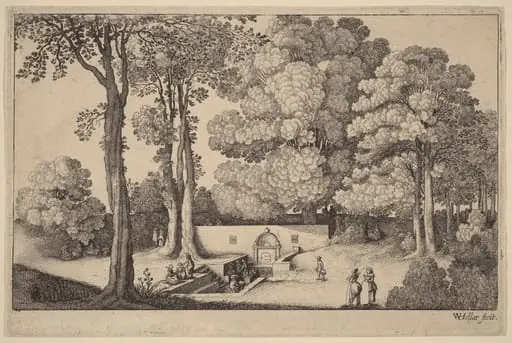 The Mineral Spring
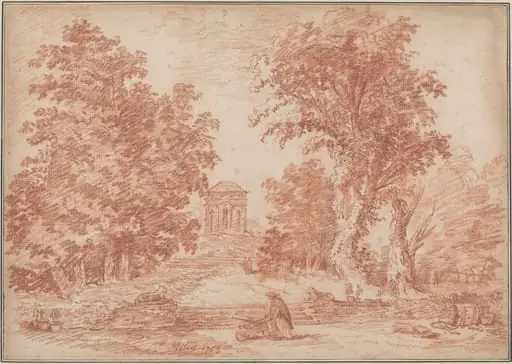 Italian Park with a Tempietto
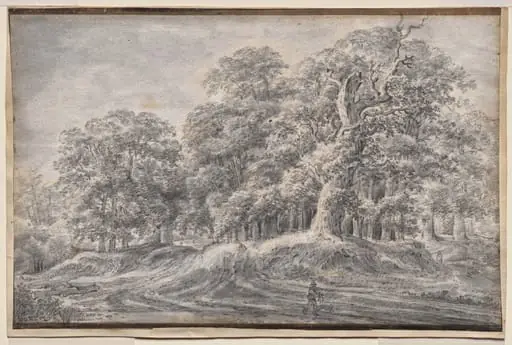 A Track on the Edge of a Wood with a Peasant Carrying Sheep
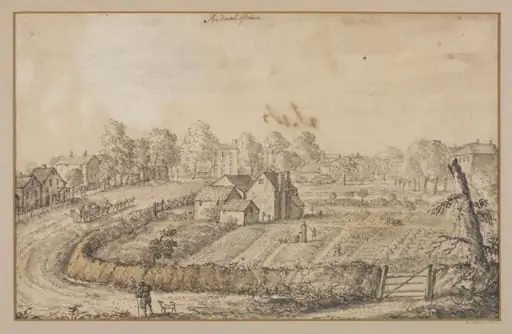 Coates' Farm, Bethnal Green
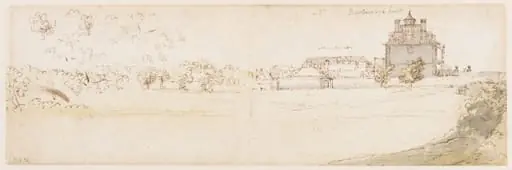 Preparatory study for a drawing of Peterborough House and Westminster Abbey
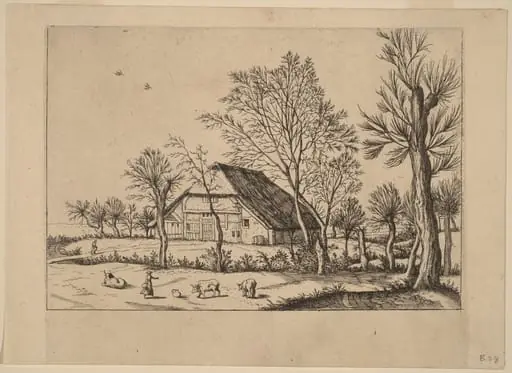 Farm
Farm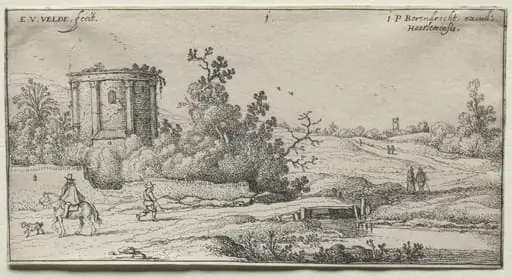 Landscapes: Landscape with Ruins of a Roman Temple
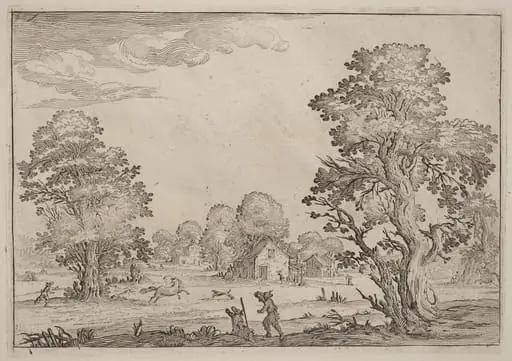 Landscape with Runaway Horses
 Untitled
 Landscape with a River and a Gatehouse