Artwork
祇園大鳥居屏風|The Torii Gate of Gion Shrine
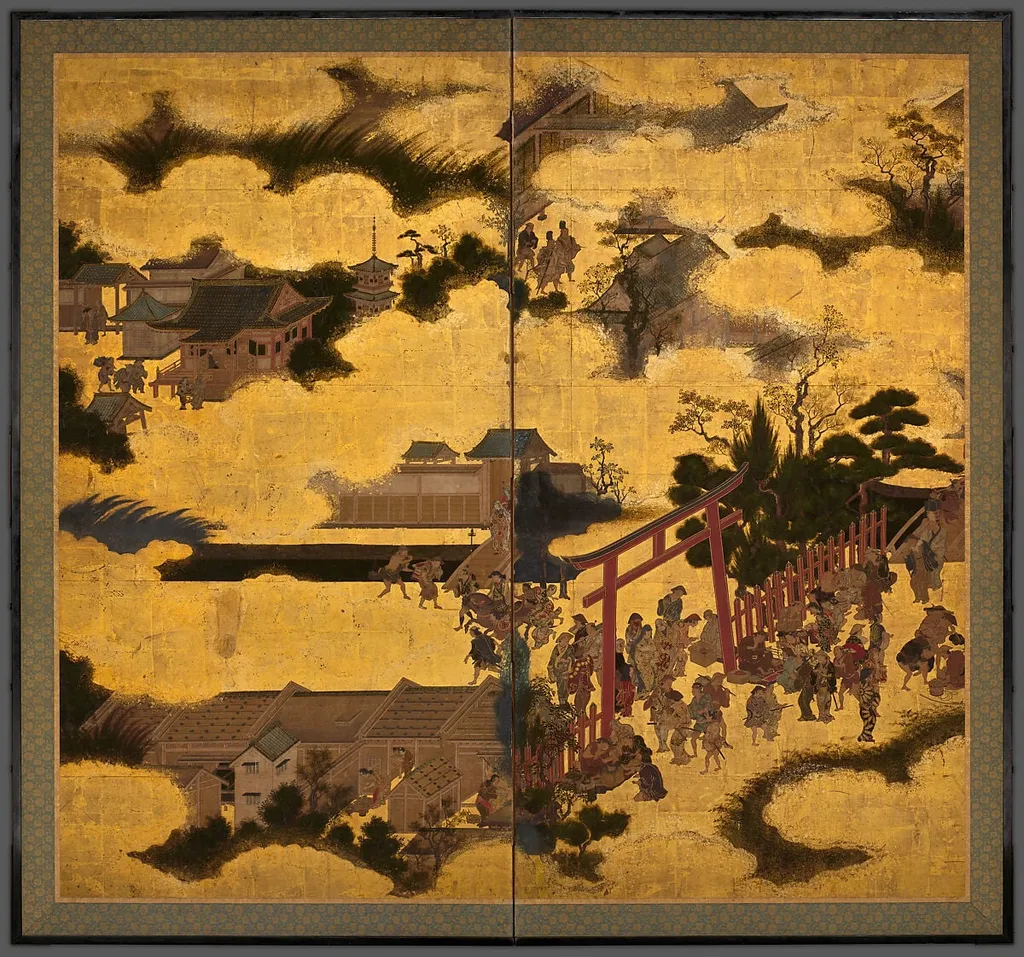
祇園大鳥居屏風|The Torii Gate of Gion Shrine is an ink painting by the Baroque artist Unknown. It dates from 1616 and is held in the collection of the Metropolitan Museum of Art. The Torii Gate of Gion Shrine is a two-panel folding screen, originally sliding doors (fusama), executed in ink, color, and gold on paper.
About this work
Overview
The Torii Gate of Gion Shrine is a two-panel folding screen, originally sliding doors (fusama), executed in ink, color, and gold on paper. It depicts a vibrant scene of everyday life centered around a prominent red gate.
Subject & Meaning
The scene focuses on the Torii Gate of Gion Shrine, surrounded by a bustling crowd, horse riders, and distant buildings. The composition conveys the gate's importance as a communal hub.
Technique & Style
Characterized by bold colors, notably a dominant yellow scheme, and dynamic composition, the work's style shows influences reminiscent of Baroque art, with meticulous attention to textures of architecture and attire.
History & Provenance
Originally designed as sliding doors (fusama), the piece was later remounted as a two-panel folding screen. Specific historical context or ownership history is not provided.
Context
Created for a likely religious or domestic setting given its original form as fusama, the piece reflects the blend of religious landmarks with daily life in its time.
Legacy
While direct artistic descendants are not specified, its Baroque-esque elements suggest an influence on or reflection of broader cross-cultural artistic exchanges of its era.
Artist & collection

 Domestic Scene
 Giacomo and Cardinal Marco, investing Andrea, Abbot of San Zeno, with his Benefice
 The Nymph of Fontainebleau
 Portrait of a Woman
 Madonna and Child with Saints in the Enclosed Garden
 Venus and Minerva
 Family Group of Four on Sofa
 Wall painting from Room H of the Villa of P. Fannius Synistor at Boscoreale
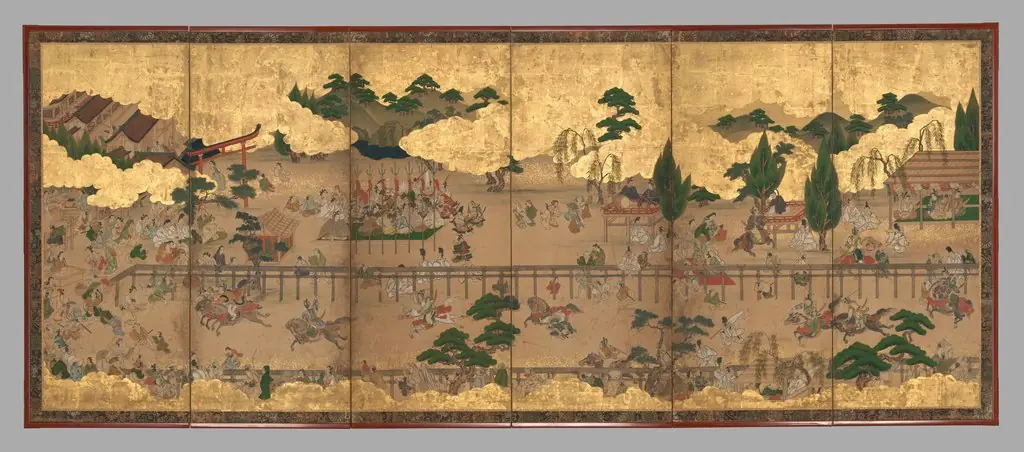 Horse Racing at Kamo Shrine
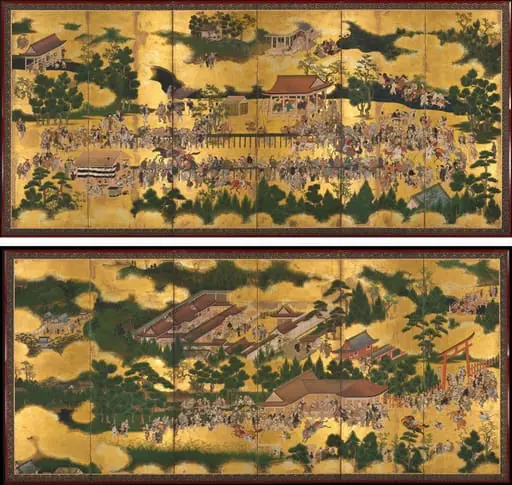 Horse Race at the Kamo Shrine
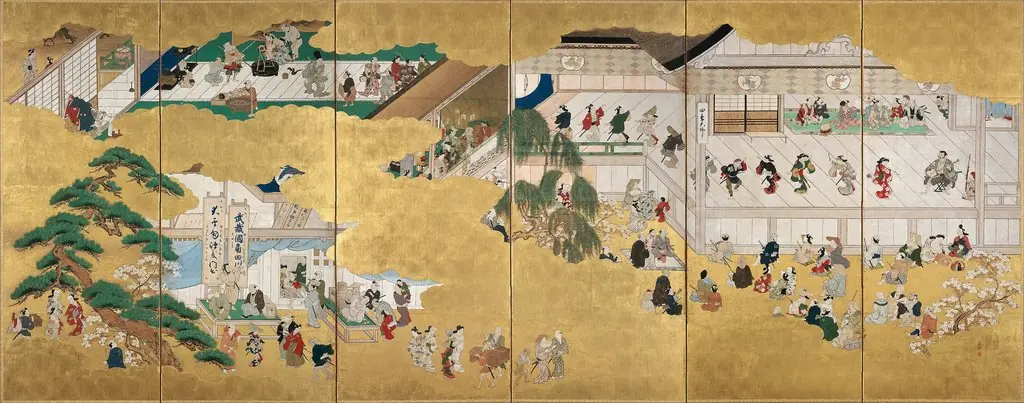 Scenes from the Nakamura Kabuki Theater
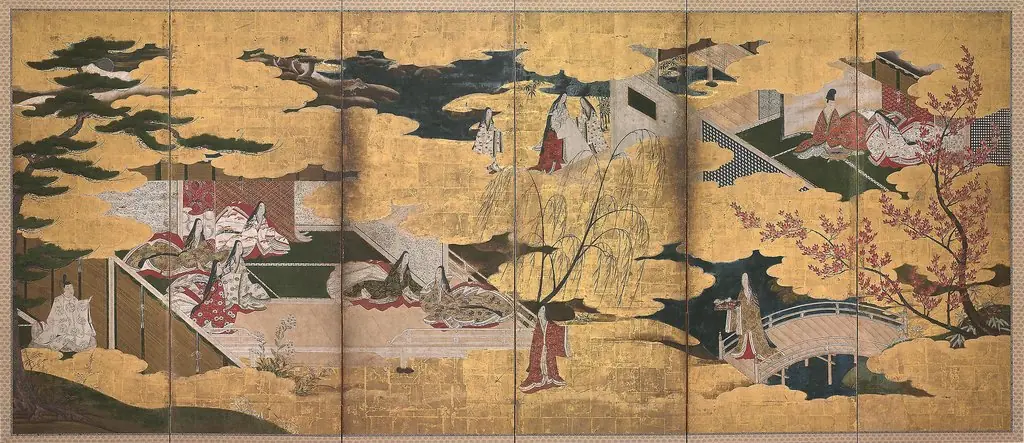 The Tale of Genji
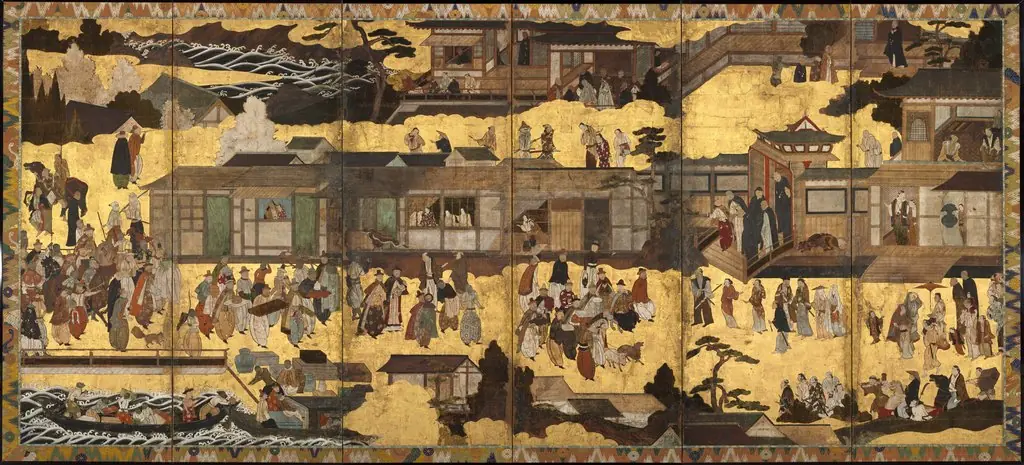 Arrival of the "Southern Barbarians"
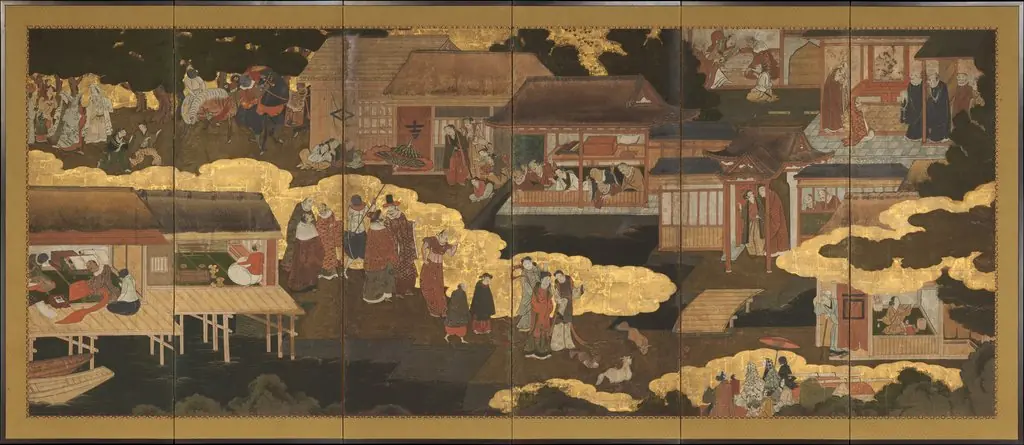 Arrival of the Europeans
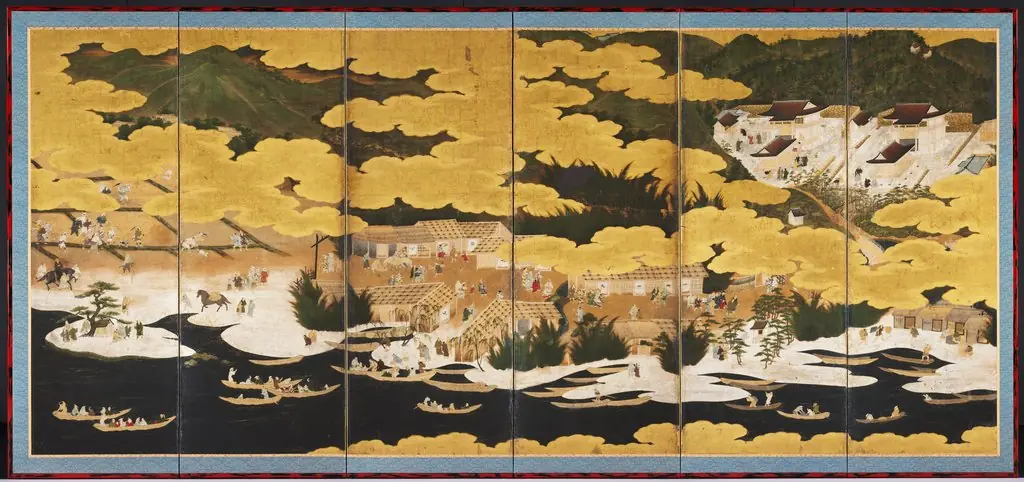 Famous Views of Ōmi
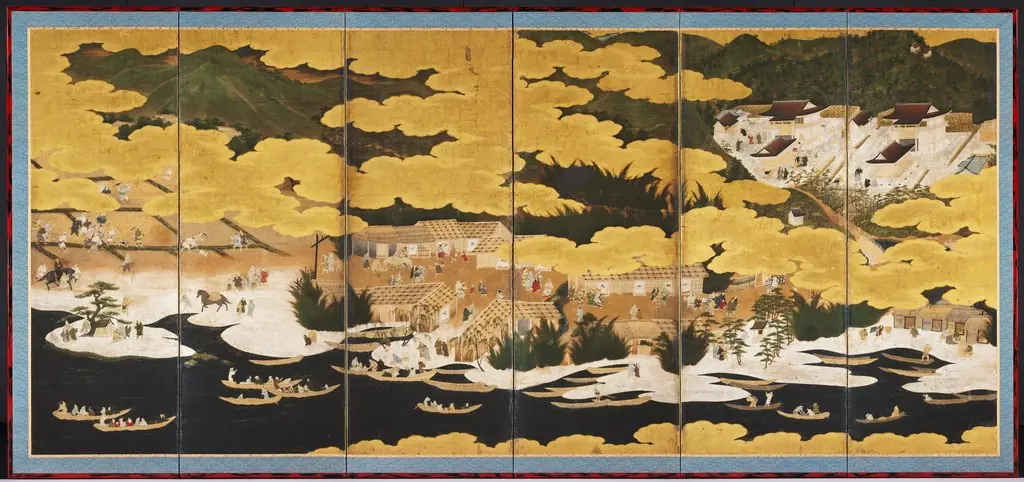 Famous Views of Ōmi
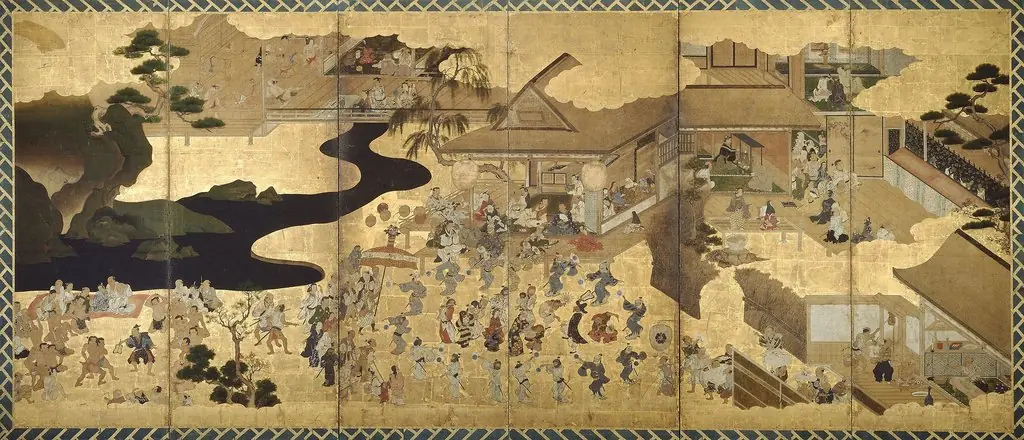 Genre Scenes (Fuzoku byobu)
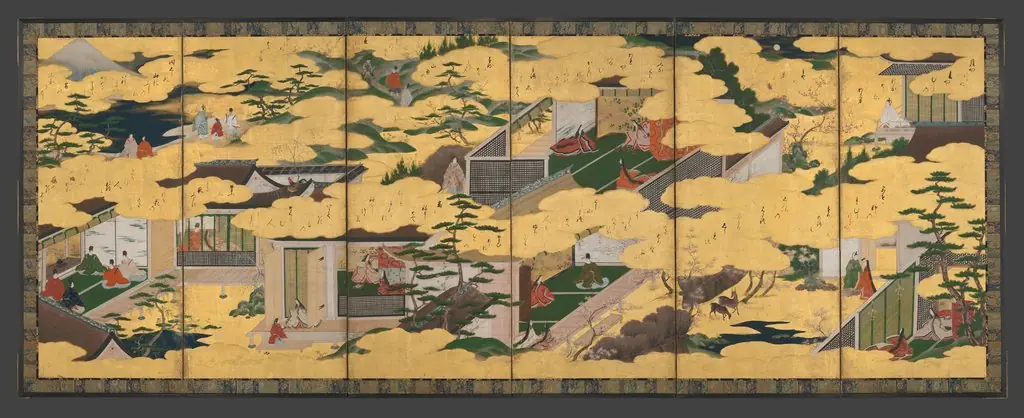 Scenes from the Tales of Ise
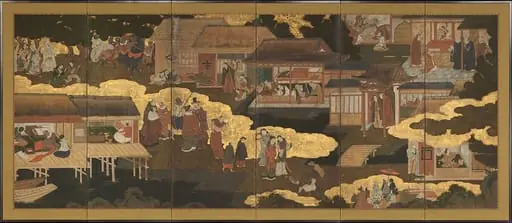 南蛮屏風|Arrival of the Europeans
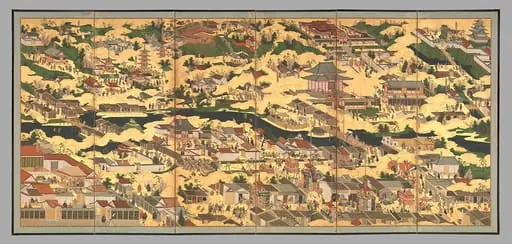 洛中洛外図屏風|Scenes in and around the Capital