Artwork
Three artisan couples
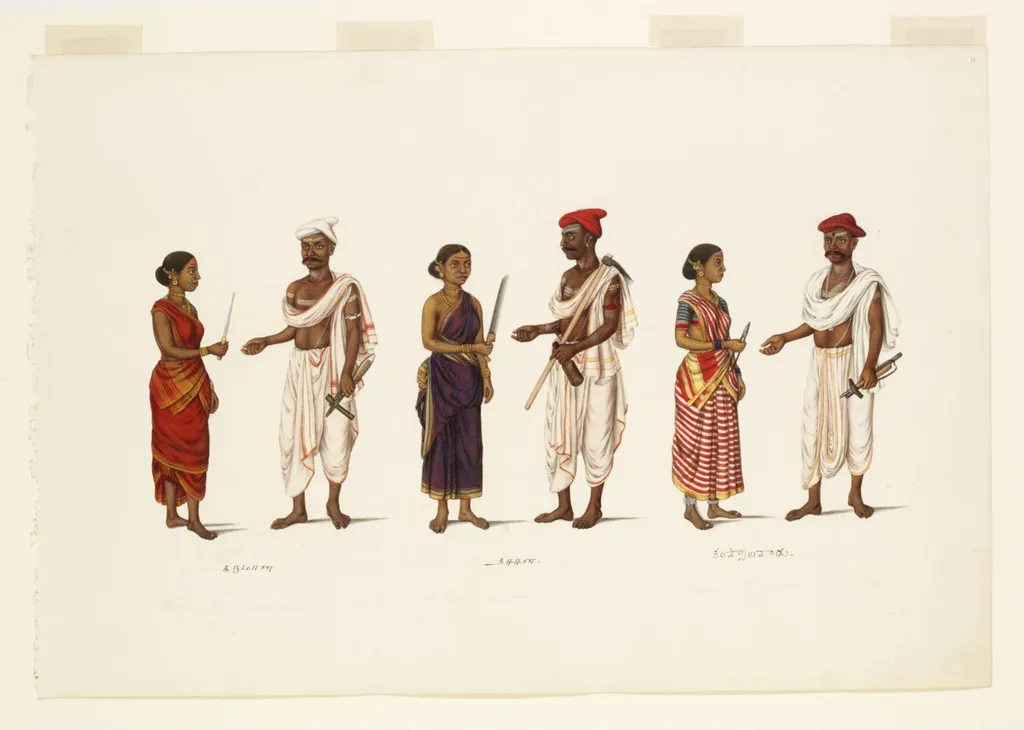
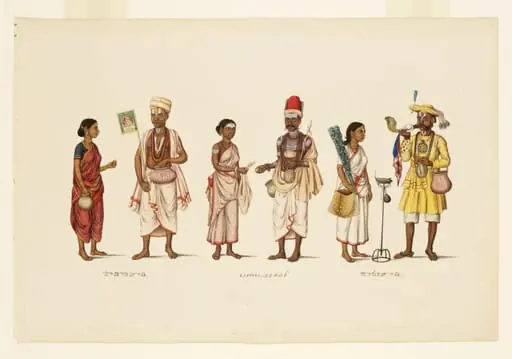
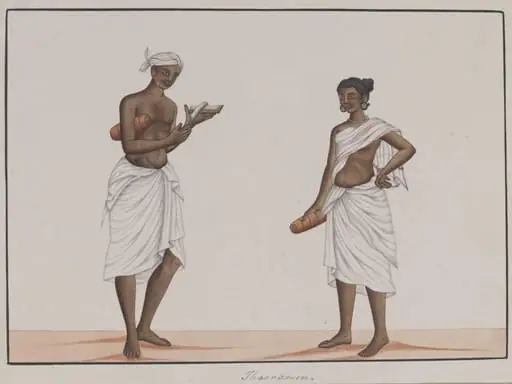
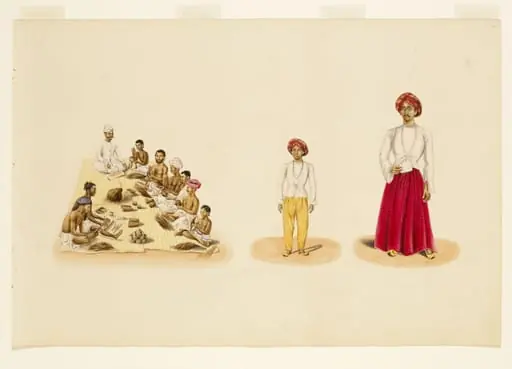
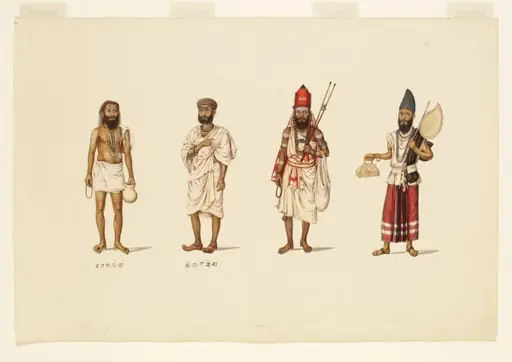
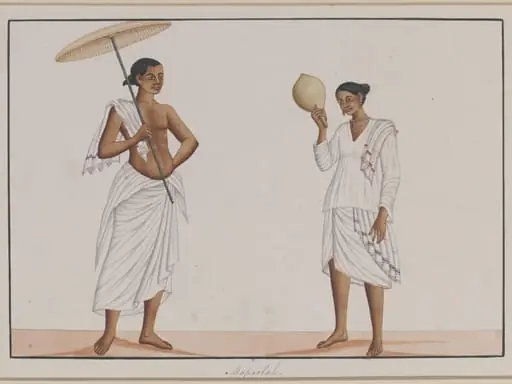
Three artisan couples is a paint painting by the Romanticist artist Unknown. It dates from 1830 and is held in the collection of the Victoria and Albert Museum. This painting presents three pairs of artisans from early nineteenth-century India, each couple aligned with a distinct craft.
About this work
Overview
Part of a larger series documenting social roles, labor, and cultural practices, the work functions as both ethnographic record and visual inventory.
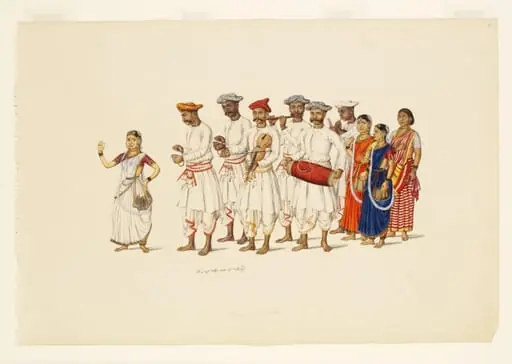
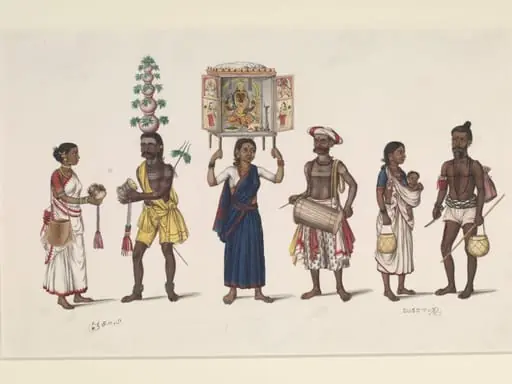
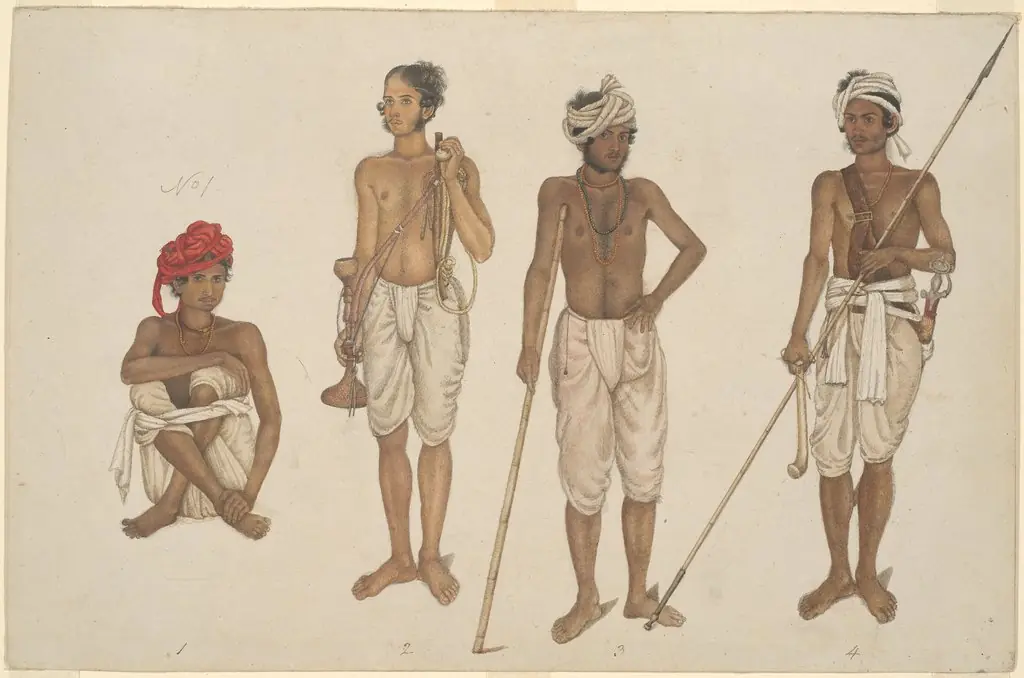
This painting presents three pairs of artisans from early nineteenth-century India, each couple aligned with a distinct craft. Part of a larger series documenting social roles, labor, and cultural practices, the work functions as both ethnographic record and visual inventory. The figures stand in a simplified, unadorned setting, emphasizing their attire, tools, and occupational identities over individual characterization.
Subject & Meaning
The composition depicts a blacksmith, carpenter, and goldsmith alongside their spouses, each holding implements associated with their trade. The inclusion of women suggests their involvement in artisanal work, while the uniformity of presentation underscores the painting’s intent to classify rather than narrate. The work reflects a broader interest in cataloging regional professions, dress, and social hierarchies during a period of heightened colonial documentation.
Technique & Style
Executed in a precise, linear manner, the painting employs flat color fields and minimal shading, characteristic of traditional Indian miniature techniques adapted for documentary purposes. The plain background eliminates spatial depth, directing attention to the figures’ garments and tools. Delicate detailing in textiles and jewelry contrasts with the restrained depiction of facial features, reinforcing the work’s classificatory function.
History & Provenance
The painting originates from a volume of thirty folios illustrating castes, occupations, and agricultural practices, likely commissioned in the 1830s. It entered institutional collections through acquisition from G. Goolden, who inherited the volume from his cousin Richard Goolden. The series exemplifies the period’s growing demand for visual records of South Asian life among European collectors and scholars.
Context
Produced during a time of expanding colonial administration, such works served as visual compendiums for officials, traders, and scholars seeking to understand local customs. The emphasis on artisans reflects both economic interest in craft production and a classificatory impulse to organize social groups. Similar series were created across India, often tailored to European patrons’ expectations of cultural representation.
Legacy
The painting contributes to the corpus of nineteenth-century South Asian documentary art, offering insights into occupational dress, gender roles, and artisanal practices. Its inclusion in a bound volume underscores the era’s shift toward systematic visual ethnography. Today, it provides a reference for historians studying pre-industrial labor, while its stylistic conventions link it to broader traditions of Indian miniature painting.
Artist & collection

 Domestic Scene
 Giacomo and Cardinal Marco, investing Andrea, Abbot of San Zeno, with his Benefice
 The Nymph of Fontainebleau
 Portrait of a Woman
 Madonna and Child with Saints in the Enclosed Garden
 Venus and Minerva
 Family Group of Four on Sofa
 Wall painting from Room H of the Villa of P. Fannius Synistor at Boscoreale