Artwork
Three poems from the “Collection of Poems Ancient and Modern” (Kokin wakashū), known as the “Imaki Fragment” (Imaki-gire)
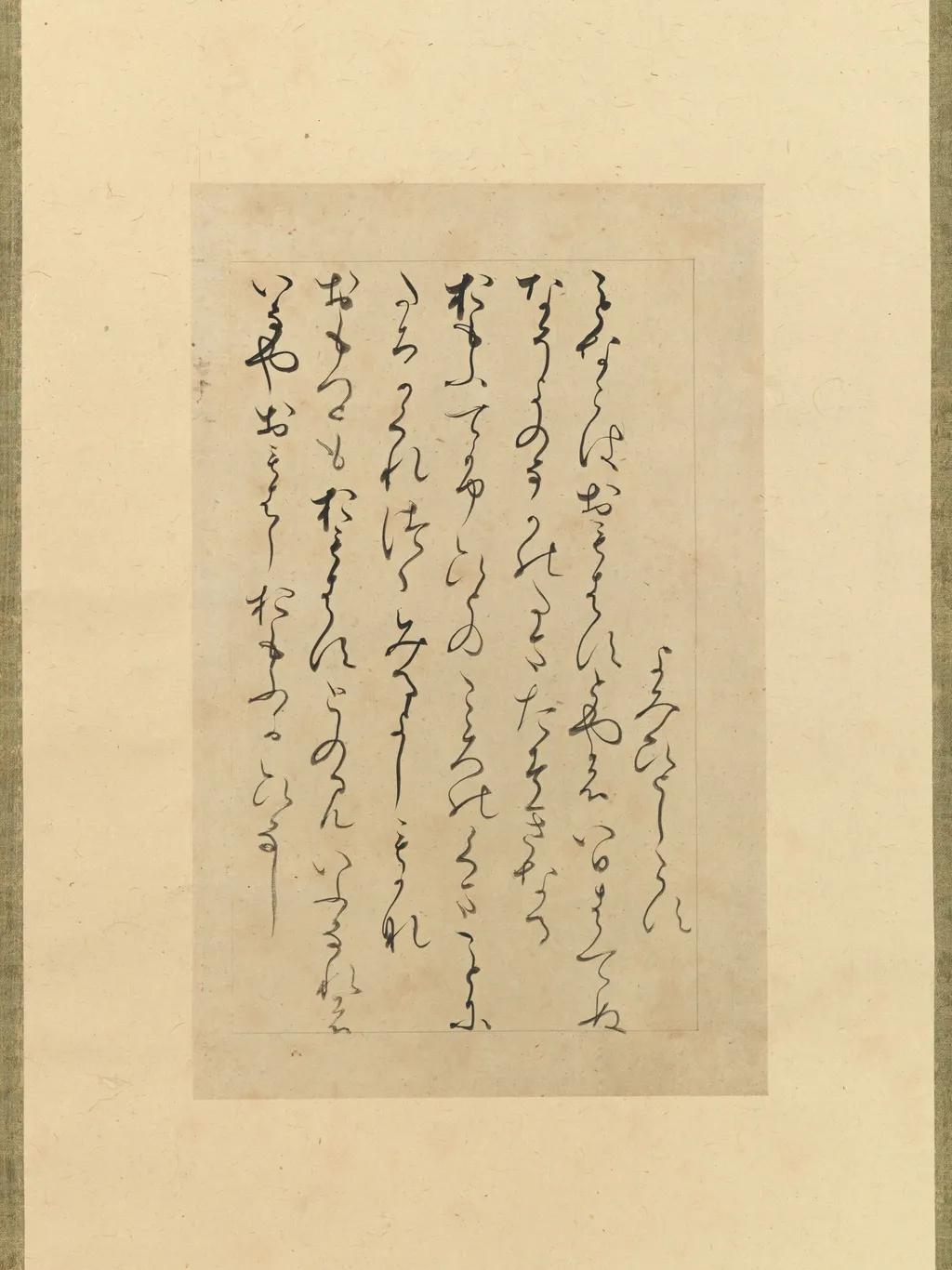
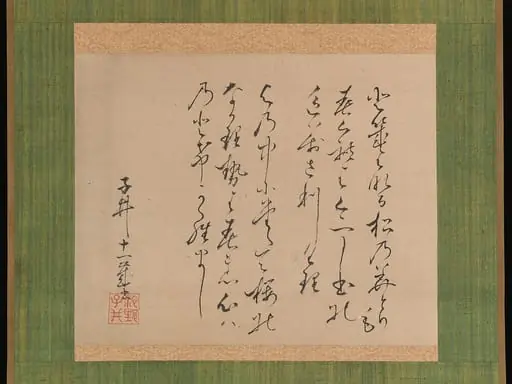
Three poems from the “Collection of Poems Ancient and Modern” (Kokin wakashū), known as the “Imaki Fragment” (Imaki-gire) is an unspecified painting. It dates from 1166 and is held in the collection of the Metropolitan Museum of Art. The work consists of a single sheet of light‑toned paper bearing black ink characters arranged in three vertical columns.
About this work
Overview
The work consists of a single sheet of light‑toned paper bearing black ink characters arranged in three vertical columns. The composition contains no pictorial elements; instead, it presents handwritten verses from the Kokin Wakashū, an early Japanese poetry anthology, reproduced in a straightforward, calligraphic style.
Subject & Meaning
The text displayed is a selection of three poems taken from the “Collection of Poems Ancient and Modern,” commonly referred to as the Imaki Fragment. By presenting the verses without illustration, the piece foregrounds the literary content, inviting viewers to consider the rhythm, imagery, and emotional tone of the classical Japanese poems themselves.
Technique & Style
The calligraphy is executed with brush and ink, showing a range of line qualities—from bold, confident strokes to thin, wavering lines that suggest rapid, spontaneous writing. The unevenness of the strokes reflects a hand‑copied transmission rather than a printed edition, emphasizing the personal touch of the scribe.
History & Provenance
The fragment originates from a manuscript tradition that reproduced poems from the Kokin Wakashū in later centuries. Although the exact date of this particular copy is not specified, its hand‑written nature indicates it was produced before modern printing technologies, likely within a scholarly or monastic context where such texts were studied and copied.
Context
The Kokin Wakashū, compiled in the early 10th century, is a foundational work of Japanese waka poetry. The Imaki Fragment represents one of the many ways the anthology was circulated, serving both as a literary reference and as a devotional object for those who valued the aesthetic of handwritten verse.
Artist & collection