Artwork
Waka Poem: “Across the fields and hills…”
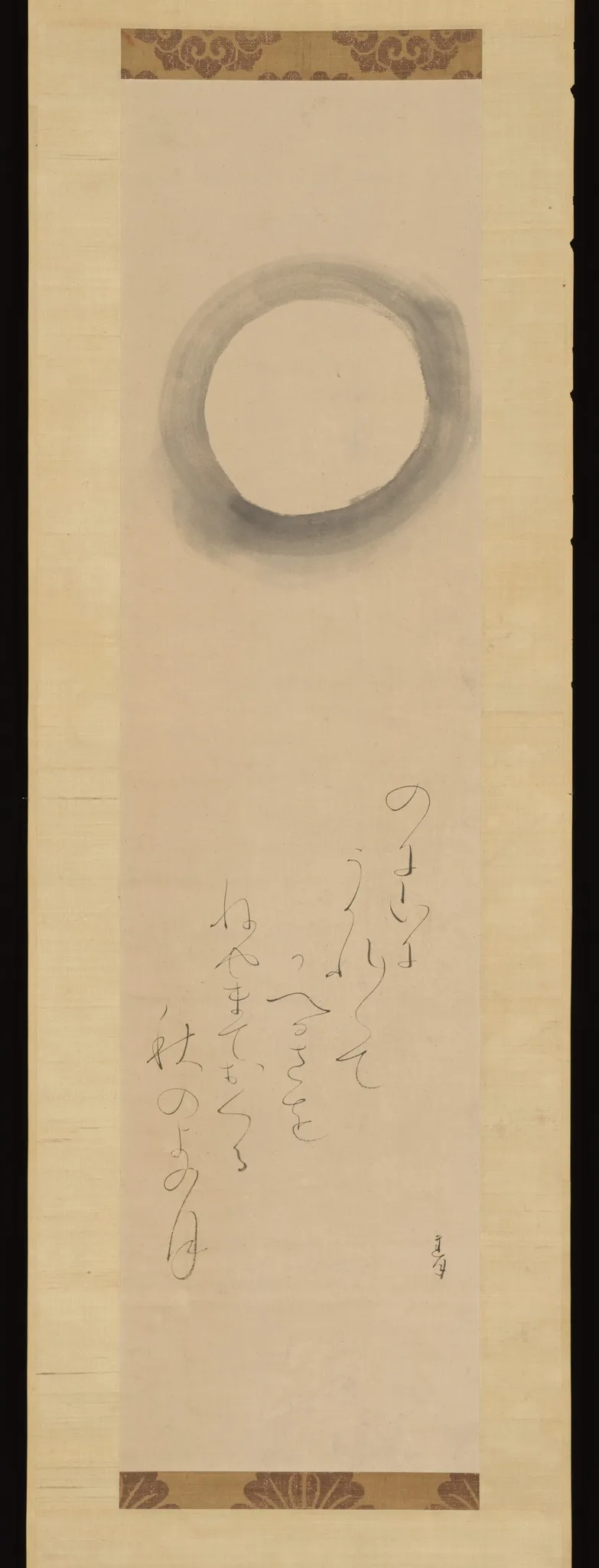
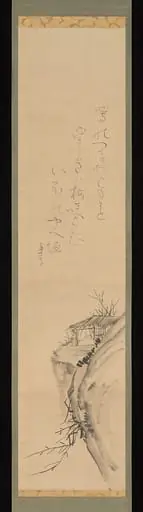
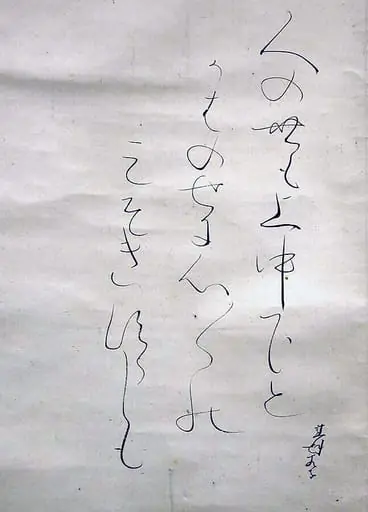
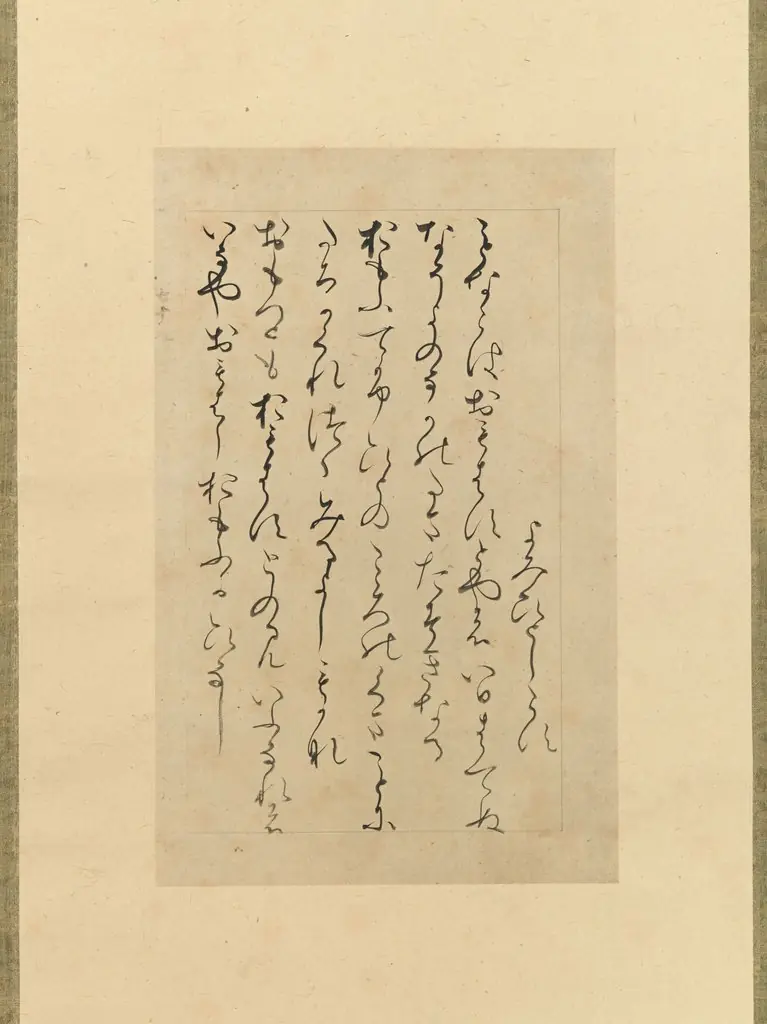
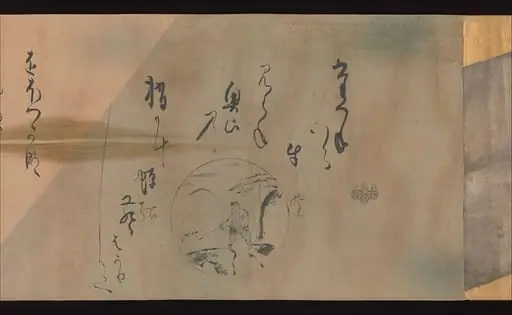
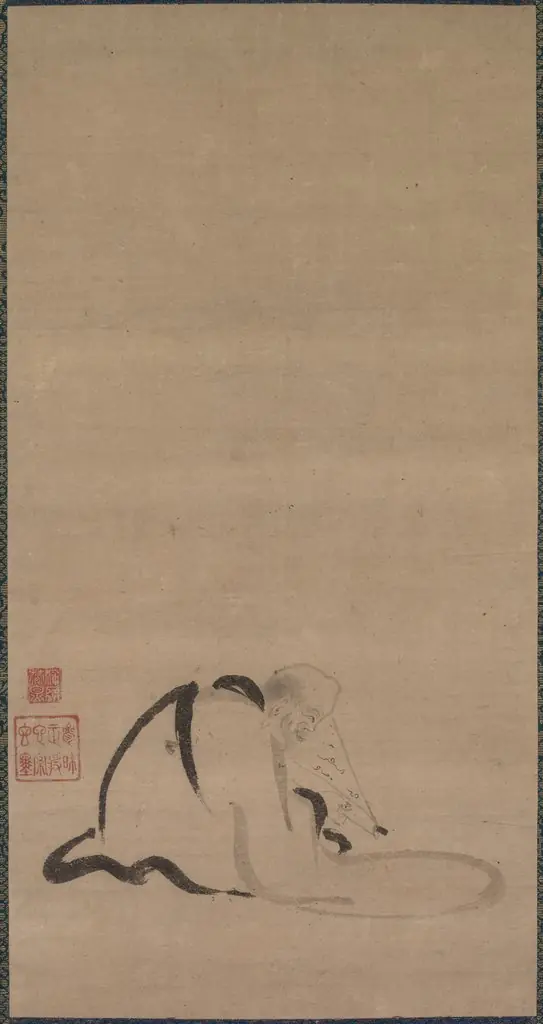
Waka Poem: “Across the fields and hills…” is an unspecified painting by the Nihonga artist Ōtagaki Rengetsu. It dates from 1834 and is held in the collection of the Metropolitan Museum of Art.
About this work
Overview
Created in 1834 by the Japanese poet‑artist Ōtagaki Rengetsu, this small painting combines ink calligraphy with a minimalist visual element. It is part of the collection of the Metropolitan Museum of Art in New York. The work presents a brief waka poem rendered in flowing Japanese characters against a plain, light‑toned surface.
Subject & Meaning
The poem, whose opening line translates as “Across the fields and hills…,” evokes a sense of travel and contemplation of the landscape. The solitary dark circle positioned near the top suggests a moon or halo, reinforcing the nocturnal or reflective mood suggested by the verse.
Technique & Style
Rengetsu employed a single brushstroke of dark ink to form the circular motif, allowing it to hover against the unadorned paper. The accompanying text is written in a loose, uneven hand, characteristic of her spontaneous calligraphic approach, which emphasizes natural rhythm over formal precision.
History & Provenance
The painting was produced during the late Edo period, a time when Rengetsu, a nun and poet, frequently merged literary and visual arts. It entered the Metropolitan Museum of Art’s collection through acquisition in the 20th century, where it remains on display as part of the museum’s Asian art holdings.
Context
Rengetsu’s work reflects the broader Japanese tradition of integrating poetry and painting, known as haiga, where a brief verse accompanies a simple visual cue. The piece exemplifies the aesthetic of wabi‑sabi, valuing simplicity, imperfection, and the fleeting nature of the moment.
Artist & collection