Artwork
Todi Ragini, from a Ragamala Series
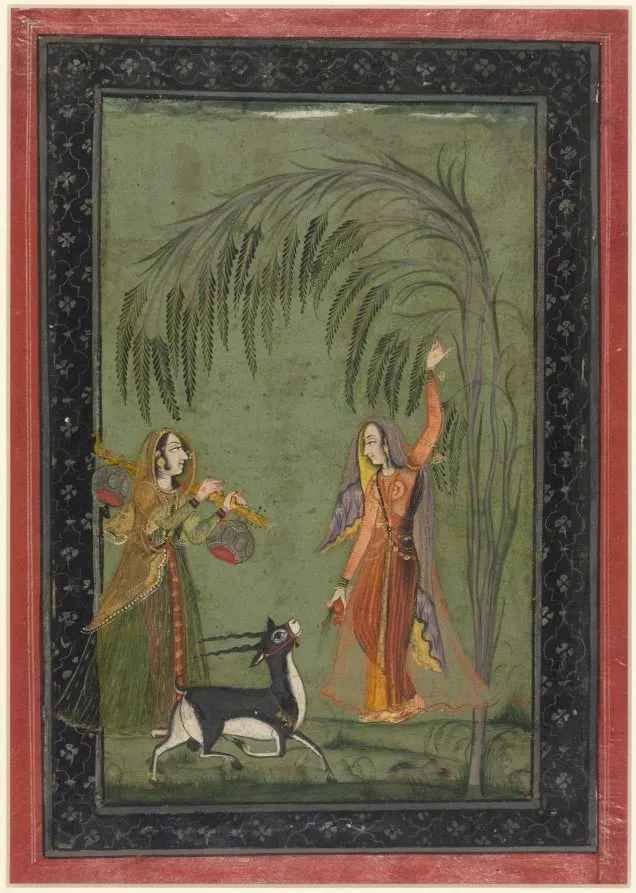
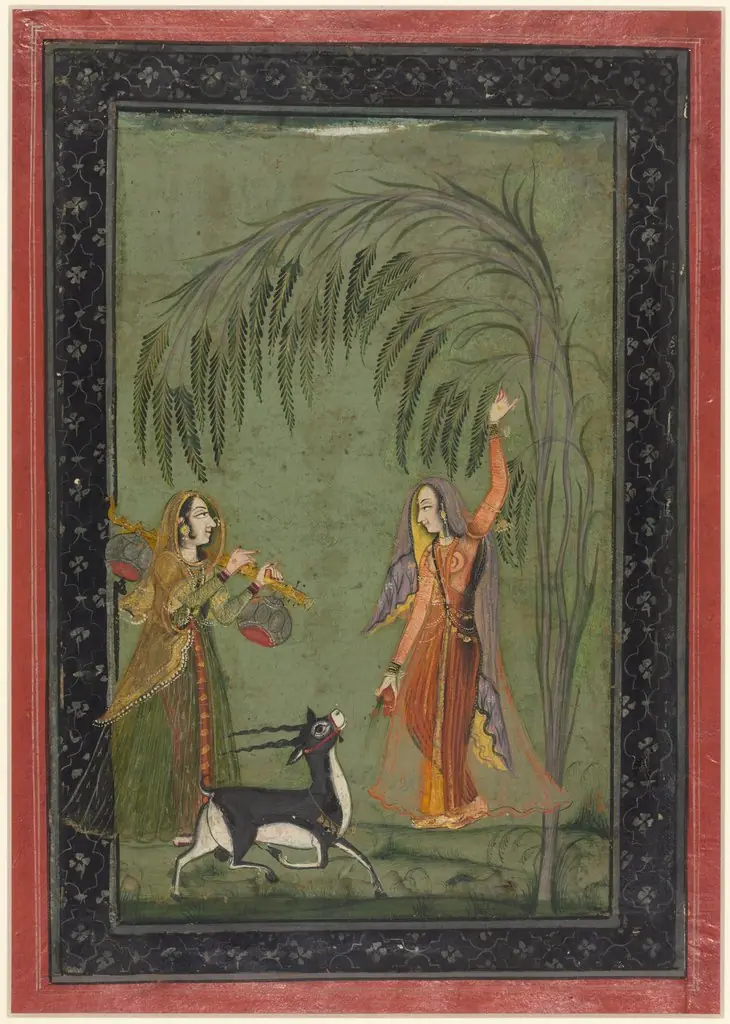
Todi Ragini, from a Ragamala Series is an unspecified painting by the Baroque artist Unknown. It dates from 1762 and is held in the collection of the Cleveland Museum of Art. This 18th‑century Indian painting forms part of a ragamala series, visualising the musical mode Todi Ragini.
About this work
If you like this quiet moment, look up *northwestern india, rajasthan, bundi or uniara, 18th century* for more paintings from the same place and time.
You see a woman in a red sari standing under a tree, a deer nudging her hand.
This painting is one page from a *Ragamala*—a set of pictures that pair music with moods. Todi Ragini is the "wife" of a springtime melody; the verses say she’s so lovely that even deer forget to run away.
If you like this quiet moment, look up *northwestern india, rajasthan, bundi or uniara, 18th century* for more paintings from the same place and time.
Overview
This 18th‑century Indian painting forms part of a ragamala series, visualising the musical mode Todi Ragini. Executed on paper in the Rajasthan courts of Bundi or Uniara, the work depicts a woman in a red sari beneath a tree, her hand gently touched by a deer. The image illustrates the poetic association of the ragini with the springtime melody Hindola Raga.
Subject & Meaning
In ragamala tradition, each male raga is paired with a female ragini; Todi Ragini is the consort of Hindola, a tune evoking the swing of lovers in spring. Verse descriptions portray her as sharp‑eyed, slender, and luminous as frost, scented with saffron and camphor from Kashmir, capable of coaxing a deer away from a forest clearing. The painting captures this gentle, persuasive charm.
Technique & Style
The composition employs the delicate brushwork and vibrant palette typical of Bundi‑Uniara court painting. The figure’s red sari and the surrounding foliage are rendered with fine line and subtle washes, while the deer is depicted in a naturalistic pose. Gold leaf accents highlight the woman's jewelry, reinforcing the courtly elegance of the scene.
History & Provenance
Created in the late 1700s for a patron of the Bundi or Uniara courts, the work was part of a larger ragamala manuscript that linked visual art with Hindustani music. The manuscript remained in regional collections before entering a museum acquisition in the early 20th century, where it has been conserved as an example of ragamala iconography.
Context
Ragamala paintings served as visual guides to the emotional states evoked by specific ragas, integrating music, poetry, and painting. The Todi Ragini image reflects the broader cultural practice of personifying musical modes as courtly figures, a practice that flourished in north‑western India during the 18th century, especially under the patronage of Rajput rulers.
Artist & collection

 Domestic Scene
 Giacomo and Cardinal Marco, investing Andrea, Abbot of San Zeno, with his Benefice
 The Nymph of Fontainebleau
 Portrait of a Woman
 Madonna and Child with Saints in the Enclosed Garden
 Venus and Minerva
 Family Group of Four on Sofa
 Wall painting from Room H of the Villa of P. Fannius Synistor at Boscoreale