Artwork
Travelling entertainers
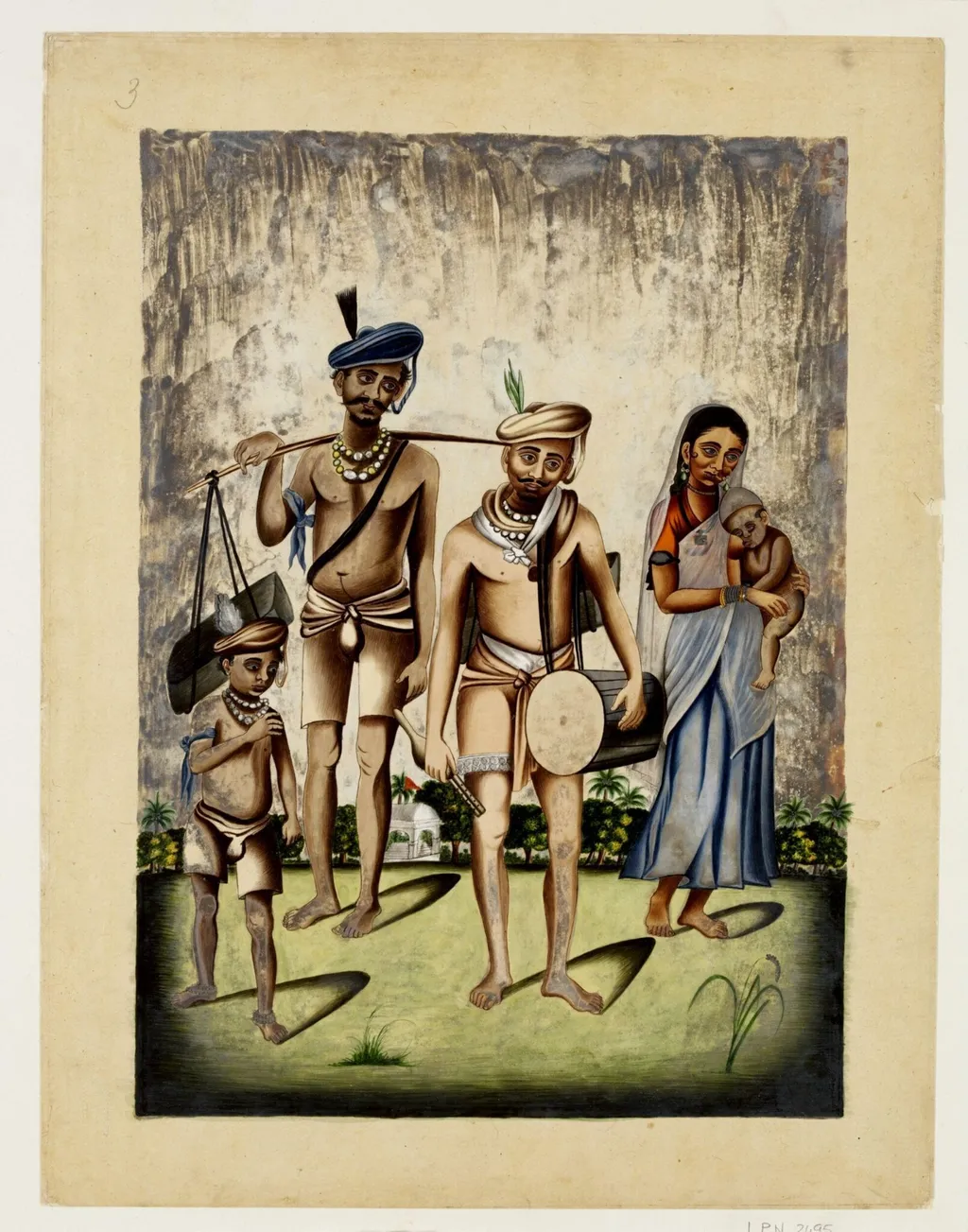
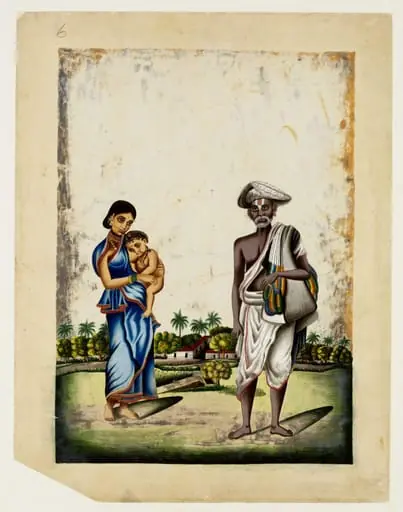
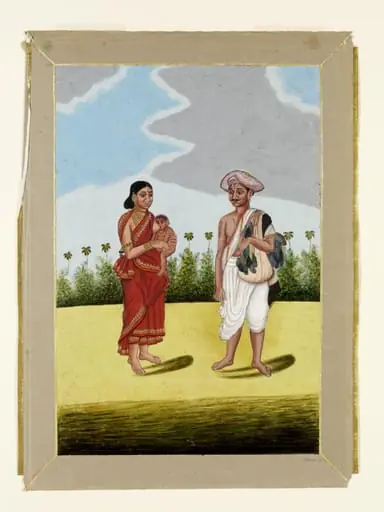
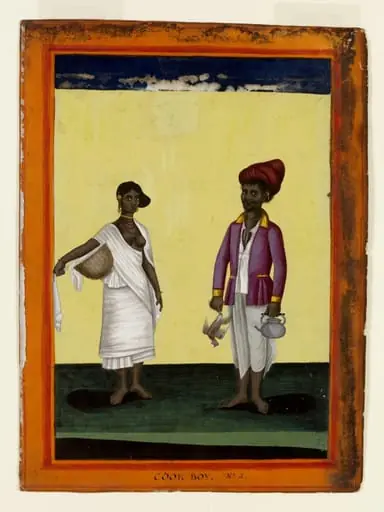
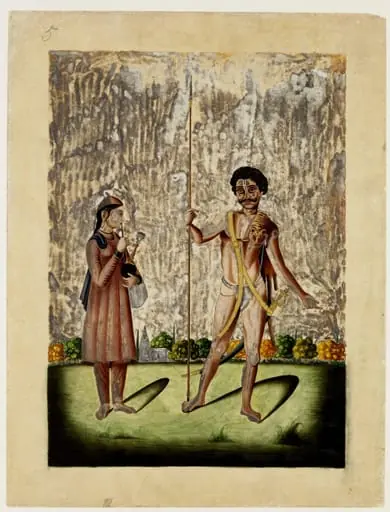
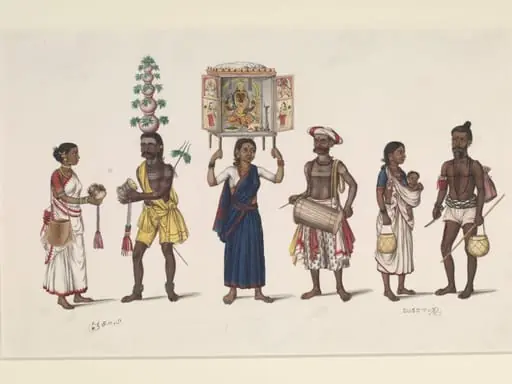
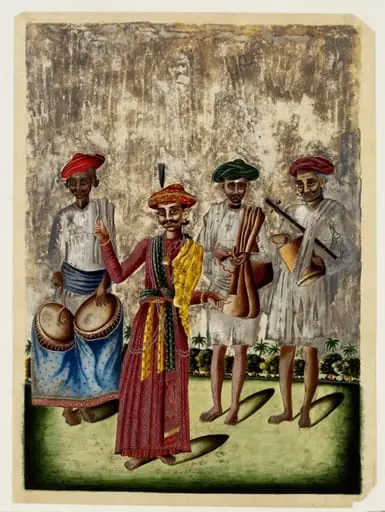
Travelling entertainers is a paint painting by the Impressionist artist Unknown. It dates from 1850 and is held in the collection of the Victoria and Albert Museum. The work portrays a small procession of itinerant performers moving through an open landscape.
About this work
Overview
The work portrays a small procession of itinerant performers moving through an open landscape. Five figures are visible: two men at the front, a boy trailing behind, and a woman with an infant on the right. The scene is set against a garden‑like backdrop that includes trees, distant architecture, and a few houses.
Subject & Meaning
The figures appear to be members of a travelling entertainment troupe. One man carries a drum, the other holds a small pot, and a third figure bears a pole‑supported bag that may contain a snake, suggesting a snake‑charmer act. The presence of a nursing mother and child adds a domestic element to the otherwise performative group.
Technique & Style
Rendered with a heightened sense of realism compared with earlier versions of the theme, the painting employs bright, saturated colours and simplified forms to convey vitality. Careful attention to the landscape—trees, roofs, and a distant temple—provides depth, while the figures are delineated with clear outlines and decorative accessories.
History & Provenance
The piece belongs to a tradition of depicting wandering entertainers that was popular in certain regional schools of painting. Its precise date and original ownership are not recorded in the supplied data, but the work reflects a period when artists began to integrate more naturalistic detail into genre scenes.
Context
Traveling performers were a common subject in visual culture, symbolising both the exotic and the everyday. By situating the troupe within a recognizable rural setting, the artist links the spectacle of performance with the rhythms of ordinary life, reflecting contemporary interest in the lives of itinerant communities.
Artist & collection

 Domestic Scene
 Giacomo and Cardinal Marco, investing Andrea, Abbot of San Zeno, with his Benefice
 The Nymph of Fontainebleau
 Portrait of a Woman
 Madonna and Child with Saints in the Enclosed Garden
 Venus and Minerva
 Family Group of Four on Sofa
 Wall painting from Room H of the Villa of P. Fannius Synistor at Boscoreale