Artwork
A naked hunter
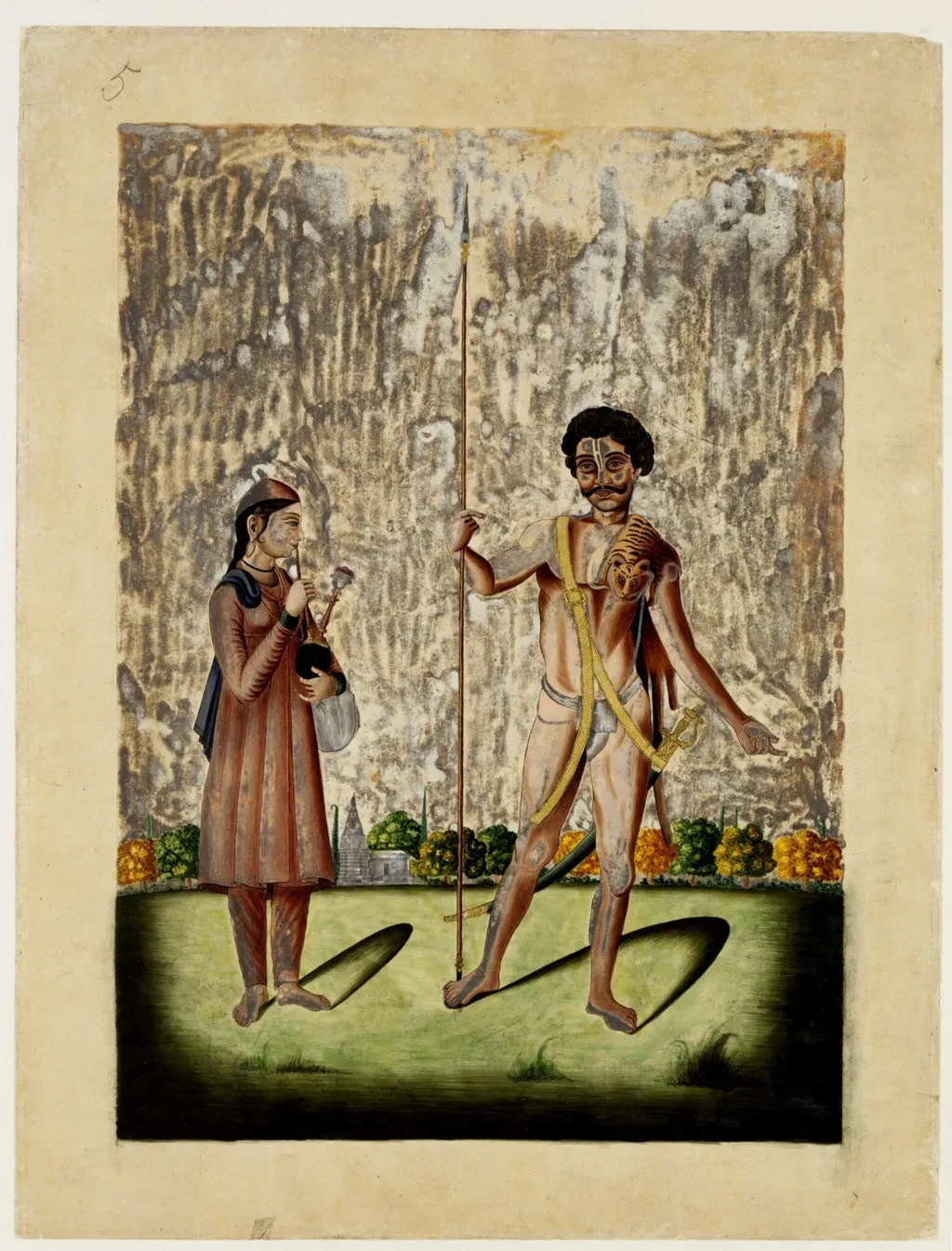
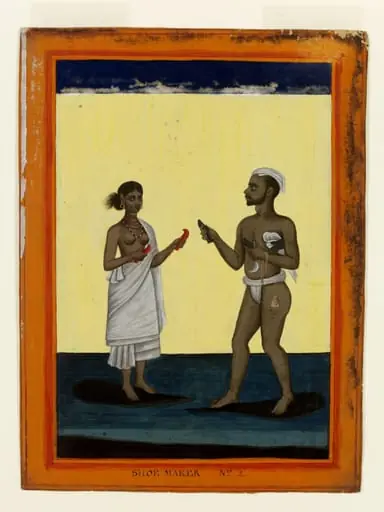
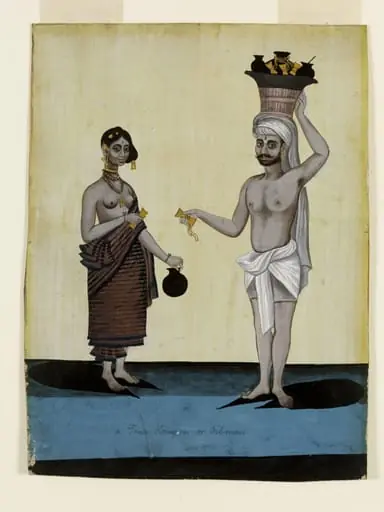
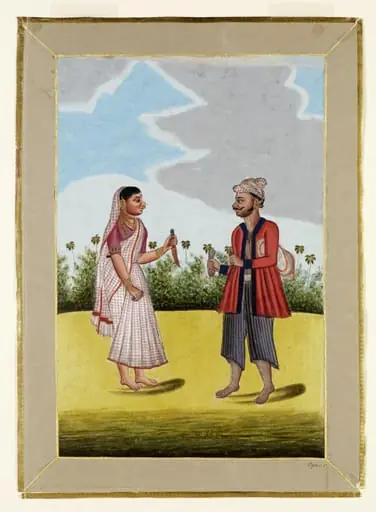
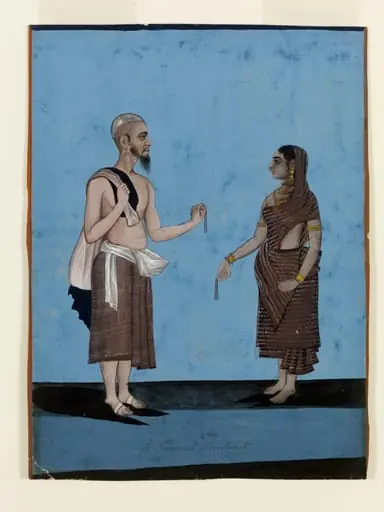
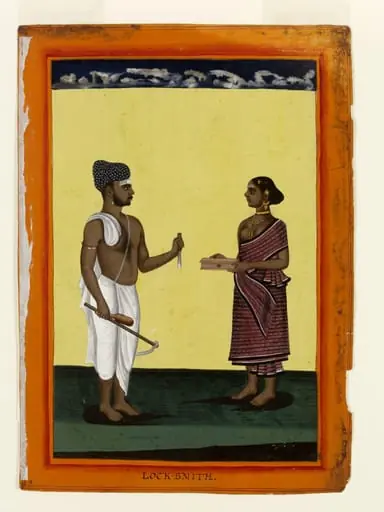
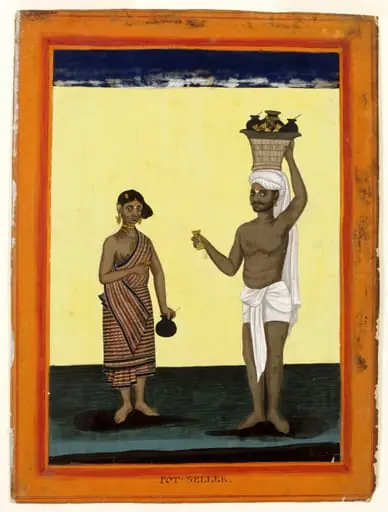
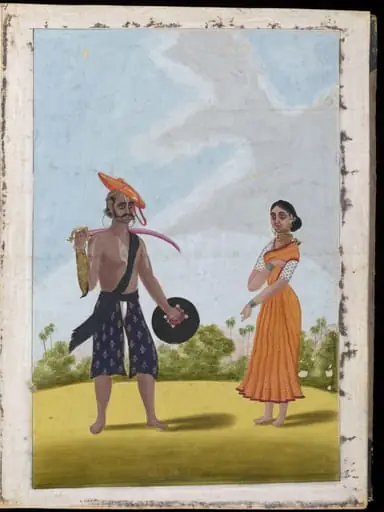
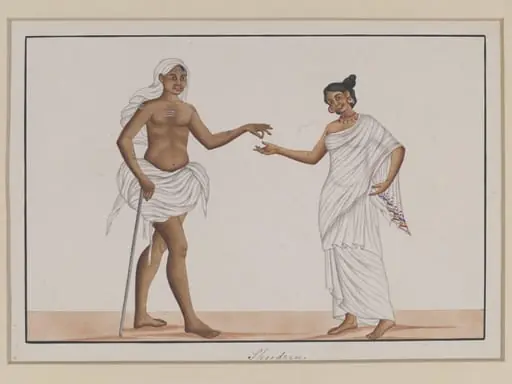
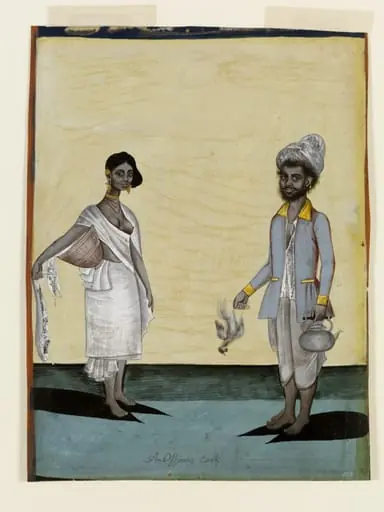
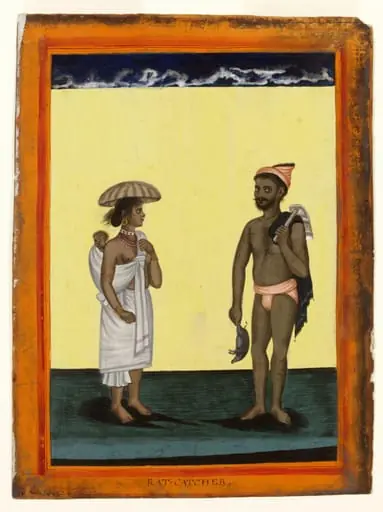
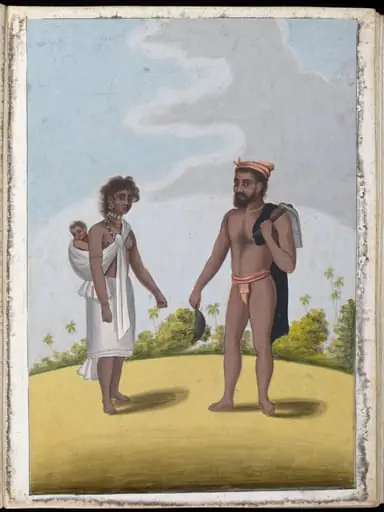
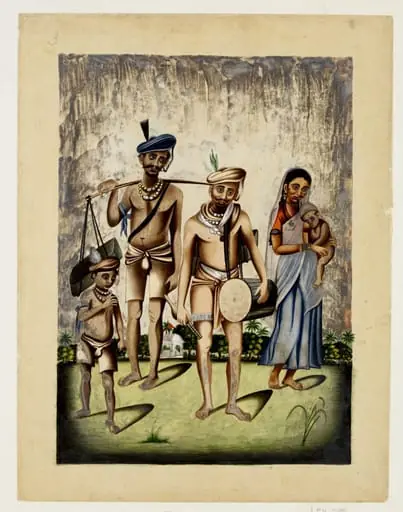
A naked hunter is a paint painting by the Impressionist artist Unknown. It dates from 1850 and is held in the collection of the Victoria and Albert Museum. This painting depicts a hunter and a companion in a stylized natural setting, rendered with minimal shading and flat color planes.
About this work
Overview
This painting depicts a hunter and a companion in a stylized natural setting, rendered with minimal shading and flat color planes.
This painting depicts a hunter and a companion in a stylized natural setting, rendered with minimal shading and flat color planes. The figures are arranged symmetrically, positioned against a backdrop of rocky terrain, distant structures, and vibrant flora. The absence of chiaroscuro and the deliberate simplification of form suggest a non-Western approach to spatial representation, emphasizing symbolic presence over naturalistic depth.
Subject & Meaning
The central figure is a bare-chested man armed with a spear and bow, draped in a yellow cloth and adorned with facial markings, possibly indicating status or ritual identity. Beside him, a woman in a plain brown robe holds a nargila, suggesting a moment of repose. Their pairing may reflect a domestic or ceremonial role, though the exact narrative remains ambiguous, rooted in local tradition rather than a known literary source.
Technique & Style
The figures are painted with bold outlines and unmodulated hues, avoiding gradients or chiaroscuro. The hunter’s body and clothing are rendered in simplified planes, while the background features flat areas of green and yellow for foliage and earth. Details like the tiger-skin mantle and floral elements are rendered with decorative precision, prioritizing pattern and symbolism over anatomical realism.
History & Provenance
The work originates from a late period in a regional painting tradition where figures began to show increased naturalism, yet retained stylized elements. Its exact origin and date are not documented, but stylistic features align with late 18th- to early 19th-century Indian or Persianate courtly art, likely produced for a local patron rather than a major imperial atelier.
Context
The scene reflects a blend of hunting culture and domestic life, common in regional art where elite figures were portrayed in semi-idealized natural settings. The presence of a nargila and ornamental flora hints at leisurely aristocratic pastimes, while the hunter’s weaponry and markings suggest martial identity. The composition avoids narrative drama, favoring quiet coexistence between figure and environment.
Legacy
This painting exemplifies a transitional phase in regional painting, where emerging interest in naturalistic detail did not override traditional flatness and symbolic form. It contributes to understanding how local artists adapted external influences without adopting Western techniques like chiaroscuro, preserving distinct visual languages well into the colonial era.
Artist & collection

 Domestic Scene
 Giacomo and Cardinal Marco, investing Andrea, Abbot of San Zeno, with his Benefice
 The Nymph of Fontainebleau
 Portrait of a Woman
 Madonna and Child with Saints in the Enclosed Garden
 Venus and Minerva
 Family Group of Four on Sofa
 Wall painting from Room H of the Villa of P. Fannius Synistor at Boscoreale