Artwork
松に鷹図大津絵|Ōtsu-e of Falcon on a Pine Tree
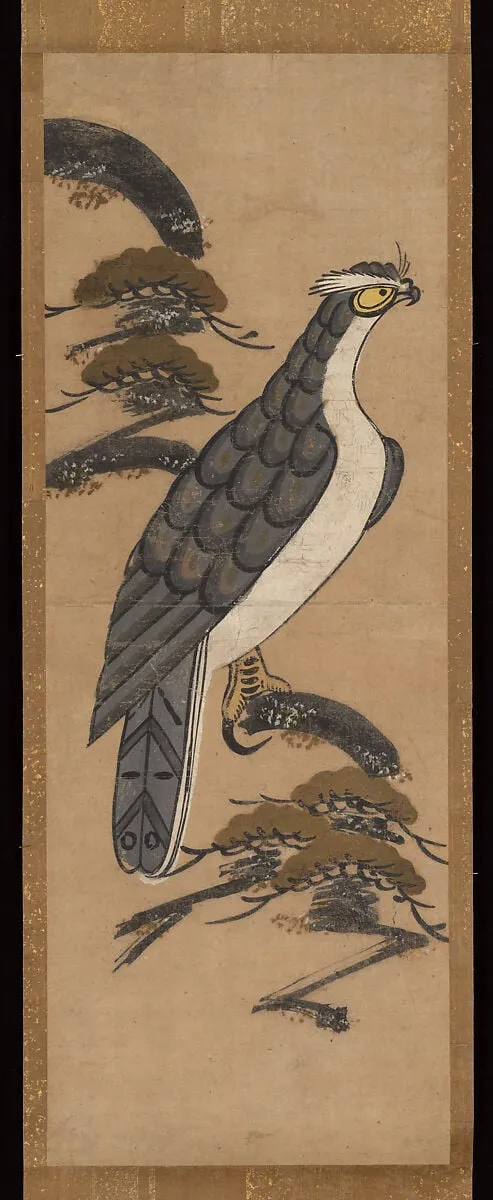
松に鷹図大津絵|Ōtsu-e of Falcon on a Pine Tree is an ink painting. It dates from 1749 and is held in the collection of the Metropolitan Museum of Art. The hanging scroll depicts a solitary falcon perched upon a pine branch, rendered in ink and color on paper.
About this work
Overview
The hanging scroll depicts a solitary falcon perched upon a pine branch, rendered in ink and color on paper. Executed in the Ōtsu-e tradition, the work belongs to a genre of inexpensive, popular prints produced for travelers in eighteenth‑century Japan.
Subject & Meaning
The central figure is a bird of prey, its poised stance suggesting vigilance and strength, while the pine branch evokes longevity and resilience in Japanese symbolism. Together they convey a modest narrative of nature’s power within a domestic visual language.
Technique & Style
The falcon’s plumage is suggested through rapid, overlapping brush strokes that function like a tonal shading, reminiscent of pencil work. The overall composition relies on bold outlines and flat washes of color, characteristic of folk‑art production that favored speed over fine detail.
History & Provenance
Created anonymously, the piece reflects the commercial practices of Ōtsu-e workshops, which rarely signed works. Such scrolls were sold at roadside stalls and inns along travel routes, serving as affordable souvenirs for itinerant visitors.
Context
Ōtsu-e emerged in the Edo period as a visual counterpart to the era’s burgeoning travel culture. Artists produced a wide range of subjects—mythology, humor, daily life—using inexpensive materials, allowing art to reach a broader public beyond elite patronage.
Artist & collection