Artwork
Two Beautiful Ladies
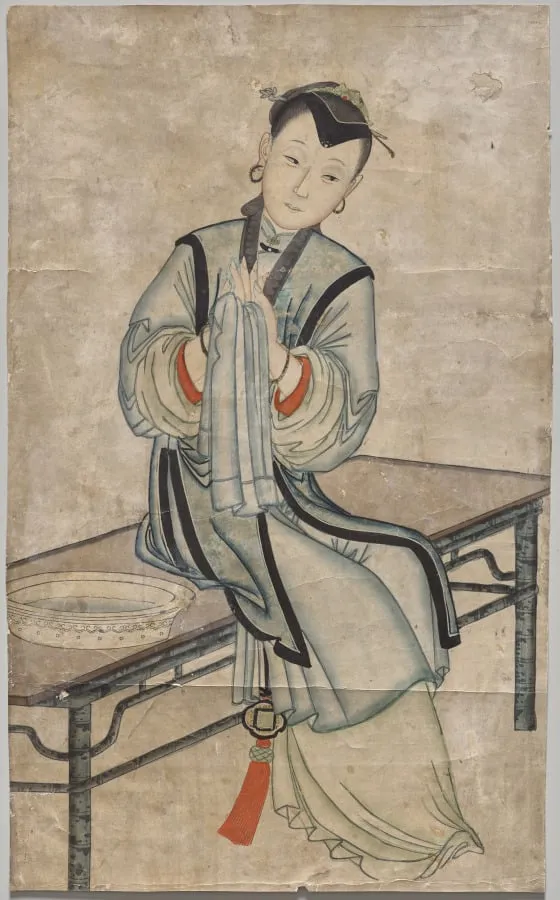
Two Beautiful Ladies is a print by the Baroque artist Unknown. It dates from 1766 and is held in the collection of the Cleveland Museum of Art. The work is a color woodblock print from the Qing dynasty, created during the reign of the Qianlong emperor (1735–1796).
About this work
You see two women in silk robes standing side by side, holding a fan and a scroll.
This painting was made in China during the Qianlong reign, when colorful prints became popular in cities. It’s not a formal portrait—just a pretty scene meant to decorate a home. The unknown artist likely worked in a workshop, not a palace.
To see more art from this time, look up *qing dynasty (1644–1911)*.
Overview
The work is a color woodblock print from the Qing dynasty, created during the reign of the Qianlong emperor (1735–1796). It depicts two women in silk garments standing side by side, one holding a fan and the other a scroll, and was intended as a decorative object for domestic interiors rather than a formal portrait.
Subject & Meaning
The figures are presented in an elegant, leisurely pose, suggesting a scene of refined feminine activity. The fan and scroll serve as conventional symbols of cultured leisure, indicating the women’s genteel status and the aesthetic values of urban households in the eighteenth‑century Chinese capital.
Technique & Style
Executed with multiple woodblocks, the print employs vivid pigments applied to paper, a method that had become widespread in the Jiangnan region. The composition balances delicate line work with flat areas of color, reflecting the commercial aesthetic of single‑sheet prints that adorned city walls and private rooms.
History & Provenance
Printed in a workshop rather than a court atelier, the piece exemplifies the shift from privately commissioned illustrated books to mass‑produced decorative prints that flourished in cities such as Nanjing, Suzhou, Hangzhou and Huizhou during the 17th and 18th centuries. Its anonymous creator remains unidentified.
Context
The rise of affordable, colorful prints in the Qing era corresponded with an expanding urban visual culture. As literacy and disposable income grew, middle‑class households increasingly displayed such artworks, integrating them into everyday spaces as markers of taste and cultural awareness.
Artist & collection

 Domestic Scene
 Giacomo and Cardinal Marco, investing Andrea, Abbot of San Zeno, with his Benefice
 The Nymph of Fontainebleau
 Portrait of a Woman
 Madonna and Child with Saints in the Enclosed Garden
 Venus and Minerva
 Family Group of Four on Sofa
 Wall painting from Room H of the Villa of P. Fannius Synistor at Boscoreale
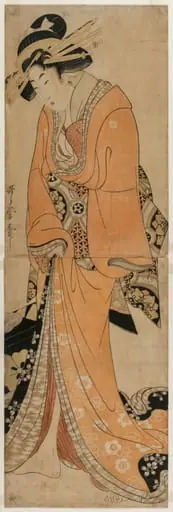 Geisha Standing Beside a Shamisen Case
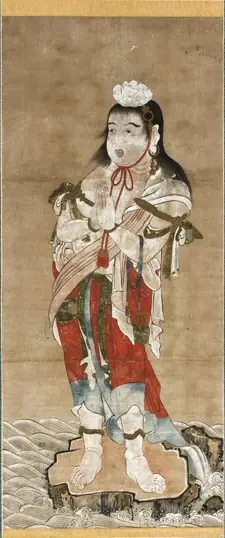 Seitaka-Doji (Acólito de Fudo Myo-o)
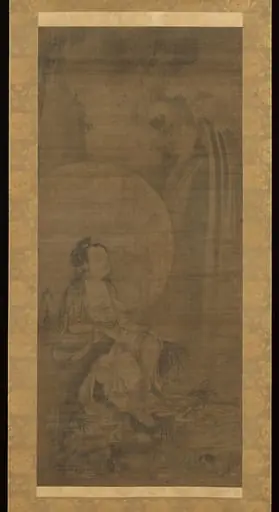 白衣観音図|White-robed Kannon
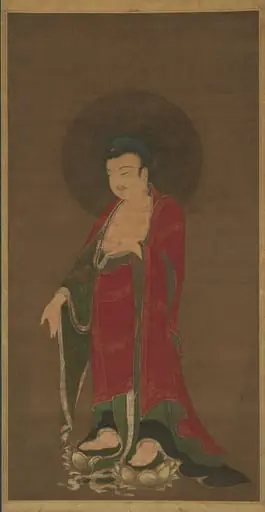 南宋 佚名 阿彌陀佛圖 軸|Buddha Amitabha Descending from His Pure Land
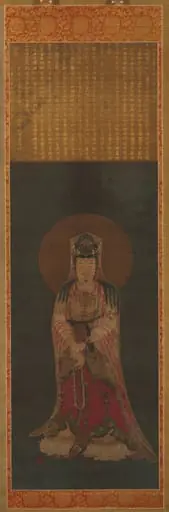 Kannon
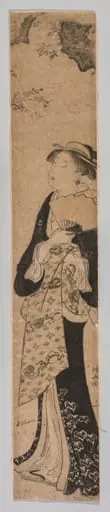 A Beauty in Spring
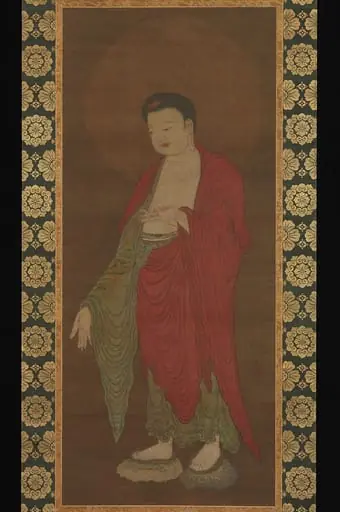 南宋 佚名 阿彌陀佛圖 軸|Buddha Amitabha Descending from his Pure Land
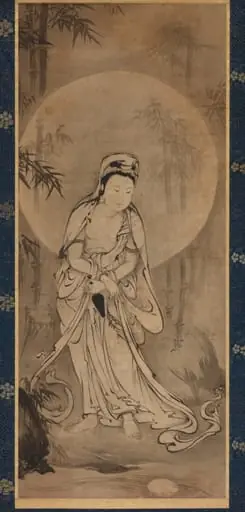 Willow-and-Moon Kannon (Yōryū Kannon)
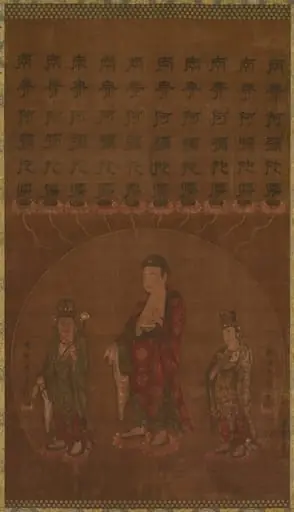 Buddha Amitābha with Two Attending Bodhisattvas