Artwork
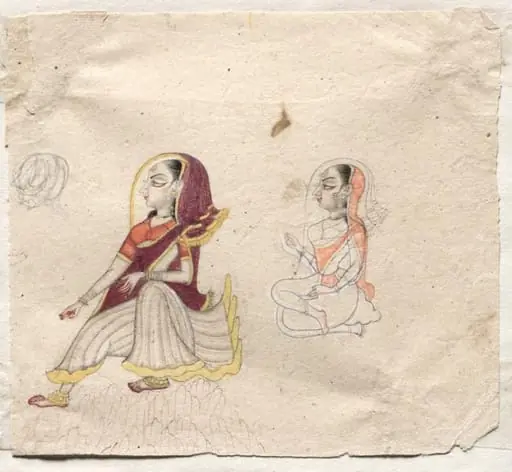
Two Women facing each other
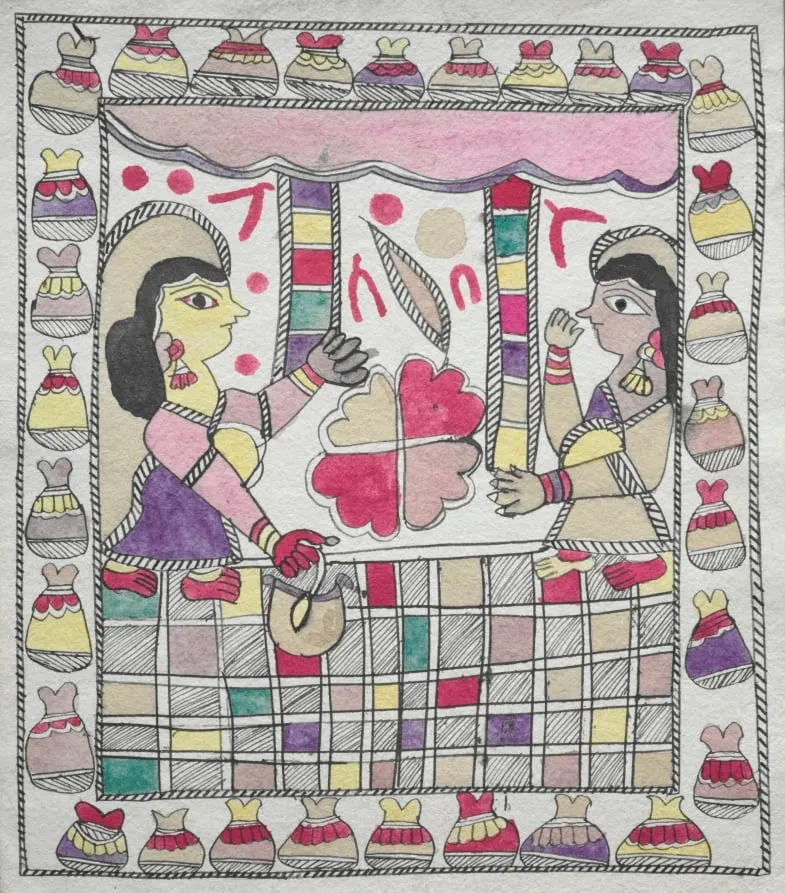
Two Women facing each other is an unspecified painting by Unknown. It dates from 1904 and is held in the collection of the Cleveland Museum of Art. This painting depicts two women seated in direct gaze within a vividly decorated interior.
About this work
Overview
The style aligns with the Mithila tradition of northern India, where domestic and ritual spaces are rendered with symbolic precision.
This painting depicts two women seated in direct gaze within a vividly decorated interior. The space is defined by geometric patterns on walls and floor, while a border of repeating figures encircles the scene. The composition emphasizes stillness and quiet exchange, with color and pattern serving as both decoration and narrative structure. The style aligns with the Mithila tradition of northern India, where domestic and ritual spaces are rendered with symbolic precision.
Subject & Meaning
The two women engage in a moment of intimate attention—one holds a red flower, the other leans forward as if listening. The flower may symbolize communication, fertility, or ritual offering. Surrounding figures carrying pots on their heads suggest daily labor, weaving domestic life into the frame. The scene reflects a cultural emphasis on female interaction, where gestures and objects convey social and spiritual continuity beyond words.
Technique & Style
The painting employs bold, unbroken outlines and flat areas of bright pigment, characteristic of Mithila art. Details are rendered with fine hand-drawn lines, avoiding shading or perspective. The repetitive border figures, rendered in miniature, function as both ornament and narrative extension. Materials likely include natural pigments on paper or cloth, applied with bamboo pens or brushes, preserving an artisanal aesthetic rooted in regional practice.
History & Provenance
This work originates from the Mithila region of Bihar, India, where women have long created wall and floor paintings for ceremonies and domestic rituals. As these works were traditionally temporary, surviving examples on paper or cloth are rare. This piece likely emerged in the 20th century, when the practice began transitioning from ephemeral surfaces to portable formats for wider circulation, preserving its visual language beyond the home.
Context
Mithila painting developed as a female-led tradition tied to marriage rituals, seasonal festivals, and household devotion. The use of geometric patterns and symbolic figures reflects cosmological beliefs and community values. The inclusion of laboring women in the border underscores the integration of daily life with spiritual expression. This art form was historically passed down matrilineally, embedding cultural memory in visual form.
Legacy
The persistence of Mithila painting into contemporary art contexts has preserved its visual vocabulary while expanding its audience. This work exemplifies how a localized tradition maintained its integrity through adaptation—shifting from walls to paper without losing its symbolic depth. Today, it stands as a testament to the endurance of women’s artistic labor and the quiet power of patterned storytelling in South Asian cultural heritage.
Artist & collection

 Domestic Scene
 Giacomo and Cardinal Marco, investing Andrea, Abbot of San Zeno, with his Benefice
 The Nymph of Fontainebleau
 Portrait of a Woman
 Madonna and Child with Saints in the Enclosed Garden
 Venus and Minerva
 Family Group of Four on Sofa
 Wall painting from Room H of the Villa of P. Fannius Synistor at Boscoreale
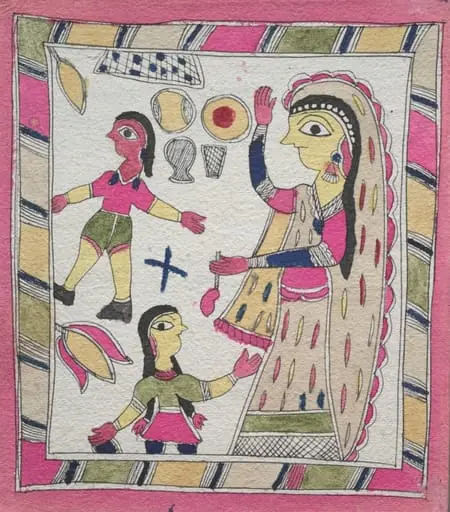 Three Figures: woman with two children playing ball
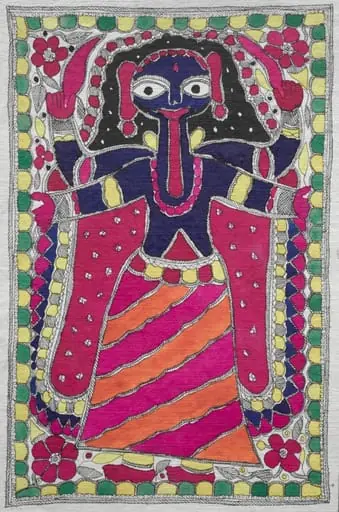 Devotional painting (female figure)
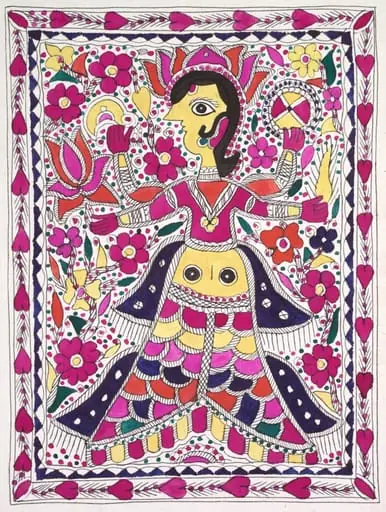 Four-armed goddess, with hearts in margin
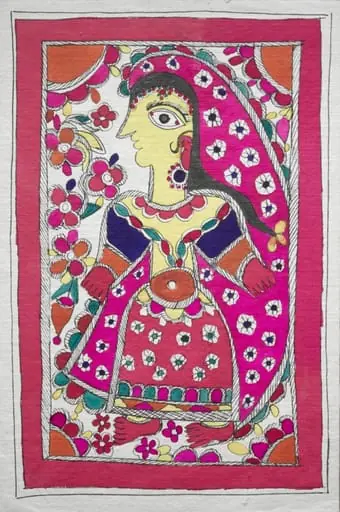 Woman in profile facing left (by woman painter)
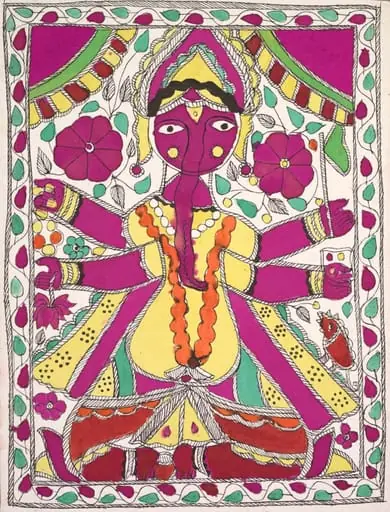 Large, multi-armed figure facing out
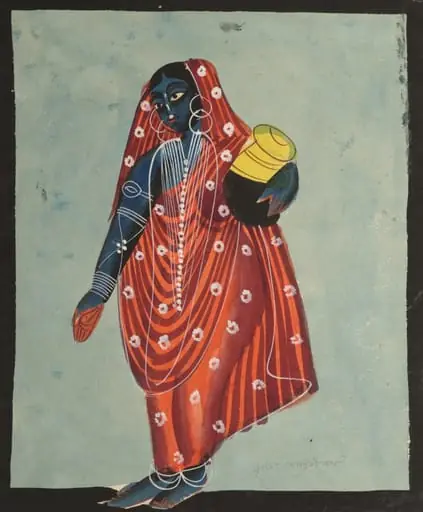 Vishnu in Female Form of Mohini Carrying Amrita for the Gods
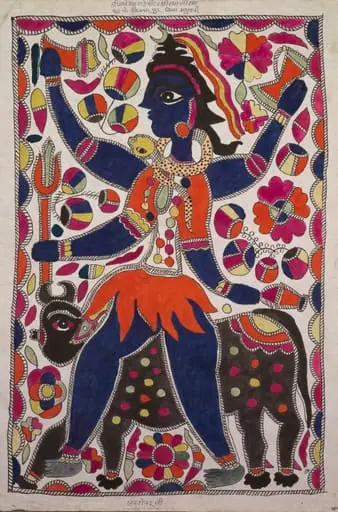 Shiva and Nandi
 Lakshmi and Sarasvati
 Jatayu, Sita and Ravana
 Rider and four-legged bovine creature in mauve, chartreuse and black palette
 Large, multi-armed figure facing left
 Two Women