Artwork
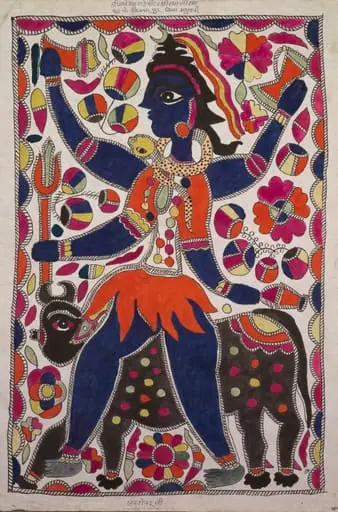
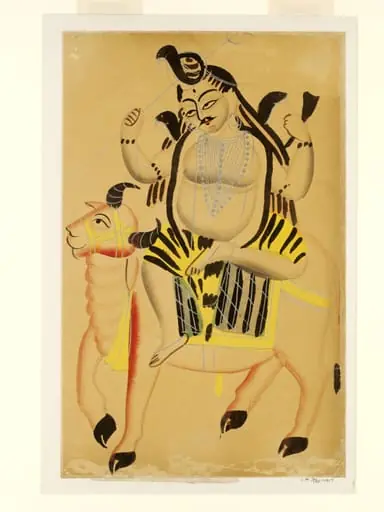
Rider and four-legged bovine creature in mauve, chartreuse and black palette
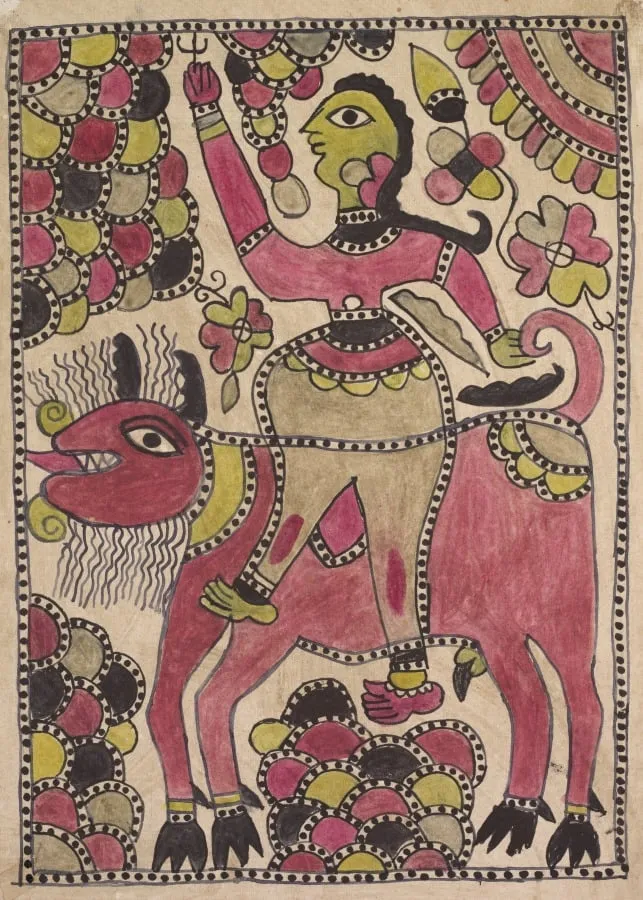
Rider and four-legged bovine creature in mauve, chartreuse and black palette is an unspecified painting by Unknown. It dates from 1904 and is held in the collection of the Cleveland Museum of Art.
About this work
Overview
Decorative elements like flowers and abstract shapes frame the central figures, reinforcing a sense of rhythmic ornamentation rather than naturalistic space.
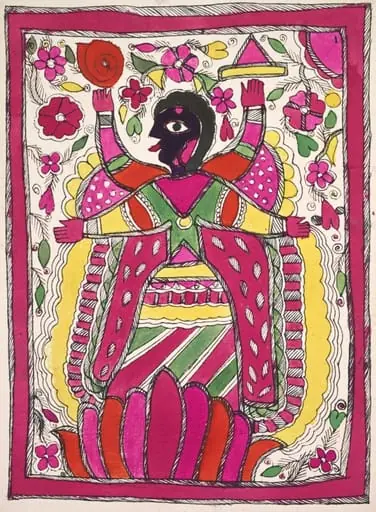
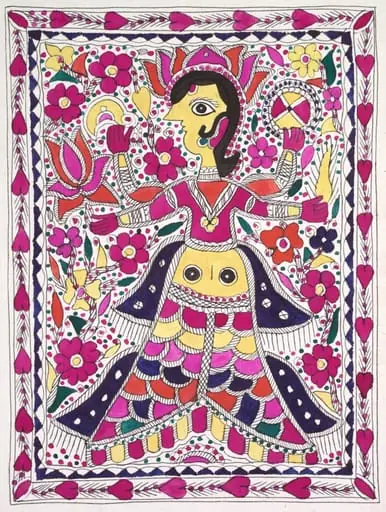
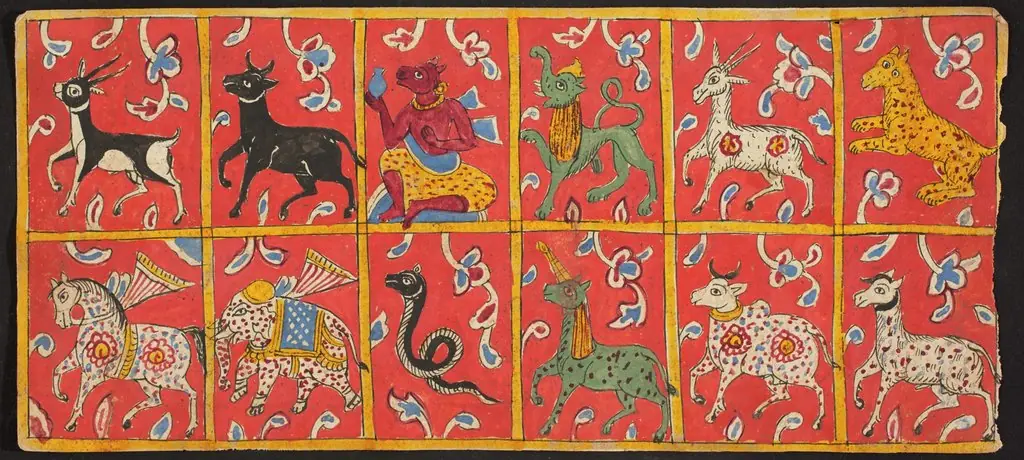
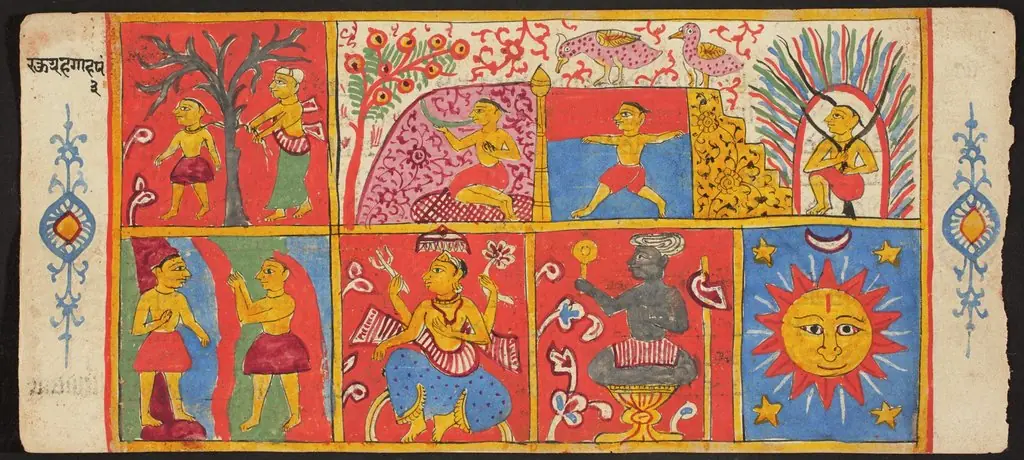
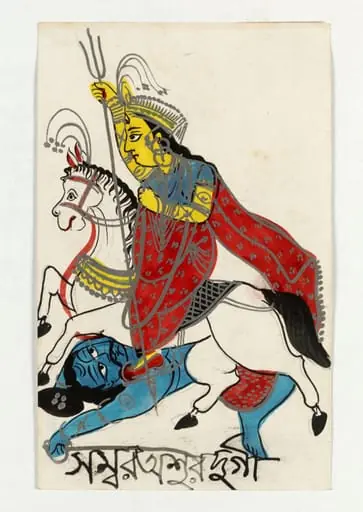
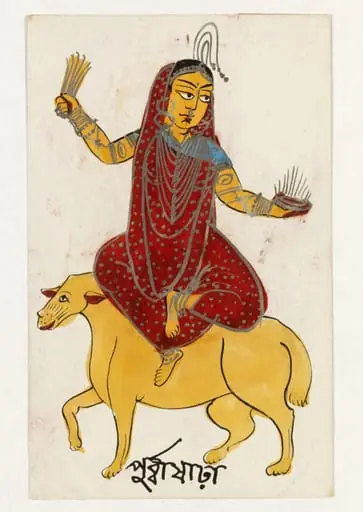
This painting depicts a rider atop a hybrid creature with a bovine head, rendered in a restricted palette of mauve, chartreuse, and black against a neutral beige ground. The composition emphasizes flat, unmodeled forms and strong outlines, evoking a handcrafted aesthetic. Decorative elements like flowers and abstract shapes frame the central figures, reinforcing a sense of rhythmic ornamentation rather than naturalistic space.
Subject & Meaning
The rider and the part-bovine figure suggest a symbolic or mythic narrative, though no specific legend is documented. The creature’s unusual anatomy may reflect local folklore or spiritual symbolism, common in traditions where animal-human hybrids represent intermediaries between worlds. The absence of contextual clues leaves interpretation open, inviting viewers to consider the image as a poetic or ritualistic vision.
Technique & Style
The work employs bold, unbroken outlines and flat areas of unmodulated color, characteristic of folk traditions that prioritize pattern over perspective. The limited palette—mauve, chartreuse, and black—creates visual harmony while enhancing the stylized, almost schematic quality. Details like the tail and hooves are rendered with deliberate simplicity, avoiding realism in favor of symbolic clarity.
History & Provenance
Though no documented origin is provided, the visual language closely aligns with the Mithila or Madhubani painting traditions of Bihar, India. These regional styles, historically practiced by women on walls and paper, often feature mythic figures and intricate ornamentation. The painting’s format and palette suggest a modern adaptation of these practices, possibly created for contemporary collectors.
Context
The imagery resonates with the Mithila school’s tradition of blending the sacred and the everyday, where animals, deities, and humans coexist in symbolic harmony. The use of natural pigments and repetitive motifs reflects a cultural emphasis on continuity and ritual. While this piece may not be an ancestral work, its aesthetic choices sit firmly within the lineage of North Indian folk painting.
Legacy
As a contemporary interpretation of a centuries-old visual language, this painting contributes to the ongoing evolution of Mithila art. It demonstrates how traditional motifs can be reimagined with new color schemes and compositions while retaining their symbolic essence. Its presence in modern collections helps sustain awareness of regional folk practices beyond their geographic origins.
Artist & collection

 Domestic Scene
 Giacomo and Cardinal Marco, investing Andrea, Abbot of San Zeno, with his Benefice
 The Nymph of Fontainebleau
 Portrait of a Woman
 Madonna and Child with Saints in the Enclosed Garden
 Venus and Minerva
 Family Group of Four on Sofa
 Wall painting from Room H of the Villa of P. Fannius Synistor at Boscoreale