Artwork
Three Figures: woman with two children playing ball
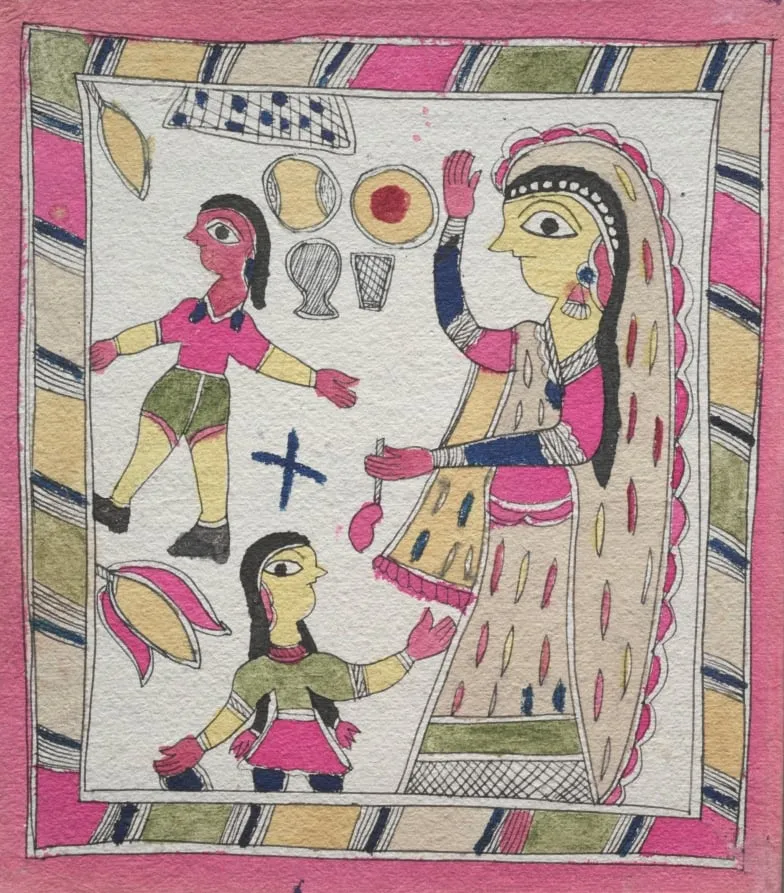
Three Figures: woman with two children playing ball is an unspecified painting by Unknown. It dates from 1904 and is held in the collection of the Cleveland Museum of Art. This painting depicts a woman and two children engaged in a quiet, everyday moment—holding and reaching for a ball.
About this work
Overview
Rendered in flat, unshaded colors against a patterned backdrop, the composition evokes the visual language of Mithila painting traditions from Bihar, India.
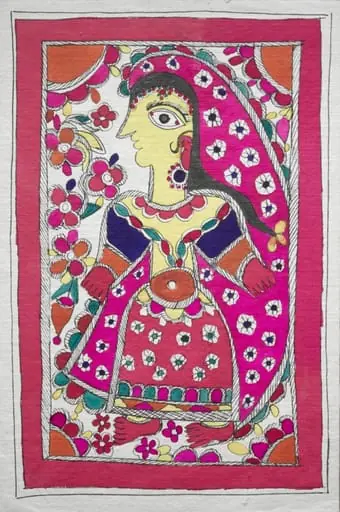
This painting depicts a woman and two children engaged in a quiet, everyday moment—holding and reaching for a ball. Rendered in flat, unshaded colors against a patterned backdrop, the composition evokes the visual language of Mithila painting traditions from Bihar, India. The figures are stylized, with simplified features and no attempt at naturalistic depth, emphasizing symbolic presence over realism.
Subject & Meaning
The scene captures a domestic interaction, likely reflecting themes of maternal care and childhood play. The woman, central and composed, holds the ball as a point of connection, while the children’s outstretched hands suggest anticipation or shared joy. The inclusion of floating household objects—baskets, plates—hints at a spiritual or symbolic layer, common in Mithila art, where the mundane and the sacred coexist.
Technique & Style
The work employs bold outlines and unmodulated color, characteristic of Mithila’s folk painting style. Shading and perspective are absent; forms are defined by flat planes and rhythmic patterns. The striped background and suspended objects create a non-linear space, distancing the scene from realism. This technique prioritizes symbolic clarity and decorative harmony over spatial illusion.
History & Provenance
Though the exact origin is undocumented, the painting aligns with the Mithila tradition, historically practiced by women in Bihar’s rural communities. These artworks were traditionally created on walls and floors during rituals and later adapted to paper in the 20th century for wider circulation. This piece likely emerged from that transition, preserving indigenous aesthetics in a portable format.
Context
Mithila painting, also known as Madhubani, developed in the Mithila region of Bihar as a ritual art form tied to festivals and life-cycle events. Women used natural pigments and brushes made from twigs to depict deities, nature, and daily life. This painting continues that legacy, transforming domestic scenes into visually rich, culturally resonant compositions rooted in regional identity.
Legacy
Works like this helped elevate Mithila art from localized ritual practice to broader recognition in Indian and global art circles. By preserving traditional motifs and techniques, such paintings sustain cultural memory and empower communities through artistic continuity. They remain vital examples of how folk traditions adapt without losing their essential character.
Artist & collection

 Domestic Scene
 Giacomo and Cardinal Marco, investing Andrea, Abbot of San Zeno, with his Benefice
 The Nymph of Fontainebleau
 Portrait of a Woman
 Madonna and Child with Saints in the Enclosed Garden
 Venus and Minerva
 Family Group of Four on Sofa
 Wall painting from Room H of the Villa of P. Fannius Synistor at Boscoreale
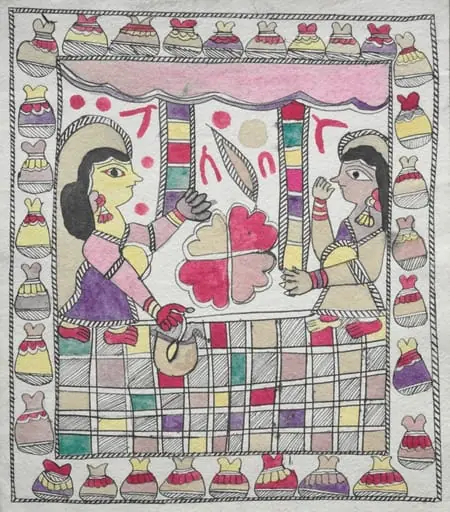 Two Women facing each other
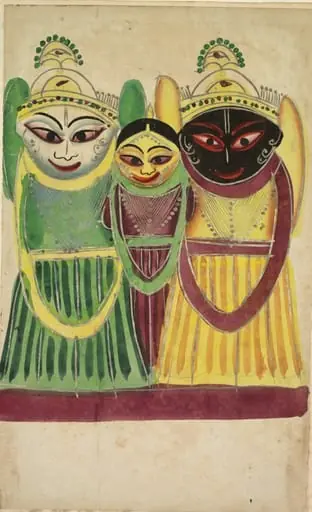 Jagannatha Trio (verso)
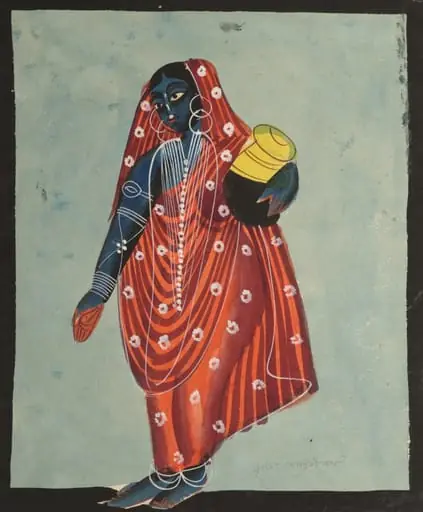 Vishnu in Female Form of Mohini Carrying Amrita for the Gods
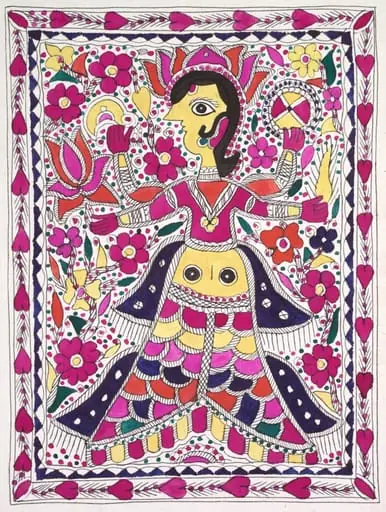 Four-armed goddess, with hearts in margin
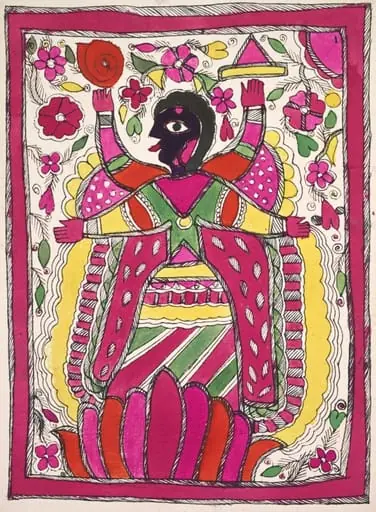 Large, multi-armed figure facing left
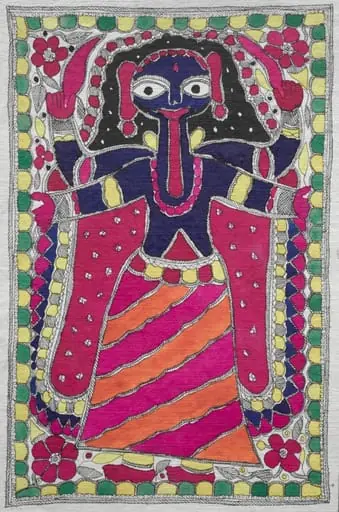 Devotional painting (female figure)
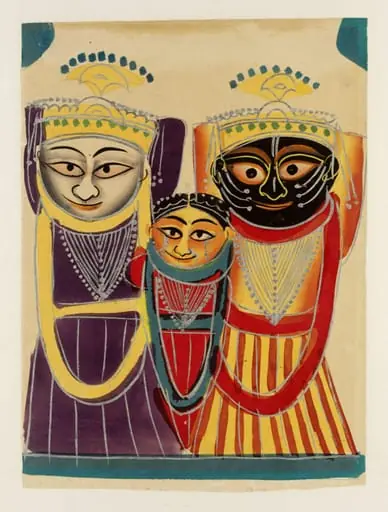 Balbhadra, Subhadra and Jagannatha
 Shiva and Nandi
 Rider and four-legged bovine creature in mauve, chartreuse and black palette
 Shashti
 Vishnu in Female Form of Mohini Carrying Amrita for the Gods
 Woman in profile facing left (by woman painter)